What if your dog’s recovery from surgery didn’t have to involve a week of restless nights and the constant worry of torn stitches? For many families in West Gippsland, the thought of their mate going under the knife is deeply stressful. You want to provide the highest level of care, but when you begin researching the keyhole spay cost Gippsland clinics offer, it’s completely normal to feel a little confused about why this advanced method carries a higher price than the traditional approach.
We understand that you’re looking for peace of mind and a way to minimise your pet’s discomfort during their healing journey. In this guide, you’ll discover the genuine medical differences between laparoscopic and traditional surgery, including how much faster your girl can get back to her usual, happy self. We will provide a transparent look at the recovery times and the specific benefits that come with using this modern technology. By the end, you’ll have a clear understanding of why so many local owners are choosing keyhole surgery as a compassionate investment in their dog’s long-term wellbeing and safety.
Key Takeaways
- Learn how laparoscopic surgery uses tiny ports instead of large incisions to significantly reduce your dog’s post-operative discomfort.
- Understand why the keyhole spay cost Gippsland owners see reflects an investment in advanced surgical equipment and specialised training for better safety.
- Discover how keyhole surgery can slash recovery times from two weeks down to just a few days, getting your mate back to their happy self sooner.
- Find out why cauterising tissue instead of tearing it leads to less internal trauma and a lower risk of post-operative complications.
- See why families across West Gippsland are choosing this modern “Gold Standard” of care to ensure their pets receive the most compassionate treatment possible.
Understanding Keyhole vs Traditional Surgery for Your Mate
Choosing how to care for your mate during their desexing is a big decision that weighs on every pet owner’s heart. While both methods achieve the same medical goal, the journey your dog takes to get there is quite different. Traditional surgery, known as a laparotomy, involves a single large incision to allow the vet to see and reach the internal organs directly. On the other hand, keyhole surgery is a minimally invasive technique that uses tiny cameras and specialised tools through small “ports” to perform the procedure with incredible precision.
In our local community, desexing is the most common reason owners ask about the keyhole spay cost Gippsland clinics provide. It’s particularly relevant for our local large-breed dogs, like Labradors or Golden Retrievers, who often have a gastropexy performed at the same time. This additional step, which can be done easily via keyhole, helps prevent life-threatening bloat, a common concern for active dogs in our region. Understanding these differences helps you feel more confident that you’re choosing the most compassionate path for your dog’s specific needs.
The Traditional Approach: Why it has been the standard
For decades, the open surgical method has been the cornerstone of veterinary medicine. It’s a tried-and-tested approach that many skilled vets still use with great success every day. During this procedure, an incision is made through the skin and the abdominal muscle wall. While it’s a safe and effective way to perform a spay, the physical impact on your dog’s core strength is significant. Because the incision is larger, the body has more work to do to knit those layers of muscle and tissue back together. This is why we traditionally see a longer period of restricted activity and the need for those “cones of shame” to protect the wound.
The Keyhole Revolution: What makes it different?
The shift toward keyhole technology represents a major leap forward in how we care for our animal companions. By using high-definition cameras, surgeons can see internal structures with incredible clarity on a high-resolution monitor, often far better than what is visible to the naked eye. This “magnification advantage” is a game-changer for identifying tiny blood vessels, which helps in reducing bleeding and improving surgical precision. Laparoscopy in veterinary medicine is now widely recognised for its ability to provide a clearer view of the surgical site with minimal disruption to the body.
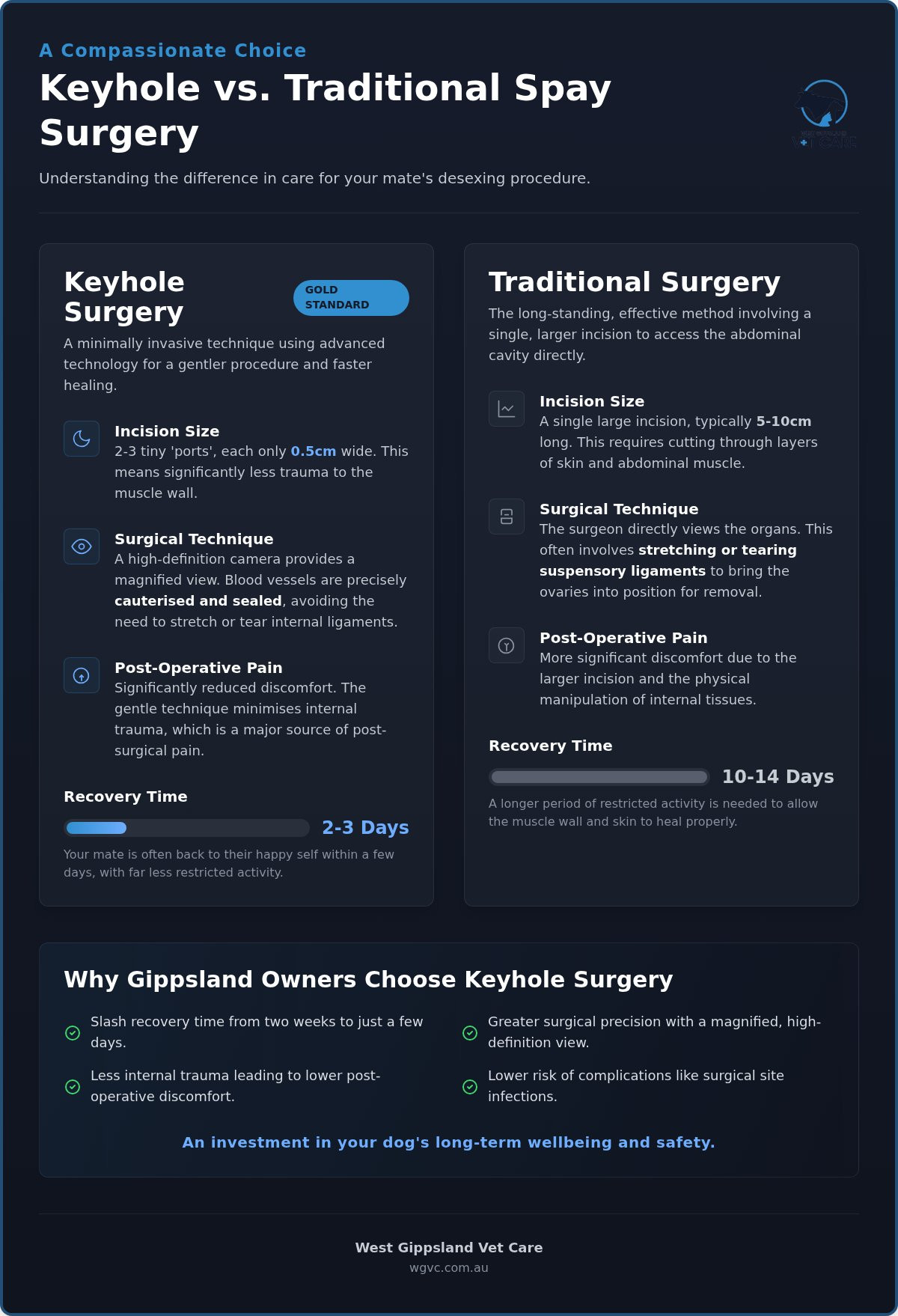
Instead of a 5-10cm incision, your dog only needs two or three tiny ports about 0.5cm wide. This means there is far less trauma to the surrounding muscle and tissue. When you look at the keyhole spay cost Gippsland families consider, a large part of that investment goes toward the sophisticated equipment that makes the procedure so much gentler. It’s about using modern tools to ensure your mate feels as comfortable as possible, both during the surgery and throughout their recovery at home.
The Surgical Breakdown: Laparoscopic vs Open Procedures
When you start looking into the keyhole spay cost Gippsland clinics provide, it’s helpful to understand exactly what happens inside your mate’s body during these different procedures. The most obvious difference is on the outside. A traditional spay usually requires a 5-10cm incision through the skin and muscle. In contrast, keyhole surgery uses just two or three tiny ports, each only 0.5cm wide. These smaller entry points mean there is significantly less surface area for potential surgical site infections, providing a much safer environment for healing.
Beyond the skin, the way tissue is handled makes a world of difference to your dog’s comfort. In a traditional “open” surgery, the vet often has to manually stretch or tear the suspensory ligaments to bring the ovaries into view. This physical pulling is a major source of post-operative pain and internal bruising. Keyhole surgery avoids this altogether. By using minimally invasive surgical techniques, we use specialised tools to cauterise and seal blood vessels with heat rather than tearing tissue. This approach is much kinder to the body and results in far less inflammatory response.
Because the high-definition camera does the “looking” for us, we don’t need to manipulate the internal organs nearly as much. In an open procedure, other organs often have to be moved aside to reach the surgical site. With laparoscopy, the camera moves through the abdomen with ease, leaving the surrounding organs undisturbed. If you’re curious about how these advanced methods could benefit your pet, feel free to chat with our friendly team about your dog’s specific needs.
Keyhole Spay (Laparoscopic Ovariectomy)
A keyhole spay is technically an “ovariectomy,” meaning only the ovaries are removed. This is the modern standard across Europe and is becoming the preferred choice for active Gippsland farm dogs and working breeds like Kelpies and Border Collies. Because we aren’t removing the entire uterus, the procedure is even less invasive than a full traditional spay. It effectively prevents unwanted pregnancies and health issues while ensuring your hard-working mate experiences minimal internal trauma and zero unnecessary pulling on their ligaments.
Prophylactic Gastropexy: A life-saving keyhole option
For owners of large breeds like Great Danes, Shepherds, or Standard Poodles in Warragul, we often recommend a prophylactic gastropexy. This life-saving procedure involves tacking the stomach to the abdominal wall to prevent “bloat” (GDV), a condition where the stomach twists and cuts off blood supply. Performing this via keyhole is a massive advantage. While a traditional open-abdomen gastropexy requires a very large incision and a long, painful recovery, the keyhole version is remarkably gentle. For families managing large breeds, combining this with a desexing procedure is often the most efficient way to manage the keyhole spay cost Gippsland owners invest in for long-term safety. For more complex cases, you might also want to learn about our Orthopaedic Vet Gippsland services to see how we handle advanced surgical care.
Keyhole Surgery for Dogs vs Traditional Cost: What is the Real Difference?
When you’re comparing surgical options for your mate, you’ll likely notice that a keyhole procedure usually carries a 20% to 40% higher price tag than a traditional spay. While we understand that budget is a practical consideration for every household, this difference represents a significant investment in your dog’s safety and comfort. The keyhole spay cost Gippsland families encounter covers more than just the surgery itself; it funds the sophisticated technology and specialised expertise required to make the procedure minimally invasive.
The equipment used is a major part of this equation. A laparoscopic tower, high-definition camera, and delicate surgical instruments are advanced medical tools that require meticulous maintenance and precise sterilisation. Beyond the hardware, our vets undergo extensive advanced training to master these techniques. Understanding veterinary laparoscopic surgery helps highlight why this level of expertise is essential for providing a modern standard of care. We also use specialised disposable items, such as sealing devices and port valves, that are only ever used once per patient to ensure the highest possible standards of hygiene.
Because the procedure is more technical, it often requires additional nursing staff to monitor advanced anaesthetic equipment and assist with the specialised instruments. This ensures that your dog has a dedicated team watching over them every second they’re in our care. When you consider the keyhole spay cost Gippsland clinics provide, you’re paying for a higher ratio of expert care and the most modern safety protocols available in veterinary medicine today.
Breaking Down the Invoice: What you are paying for
It helps to see exactly where your investment goes. The higher fee includes the ongoing maintenance and calibration of delicate medical scopes to ensure they provide the clearest possible view. It also covers the cost of high-quality pain management protocols that are standard with advanced procedures. We believe every pet deserves to wake up feeling comfortable, so we use a combination of local anaesthetics and multi-modal pain relief to ensure their recovery starts on the best possible note.
The ‘Invisible’ Savings of Keyhole Surgery
While the upfront cost is higher, keyhole surgery often leads to “invisible” savings that aren’t always obvious on day one. Because the healing process is so much faster and less complicated, most owners find they need fewer post-operative check-ups. There is also a significantly reduced need for expensive long-term pain medication and antibiotics, as the internal trauma is so minimal. Perhaps most importantly, the risk of emergency re-admissions due to torn stitches or wound infections is much lower, which can save you both money and heartache during those first two weeks of recovery.
Recovery and Post-Op Care: Factoring in Your Time and Your Dog’s Comfort
Recovery is often where the true value of your investment becomes clear. With a traditional spay, you’re looking at 10 to 14 days of strict confinement. This means no jumping, no running, and the constant supervision of a dog who likely doesn’t understand why their world has suddenly become so small. For a high-energy mate, this can lead to significant frustration and behavioural changes during those two weeks. Keyhole surgery changes this timeline completely. Most dogs are back to restricted activity for as little as 2 to 3 days, which is a massive relief for both the pet and the owner.
In our busy Gippsland community, the “Owner Factor” is a real consideration. Monitoring a restless dog for a fortnight often means taking time off work or sacrificing your own sleep to ensure they haven’t bothered their stitches. When you weigh up the keyhole spay cost Gippsland families choose, you’re also factoring in the value of your own time and the reduction in household stress. A faster recovery means your household returns to its normal rhythm much sooner.
Managing Pain: The gentle approach
Clinical studies in veterinary medicine indicate that laparoscopic procedures result in substantially less post-operative pain compared to open surgery. This is because the smaller incisions significantly reduce the inflammatory cascade within the body. Instead of the widespread tissue trauma associated with a larger opening, the body only has to manage a few tiny points of entry. It’s why we so often see our keyhole patients wagging their tails and ready to head home the very same afternoon they had their procedure.
The ‘Cone of Shame’ and Exercise Restrictions
One of the biggest hurdles in post-op care is the dreaded restrictive collar. Because keyhole incisions are so small and cause less irritation, many dogs rarely need a cone for more than a day or two. This is especially important for active working breeds or dogs on larger properties. If you’re used to the robust health requirements of our region, perhaps through working with a Livestock Vet West Gippsland, you’ll know that getting an animal back on its feet safely and quickly is always the priority. A quicker return to light lead walks helps maintain your dog’s mental wellbeing while their body finishes the final stages of healing. To ensure your mate has the smoothest possible journey, reach out to our caring team to discuss how we can help.
Making the Choice: Why West Gippsland Owners Trust Keyhole Technology
Deciding on the right surgical path for your mate involves balancing practicalities with the deep bond you share. While we’ve explored how the keyhole spay cost Gippsland families encounter reflects the advanced technology and training required, the true value lies in the days following the procedure. It’s an investment in a “softer” start to your dog’s adult life, prioritising their comfort and your peace of mind. By choosing this modern approach, you’re often avoiding the stress of a long, restricted recovery and the worry that comes with larger surgical wounds.
Trusting a local team who understands the specific needs of our community makes a world of difference. Families in Warragul, Drouin, and the surrounding townships no longer need to travel into the city to access this “Gold Standard” of care. Having this level of surgical expertise right here in West Gippsland means your dog can recover in their own familiar environment sooner, with the support of a clinic that knows them by name. We view ourselves as more than just a medical provider; we’re a partner in your pet’s lifelong journey of health and happiness.
The WGVC Difference: Compassion meets technology
At our clinics, we don’t just focus on the technical side of the surgery. We apply our Fear-Free philosophy to every case, ensuring that your dog’s emotional wellbeing is cared for from the moment they walk through our doors. This nurturing approach, combined with the precision of laparoscopic tools, creates a stable and supportive environment for your mate. We’re proud to offer this advanced care locally, and we always invite you to call the clinic for a tailored discussion. Every dog is an individual, and we love taking the time to listen to your concerns and answer your questions personally.
Is keyhole right for every dog?
While keyhole surgery offers incredible benefits, it isn’t always the automatic choice for every single patient. There are certain medical conditions or physical factors where a traditional open surgery might still be the safer or more appropriate option. For example, very small dogs or those with specific pre-existing abdominal issues may benefit more from the traditional approach.
This is where the relationship with your vet becomes so important. We use a thorough physical exam and a review of your dog’s history to guide the final decision. Our goal is always to recommend the path that offers the highest level of safety and the most comfortable outcome for your mate. If you’re ready to take the next step, we encourage you to contact the West Gippsland Vet Care team to discuss keyhole options and find out if it’s the right fit for your dog’s upcoming desexing.
Preparing Your Mate for a Brighter, Faster Recovery
Choosing the best care for your dog is a personal journey, but it’s one you don’t have to walk alone. By opting for a laparoscopic approach, you’re prioritising your mate’s comfort with smaller incisions, less pain, and a recovery time that gets them back to their favourite local parks in days rather than weeks. While the keyhole spay cost Gippsland families consider reflects a higher upfront investment, the lasting benefits of reduced stress and a lower risk of complications make it a deeply compassionate choice for many owners.
As West Gippsland’s leaders in laparoscopic pet surgery, our independent, family-owned practice is dedicated to providing the highest standard of care right here in your community. We use a fear-free certified approach to ensure your dog feels safe and nurtured throughout their stay with us. If you’re ready to discuss the best path forward for your mate’s health, we’re here to help you make an informed and loving decision.
Book a consultation at West Gippsland Vet Care to see if keyhole surgery is right for your dog and give your pet the gentle experience they deserve.
Frequently Asked Questions
Is keyhole surgery for dogs safer than traditional surgery?
Laparoscopic surgery is generally considered safer because it provides our vets with a much clearer, magnified view of your dog’s internal organs. This high-definition precision allows for better control of bleeding and significantly reduces the risk of post-operative infections. Because the incisions are so small, there is also much less chance of wound breakdown or complications while your mate is healing at home.
How much more does a laparoscopic spay cost compared to a normal spay?
A keyhole procedure typically carries a price tag that is 20% to 40% higher than a traditional spay. This reflects the significant investment in high-tech equipment and the specialised training our team undergoes to master these advanced techniques. When considering the keyhole spay cost Gippsland families often find the faster recovery and reduced need for follow-up care provide excellent value for money.
Can any vet perform keyhole surgery on my dog?
No, keyhole surgery requires highly specialised equipment and advanced surgical training that isn’t available in every clinic. Only a small number of practices in our region have the necessary laparoscopic towers and high-definition cameras. It’s important to choose a vet who has dedicated experience in these minimally invasive techniques to ensure the safest outcome for your mate.
Does my dog still need general anaesthesia for keyhole surgery?
Yes, your dog will still be under a full general anaesthetic during the procedure to ensure they are completely comfortable and still. While the incisions are tiny, we are still performing an internal surgery that requires your pet to be deeply asleep. Our team uses advanced monitoring equipment and tailored pain management protocols to keep your pet safe and peaceful throughout the entire process.
How long is the recovery time for a keyhole gastropexy?
Recovery from a keyhole gastropexy is remarkably fast, with most dogs returning to light activity within 2 to 3 days. This is a massive improvement over the traditional open-abdomen method, which usually requires two weeks of strict confinement. It allows your dog to get back to their normal routine much sooner while ensuring their stomach is safely secured against life-threatening bloat.
Are there any breeds that shouldn’t have keyhole surgery?
Most breeds are excellent candidates for keyhole surgery, though very small dogs or those with specific medical conditions may sometimes be better suited to a traditional approach. During a physical exam, our vets will assess your mate’s size and overall health to determine the safest method. We always tailor our recommendation to what is best for your dog’s individual needs and body type.
Will my dog have a scar after keyhole surgery?
Your dog will have two or three tiny scars, each only about 0.5cm long, which become almost invisible once their fur grows back. Unlike the larger scar from a traditional spay, these small ports heal very quickly and are much less likely to be noticed. Most owners find it difficult to even locate the surgical sites just a few weeks after the procedure has finished.
What happens if the vet finds a complication during the keyhole procedure?
If our surgical team encounters an unexpected complication, we are fully prepared to convert the procedure to a traditional open surgery immediately. Your dog’s safety is always our absolute priority. While this is rare, having a highly skilled vet means they can adapt the surgical plan in real-time to ensure the best possible medical outcome for your mate.