Did you know that choosing a laparoscopic procedure can reduce your dog’s post-operative downtime by up to 75 percent? It is a complete game-changer for active families in West Gippsland who worry about keeping a high-energy mate confined for weeks on end. We know that the thought of your dog in pain is heartbreaking, especially when the recovery time for keyhole spay in dogs is so much shorter and gentler than traditional methods.
You’re right to want the most comfortable experience for your pet. In this guide, we’ll explain why this modern technique allows most dogs to return to their normal routine in just two to three days. We’ll walk you through a clear day-by-day expectation for the first 72 hours and provide practical tips to manage the “false recovery” phase, where they feel great but still need a little extra care. Whether you’re in Warragul, Drouin, or the surrounding hills, you’ll discover how to support a swift, stress-free recovery that gets your best friend back on their paws much sooner.
Key Takeaways
- Understand how tiny incisions and reduced tissue trauma result in significantly less post-operative pain and surgical stress for your mate.
- Learn why the recovery time for keyhole spay in dogs is so much faster, with most pets returning to their normal energy levels within just 72 hours.
- Discover how to manage the “false recovery” phase and why strict rest is only needed for a few days compared to the usual two-week confinement.
- Get practical advice on setting up a cosy recovery suite and preventing your dog from jumping onto the couch or into the back of the ute.
- Find out how specialised laparoscopic equipment at our Warragul and Drouin clinics ensures a safer, fear-free experience for your family pet.
Why Keyhole Spay Recovery is a Game-Changer for Your Dog
For many families in Warragul and Drouin, our dogs aren’t just pets; they’re vital members of the household. When it’s time for desexing, the traditional “open” surgery can feel like a major hurdle for both the pet and the owner. This is why many local owners are now opting for a minimally invasive alternative. Keyhole spaying, technically known as a laparoscopic ovariectomy, uses advanced technology to achieve the same result with far less impact on your mate’s body.
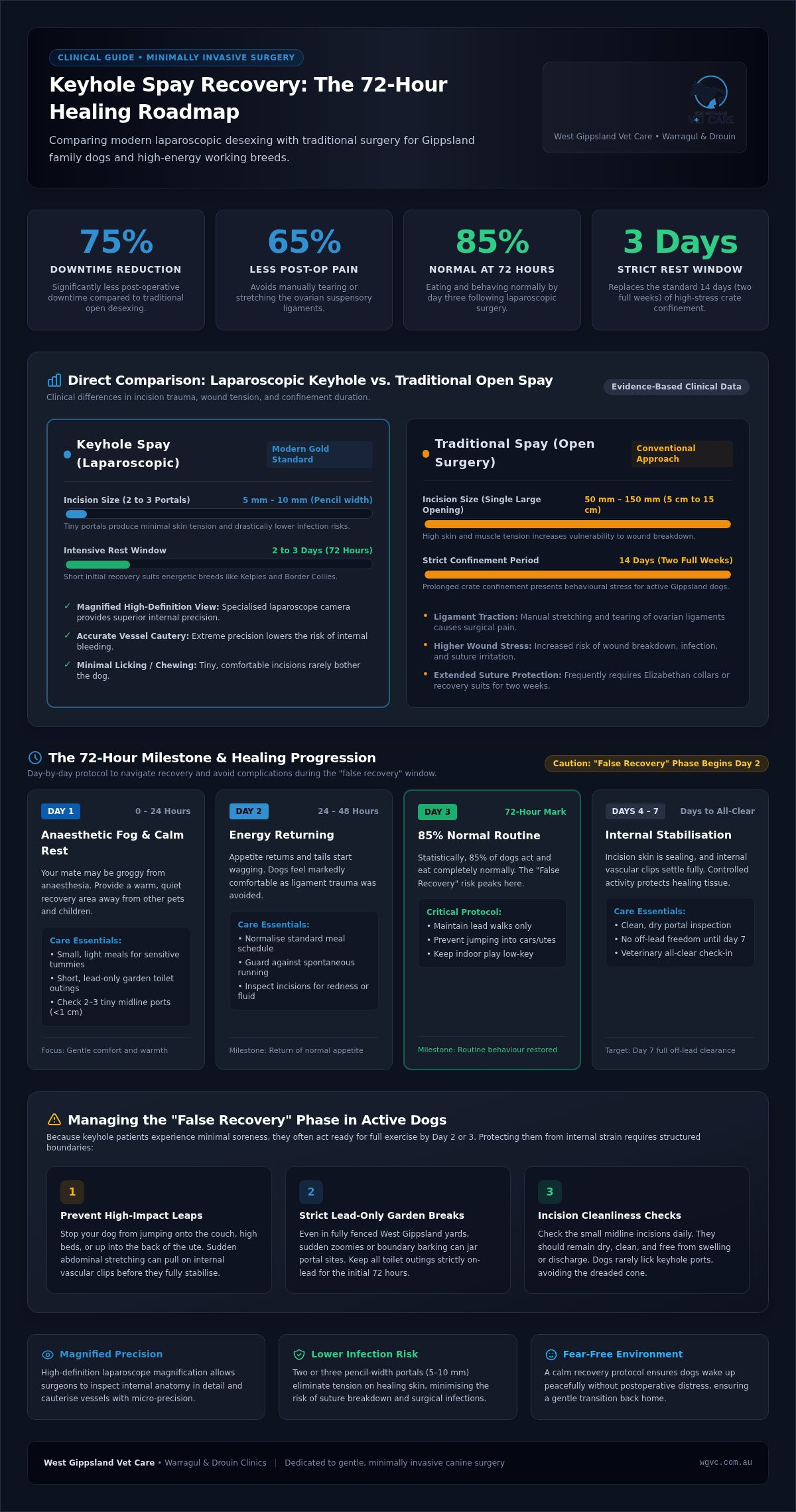
The most significant advantage is the drastic reduction in physical stress. Because we aren’t manually stretching or tearing the ovarian ligaments like in a traditional spay, research shows that dogs experience up to 65 percent less post-operative pain. This high level of comfort is a primary reason why the recovery time for keyhole spay in dogs is so much shorter than the standard two-week wait we’ve all grown used to. It’s a particularly popular choice for our high-energy Gippsland working breeds, like Kelpies and Border Collies, who don’t take well to long periods of crate rest.
The Science of Smaller Incisions
During laparoscopic keyhole surgery, our surgeons use a specialised tiny camera called a laparoscope. This provides a high-definition, magnified view of the internal organs, allowing for much greater precision than the naked eye can provide through a standard incision. Instead of a single large opening that can measure anywhere from 5cm to 15cm, we work through two or three tiny portals. These small openings are typically only 5mm to 10mm in size, which is roughly the width of a pencil. Laparoscopic spay is now widely considered the modern gold standard for canine desexing.
Reduced Risk of Post-Op Complications
Smaller incisions don’t just mean less pain; they also mean fewer things can go wrong during the healing process. There’s a significantly lower risk of wound breakdown or infection because there’s almost no tension on the skin around the portal sites. We’ve found that dogs are much less likely to lick or bother their stitches when the site is so small and comfortable. Additionally, the internal visualisation allows us to cauterise vessels with extreme accuracy, which reduces the risk of internal bleeding during and after the procedure.
At West Gippsland Vet Care, we combine this surgical precision with our dedicated fear-free approach. This means your dog wakes up in a calm environment, feeling comfortable rather than confused or sore. It sets the stage for a smooth transition back to your home, often with your mate feeling like their old self within just a few hours of the procedure.
The 72-Hour Milestone: A Rapid Healing Timeline
The first few days after any surgery can be a bit of a worry for owners. However, the recovery time for keyhole spay in dogs is remarkably swift. While a traditional spay often requires two weeks of strict confinement, the keyhole method focuses on a much shorter 72-hour window of intensive rest. This rapid turnaround is one of the reasons why the American College of Veterinary Surgeons highlights minimally invasive techniques as a way to reduce surgical stress and hasten the return to normal activity. By the time you reach the three-day mark, most dogs are already acting like their usual selves.
Day 1: The First 24 Hours at Home
When you first bring your mate home, they might still be in a bit of an “anaesthetic fog”. This is perfectly normal. Keep them in a warm, quiet area away from other pets or noisy children. Offer small, light meals rather than one big dinner to help their tummy settle. You’ll notice two or three tiny incision sites, usually less than 1cm long, along their midline. These small ports heal quickly, but you should still keep garden breaks to short, lead-only outings to prevent any sudden movements or stretching of the surgical sites.
Days 2 to 5: Returning to Routine
By the second or third day, you’ll likely see a dramatic change. Research indicates that approximately 85 percent of dogs behave and eat normally by the 72-hour mark. It’s heartening to see their tail wagging and energy returning so soon. Because the recovery time for keyhole spay in dogs is so condensed, it’s much easier to manage for busy Gippsland families compared to traditional surgery. However, this is also when the “false recovery” period begins. Because they feel so much better, they might try to jump or run before the internal clips have fully settled.
It’s vital to keep play quiet and avoid off-lead exercise until we give you the all-clear, usually around day seven. Look for clean, dry incision sites with no redness or discharge as a sign that everything is progressing perfectly. If you have any questions about your pet’s progress during these first few days, our team at West Gippsland Vet Care is always here to support you and your best friend.
Keyhole vs. Traditional Spay: Comparing Post-Op Comfort
Choosing between surgical methods often comes down to the daily reality of your pet’s comfort. With a traditional spay, the larger incision requires significant internal stretching, which naturally leads to more inflammation. This usually means a longer course of pain medication and a full 10 to 14 days of strict exercise restriction. In contrast, the recovery time for keyhole spay in dogs is much more manageable because the procedure is so gentle on the body’s tissues.
One of the biggest wins for owners is the “cone of shame” duration. While traditional surgery patients often need to wear a protective collar for the entire two-week healing period to prevent them from chewing at a large row of stitches, keyhole patients often only need protection for a few days. The tiny 5mm to 10mm ports heal so quickly and cause so little irritation that many dogs barely notice they are there. This leads to a much happier pet and a far less stressful household during those first few nights home.
Internal Healing: Ovariectomy vs. Ovariohysterectomy
A common point of confusion is what actually happens inside. Traditional spaying usually involves an ovariohysterectomy, where both the ovaries and the uterus are removed. Keyhole surgery typically performs an ovariectomy, removing only the ovaries. There is a long-standing myth that the uterus must be removed to prevent future health issues, but modern veterinary science has proven that as long as the ovaries are gone, the uterus remains healthy and inactive. By leaving the uterus in place, we significantly reduce the amount of internal trauma and bleeding. This commitment to minimally invasive techniques is part of our broader focus on Orthopaedic Vet Gippsland standards, ensuring every surgery is as precise and gentle as possible.
The Mental Health of Your Dog
We can’t forget the emotional toll that long-term confinement takes on our pets. For a high-energy dog in West Gippsland, being locked in a crate or a small laundry for two weeks can lead to significant “kennel stress” and frustration. They don’t understand why they can’t jump in the back of the ute or run across the paddock. Because the recovery time for keyhole spay in dogs allows for a return to light exercise in just three to five days, your mate can rejoin the family “pack” dynamic much sooner. This reduces the need for heavy sedatives to keep them quiet and helps maintain their happy, confident temperament throughout the healing process.
Expert Tips for Managing Your Dog’s Recovery at Home
Bringing your mate home after surgery is a relief, but the work of a good pet parent continues in the living room. To make the most of the short recovery time for keyhole spay in dogs, we recommend setting up a “recovery suite”. This isn’t anything fancy; just a quiet, low-traffic area of your home with a comfortable bed where your dog won’t be disturbed by other pets or busy family life. Keeping the environment calm helps ensure those first 72 hours are spent resting rather than reacting to household noise.
One of the most important rules during this window is “no vertical movement”. Even though your dog will likely feel energetic quite quickly, jumping onto the couch or into the back of the ute can put unnecessary strain on the internal surgical sites. If your dog usually sleeps on your bed or travels in a high vehicle, you’ll need to lift them or provide a temporary ground-level alternative. To help them burn off energy without the physical strain, try using mental stimulation tools like lick mats or snuffle mats. These provide a great “mental drain” that keeps them occupied while their body focuses on healing.
Lead-Only Exercise in West Gippsland
While the recovery time for keyhole spay in dogs is remarkably fast, off-lead runs at the local park in Warragul or Drouin should wait for at least five to seven days. Instead, focus on “sniffari” walks. These are short, lead-only outings where you let your dog take the lead with their nose. Five minutes of intensive sniffing can be as tiring for a dog as a twenty-minute run. If you live in a multi-dog household, it’s often best to walk the recovering dog separately to prevent any accidental rough-and-tumble play that might stretch the incision sites.
Incision Care and Monitoring
Checking the two or three tiny portal sites should be a stress-free part of your daily routine. You’re looking for clean, dry edges with minimal swelling. Many of our clients prefer using a medical pet shirt, which is a soft fabric onesie, rather than the traditional plastic “cone of shame”. These shirts keep the area clean and prevent licking without the clumsiness of a collar. Just remember to keep the area completely dry. This means no baths and no swimming in local dams or creeks for the first seven to ten days. If you notice any of these “red flags”, please contact us immediately:
- Excessive redness or heat around the tiny incisions.
- Any discharge that looks like pus or has a strong odour.
- Significant swelling or a “bulge” under the skin.
- A sudden drop in energy or refusal to eat after the first 24 hours.
If you have any concerns about your pet’s progress or want to discuss the best post-op plan for your specific breed, feel free to book your mate’s consultation with our caring team.
Advanced Surgical Care at West Gippsland Vet Care
Choosing the right clinic for your dog’s desexing is a decision made from the heart. At West Gippsland Vet Care, we’ve invested in a specialised laparoscopic surgical suite at our Warragul clinic to ensure we can offer the highest standard of minimally invasive care. Our team has spent over 35 years serving this community, and we understand that your dog is a central part of your family life. By using advanced equipment, we’re able to ensure the recovery time for keyhole spay in dogs is as swift and comfortable as possible, keeping your mate’s well-being at the forefront of everything we do.
Our commitment to your pet goes beyond the surgery itself. We embrace a fear-free approach from the moment you walk through our doors in Warragul or Drouin. This means we use low-stress handling techniques to keep your dog calm during admission, throughout their stay, and until they’re safely back in your arms. We believe that a relaxed mind is just as important as a healing body for a successful surgical outcome.
Why Choose Us for Your Dog’s Spay?
As a local independent practice, we pride ourselves on providing personalised care that isn’t dictated by a corporate head office. We focus on the latest veterinary advancements to benefit our local patients. For many Gippsland families with large or deep-chested breeds, we often recommend integrated care. This involves combining a keyhole spay with gastropexy surgery for dogs. Performing both procedures under a single anaesthetic event significantly reduces overall surgical stress and prevents the future risk of life-threatening bloat. To give you total peace of mind, we also provide 24-hour emergency support exclusively for our existing clients, ensuring help is always available if you have concerns during the healing process.
Booking a Consultation in Warragul or Drouin
Every dog is an individual, which is why we never take a “one size fits all” approach to surgery. The first step is always a thorough pre-operative health check. During this visit, we’ll discuss your dog’s history and perform blood tests to ensure their internal organs are functioning perfectly before any procedure. This allows us to tailor an anaesthetic plan specifically for your dog’s age, breed, and health status. We know that the recovery time for keyhole spay in dogs is a major factor in your decision, and we’re here to answer every question you have with honesty and compassion. We invite you to reach out to our team to discuss how we can make your best friend’s desexing journey a positive, gentle experience for the whole family.
Give Your Mate the Best Start to a Healthy Life
Choosing the right surgical path for your dog is a decision made from the heart. By opting for a laparoscopic procedure, you’re choosing a method that prioritises comfort and a swift return to the family pack. We’ve explored how the recovery time for keyhole spay in dogs turns what used to be a stressful two-week ordeal into a manageable 72-hour transition. Tiny incisions mean less inflammation and a significantly happier pet during those crucial first few days at home in Warragul or Drouin.
As an independent, local practice, we’re proud to offer state-of-the-art laparoscopic equipment and a fear-free certified approach to ensure your pet feels safe and cared for. Our surgical experts are dedicated to providing the high-level care your best friend deserves. Book a laparoscopic spay consultation for your best mate at West Gippsland Vet Care today to discuss how we can support your pet’s health. We look forward to seeing your dog back on their paws and enjoying the Gippsland sunshine in no time.
Frequently Asked Questions
How long after keyhole spay can my dog go for a walk?
Your dog can go for short, lead-only garden breaks as soon as they get home to Warragul or Drouin. We recommend waiting 48 to 72 hours before starting gentle “sniffari” walks around the block on a short lead. Because the recovery time for keyhole spay in dogs is so condensed, they can usually return to their full exercise routine, including off-lead runs, within seven to ten days once the internal sites have settled.
Does a keyhole spay hurt less than a normal spay?
Yes, keyhole spaying is significantly more comfortable than traditional surgery. Because we use a camera and specialised tools to cauterise the ligaments rather than manually stretching or tearing them, dogs experience up to 65 percent less post-operative pain. This reduction in tissue trauma is the main reason your mate will likely be looking for their dinner and wagging their tail within just a few hours of waking up from their procedure.
Will my dog need to wear a cone after keyhole surgery?
While every dog is different, most keyhole patients need a cone or protective collar for a much shorter duration than traditional surgery. The tiny 5mm to 10mm incisions are far less irritating than a large surgical wound, so dogs are less inclined to lick them. Many of our local clients find that a soft medical pet shirt is a more comfortable and effective alternative for the first few days of healing.
What are the signs of infection after a laparoscopic spay?
You should monitor the portal sites for any unusual redness, heat, or swelling that seems to be getting worse rather than better. Any discharge that looks cloudy or has a strong odour is a clear sign that you should contact our team. Because the incisions are so small, infections are rare, but keeping the area dry and preventing licking for the first week is essential for a smooth and healthy recovery.
Can my dog jump on the sofa after keyhole surgery?
We recommend that you prevent your dog from jumping onto the sofa or into the back of the ute for at least five to seven days. Even though they feel great and the external ports are tiny, the internal clips and cauterised sites still need a period of quiet rest to heal properly. Providing a comfortable bed on the floor in a quiet area of your home helps manage this phase safely.
Is keyhole surgery safe for older dogs or large breeds?
Laparoscopic surgery is an excellent choice for both older dogs and large breeds. For senior pets, the reduced surgical stress and shorter anaesthesia time make the procedure much gentler. Large or deep-chested breeds, which are common in our Gippsland community, also benefit from the ability to combine a keyhole spay with a preventative gastropexy. This helps protect them against life-threatening bloat in one single, minimally invasive session.
How long does the actual keyhole spay procedure take?
The actual surgical time for a keyhole spay is typically between 30 and 45 minutes. While the preparation and anaesthesia setup are very thorough, the high-definition camera allows our surgeons to work with incredible precision. This efficiency means your pet spends less time under anaesthesia, which contributes to a smoother and faster wake-up in our fear-free recovery ward before they head home to your family later that same day.
What happens if my dog licks her keyhole incisions?
If your dog licks their keyhole incisions, they can introduce bacteria or cause the tiny portal sites to become inflamed. While the recovery time for keyhole spay in dogs is fast, the skin still needs a few days to seal completely. If you notice your mate is starting to bother the area, it’s best to use a medical pet shirt or a protective collar immediately to prevent any self-trauma or the risk of a secondary infection.