What if the fur collecting around your home isn’t a sign you’re brushing badly, but a cue that your dog’s coat needs a different kind of care? If you’ve searched “deshedding treatment for dogs Trafalgar”, you may be wondering whether professional grooming will suit your dog’s coat and help them feel comfortable.
It’s understandable to have questions, especially if you’re concerned about skin irritation or your dog finding grooming stressful. Professional deshedding can help remove loose coat, but the right approach depends on your dog’s coat condition and how they respond to handling. West Gippsland Vet Care provides professional dog grooming for families in Trafalgar and nearby West Gippsland communities.
In this guide, you’ll learn what to expect from a deshedding appointment, how to decide whether professional grooming may suit your dog, and what to tell the grooming team beforehand. We’ll also cover practical ways to care for your dog’s coat at home and signs that call for veterinary advice.
Key Takeaways
- Deshedding can help remove loose coat, but it won’t stop your dog’s normal shedding altogether.
- Coat condition, skin comfort and your dog’s response to handling all matter when deciding on grooming care.
- Home brushing, professional grooming and veterinary advice each suit different situations. Use your dog’s comfort and coat condition to guide your choice.
- Before an appointment, share what you’ve noticed about your dog’s coat, skin and handling preferences.
- West Gippsland Vet Care provides professional dog grooming for local owners, including those in Trafalgar and surrounding communities.
Dog de-shedding in Trafalgar: what it can and can’t do
Loose hair on the couch, clothes and floors can feel never-ending, even when you brush your dog regularly. Shedding is a normal part of coat renewal for many dogs. How much hair they lose and when it happens varies between dogs, so one grooming routine won’t suit every pet.
Professional deshedding is grooming that helps remove loose coat, with care suited to the individual dog. It can help manage loose hair, but it won’t stop normal shedding or keep your home completely fur-free. The professional dog grooming process can include coat care and the removal of loose or dead hair, with the approach guided by the dog’s coat and comfort.
Is shedding normal, and when might grooming help?
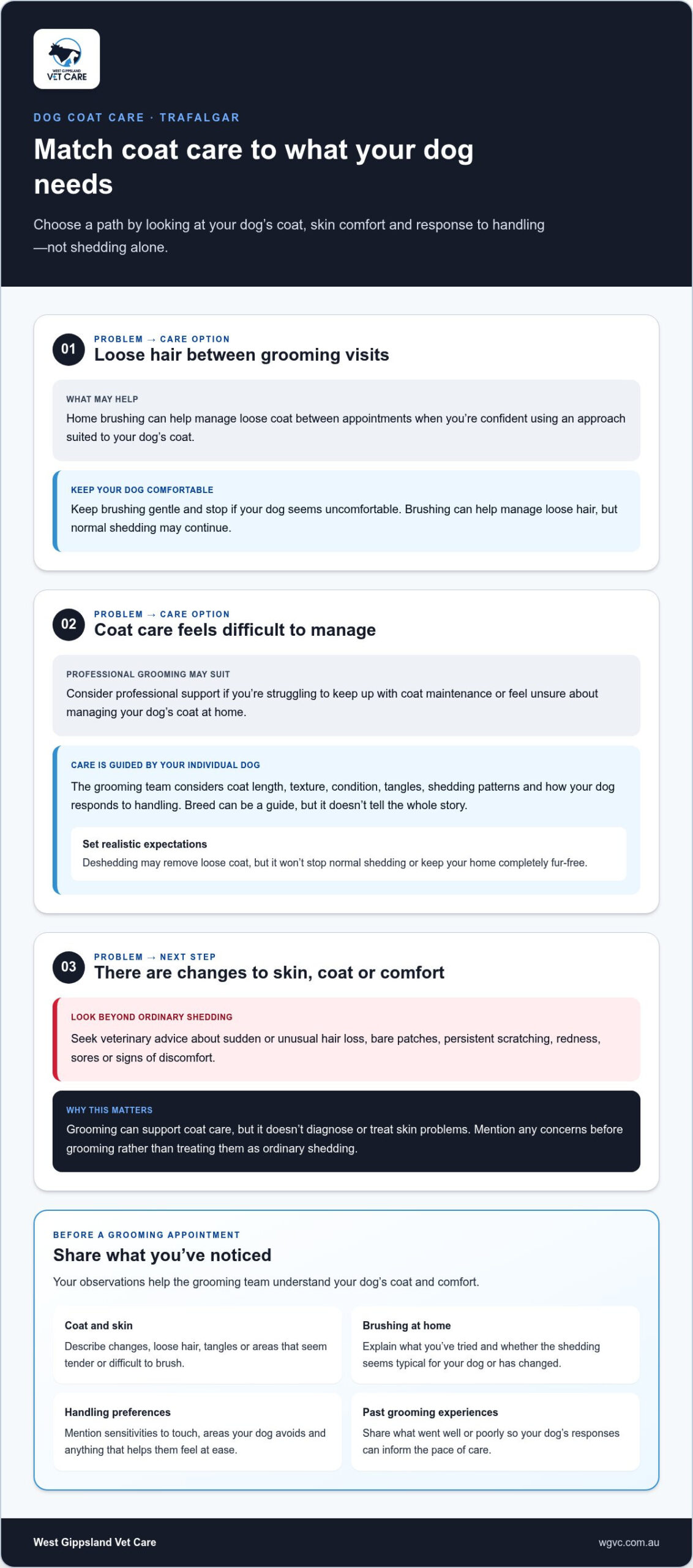
Finding loose hair around the home doesn’t automatically mean something is wrong. Routine brushing can help manage loose coat between appointments. Professional grooming may be useful if you’re struggling to keep up, or if you’d like support with your dog’s coat care. When considering a deshedding treatment for dogs Trafalgar owners might choose, start with your dog’s coat type, condition and comfort.
Look for changes rather than focusing on shedding alone. Sudden or unusual hair loss, bare patches, persistent scratching, redness, sores or signs of discomfort are reasons to seek veterinary advice. Grooming can support coat care, but it isn’t a substitute for investigating a skin or health concern.
What results should Trafalgar dog owners realistically expect?
A grooming appointment may leave less loose hair in the coat, but some shedding can continue afterwards as part of your dog’s normal coat cycle. Results depend on the coat’s condition and your dog’s individual grooming needs. Think of deshedding as one part of ongoing coat care, rather than a one-off fix.
West Gippsland Vet Care provides professional dog grooming for Trafalgar and nearby West Gippsland communities. Before grooming, describe what you’ve noticed at home, including changes to your dog’s coat or skin and how they respond to handling. This gives the team useful context for discussing suitable care and setting realistic expectations about loose hair.
What happens during professional dog deshedding and coat care?
A professional grooming appointment should take your dog’s individual needs into account, rather than follow a one-size-fits-all routine. The grooming team considers your dog’s coat length, texture and condition, along with your concerns and how your dog responds to handling. Details about brushing at home and any areas that seem sensitive can help inform the conversation.
Grooming helps manage loose coat; it doesn’t diagnose or treat skin problems. If your dog has persistent irritation, sores or unusual hair loss, seek veterinary advice so the concern can be assessed. Mention these signs before grooming instead of treating them as ordinary shedding.
How a groomer can tailor care to your dog’s coat
Coat length, texture, tangles and shedding patterns can all influence appropriate care. A dog with a dense coat may have different grooming needs from one with a short, fine coat. A change in coat condition may also need attention. Breed can be a useful guide, but it doesn’t tell the whole story: your dog’s individual coat and comfort matter too.
Before a deshedding treatment for dogs Trafalgar owners are considering, describe what you’ve noticed at home. Is the loose hair typical for your dog, or have you seen a new change? Are any areas tender or difficult to brush? These observations can help distinguish routine coat maintenance from a concern that may need veterinary advice.
Keeping the grooming experience comfortable
You know your dog’s preferences best. Share any sensitivities around being touched, previous grooming experiences that went well or poorly, and handling preferences. Mention health concerns or areas your dog avoids having brushed. This context helps the grooming team take your dog’s responses into account and guide the pace of care.
During the appointment, let the team know what helps your dog feel at ease and raise any concerns about their comfort. Dogs respond differently, so clear communication and attention to their cues are useful throughout grooming.
If you’re in Trafalgar or a nearby West Gippsland community, West Gippsland Vet Care dog grooming provides professional grooming for dogs. Sharing your observations and preferences is a practical starting point for discussing coat care.
Home brushing or professional deshedding in Trafalgar: how to decide
Home brushing and professional grooming can complement each other. Brushing helps you keep an eye on your dog’s coat between appointments, while professional care may help when coat maintenance becomes difficult or you’re unsure what approach suits your dog. If you’re weighing up a deshedding treatment for dogs Trafalgar owners are considering, use your dog’s comfort and coat condition as your guide rather than following a fixed schedule.
| Option | Coat needs and owner confidence | Dog comfort and skin concerns |
|---|---|---|
| Home brushing | May help manage loose hair between grooming visits if you’re confident using an approach suited to your dog’s coat. | Keep sessions gentle and stop if your dog seems uncomfortable. Seek veterinary advice about pain, ongoing irritation or unexpected coat changes. |
| Professional grooming | May suit owners who want support with ongoing coat care or feel unsure about managing their dog’s coat at home. | Your dog’s response and coat condition should inform their care. Tell the grooming team about sensitivities or areas that seem uncomfortable. |
| Veterinary advice | Appropriate when the concern appears to go beyond routine coat maintenance. | Seek advice for persistent irritation, sores, pain or unusual hair loss. Grooming manages the coat; it isn’t a veterinary assessment. |
When can brushing at home be enough?
Gentle, regular brushing can help lift loose hair and familiarise you with your dog’s usual coat condition. The right approach depends on the coat, so use guidance suited to your dog instead of assuming one brush or routine works for every pet. Home care may be practical if your dog is comfortable with it and you feel confident brushing them.
Pause if brushing causes discomfort, or if you notice tenderness, persistent skin irritation or an unexpected change in the coat. These signs call for veterinary advice, not more brushing.
When might professional dog grooming suit your situation?
Professional grooming may be useful if coat care is difficult to manage at home, your dog’s needs feel unclear, or brushing has become uncomfortable for either of you. It can also complement your regular home routine. There’s no single frequency that suits every dog, so consider their coat, comfort and how well your current routine is working.
West Gippsland Vet Care provides professional dog grooming for Trafalgar and nearby West Gippsland communities. Sharing what you’ve noticed at home can help make grooming a more informed part of your dog’s ongoing coat care.
Preparing your dog for a deshedding grooming appointment
A little preparation helps you explain what your dog needs and feel more at ease about the visit. For a deshedding treatment for dogs Trafalgar owners are considering, give the grooming team a clear picture of your dog’s coat, comfort and preferences. The purpose is to share useful observations, not to diagnose a skin problem at home.
What to tell the grooming team beforehand
Before the appointment, think about anything that could affect your dog’s comfort during coat care. Mention skin sensitivities, areas of matting, signs of pain, handling concerns and how your dog has responded to grooming in the past. It’s also helpful to describe any changes you’ve noticed in their coat or behaviour.
These details help the team understand your dog as an individual. If you’re unsure whether a change is a grooming concern or something that needs veterinary attention, describe what you’ve observed rather than trying to identify the cause yourself.
A simple before, during and after checklist
- Before: Share relevant coat, skin and health information, including sensitivities and handling preferences. Explain what has helped your dog feel comfortable during previous grooming.
- During: Pass on useful observations and listen to guidance about your dog’s coat care. Raise any concerns about your dog’s comfort.
- After: Notice how your dog is feeling and look out for concerning changes to their skin or coat. Follow the care advice given during the appointment.
What to watch for after grooming
Once you’re home, notice whether your dog seems comfortable and whether their skin looks as you’d expect. Every dog is different, so pay attention to changes from their usual behaviour rather than expecting a particular result or timeline.
If you notice pain, persistent irritation or an unusual change in the coat, seek veterinary advice. Grooming supports coat care, but it isn’t a substitute for veterinary assessment when something seems wrong.
If you’re in Trafalgar or a nearby West Gippsland community and would like professional grooming support for your dog, book professional dog grooming with West Gippsland Vet Care. Sharing your dog’s needs and preferences is a helpful first step.
Dog grooming for Trafalgar at West Gippsland Vet Care
Choosing grooming care is a personal decision. Your dog’s coat, comfort and response to handling all matter, as does what you can manage in your regular home-care routine. If you’re looking into a deshedding treatment for dogs Trafalgar, start with what you’ve noticed: where loose hair collects, how your dog tolerates brushing and whether their coat or skin has changed.
A local option for dog grooming near Trafalgar
West Gippsland Vet Care provides professional dog and cat grooming for Trafalgar and surrounding communities, including Warragul, Drouin, Bunyip, Yarragon, Trafalgar, Willow Grove, Hill End and Neerim South. Coat care is guided by the dog in front of the team, with their individual needs and comfort in mind, rather than a promise about how much loose hair will be removed.
You know your dog best. Share details such as areas they dislike being touched, previous grooming experiences and changes you’ve noticed in their coat. If you’ve seen persistent irritation, sores, pain or unusual hair loss, raise that concern too. Skin or health changes may need veterinary advice rather than being treated as a grooming issue.
There’s no single routine that suits every coat. Gentle brushing may help with day-to-day loose hair, while professional grooming can be a useful part of ongoing coat care if home maintenance feels difficult or you’d value support.
Take the next step for your dog’s coat care
Before deciding, consider your dog’s coat condition, how comfortable they are with handling and what you can realistically maintain at home. Keep expectations practical: grooming can help manage loose coat, but normal shedding may continue. If you’re unsure whether a change is ordinary shedding or a skin concern, veterinary advice is the appropriate next step.
West Gippsland Vet Care welcomes dog owners from Trafalgar and nearby West Gippsland communities to explore professional grooming as part of their pet’s care. Bring your observations and questions so the conversation can focus on your dog’s needs and comfort. Explore grooming care with West Gippsland Vet Care.
Choose coat care that suits your dog
Professional deshedding can help manage loose hair, but it won’t stop the normal shedding cycle. Your dog’s coat, comfort and response to handling all help shape suitable grooming care. Regular, gentle brushing at home can complement professional grooming, while sudden coat changes, persistent irritation or signs of pain are reasons to seek veterinary advice.
If you’re considering a deshedding treatment for dogs Trafalgar, sharing what you’ve noticed about your dog’s coat and grooming preferences can help guide a useful conversation. West Gippsland Vet Care provides professional dog and cat grooming for Trafalgar and nearby West Gippsland communities. The clinic also provides fear-free veterinary care as part of its veterinary services.
Every dog is different, and choosing coat care can be a thoughtful process. Explore grooming care with West Gippsland Vet Care and take the next step towards a routine that feels right for you and your dog.
Frequently Asked Questions
Is a deshedding treatment suitable for every dog?
No, deshedding care isn’t automatically suitable for every dog. The right grooming approach depends on your dog’s coat, its condition and how comfortable they are with handling. If your dog has persistent irritation, sores, pain or unusual hair loss, seek veterinary advice rather than treating it as a grooming concern. Share any sensitivities or previous grooming difficulties with the grooming team so your dog’s individual needs can be considered.
Can a deshedding treatment stop my dog from shedding?
No. A deshedding treatment can help manage loose coat, but it can’t stop normal shedding altogether. Some loose hair may continue to appear as your dog’s coat naturally renews. The amount of hair released during grooming varies with each dog’s coat and condition. Think of professional deshedding as one part of coat care, alongside suitable home brushing, rather than a way to make your dog shed-free.
How often should a dog have professional deshedding grooming?
There isn’t one fixed schedule that suits every dog. The interval depends on your dog’s coat, how quickly loose hair builds up, their comfort with grooming and what you can manage at home. Notice how the coat responds to gentle brushing and whether it becomes difficult to maintain. The grooming team can discuss care based on your dog’s needs, rather than relying on a set frequency for every breed or coat.
Can deshedding grooming irritate a dog’s skin or coat?
Grooming may be uncomfortable if your dog has sensitive or already irritated skin, or if coat care causes distress. Tell the grooming team about known sensitivities, sore areas, pain or previous reactions before the appointment. Stop home brushing if your dog shows discomfort. Persistent irritation, sores, pain or unusual hair loss warrant veterinary advice, as grooming is for coat care and doesn’t diagnose the cause of skin changes.
What happens during a professional dog deshedding appointment?
The appointment involves discussing your dog’s coat and care needs, then providing grooming suited to their condition and comfort. Let the team know about matting, skin sensitivities, health concerns, handling preferences and previous grooming experiences. Your dog’s response matters throughout the visit, so share anything that may help guide their care. The aim is to manage loose coat appropriately, not to promise that shedding will stop or a particular result will follow.
Is brushing at home enough to manage my dog’s shedding?
Gentle, coat-appropriate brushing may help manage loose hair between professional grooming appointments, and some owners find it suits their dog’s needs and home routine. It can also help you notice changes in the coat. Brushing and professional grooming can complement each other, but home care won’t suit every situation. If brushing causes discomfort, or you notice persistent irritation or an unexpected coat change, pause and seek veterinary advice.
Where can I find professional dog grooming near Trafalgar?
West Gippsland Vet Care provides professional dog and cat grooming for Trafalgar and nearby West Gippsland communities, including Warragul, Drouin, Bunyip, Yarragon, Willow Grove, Hill End and Neerim South. Before grooming, share what you’ve noticed about your dog’s coat, comfort and handling preferences. This gives the team useful context for discussing care that considers your dog as an individual.