You’ve likely spent many mornings walking through Brooker Park, watching your pup socialise and grow, only to find yourself wondering when the right time is for that next big health milestone. Making the decision to book in for dog castration in Warragul often comes with a heavy heart; it’s perfectly normal to feel a bit of a knot in your stomach when thinking about your best friend going under general anaesthesia or managing their pain afterwards.
We understand that your dog isn’t just a pet, they’re a member of the family, and you want to ensure they receive the same level of care you’d expect for yourself. This guide is designed to replace that worry with confidence by explaining the lifelong health benefits and the modern, gentle techniques used to keep your dog comfortable. You’ll learn exactly what happens during the procedure, how we tailor pain management to your dog’s needs, and the simple ways you can support their recovery at home. By the end, you’ll have a clear path forward for a healthy, happy, and well-behaved companion who’s ready for many more years of West Gippsland adventures.
Key Takeaways
- Discover how desexing can protect your dog from serious health conditions, including certain cancers and prostate issues, ensuring more happy years together.
- Learn about the modern safety protocols and gentle anaesthesia we use for dog castration Warragul, prioritising your pet’s comfort and your peace of mind.
- Find out the ideal age for the procedure based on your dog’s specific breed and size to support healthy bone and joint development.
- Get practical advice on setting up a calm home environment and managing the recovery process to help your mate heal quickly and safely.
- Understand our fear-free approach, where every member of our local veterinary team treats your dog with the same kindness and care as their own family.
Understanding Dog Castration in Warragul: Why It Matters
When we talk about dog castration Warragul families often have plenty of questions about what the procedure actually involves and why it is recommended. Put simply, it’s the surgical removal of a male dog’s testes. This routine surgery is a cornerstone of responsible pet ownership, designed to prevent unplanned breeding while offering significant long term health advantages. By choosing Understanding Dog Castration and its role in preventative care, you’re making a proactive choice for your mate’s future. It isn’t just about population control; it’s a personal commitment to a higher quality of life for your dog.
The Health and Longevity Connection
Preventing health issues before they start is always kinder than treating them later. Castration removes the risk of testicular tumours and lowers the chance of developing perianal hernias or prostate conditions. Addressing these risks early saves your mate from complex surgeries and discomfort during their senior years. Common health benefits include:
- Eliminating testicular cancer risks: Removing the organ removes the threat.
- Prostate health: Significant reduction in the risk of non-cancerous enlargement and infections.
- Hernia prevention: Lowering the incidence of certain hernias influenced by hormones.
Ultimately, castrating your dog is a proven way to help them enjoy a longer, healthier, and more vibrant life by your side.
Community and Behavioural Benefits
An intact dog often feels an overwhelming urge to roam away from home toward busy Warragul roads or unfamiliar territory. Reducing hormone-driven behaviours also ensures safer, more relaxed interactions at local spots like Brookfield Reserve. By desexing your dog, you play a vital role in reducing unwanted litters across the Gippsland region. This helps our community remain a safe and welcoming place for all pets.
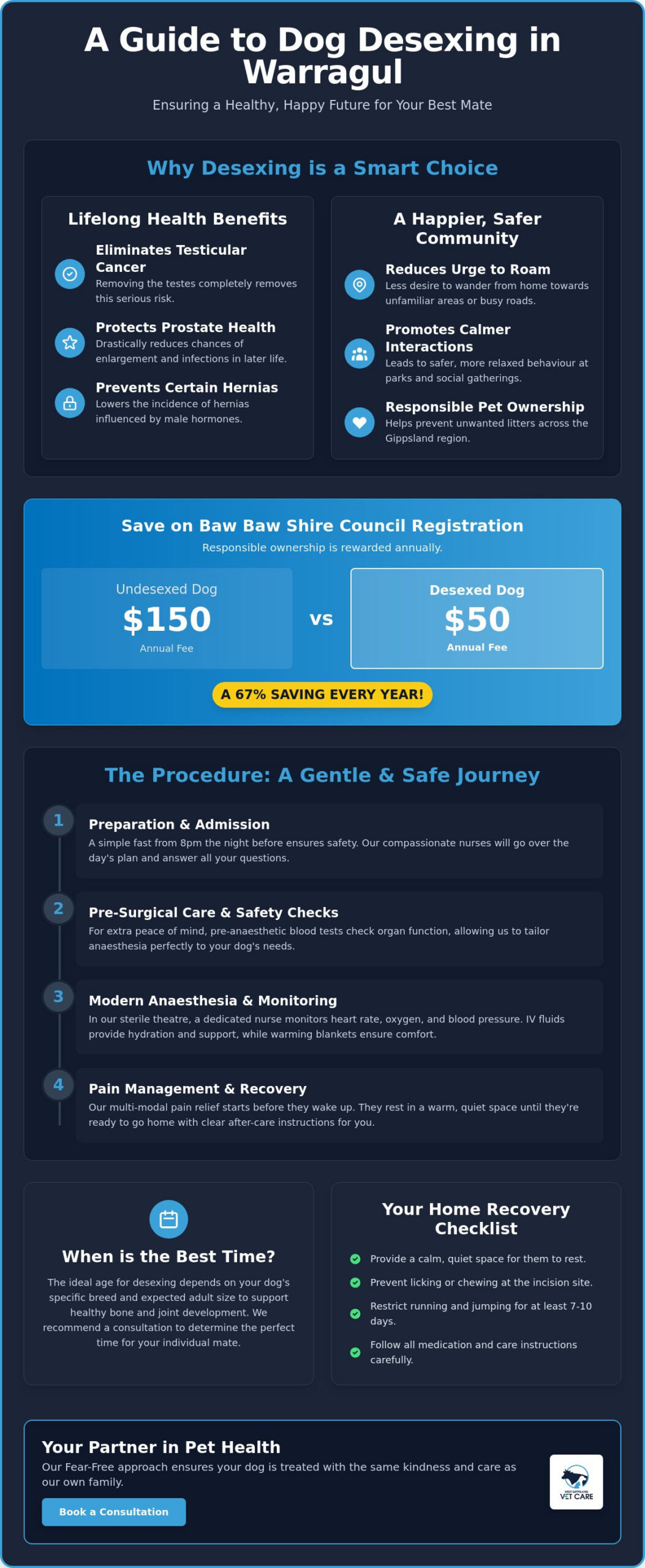
There’s also a practical, financial benefit for local residents that makes a real difference to the household budget. The Baw Baw Shire Council provides a strong incentive for desexing through their annual registration fees. For the 2025-2026 period, registering a desexed dog costs $50.00, whereas the fee for an undesexed dog jumps to $150.00. This three-fold difference reflects the community’s commitment to responsible pet ownership. Booking in for dog castration Warragul is a simple step that rewards you for looking after your dog’s health and the safety of our wider neighbourhood.
The Procedure: What to Expect at Your Local Clinic
Walking into a veterinary clinic on surgery day often feels like a big step for any pet owner. We understand the quiet worry that comes with handing over your best friend for a procedure. Our team prioritises a gentle, supportive environment to ensure that dog castration Warragul is a stress-free experience for everyone involved. We use fear free veterinary care techniques to help your dog feel relaxed from the moment they arrive, focusing on low-stress handling and a calm atmosphere to keep those tails wagging as much as possible.
Preparing for Surgery Day
A successful surgery starts at home the night before. We ask that you fast your dog, usually from 8 pm, to ensure their stomach is empty for the anaesthesia. This simple step is vital for their safety during the procedure. When you arrive for admission, a member of our compassionate nursing team will sit down with you to discuss the day’s plan and answer any last-minute questions. For older dogs or those with known health quirks, we often recommend pre-anaesthetic blood tests. These tests act as a safety net, allowing us to check organ function and tailor the anaesthetic specifically to your dog’s needs.
Inside the Theatre
Once your dog is settled, they are moved to our sterile surgical theatre. This space is equipped with modern technology designed specifically for animal health. Your dog’s safety is our absolute priority, which is why a dedicated nurse monitors their vitals throughout the entire process. We track heart rate, oxygen levels, and blood pressure with the same care you would expect in a human hospital. To keep your mate comfortable, we also focus on:
- Temperature Regulation: Using specialised warming blankets to prevent chills during and after surgery.
- Hydration Support: Providing intravenous fluids to maintain stable blood pressure and support kidney health.
- Sterile Protocols: Maintaining a strictly controlled environment to minimise any risk of infection.
Our approach to pain management is multi-modal, meaning we use a combination of different medications to block pain at various levels. This starts before the surgery even begins and continues well into their recovery at home. By combining local anaesthetics with gentle sedatives and anti-inflammatories, we ensure your dog wakes up feeling comfortable rather than distressed. If you have any concerns about how your dog handles medical visits, feel free to chat with our compassionate team about our personalised care plans.
When is the Best Time to Castrate Your Dog?
Deciding on the right timing for your mate’s procedure is one of the most common conversations we have with local owners. There isn’t a single “perfect” date that applies to every dog in West Gippsland. Instead, the ideal window for dog castration Warragul depends on your dog’s breed, expected adult size, and individual lifestyle. While six months was once the universal standard, modern veterinary research suggests a more tailored approach is better for your dog’s long term physical health.
Small vs. Large Breed Considerations
Smaller breeds, such as Jack Russells or Cavalier King Charles Spaniels, tend to reach their full size quite quickly. For these littler companions, desexing at around six months of age is usually ideal. However, for the larger working dogs often found on Gippsland properties, we frequently recommend waiting a bit longer. Skeletal maturity refers to the stage of development where a dog’s bones have finished growing and the growth plates have safely closed and fused. In larger breeds, this process takes more time, and rushing the procedure can sometimes interfere with their natural structural development.
For giant breeds like Mastiffs or Great Danes, testosterone plays a vital role in signaling those growth plates to close. If a dog is castrated too early, the plates may stay open longer than intended, potentially leading to a dog that is taller and more prone to certain joint issues. We take the time to look at your dog’s specific growth patterns to ensure we pick a date that supports their sturdy frame and future mobility.
Debunking Common Castration Myths
It’s natural to worry that surgery might change the dog you love, but many of the stories you might have heard are simply myths. A frequent concern is that a dog will automatically become “fat and lazy” after the procedure. While a dog’s metabolism can slow down slightly after desexing, their weight is ultimately managed by the quality of their diet and the amount of exercise they get. A castrated dog can be just as fit and active as any other, especially with plenty of walks around the local Warragul trails.
Another common worry is that your mate might lose his protective instinct or “personality.” In reality, a dog’s desire to look after his family is rooted in his bond with you and his natural temperament, not his hormones. Castration won’t take away his playfulness or his loyalty. It simply removes the hormone-driven urges that lead to frustration, roaming, or territorial aggression. Your dog will still be the same affectionate companion you brought home, just without the biological pressure to seek out mates or defend his patch against every other dog in the park. Every dog is an individual, and we invite you to sit down with us to create a personalised timeline that suits your best friend’s specific needs.
Post-Operative Care: Helping Your Mate Heal at Home
Bringing your dog home after their surgery is always a relief, but the next few days are crucial for a smooth recovery. While the procedure for dog castration Warragul is routine, your mate has still undergone a significant event and needs a quiet, comfortable space to rest. Setting up a dedicated “recovery zone” away from the main family hustle helps them stay calm. This area should be warm, draft-free, and close enough for you to keep a watchful eye on them without causing too much excitement.
During the first 24 hours, your dog might still feel a little groggy from the anaesthesia. It’s best to offer a small, light meal in the evening to prevent any post-operative nausea. If they aren’t interested in food right away, don’t worry; their appetite usually returns by the next morning. One of the most important tools for healing is the Elizabethan collar, often called the “cone of shame.” While it might look a bit awkward, it’s essential for preventing your dog from licking or chewing at their stitches. Licking can quickly lead to infection or the wound reopening, which we want to avoid at all costs.
The First 48 Hours
Rest is the absolute priority during the first two days. You’ll need to restrict their exercise strictly, which means no running, jumping on the couch, or climbing stairs. When they need to go outside for a toilet break, always use a lead to ensure they don’t suddenly bolt after a bird or a passing car. Monitoring the incision site is a key part of your role as a nurse at home. A small amount of redness is normal, but if you notice significant swelling, discharge, or if the wound feels hot to the touch, reach out to us immediately. Always stick to the prescribed pain relief schedule we’ve organised for you to keep your pup comfortable as they heal.
Managing Local Factors in West Gippsland
Living in our beautiful region comes with specific challenges for a recovering dog. During our damp Gippsland winters, it’s vital to keep the surgical site clean and dry. If the grass is wet, consider a quick towel-dry after toilet breaks to prevent moisture from sitting on the wound. In the warmer months, keep a close watch for flies or local pests that might be attracted to the incision. Since your mate can’t go for their usual long walks, keep them mentally stimulated with low-energy activities like gentle scent games or a food-stuffed toy. If you have any questions about your dog’s progress or need to book a follow-up check, you can easily contact our clinic to speak with our caring team.
Why West Gippsland Vet Care is the Right Choice
Choosing where to book your mate for dog castration Warragul is a decision that involves both the head and the heart. You want the highest clinical standards, but you also want to know that the people looking after your dog truly care about their emotional well-being. At West Gippsland Vet Care, we’ve built our reputation on this exact balance. As an independent and locally owned practice, we aren’t beholden to corporate quotas. Instead, we’re focused on the families who live right here in our community. Every dog that walks through our doors is treated with the same patience and kindness we’d show our own pets.
Our surgical expertise spans from routine desexing to advanced vet surgery gippsland owners can rely on for more complex needs. This depth of experience means that even a standard procedure like castration is performed with meticulous attention to detail. We also offer a 24-hour emergency service to our existing clients, providing a vital safety net during those first few nights of recovery at home. If you have a concern at 2 am, you won’t be left wondering where to turn; our team is here for you.
A Family-Oriented Approach to Pet Health
We believe that great veterinary care is a partnership between our team and you. This starts with open, honest communication and a gentle authority that helps put both pets and owners at ease. To make the process as smooth as possible, we utilise our in-house vet laboratory. This allows us to run essential pre-operative blood tests on the morning of the surgery, giving us immediate results and ensuring your dog is in peak condition before we begin. Our long history in the West Gippsland region is built on these small, thoughtful steps that prioritise safety above all else.
Taking the Next Step for Your Dog
When you’re ready to move forward, the first step is a simple consultation. This is a great chance for us to meet your dog, check their overall health, and discuss the best timing for their procedure based on their breed and lifestyle. If your dog is a new patient, please bring along any previous vaccination records or medical history. We have clinics in both Warragul and Drouin, making it easy to find a time and location that fits into your busy schedule. We look forward to helping your best mate live a long, happy life.
Contact West Gippsland Vet Care to book your mate’s desexing consultation today.
Supporting Your Mate’s Long-Term Health and Happiness
Taking the next step for your dog’s well-being is a decision rooted in love and a desire for many more happy years together. By choosing dog castration Warragul, you’re not just preventing unwanted litters; you’re actively reducing the risk of serious health conditions like prostate disease and ensuring your mate stays safe and close to home. Whether you have a tiny terrier or a giant Gippsland working dog, getting the timing right with a personalised plan makes all the difference for their healthy physical development.
As a locally owned, independent practice, we take pride in being a dependable part of your support system. Our team is dedicated to fear-free veterinary care principles, ensuring your dog feels safe and nurtured throughout their stay. For your peace of mind, we also provide 24-hour emergency support to all our surgical clients, so you’re never alone during the recovery process. We’re here to guide you through every stage with the kindness and expertise your best friend deserves.
Book Your Dog’s Desexing Consultation at West Gippsland Vet Care today to start this journey together. We look forward to seeing those happy tails in our Warragul or Drouin clinics soon.
Common Questions About Dog Castration
How much does dog castration cost in Warragul?
The cost of dog castration Warragul families can expect varies depending on your dog’s weight, age, and individual health needs. Every dog is different, so we provide a personalised estimate after a physical health check to ensure your mate receives the safest care possible. This tailored approach allows us to account for specific anaesthetic requirements and the most effective pain management for your dog’s size and breed.
Will my dog have to stay overnight after being castrated?
Most dogs don’t need to stay overnight and are ready to head home for a quiet evening the same day as their surgery. We typically admit patients in the morning and monitor them closely as they gently wake up from their procedure. Once our nursing team is happy that your pup is comfortable, alert, and steady on their paws, we’ll give you a call to arrange a pick-up time.
Is castration the same as desexing or neutering?
Yes, these terms are often used interchangeably, although castration refers specifically to the surgical procedure for male dogs. Desexing is a broad term that covers both males and females, while neutering is another common word for the process. Regardless of which term you use, dog castration Warragul is a routine and compassionate choice that helps prevent unplanned litters and supports your dog’s long term health.
What happens if my dog licks his stitches?
Licking stitches can introduce bacteria to the wound, which often leads to irritation, swelling, or a painful infection. In some cases, a determined dog can even pull the stitches out, which might require a return trip to the clinic for repairs. This is why we recommend using an Elizabethan collar or a recovery suit to keep the area safe while the skin heals over those first ten days.
Can my dog still go for walks after surgery?
Your dog will need to stick to very short, slow toilet breaks on a lead for about 10 to 14 days after their procedure. It’s vital to avoid any running, jumping, or rough play, as these activities can cause the wound to open or lead to internal bruising. We’ll check the incision site at a follow-up appointment before giving you the all-clear to return to your normal walking routine.
Does dog castration reduce aggression?
Castration can help reduce hormone-driven behaviours, such as roaming to find a mate or certain types of territorial aggression. While it isn’t a “magic fix” for all behavioural issues, it often makes a dog calmer and more focused on their owner. If your dog has deep-seated habits or anxiety-based aggression, we can discuss how desexing works alongside professional training or a behaviour consultation to get the best result.
At what age should I castrate my Golden Retriever vs. a Terrier?
We often recommend waiting until a Golden Retriever is at least 12 to 18 months old, whereas a smaller Terrier is usually ready around six months of age. Larger breeds take longer to reach skeletal maturity, and keeping their hormones for a bit longer helps their joints and bones develop properly. We’ll help you decide on the perfect timing by looking at your dog’s specific growth and lifestyle during their puppy checks.
What are the risks of general anaesthesia for my dog?
While any medical procedure carries a small amount of risk, modern anaesthesia is very safe for healthy dogs. We use advanced monitoring equipment to track your dog’s heart rate, blood pressure, and oxygen levels throughout the entire surgery. A dedicated nurse stays with your mate from the moment they go to sleep until they are fully awake, ensuring they are safe, warm, and comfortable every step of the way.