Did you know that a Great Dane has a nearly 40% chance of facing a life-threatening “bloat” emergency during their lifetime? For owners of large and deep-chested breeds, the fear of Gastric Dilatation-Volvulus (GDV) is a heavy burden to carry. When researching the cost of preventative gastropexy Gippsland families often find themselves balancing the immediate surgical investment against the terrifying potential of a high-stakes emergency later on. It’s a significant decision, but you aren’t alone in wanting the very best protection for your four-legged family member.
We understand that the thought of surgery can be daunting, especially when you’re trying to decode the differences between traditional methods and modern keyhole options. You want to ensure your dog stays safe and comfortable while managing your household budget wisely. This guide will walk you through the factors that influence the cost of this “insurance policy” surgery, helping you see why a planned procedure is a much gentler experience for both your dog’s body and your peace of mind than a midnight crisis.
You’ll gain a clear picture of how preventative care offers long-term savings and why our teams in Warragul and Drouin advocate for the gold standard of keyhole surgery. We’ll explore the benefits of faster healing times and the security that comes from knowing your local vet is right here to support you and your companion through every stage of their life.
Key Takeaways
- Learn why preventative gastropexy is considered an essential “insurance policy” for large-breed dogs, providing protection against life-threatening GDV emergencies.
- Understand the distinct benefits of the “keyhole” (laparoscopic) approach compared to traditional surgery, specifically regarding smaller incisions and faster recovery times.
- Discover the various factors, such as your dog’s weight and the chosen surgical method, that influence the total cost of preventative gastropexy Gippsland clinics provide.
- Explore the peace of mind that comes with choosing local expertise in Warragul or Drouin, avoiding the stress of long-distance travel to Melbourne.
- Gain practical insights into preparing your pet for their procedure and how a “fear-free” veterinary approach ensures a calmer hospitalisation experience.
Understanding Bloat and the Role of Preventative Gastropexy
Gastric Dilatation-Volvulus, or GDV, is a phrase that strikes fear into the heart of any large-breed dog owner. It often begins with “bloat,” where the stomach fills with gas, but quickly turns into a “torsion” or twist. This twist is a critical emergency because it traps gas and cuts off blood flow to vital organs. For those living in our beautiful West Gippsland region, time is the biggest enemy. If a twist occurs late at night, the travel time from Drouin or Warragul to a distant emergency centre can be the difference between life and death. This is why many families find that the cost of preventative gastropexy Gippsland wide is a small price to pay for the security of their pet.
A Canine gastropexy is a surgical procedure where the stomach is physically “tacked” or stitched to the abdominal wall. This simple but effective measure doesn’t stop a dog from bloating with gas, but it does prevent the stomach from performing that deadly twist. It’s about buying you time and keeping your dog safe. When calculating the cost of preventative gastropexy Gippsland families should think of it as a long-term investment in their dog’s health and their own peace of mind.
Which Breeds Need This “Insurance Policy” Most?
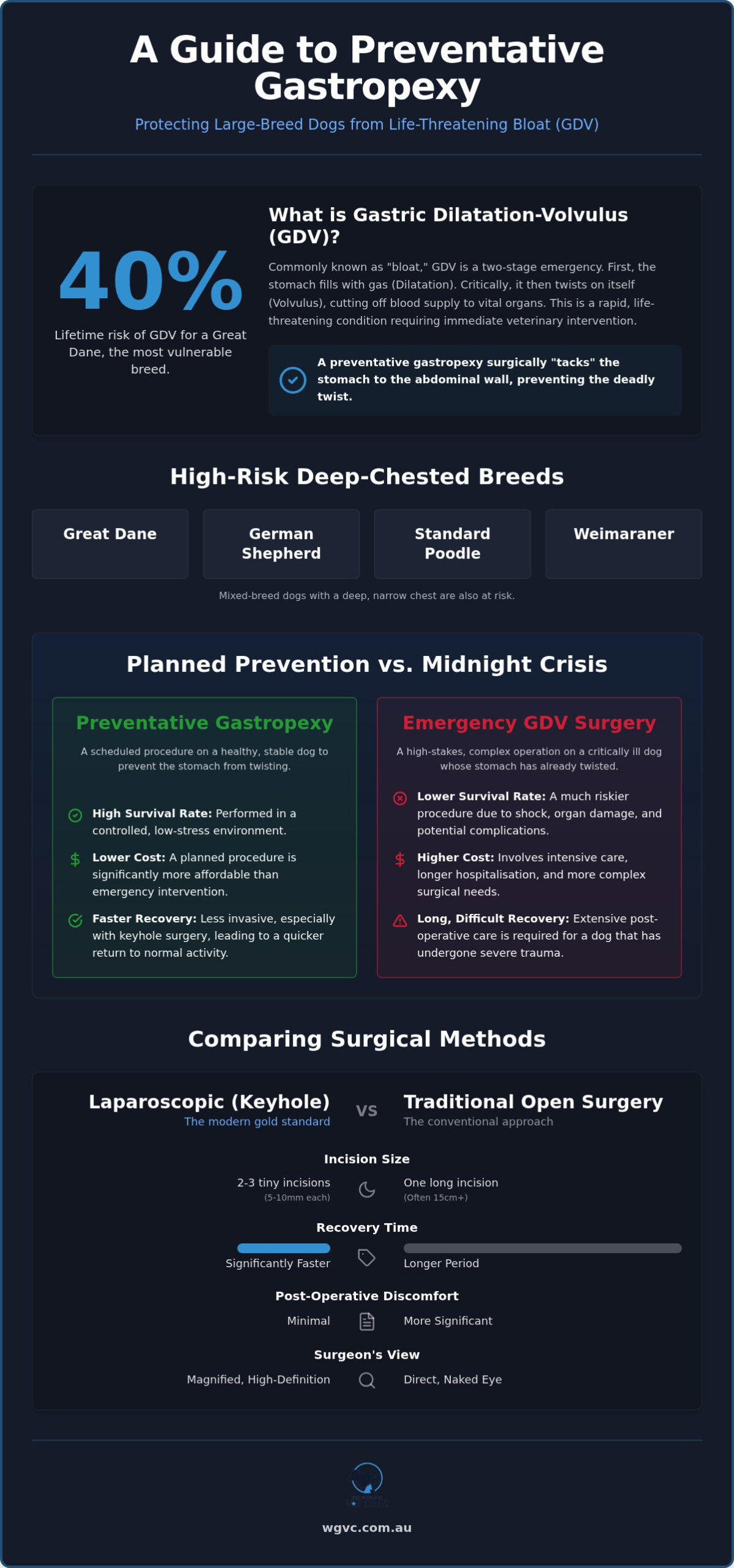
While any dog can technically experience GDV, deep-chested breeds are at a significantly higher risk. Great Danes are the most vulnerable, with research showing a lifetime risk as high as 40%. Other breeds we often see in our clinics, like German Shepherds, Standard Poodles, and Weimaraners, also face these odds. Even mixed breeds with a deep, narrow chest profile should be considered for this procedure. In rural areas where dogs are often active and deep-chested working breeds are common, the risk is a daily reality that owners must manage carefully.
Preventative vs. Emergency Surgery: A Comparison
Choosing to act early is always easier on your dog’s body and your own stress levels. Emergency surgery for a twisted stomach is a complex, high-pressure intervention that often requires intensive care and a much longer hospital stay. The survival rate for emergency cases is sadly much lower than for those who have the procedure done while they are healthy. Preventative gastropexy is a planned, elective procedure to secure the stomach wall. By choosing a scheduled surgery, you’re opting for a controlled environment, a shorter recovery, and a significantly lower financial burden compared to the high stakes of a midnight emergency intervention.
Laparoscopic vs. Open Gastropexy: Comparing Surgical Methods
When you decide to protect your dog with a preventative gastropexy, you’ll likely encounter two main surgical paths. The traditional “open” method has been the standard for decades. It involves a larger incision to allow the surgeon to see and access the stomach directly. While this method is highly effective at preventing a twist, it does mean a longer recovery period and more post-operative discomfort for your pet. It’s a reliable procedure, but modern advancements have given us a gentler way to achieve the same life-saving results.
The laparoscopic or “keyhole” approach represents a modern revolution in veterinary medicine. Instead of one large opening, we use two or three tiny incisions, usually between 5 and 10 millimetres. A high-definition camera is inserted, giving our surgeons a magnified and incredibly clear view of the internal organs. This level of precision is often superior to what the naked eye can see during open surgery. Because the cost of preventative gastropexy Gippsland owners consider often includes the value of a smoother recovery, many families now view keyhole surgery as the gold standard for their companions.
At West Gippsland Vet Care, we prioritise keyhole technology because we’ve seen first-hand how much easier it is on our patients. Our team is dedicated to providing advanced care that minimises stress and maximises comfort. According to the American College of Veterinary Surgeons on GDV, the primary goal is always a strong, permanent bond between the stomach and the abdominal wall. Keyhole surgery achieves this goal with significantly less trauma to the surrounding tissues, making it a compassionate choice for your dog’s long-term health.
The Benefits of Keyhole Surgery for Your Dog
The most immediate benefit for your dog is the significant reduction in post-operative pain. Smaller incisions mean less tissue damage and a much lower risk of site infections or complications. Most dogs are back on their feet and feeling like themselves much faster than they would be after traditional surgery. This quick return to normal activity is a huge relief for owners of active Gippsland breeds who find it difficult to keep their pets quiet during a long recovery period. The high-definition camera views also allow us to inspect other abdominal organs with incredible detail during the procedure.
Is Keyhole Surgery Always an Option?
While we love the benefits of keyhole surgery, it isn’t always the right fit for every individual case. Factors like a dog’s specific anatomy, previous abdominal surgeries, or certain health conditions might lead our team to recommend the traditional open approach. It’s a decision we make together after a thorough consultation. Providing this level of specialised care requires advanced equipment and significant surgical expertise, similar to the precision needed for complex bone repairs. If you’re interested in learning more about our surgical capabilities, you can read about our work as an Orthopaedic Vet Gippsland provider. If you have questions about your dog’s suitability, you can chat with our friendly team to explore the best options for your mate.
Factors Influencing the Cost of Preventative Gastropexy
Every dog we see is an individual, and their specific needs will naturally shape the overall investment in their health. When calculating the cost of preventative gastropexy Gippsland families should first consider the size and weight of their companion. Larger dogs require higher dosages of anaesthesia and post-operative medications, which can influence the final fee. We also place a high priority on safety, which is why we recommend pre-anaesthetic blood testing. This allows us to check your dog’s organ function before they go under, ensuring we can tailor the procedure to their unique internal health profile.
The surgical technique you choose also plays a significant role. While traditional open surgery is a reliable method, the advanced laparoscopic approach involves specialised equipment and high-definition imaging. Beyond the surgery itself, your investment covers comprehensive post-operative care. This includes tailored pain relief to keep your mate comfortable at home and follow-up checks to ensure the tiny incisions are healing perfectly. By focusing on these details, we ensure the experience is as stress-free as possible for both you and your pet.
The “Combo” Discount: Bundling with Desexing
For many of our clients in the Warragul and Drouin areas, the most cost-effective path is to “bundle” the gastropexy with a spay or neuter procedure. Performing both surgeries at once means your dog only needs a single session of anaesthesia and one stay in our hospital. This significantly reduces theatre fees and professional costs compared to doing the procedures months apart. For large-breed puppies, we often discuss this option during their early health checks, as it’s a proactive way to secure their future health while being mindful of your household budget.
Technology and Expertise as Cost Drivers
Advanced veterinary care requires a commitment to both technology and ongoing education. Our clinics invest in high-end laparoscopic towers and precision instruments to offer the “keyhole” standard of care. This technology, combined with the advanced surgical training our vets undergo, ensures a high level of safety and precision. As Cornell University’s guide to bloat points out, understanding these risk factors is the first step in prevention. While the initial fee for a planned procedure is a consideration, it’s helpful to weigh it against the “cost of waiting.” An emergency GDV intervention is an intensive, high-stakes surgery that can easily range from $5,000 to over $10,000. Choosing prevention isn’t just about safety; it’s a strategic choice for your pet’s long-term wellbeing.
Preparing Your Pet for Surgery in West Gippsland
The journey toward protecting your dog begins with a thorough pre-surgical consultation at either our Warragul or Drouin clinics. This initial meeting is a vital step where we get to know your pet’s health history and discuss the cost of preventative gastropexy Gippsland families can expect based on their dog’s specific size and breed. We’ll perform a physical exam and chat about the procedure in detail, ensuring you feel completely comfortable with the plan. This is also the perfect time to ask any questions about the day itself, as we believe open communication is the foundation of great care.
On the morning of the surgery, we’ll ask you to follow specific fasting protocols, which usually involves no food after 8:00 pm the night before. Water is typically fine until you leave home. When you arrive for admission, our nursing team will guide you through the process, making sure your dog feels safe and settled from the moment they walk through our doors. Having these services available locally in West Gippsland means you don’t have to worry about long, stressful drives to Melbourne on the day of a major procedure.
Local follow-up care is just as important as the surgery itself. Being close to home allows for easy stitch checks and ensures that any concerns can be addressed quickly by the team who performed the operation. If you’re ready to take the next step for your dog’s health, you can book a consultation with our compassionate team today.
Post-Operative Care and Recovery
Recovery is a time for rest and gentle healing. For many of our active Gippsland dogs, especially those living on farms or larger blocks, managing exercise restriction is the biggest challenge. Your dog will need to avoid running, jumping, or rough play for about two weeks to allow the internal and external sites to bond securely. You’ll also need to monitor the tiny keyhole incisions daily for any unusual redness or swelling. We’ll provide a specific dietary plan for the first few days, usually involving small, frequent meals of soft food to keep the stomach settled while it heals.
When to Call the Vet Post-Surgery
While most pets recover beautifully, it’s important to know the signs of normal healing versus potential complications. Slight bruising is common, but persistent lethargy, a refusal to eat, or discharge from the incision site should be reported. Our Drouin and Warragul teams are always a phone call away for peace of mind. We provide a 24-hour emergency service to our existing clients, so you’re never alone if you have a concern in the middle of the night. Knowing that your surgical team is right here in the community provides a level of security that long-distance clinics simply can’t match.
Why Choose West Gippsland Vet Care for Gastropexy?
Choosing where to trust your dog’s life is a deeply personal decision. At West Gippsland Vet Care, we don’t just see a patient; we see a family member. Our commitment to advanced, minimally invasive keyhole surgery isn’t just about the technology; it’s about our dedication to making recovery as gentle as possible. We’ve embraced a “fear-free” approach to hospitalisation because we know that a calm, happy dog heals faster. From the moment you walk into our clinics, our team works to create a space of safety and mutual respect.
Our roots in the West Gippsland community run deep. Since our founding, we’ve focused on being a reliable fixture for local families. This local presence means our services are seamlessly integrated. Whether your dog needs senior health checks, puppy preschool, or preventative dental care, we manage their records and history under one roof. When discussing the cost of preventative gastropexy Gippsland owners can feel confident that they are investing in a team that knows their pet’s entire health journey and truly cares about their future.
Expert Surgical Teams in Warragul and Drouin
Our veterinarians in Warragul and Drouin specialise in soft tissue and keyhole procedures, bringing a wealth of experience to every operation. To support this expertise, our clinics are equipped with state-of-the-art diagnostic imaging and in-house laboratory facilities. This means we get results quickly, allowing us to make the best decisions for your mate in real-time. For professional breeders who are already working with us, this procedure is a natural addition to a comprehensive health plan. You can learn more about our specialised breeding support in our guide to being a Canine Reproduction Vet Victoria.
Start the Conversation Today
Taking the first step toward peace of mind is simple. You can book a surgical assessment at either our Warragul or Drouin clinics to discuss your dog’s specific needs. During this visit, we’ll provide a transparent, itemised quote so you understand exactly what the cost of preventative gastropexy Gippsland involves for your pet. We don’t believe in hidden fees or high-pressure tactics; we’re here to provide the information you need to make an informed choice. Ultimately, we treat every dog that comes through our doors like our own family. We’re here to listen, to care, and to ensure your best mate has the very best protection for the years of adventure ahead.
Secure Your Best Mate’s Future Today
Protecting your dog from the sudden danger of GDV is one of the kindest decisions you can make as a pet owner. By choosing to act before an emergency strikes, you aren’t just managing the cost of preventative gastropexy Gippsland families plan for; you’re ensuring your companion avoids a traumatic and life-threatening crisis. We’ve explored how modern keyhole technology makes this procedure gentler than ever, allowing your dog to return to their favourite Gippsland adventures with minimal discomfort and a much faster recovery time.
Our team is here to walk beside you, offering the expertise of a specialist surgical centre with the heart of a locally owned clinic. As a proudly independent practice, we prioritise the deep bond you share with your animals. Whether you’re in Warragul or Drouin, you have access to specialists in advanced keyhole surgery and the security of 24-hour emergency support for our existing clients.
Book a surgical consultation with our West Gippsland team today to discuss a tailored plan for your pet’s specific needs. We look forward to helping you gain the true peace of mind that comes from knowing your mate is safe, secure, and well-protected for the years ahead.
Frequently Asked Questions
Is preventative gastropexy 100% effective at preventing bloat?
Preventative gastropexy is not 100% effective at preventing gas-filled bloat, but it is incredibly successful at preventing the life-threatening twist known as torsion. While your dog’s stomach can still fill with air, the surgery ensures it stays anchored in place. This prevents the stomach from rotating and cutting off blood flow, which is the most dangerous part of a GDV emergency. It essentially turns a fatal crisis into a manageable medical issue.
Can my dog still get bloat after a gastropexy surgery?
Yes, your dog can still experience gastric dilatation, where the stomach distends with gas or food. However, because the stomach wall is securely tacked to the abdominal side, it cannot twist into a volvulus. If you notice your dog’s abdomen looks swollen or they are unsuccessfully retching, you should still contact our Warragul or Drouin clinics immediately. Early intervention for gas bloat is much simpler when the risk of a deadly twist has been removed.
What is the best age to have a preventative gastropexy performed?
Most veterinarians recommend performing this procedure when your dog is being desexed, typically between six and twelve months of age. For large and giant breeds in the Gippsland area, this timing is ideal as it allows us to use a single session of anaesthesia for both surgeries. The procedure can also be performed at any age once the dog has reached physical maturity. We’ll discuss the best window for your specific breed during a consultation.
Does pet insurance in Australia typically cover preventative gastropexy?
Standard pet insurance policies in Australia generally don’t cover elective or preventative procedures like gastropexy. Most insurers view it as a proactive wellness choice rather than a treatment for an active illness. Some premium policies or specific wellness add-ons might offer a small contribution toward the cost of preventative gastropexy Gippsland owners pay. It’s a good idea to check your specific Product Disclosure Statement or speak directly with your provider before booking the surgery.
How long is the recovery period for a keyhole gastropexy?
The recovery for a keyhole procedure is significantly shorter than traditional open surgery. Most dogs are back to their usual selves within two to three days, but we require exercise restriction for about ten to fourteen days. This ensures the internal tack has enough time to form a strong, permanent bond with the abdominal wall. During this time, we suggest lead-only walks and avoiding any rough play or jumping around your home or farm.
Is the cost of gastropexy higher for Great Danes compared to smaller breeds?
The cost of preventative gastropexy Gippsland clinics charge often varies based on a dog’s weight. Great Danes and other giant breeds require higher doses of anaesthetic agents, sedatives, and post-operative pain relief compared to smaller deep-chested breeds. They also require more nursing support during recovery and larger surgical sets. We provide transparent, itemised quotes during our assessments so you can see how your dog’s specific size influences the various components of the surgical fee.
Can a gastropexy be done at the same time as a laparoscopic spay?
Yes, combining a gastropexy with a laparoscopic spay is considered the gold standard for large-breed female dogs. This combination approach is highly efficient because our surgeons use the same keyhole entry points and camera equipment for both procedures. It’s a compassionate choice that minimises the total time your pet spends under anaesthesia and simplifies their recovery into one single healing period. This makes the post-operative process much easier for both you and your dog.
What are the risks associated with preventative gastropexy surgery?
As with any surgical procedure, there are minor risks including reactions to anaesthesia, post-operative infection, or the formation of a fluid pocket called a seroma near the incision. Because a preventative gastropexy is a planned procedure on a healthy dog, these risks are statistically very low. Our team uses advanced monitoring and a fear-free approach to ensure the highest level of safety. We’ll discuss your dog’s specific health profile in detail before we proceed.