
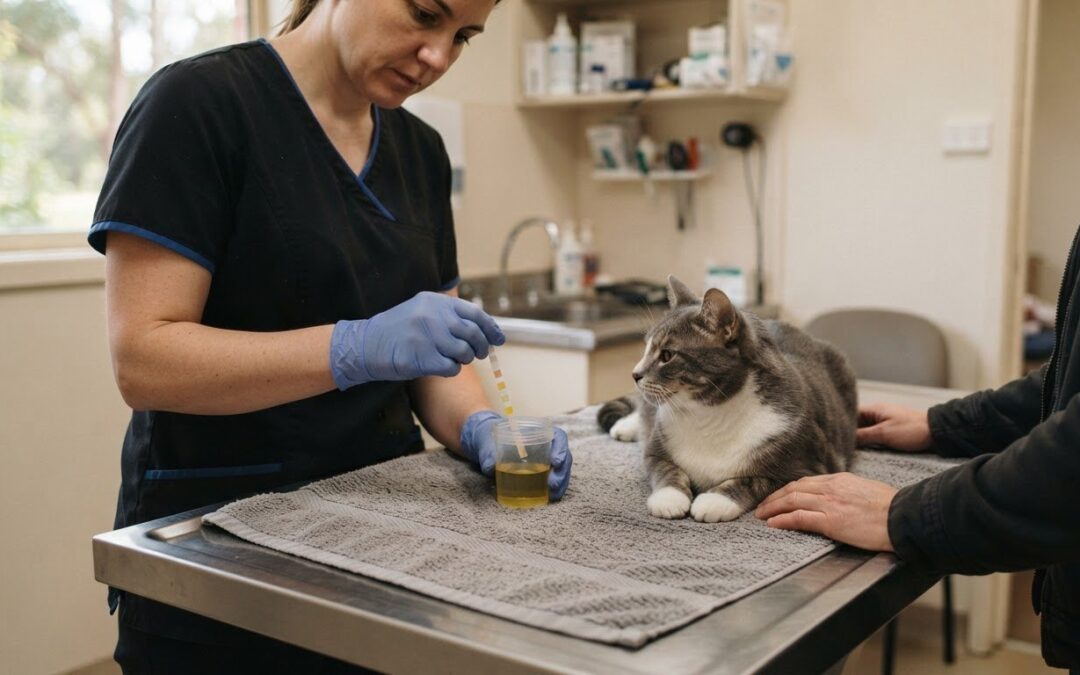
A sudden change in toileting can signal a medical problem, not misbehaviour. Medical causes of a cat urinating outside the litter box include urinary tract inflammation, pain and urgency; a vet can use urine and blood tests to investigate what’s behind the change.
It’s understandable to feel worried or frustrated when your cat starts urinating around the house, especially if they otherwise seem well. Cats with urinary problems may not look sick, so a change in where or how they urinate deserves attention.
This article explains how urinary conditions, kidney disease, thyroid disease and diabetes can affect toileting, and what urine test results may help reveal. You’ll also learn how to distinguish spraying from a toileting accident by looking at the amount of urine, the surface and your cat’s posture. Straining, crying while trying to urinate, blood in the urine or being unable to pass urine requires urgent veterinary attention.
Key Takeaways
- A vet’s assessment can help distinguish a medical problem from a change in toileting habits, with urine testing helping guide the investigation.
- The amount of urine, the surface and your cat’s posture can offer clues about whether they’re spraying or having a toileting accident.
- Changes in thirst, appetite, weight or vocalisation can help identify health issues that may affect urination.
- Notice straining, distress or difficulty passing urine? Seek prompt veterinary care, as a urinary blockage can become life-threatening.
Veterinary assessment and urine analysis
A sudden change in toileting warrants a veterinary assessment, even if your cat seems well. Urine and blood tests can help investigate medical causes of a cat urinating outside the litter box before assuming it is a litter tray preference.
Ruling out medical causes
Investigating medical causes means assessing whether illness or pain is contributing to accidents around the home. A cat with urinary disease may avoid the tray, and this change can be mistaken for spraying or marking furniture.
Your vet will consider what has changed, including where the urine appears and whether your cat strains or passes small amounts. Details such as accidents in several places, a covered tray, or a change from normal toileting can help frame the assessment, but they don’t identify the cause alone. These observations help explore possible medical causes when a cat urinates outside the litter box.
Veterinary examinations and tests
A veterinary examination combines your cat’s history and physical assessment with tests selected to investigate possible causes. Urine analysis can assess changes in the urine, while blood tests may help investigate conditions that affect drinking and urination.
Tell the vet when the accidents began, how often they happen, and whether you’ve noticed blood, increased thirst or appetite changes. For example, a cat repeatedly squatting with little urine needs more urgent attention than one leaving a small spray on a vertical surface. Test findings help guide appropriate care.
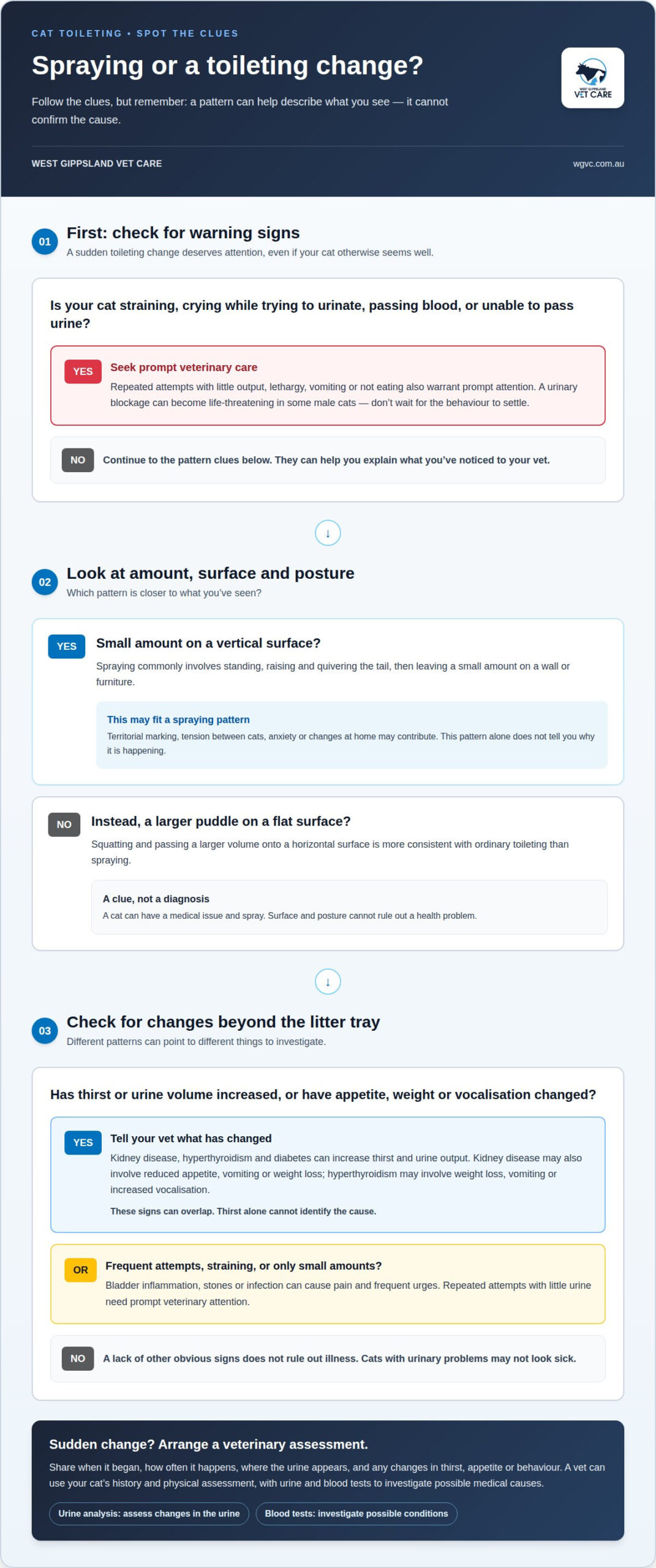
Seek prompt veterinary care if your cat strains, cries while trying to urinate, has visible blood in the urine or cannot pass urine. Repeated attempts with little output, lethargy, vomiting or not eating also warrant prompt attention. A urinary blockage can become life-threatening in some male cats, so don’t wait for the behaviour to settle. Cats with medical conditions may not look sick.
In Australia, the cost of urinary tests and treatment depends on the examination, tests and care required; the cost is given after a quote request. Relevant factors include whether urine or blood tests, further investigation or treatment are needed.
Distinguishing urine spraying from other house soiling
Spraying usually leaves small amounts on vertical surfaces, while ordinary toileting leaves larger puddles on flat surfaces. These patterns offer clues, but they don’t confirm the cause.
Spraying versus normal toileting
A cat spraying typically stands, raises and quivers its tail, then leaves a small amount of urine on a wall or furniture. Normal toileting usually involves squatting and passing a larger volume onto a flat surface. This difference can help you describe what you’ve seen, including the places affected, but posture or location alone doesn’t explain why it’s happening.
Spraying can be territorial marking, particularly when there are changes at home or tension between cats. Anxiety may also affect toileting behaviour. A cat’s dislike of a covered tray or a change in litter preference may contribute to accidents, so note recent changes and share them with your vet.
Medical signs versus urine marking
Urine marking is usually a small spray on vertical surfaces; urinary tract disease can cause frequent attempts, straining, vocalising or blood. These signs can suggest a bladder problem, but behaviour alone can’t confirm or rule out a medical condition.
If your cat repeatedly squats with little output or cries while trying to urinate, seek veterinary attention. Spraying on several vertical surfaces may suggest marking, while larger puddles on horizontal surfaces are more consistent with ordinary toileting. A cat can have a medical issue and spray, so don’t assume the pattern tells the whole story.
Desexing may reduce inappropriate toileting when reproductive or territorial reasons drive spraying. It won’t address every cause, such as anxiety or a urinary problem. For cats whose marking may relate to household stress, behaviour consultations can help explore the behaviour and its context with care.
Kidney disease, thyroid disease, and diabetes
Kidney disease, hyperthyroidism and diabetes can increase thirst and urine output, leading to accidents. These conditions can develop without obvious signs that your cat feels unwell.
Kidney disease and hyperthyroidism
Kidney disease and hyperthyroidism can both change how much a cat drinks and urinates. Kidney disease may also cause reduced appetite, vomiting or weight loss, particularly in senior cats. Hyperthyroidism can cause weight loss, vomiting and increased vocalisation, especially in older cats. Because these signs overlap, thirst alone can’t identify the cause.
Notice patterns such as a water bowl emptying faster alongside more frequent tray visits. Share changes in appetite, weight and vocalising with your vet. Blood tests can help investigate possible medical causes and guide the next steps. A cat may still seem bright at home, so don’t wait for several signs to appear before arranging an assessment.
Diabetes and urinary disease
Diabetes mellitus can increase thirst and urination, as can kidney and thyroid disease. Lower urinary tract disease works differently: bladder inflammation, stones or infection can cause pain and frequent urges. The distinction matters because increased urine volume differs from repeated attempts to pass small amounts.
Urinary crystals can irritate the bladder and increase the risk of infection or stones. Stress can also affect a cat’s urinary function and behaviour. Environmental changes may contribute to stress-related bladder problems, but a preference for unscented litter or a change at home doesn’t rule out disease. A vet can assess whether testing is needed.
Other causes include age-related joint disease or cognitive decline, which can make reaching the tray difficult. Digestive problems may cause painful, urgent or frequent defecation, sometimes mistaken for urinary accidents. Keep track of whether your cat urinates, passes stool or does both outside the tray. This detail helps explain what’s happening if you’re concerned about your cat urinating outside.
Straining, crying while trying to urinate, blood in the urine or being unable to pass urine requires urgent veterinary attention. A urinary blockage can become life-threatening in some male cats. Seek prompt care, even if stress or a recent change at home seems like a possible explanation.
Urinary tract inflammation, pain, and urgency
Inflammation, stones and infection can make urination painful or difficult. A cat may then associate the litter tray with discomfort and toilet elsewhere.
Urinary tract inflammation
Urinary tract inflammation irritates the bladder, making urination more frequent and sometimes urgent. Feline idiopathic cystitis can cause accidents outside the tray and blood in the urine; stress may contribute to the condition. Bladder stones can also irritate the bladder and, in severe cases, obstruct urine flow. These problems can look like inappropriate toileting but need veterinary assessment.
Urinary crystals may irritate the bladder and increase the risk of infection or stones. Because the signs can overlap, the pattern alone can’t identify the cause. A veterinarian can use an examination and urine analysis to investigate what is happening and guide appropriate care.
Pain during urination
Painful urination can make a cat squat repeatedly, strain or vocalise while trying to pass urine. A urinary tract infection may cause frequent attempts, small amounts and blood. If the tray has become associated with pain, your cat may choose another place, such as a soft rug or bathroom floor.
Notice how your cat behaves, not just where the urine appears. Straining, crying or visible blood requires prompt veterinary attention. Don’t punish a cat for accidents; this can increase anxiety without addressing discomfort or disease.
Urinary urgency
Urinary urgency is a sudden or frequent need to urinate, sometimes leaving little time to reach the tray. Bladder inflammation can cause this pattern, while a blockage may prevent urine from passing. Repeated squatting with little or no urine is an emergency, particularly for some male cats.
Keep the litter tray accessible and comfortable while arranging care, but don’t let routine cleaning or environmental adjustments delay urgent assessment. A blocked urinary tract can become life-threatening without prompt treatment. If your cat is straining or unable to urinate, seek urgent veterinary care.
West Gippsland Vet Care: Advanced Diagnostics & Medical Care
West Gippsland Vet Care provides advanced diagnostics and medical care to investigate changes in your cat’s urination. If your cat is avoiding the litter tray, straining or passing small amounts, a veterinary assessment can help determine whether a health problem is involved. The findings guide appropriate care for your cat, rather than treating the behaviour alone.
Difficulty passing urine or repeated attempts with little output need urgent attention. West Gippsland Vet Care provides 24-hour emergency and trauma care for existing clients. If you’re concerned about your cat’s toileting or signs of discomfort, contact West Gippsland Vet Care to discuss the next step.
Take the next step for your cat
Understanding possible medical causes of a cat urinating outside the litter box can help you respond without treating the behaviour as deliberate mischief. Your observations can make the veterinary conversation more useful: note when the change began, where it happens, and what you’ve noticed about your cat’s routine, appetite or thirst. These details help build a clearer picture of the change and its impact at home.
You don’t need to work out the cause on your own. If your cat’s toileting has changed, speak with a veterinarian about an assessment and suitable next steps. If your cat is straining or unable to pass urine, seek urgent veterinary care rather than waiting to see whether the behaviour settles.
Contact West Gippsland Vet Care to discuss your cat’s change in toileting. A thoughtful next step can help you support your cat with care and confidence.
Frequently Asked Questions
Why Is My Cat Peeing Outside the Litter Box?
Your cat may avoid the tray because of illness, stress or an unsuitable toileting setup. A new tray location, unfamiliar litter texture or conflict with another cat can affect where they go. Note what has changed at home and whether the accidents happen in one spot or several. This context can help a vet distinguish possible health issues from environmental triggers.
How Can You Treat the Problem?
Treatment depends on the cause, so start with a veterinary assessment rather than assuming your cat is misbehaving. A medical condition needs care directed at that problem; stress or tray aversion may call for environmental changes. For example, if one cat blocks access to a shared tray, separating toileting areas may help. Follow your vet’s advice about treatment and note whether the pattern changes.
What Other Methods Should I Consider to Stop Litter Box Problems and Spraying?
Make trays easy to reach, keep them clean and avoid ammonia-based cleaners, which can attract cats back to soiled places. Scoop waste at least once daily. The RSPCA recommends two trays for one cat, plus one additional tray for each extra cat. In a multi-cat home, placing trays in separate locations can reduce competition and make access easier.
When Should You See a Vet?
Arrange veterinary care for a sudden toileting change, especially if your cat strains, cries, passes blood or repeatedly produces little urine. Being unable to pass urine requires urgent attention. Cat owners in Warragul, Drouin, Bunyip, Yarragon, Trafalgar, Willow Grove, Hill End and Neerim South should take these signs seriously rather than waiting to see if they resolve on their own.
What Medical Conditions Cause Cats to Urinate Outside the Litter Box?
Possible causes include bladder inflammation, urinary crystals, stones or infection, as well as kidney disease, hyperthyroidism and diabetes. Arthritis or age-related changes in thinking can make a tray harder to reach or use. Digestive problems may also cause toileting accidents, particularly involving faeces. Because these issues need different responses, a vet’s assessment can help identify which explanation best fits your cat.
What Are the Signs of Feline Lower Urinary Tract Disease, Cystitis and Urinary Stones?
Watch for frequent tray visits, straining, small amounts of urine, vocalising, blood or accidents around the house. Cystitis and stones can irritate the bladder and make urination uncomfortable. A cat that repeatedly tries but cannot pass urine needs urgent veterinary attention, as a blockage can become life-threatening. Keep track of toileting changes so you can describe the pattern clearly during an assessment.