
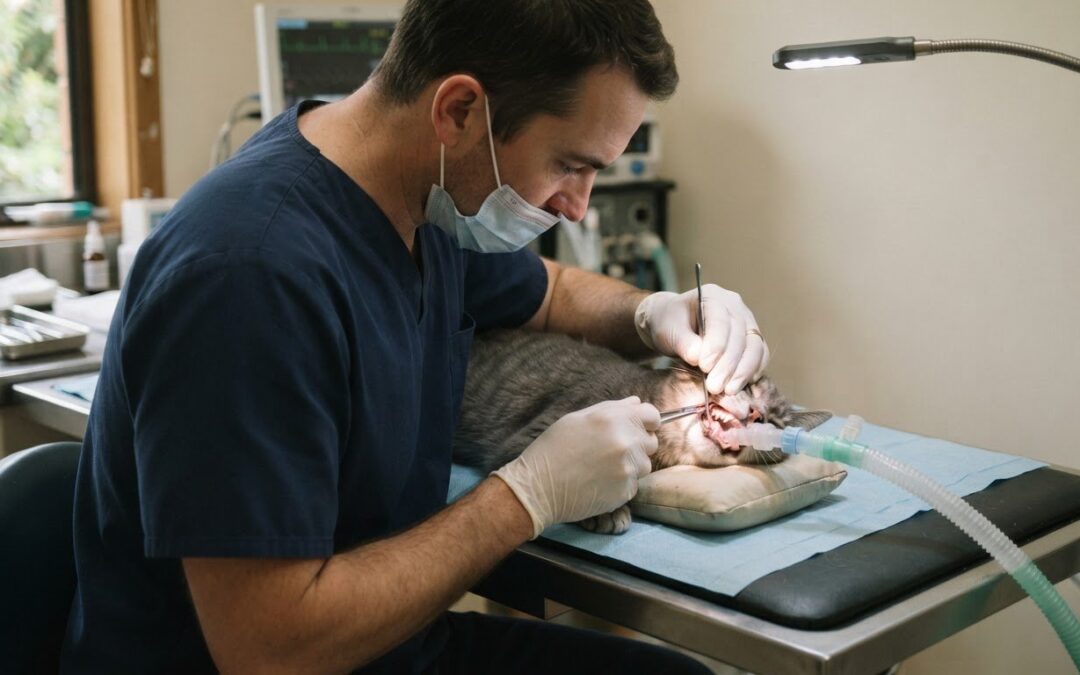
A cat’s tooth extraction estimate can vary because the cost of cat tooth extraction in Bunyip depends on the care your cat needs, not just the tooth being removed. Pre-anaesthetic checks, bloodwork and the procedure itself all help shape the estimate.
It’s understandable to want a clearer idea of the likely costs before making a decision for your cat. The price depends on your cat’s individual case and is provided after a quote request, with factors such as pre-anaesthetic checks, bloodwork and procedure complexity taken into account.
This guide explains why a straightforward extraction may differ from more involved dental surgery, what factors affect an estimate and what to discuss with your veterinarian. That context can help you understand how the proposed care relates to your cat’s needs.
Key Takeaways
- Separate the extraction itself from pre-anaesthetic checks, bloodwork and other services to see what contributes to an estimate.
- The number of teeth and the complexity of removing them can affect the procedure, so estimates may differ from one cat to another.
- Dental X-rays can help identify problems below the gumline and guide decisions about which teeth need treatment.
- Changes in eating or other signs of mouth discomfort can be easy to miss; learn what to watch for and when to seek veterinary advice.
How much do cat oral surgery and tooth extractions cost?
There is no standard estimate for cat dental surgery: the procedure and associated care determine the total. For cats in Bunyip, look at the extraction alongside any checks, anaesthetic, imaging and medication included in the estimate.
Extraction and Other Service Costs
An extraction estimate covers removing the affected tooth, while related services may be itemised separately. These can include an examination, pre-anaesthetic bloodwork, dental X-rays, cleaning and take-home medication. Ask for an itemised estimate to see which steps are included and which may be additional.
An estimate from another state is only a guide, not a quote for Bunyip. The total depends on your cat’s needs and the services included; a quote for your case will reflect the proposed care.
Anaesthetic, Vet Time and Medication
General anaesthetic allows the veterinarian to perform dental extractions while your cat is unconscious. The estimate may include anaesthetic, monitoring, veterinary time, fluids and recovery care, as well as the extraction. The procedure’s length and complexity affect the care involved.
Medication may include pain relief for your cat to take at home. Check whether it is listed separately, along with any antibiotics or other prescribed treatment.
Factors Affecting Extraction Costs
The number of teeth and the difficulty of removing them both affect the procedure. A small tooth may be simpler to remove than a large tooth that requires surgical extraction and sutures. Dental X-rays can reveal damage below the gumline and change which teeth need treatment.
Pre-anaesthetic bloodwork helps assess your cat before the procedure, and the cost depends on which tests are included. Bad breath can signal dental trouble, but it does not show the full extent of disease. An examination and imaging help guide the treatment plan.
After an extraction, follow the veterinary team’s instructions for food, medication and mouth care. Uncomplicated extraction sites generally heal within one to two weeks, and dissolving stitches typically take a similar length of time. Contact the clinic if you are concerned about your cat’s recovery.
Cat and dog tooth extractions
Tooth extraction may be considered when disease has damaged a tooth or surrounding tissue, or when a tooth causes ongoing pain. Cats can develop tooth resorption, where damage below the gumline may be difficult to see during an examination of an awake cat. Dental X-rays help reveal affected roots and guide the treatment plan.
Dogs can also need extractions for damaged, infected or severely diseased teeth. The decision depends on the tooth’s condition and position, and whether it can be treated while preserving its function. An examination helps determine whether removal or another approach is appropriate. General anaesthetic allows the veterinarian to assess and treat the mouth thoroughly.
The number of teeth alone does not show how involved surgery will be. One tooth with complex roots may need a different approach from several simpler extractions. The veterinarian considers X-ray findings, the tooth’s structure and the surrounding tissues. Stitches may be needed to close the site, depending on the procedure. Complications are uncommon, whether one tooth or several are removed.
Dental disease is common in older pets. The Australian Veterinary Association reports that four out of five dogs and cats over the age of three show some grade of dental disease. This does not mean every affected pet needs an extraction: examination and X-rays help identify appropriate treatment. Removing a painful, infected tooth can address a source of discomfort, while a broader dental assessment may identify other areas needing attention.
If your cat’s mouth needs closer assessment, veterinary dental X-rays can help show what’s happening beneath the gumline and inform treatment decisions.
Cat tooth extraction cost estimates
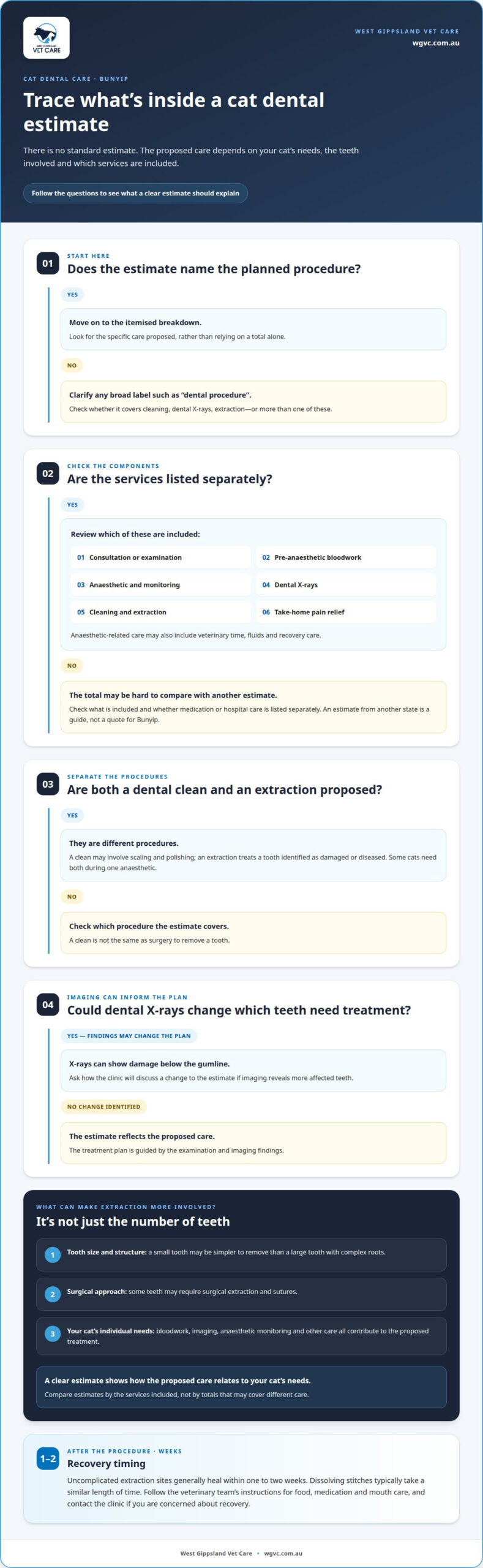
A useful estimate breaks the dental procedure into its parts rather than showing only a total. For example, a clinic may list the consultation, pre-anaesthetic bloodwork, anaesthetic, dental X-rays, cleaning, extraction and take-home pain relief separately. This makes it easier to understand what the proposed treatment includes.
A dental clean and an extraction are different procedures. A clean may involve scaling and polishing, while an extraction treats a tooth the veterinarian identifies as damaged or diseased. Some cats need both during one anaesthetic. Ask how the estimate separates these procedures and whether medication or hospital care is listed separately.
The number of teeth is only one part of an estimate. One tooth with complex roots may need a different surgical approach from several easier extractions. Dental X-rays can reveal disease beneath the gumline, so the treatment plan may change after imaging. Bloodwork and anaesthetic monitoring also contribute to the care provided.
Check that the estimate names the planned procedure and any additional care. If it uses a broad line such as “dental procedure”, ask whether that includes cleaning, X-rays or extraction. Confirm whether take-home pain relief is included and how the clinic will discuss a change if imaging reveals more affected teeth. These details clarify the difference between a basic clean and surgery for dental disease.
The estimate depends on your cat’s condition, the teeth involved, procedure complexity, bloodwork, imaging and other care included. A quote for your case will reflect the proposed treatment. A clear estimate helps you understand the plan before your cat’s appointment, rather than comparing totals that may cover different services.
What symptoms mean a cat may need a tooth extraction, and how urgent is treatment?
Dental disease can cause pain below the gumline, even when a cat’s mouth looks normal. Tooth resorption and severe gingivitis are common feline dental problems, and affected teeth can be painful. Bad breath, changes in eating or chewing, and signs of mouth discomfort are reasons to arrange a veterinary assessment. These signs alone cannot show which tooth is affected or whether extraction is needed.
Notice changes in your cat’s behaviour, such as eating less comfortably or avoiding familiar food. A veterinarian examines the mouth and uses dental X-rays to assess the roots and disease hidden beneath the gumline. The findings help identify affected teeth and guide treatment. Extraction is considered when a tooth is painful or diseased, not on the basis of bad breath alone.
Arrange an appointment if mouth discomfort or changes in eating persist, rather than waiting for the problem to worsen. An assessment can help identify the cause and appropriate treatment. Sudden trauma or severe distress requires urgent veterinary attention. Dental disease can be difficult to spot at home, so a normal-looking mouth does not rule it out. Cats may eat more comfortably after painful teeth are removed, but an examination comes first.
For existing clients, West Gippsland Vet Care provides a 24-hour emergency service for urgent situations. If your cat has sudden trauma or severe distress, seek urgent veterinary care. For less urgent signs, arrange an assessment so the mouth can be examined and dental X-rays considered. The findings help distinguish a tooth needing extraction from other causes of discomfort, and clarify the next step for your cat.
West Gippsland Vet Care
West Gippsland Vet Care can assess your cat’s dental health and explain the factors that shape a treatment estimate. If your cat has bad breath, changes in eating or signs of mouth discomfort, the team can discuss your concerns and assess appropriate care. An examination and any recommended tests help clarify the treatment plan and explain the steps included in the estimate.
Clear communication can help you understand the proposed care and raise questions about your cat’s needs. Contact West Gippsland Vet Care to discuss your cat’s dental concerns.
Take the next step with confidence
Once you have an estimate, the next step is to understand how the proposed care fits your cat’s needs. Discuss what the treatment plan covers, how examination and test findings guide decisions, and what to expect as you plan for care. A clear conversation can help you feel prepared to make decisions at your own pace.
If you’re weighing the cost of cat tooth extraction in Bunyip, focus on understanding the care proposed for your cat rather than comparing totals without their inclusions. Each cat’s dental needs differ, and knowing why a particular plan is recommended can make the decisions ahead feel more manageable.
West Gippsland Vet Care is here to talk through your cat’s dental concerns and help you consider the next step. Contact West Gippsland Vet Care to start a conversation about your cat’s care. With a clearer plan, you can move forward feeling more informed and supported.
Frequently Asked Questions
Is anaesthesia needed for my cat’s dental procedure?
Yes, dental procedures for cats, including professional cleaning and extractions, require general anaesthesia. This allows the veterinarian to examine and treat the mouth while your cat is unconscious. Before treatment, the veterinary team assesses your cat’s health and plans appropriate monitoring. Tell them about any medicines your cat takes or health changes you have noticed, as this information helps inform the pre-procedure assessment.
Why is cat dental work so expensive?
Cat dental treatment involves more than removing a tooth. The care plan may include an examination, blood tests, anaesthesia, monitoring, dental imaging, veterinary time and recovery medication. A difficult extraction or several affected teeth can require more surgical work. For example, dental X-rays may reveal disease beneath the gumline and change the treatment needed during the procedure.
Do I need to pay for extractions upfront?
Payment timing depends on the clinic’s billing arrangements; an estimate alone does not set a payment due date. Review the written payment terms before agreeing to treatment, including when payment is due and which services are included. If the treatment plan changes after examination or imaging, make sure you understand how the revised estimate affects the amount payable.
How can I offset the cost of my cat’s surgical procedure?
Pet insurance may contribute if your policy covers the dental condition and treatment. Dental cover varies, and a policy generally needs to be active before treatment is needed, so check the policy wording and exclusions. Setting aside money for veterinary care may also help with unexpected procedures. Do not assume a dental condition is covered simply because your cat is insured.
What factors affect the cost of cat dental extraction in Australia?
The estimate depends on your cat’s diagnosis, the teeth involved and how complex they are to remove. It may also include pre-anaesthetic assessment, bloodwork, dental imaging, anaesthesia, monitoring and take-home medication. For the cost of cat tooth extraction in Bunyip, compare what each estimate includes, not just the total. An extraction-only quote may differ from one covering broader dental care.
Do Bunyip-area vets provide itemised quotes for cat tooth extraction?
Quote formats can differ, so do not assume every estimate lists the same details. An itemised quote can show the extraction, anaesthesia, imaging, bloodwork and medication separately. Before agreeing to the procedure, read the inclusions and check whether the estimate explains how additional treatment will be discussed if examination or X-rays reveal further dental problems.