
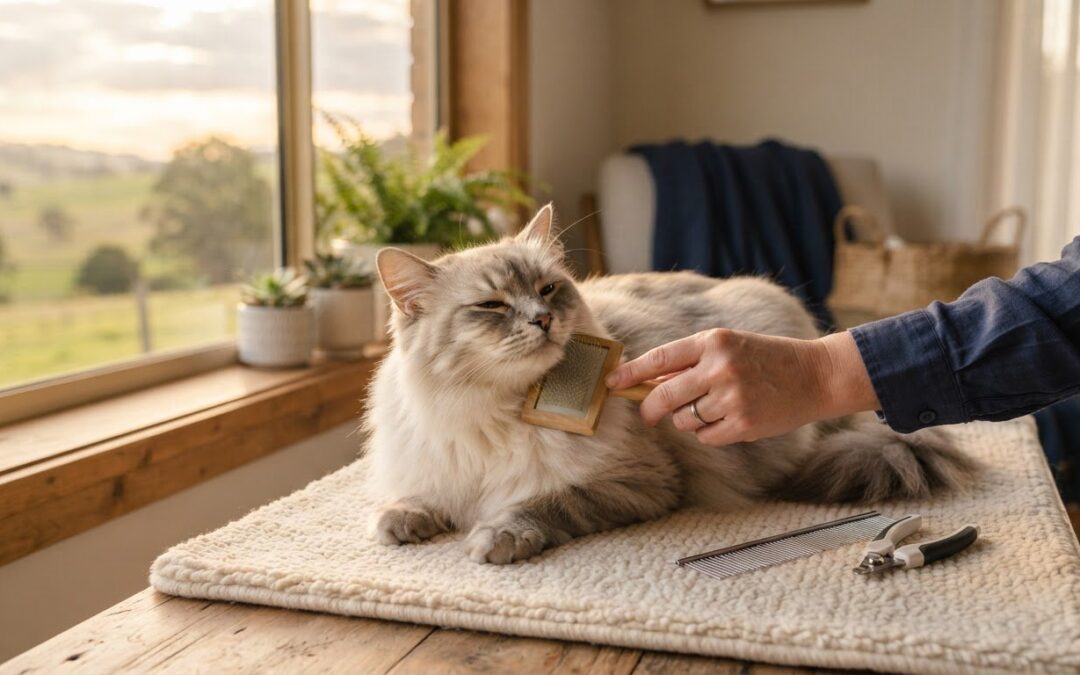
A long-haired cat needs more than the occasional brush. Daily brushing helps remove dirt, tangles and loose hair, while nail trimming is recommended every two weeks or as needed. For cat grooming for long-haired cats in Yarragon, a steady routine and suitable tools can help keep a coat in good condition and make knots easier to spot early.
Grooming can feel daunting when your cat wriggles, dislikes water or has a stubborn tangle. You’re not alone in wanting to keep them comfortable while caring for their coat. This guide covers regular brushing, bathing, nail care and useful tools, plus what to do when a mat won’t loosen gently and when professional grooming may be the kinder option.
Key Takeaways
- Brush long-haired cats daily, and match coat trims to the type of coat: silky coats need attention every 6-8 weeks, while extremely hairy coats may need it every 4-6 weeks.
- Bathing can help remove dirt and loose hair, but keep it gentle: use lukewarm water, avoid the face and dry your cat on a low heat setting if using a blow dryer.
- Choose grooming tools that let you work gently through the coat, and stop if your cat shows discomfort rather than pulling at a knot.
- Large or severe mats need professional attention. The article also explores grooming options in nearby towns, so you can consider what may suit you and your cat.
Why should you regularly groom your long haired cat?
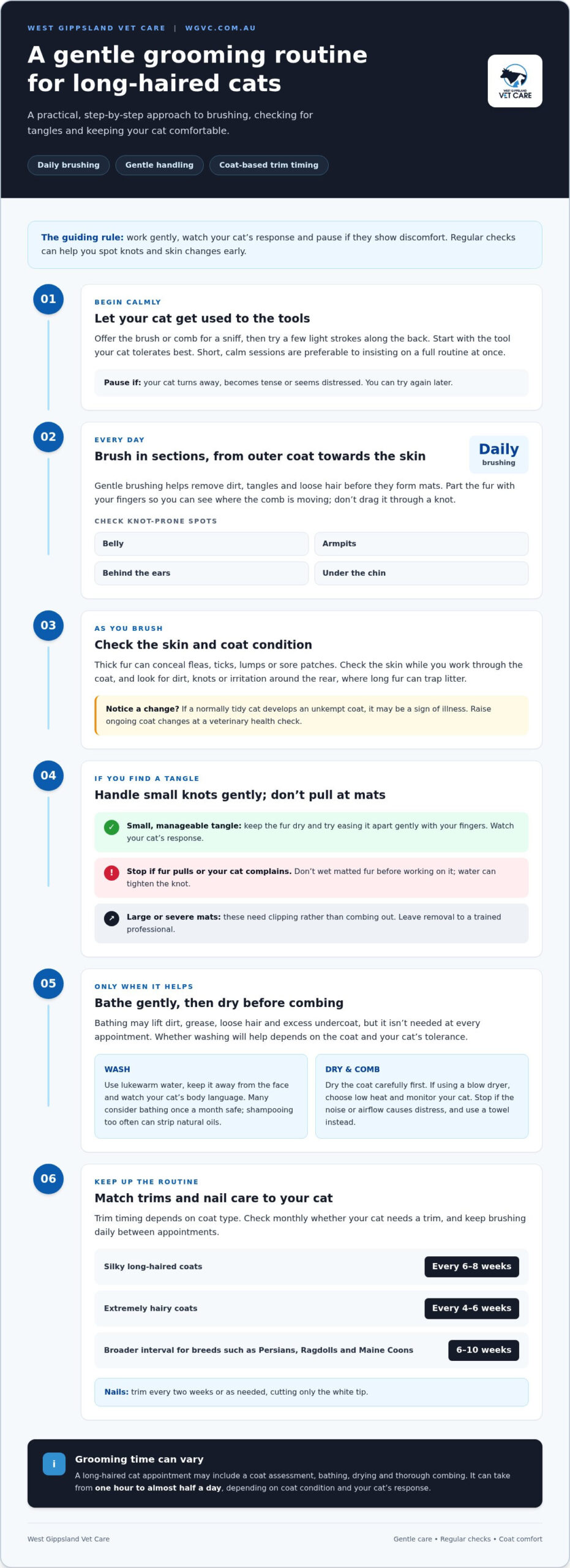
Daily brushing helps remove dirt, tangles and dead hair before they form mats. Work gently from the outer coat towards the skin, checking the belly, armpits, behind the ears and under the chin. These areas knot easily, especially on cats with thick or flowing coats. Regular, gentle handling also helps your cat get used to the brush. For cat grooming for long-haired cats in Yarragon, a calm home routine is a useful starting point.
Mats are more than uncomfortable. Severe tangles can irritate or injure the skin and restrict movement, while thick fur can conceal fleas, ticks, lumps or sore patches. Check the skin as you brush, and don’t tug at a resistant knot. Large or severe mats need clipping rather than combing out, so leave removal to a trained professional. If a normally tidy cat develops an unkempt coat, it may be a sign of illness.
Trim timing depends on coat type. Silky long-haired breeds may need grooming every 6-8 weeks, while extremely hairy coats may need attention every 4-6 weeks to help prevent matting. A broader maintenance interval for long-haired breeds such as Persians, Ragdolls and Maine Coons is 6 to 10 weeks. Check monthly whether your cat needs a trim, and brush daily between appointments. A cat grooming routine for long-haired cats in Yarragon can follow these coat-based intervals, adjusted to your cat’s condition.
Trim nails every two weeks or as needed, cutting only the white tip. Long fur around the rear can trap litter, so check for dirt, knots and irritation. If your cat resists, start with a gentle brush over the topcoat and pause if they become distressed.
Nutrition also supports coat health. Feed a balanced diet suited to your cat’s life stage, and note any coat changes alongside changes in appetite or behaviour. If their fur becomes unkempt despite regular care, raise it at a veterinary health check.
Before booking a groomer around Yarragon, ask what the appointment includes and whether they need vaccination records or a health check. Requirements vary between services, so clarify them when arranging the visit.
But cats hate water, right?
A long-haired cat appointment may include a coat assessment, bathing, drying and thorough combing. Grooming can take from one hour to almost half a day, depending on coat condition and your cat’s response.
Bathing and showering
Bathing can lift dirt, grease, loose hair and excess undercoat from a long coat. Use lukewarm water, keep it away from your cat’s face, and watch their body language throughout. A calm, steady approach helps you notice when your feline companion needs a pause. Many consider bathing once a month safe, while shampooing too often can strip natural oils.
Drying and combing
After bathing, dry the coat carefully before combing. A blow dryer can speed up drying, but use low heat and monitor your cat’s reaction. If the noise or airflow causes distress, stop and use a towel instead. Once the coat is dry, comb gently to remove loose hair and check for tangles.
Don’t wet matted fur before working on it, as water can tighten the knot. For a small, manageable tangle, try easing it apart gently with your fingers and watch your cat’s response. Stop if they complain or the fur pulls. Large or severe mats need clipping, not combing, and should be handled by a trained professional.
Bathing isn’t necessary at every appointment. Whether washing will help depends on dirt, grease and undercoat, as well as your cat’s tolerance. A thorough dry and comb can remove loose hair without shampoo. During cat grooming, your cat’s comfort matters as much as the finished coat.
If washing and combing at home are difficult, explore cat and dog grooming as a practical next step.
Tools for grooming long-haired cats
The right tools help you work through the coat gently instead of pulling at knots. Equipping yourself with quality pet grooming essentials from providers such as Oscar & Zo can make home sessions much smoother. A wide-toothed metal comb can separate longer strands, while a soft slicker brush lifts loose hair and debris. Start with whichever tool your cat tolerates best, then use the comb to check for tangles in the undercoat.
- Wide-toothed comb: Use it to tease apart loose tangles, especially around the chest, tail and behind the ears.
- Soft slicker brush: Brush in short, light strokes to collect loose hair without pressing hard against the skin.
- Fine-toothed comb: Try it on smaller areas, such as the face or paws, only if your cat stays relaxed.
- Cat nail clippers: Keep them nearby for routine nail care, trimming only the white tip of each nail.
Let your cat inspect each tool before grooming. Place the brush on the floor for a sniff, then try a few strokes along the back. If your cat turns away or becomes tense, pause and try again later. Short, calm sessions can make grooming more familiar than insisting on a full routine at once.
Work in sections, parting the fur with your fingers so you can see where the comb is moving. Start with the outer coat, then gently check deeper layers for tangles. Don’t drag a comb through a knot. If the fur pulls or your cat complains, stop. Large or severe mats need a trained professional, not home combing.
Clean tools between sessions by removing trapped hair and debris. Store the comb and brush together to make regular coat checks easier. A suitable tool moves through loose fur without tugging, while your cat stays comfortable. For stubborn mats, put the tools aside rather than risk a sore patch. If you are looking for further pet care advice and breed guides, online resources such as Paw Chirp can provide useful tips for cat owners.
Which nearby towns offer long-haired cat grooming near Yarragon?
Start your search in Yarragon, then include nearby towns such as Trafalgar, Warragul and Drouin. These locations can help define a practical search area, but a town name alone doesn’t tell you whether a business grooms cats. Look specifically for feline grooming rather than assuming a dog-grooming service also handles cats.
In Trafalgar or Warragul, look for a service that caters for long coats and can assess, brush, bathe and dry them. A Persian with dense fur may need a different approach from a silky-coated cat. When booking, describe your cat’s coat, temperament and any problem areas so the appointment can be planned around their needs.
Drouin, Bunyip, Willow Grove, Hill End and Neerim South are also useful places to include when searching around Yarragon. Before travelling, compare the grooming tasks offered and the service’s approach to handling cats. A cat with knots or sore patches may need a different plan from one attending for routine coat care.
Use a simple comparison for each town:
- Feline experience: Look for cat-specific grooming experience, since cats need different handling from dogs.
- Coat care: Check whether the service can address long fur, undercoat and tangles safely.
- Appointment setting: Consider whether the environment and routine will suit your cat.
- Travel: Factor in your cat’s comfort on the journey from Yarragon and back.
Regular visits can help cats get used to grooming, while home care supports their coat between appointments. For long-haired cat grooming near Yarragon, compare options in Yarragon, Trafalgar, Warragul, Drouin, Bunyip, Willow Grove, Hill End and Neerim South based on your cat’s coat and comfort. A calm, feline-focused approach matters more than the town name alone.
West Gippsland Vet Care: Pet Vaccinations
West Gippsland Vet Care offers pet vaccinations as part of your cat’s wider healthcare. Grooming focuses on coat and nail care, while vaccinations are a separate preventative measure. If you notice a change in your cat’s coat, skin or comfort while brushing, note what you’ve seen and discuss it during a veterinary visit.
Routine care extends beyond grooming. West Gippsland Vet Care also provides desexing and microchipping for pet owners who need these services. Each supports a different aspect of your cat’s care, so choose what suits your needs.
For information about pet vaccinations, visit wgvc.com.au or contact West Gippsland Vet Care.
Make your cat’s care routine work for them
A grooming routine can help you notice how your cat’s needs change over time. Keep a simple note of what they tolerate, which areas are difficult to manage and any changes to their skin or coat. Sharing these observations at a veterinary visit can help you discuss your cat’s overall wellbeing, not just their appearance.
For cat grooming for long-haired cats in Yarragon, choose a routine that suits your cat’s coat and comfort, then adjust it as needed. Grooming is one part of responsible care. West Gippsland Vet Care also offers pet vaccinations, desexing and microchipping to support other aspects of your cat’s health.
If you’d like to discuss your cat’s care, contact West Gippsland Vet Care. A thoughtful next step can help you feel more confident supporting your companion at home.
Frequently Asked Questions
Should I have my long-haired cat shaved down in the summer?
A full summer shave usually isn’t the first choice for a long-haired cat. The coat helps protect the skin, and removing too much fur can increase the risk of sunburn. A feline groomer can assess the coat and decide how much length to retain. If your cat has heavy tangles, poor coat condition or difficulty grooming, discuss suitable clipping with a professional rather than shaving at home.
When should I give my long-haired cat a trim?
Check your cat’s coat monthly and arrange a trim when its length or condition makes care difficult. Silky coats may need grooming every 6-8 weeks, while extremely hairy coats may need attention every 4-6 weeks. Persians, Ragdolls and Maine Coons are among the breeds with a broader 6 to 10 week maintenance interval. Coat density, knotting and your cat’s comfort all affect timing.
What long-haired cat grooming services are available, such as brushing, de-matting, bathing and clipping?
West Gippsland Vet Care provides dog and cat grooming. For a long-haired cat, grooming may include brushing, combing, bathing, drying and clipping, depending on the coat and the cat’s tolerance. Large or severe mats need professional removal, not pulling out with a comb. A sanitary trim is another option: hair around the private parts is clipped short to help keep the area clean and dry.
How much does long-haired cat grooming cost near Yarragon?
The price depends on the coat’s condition, the grooming required and the services requested. A cat with compacted tangles may need a different approach from one having routine maintenance on an easily combed coat. Bathing, drying and clipping also affect the work involved. Describe your cat’s coat and the care you want when requesting a quote.
How often should long-haired cats be professionally groomed?
Professional grooming intervals depend on coat type and how easily the fur tangles. Silky coats are commonly groomed every 6-8 weeks, while extremely hairy breeds may need sessions every 4-6 weeks. For breeds such as Persians, Ragdolls and Maine Coons, a 6 to 10 week maintenance schedule is another guide. Cats with difficult coats or reduced self-grooming need closer coat monitoring between visits.
How can I compare local cat groomers by experience, reviews and services?
Across Warragul, Drouin, Bunyip, Yarragon, Trafalgar, Willow Grove, Hill End and Neerim South, compare cat-specific experience and the grooming tasks offered. Look for review details about feline handling, coat care and communication, rather than relying on star ratings alone. Check that the service understands long coats and severe mats. West Gippsland Vet Care provides dog and cat grooming for local pet owners.