Did you know that over 53% of Australian agility dogs have sustained an injury at some point in their careers? Whether it’s a dedicated working kelpie mustering on a West Gippsland farm or a Border Collie flying through an obstacle course in Warragul, our active companions push their bodies to the limit every single day. It’s heartbreaking to see your best mate suddenly limping or lose that spark of energy that makes them who they are. You want to keep them moving, but the worry of a serious ligament tear or the potential need for orthopaedic surgery can feel overwhelming when you aren’t sure what’s wrong.
We understand that your dog is more than just an athlete; they’re a vital part of your family and your daily life. This guide will help you identify the common signs of canine sports injuries so you can act quickly and keep your companion in peak condition for years to come. We’ll cover how to distinguish between minor strains and serious injuries, when you should seek professional care at our clinics in Warragul or Drouin, and the best ways to keep your dog active safely. By being proactive today, you can ensure your dog stays on the field and out of pain for longer.
Key Takeaways
- Recognise that every active dog in Gippsland is an athlete, meaning even your bushwalking companion or working kelpie is susceptible to musculoskeletal strain.
- Learn to identify common canine sports injuries, such as hindlimb ligament tears, to ensure your mate receives the right care before a simple limp becomes a serious issue.
- Discover why “weekend warriors” are at higher risk of injury and how to manage the transition from weekday rest to weekend adventures safely.
- Implement a simple warm-up and cool-down routine to protect your dog’s joints and significantly reduce the likelihood of paddock or field accidents.
- Understand the specialised diagnostic and orthopaedic surgery options available locally to support your dog’s long-term mobility and comfort.
What Constitutes a Canine Sports Injury in West Gippsland?
When we talk about canine sports injuries, it’s easy to envisage a professional racing dog or a high-stakes agility competitor. However, in our corner of West Gippsland, an “athlete” looks quite different. For us, an athlete is the working kelpie navigating a steep paddock, the Border Collie weaving through poles at a local club, or even the energetic Labrador who joins you for a Saturday morning hike through the bush. These injuries involve any damage to a dog’s musculoskeletal system, including muscles, tendons, ligaments, and bones, that occurs during periods of high-intensity activity.
The varied terrain of Gippsland adds its own set of challenges. Our dogs aren’t just running on flat, manicured grass. They’re dealing with hidden wombat holes, slippery mud after a winter downpour, and the uneven ground of a working farm. These environmental factors mean that even a simple game of fetch can quickly turn into a significant physical event. While we see these moments as “play,” your dog’s body treats them as an athletic endeavour that requires immense strength, balance, and quick reflexes.
The Working Dog vs. The Hobby Athlete
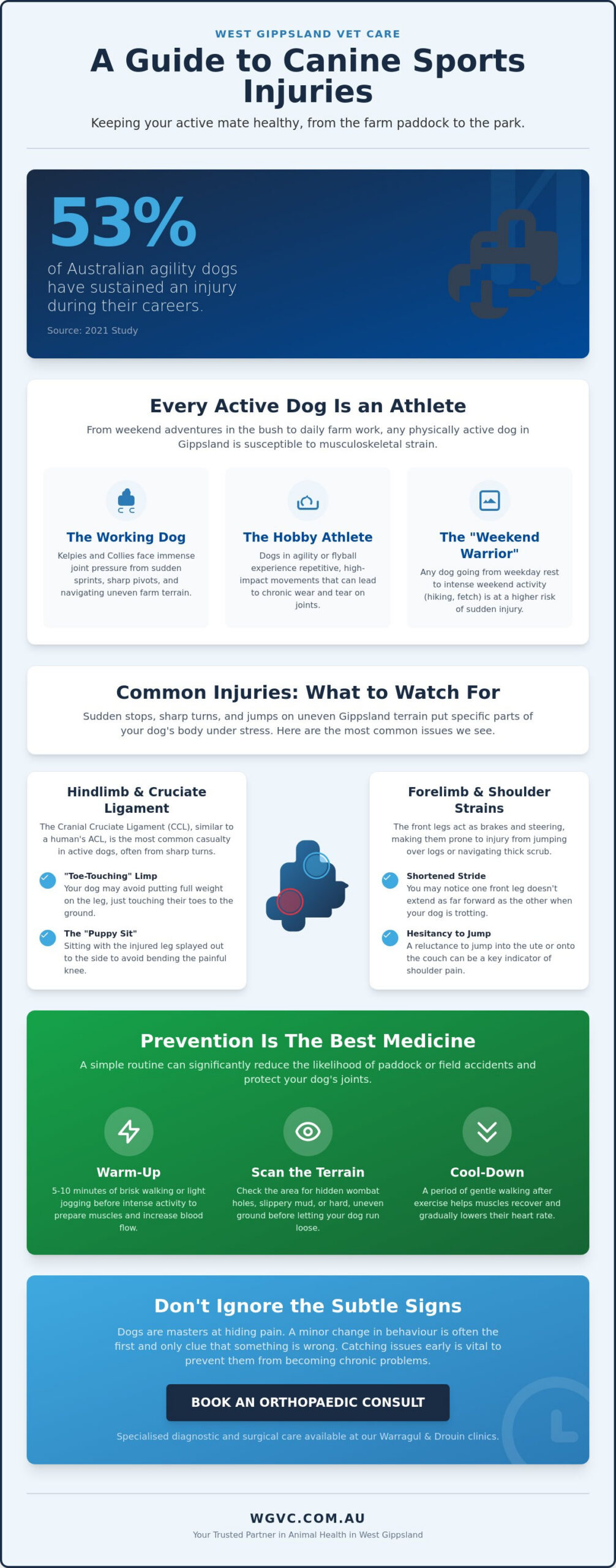
Our local working dogs are the backbone of many Gippsland farms, but their job is physically demanding. Herding livestock involves sudden bursts of speed, sharp pivots, and jumping over obstacles, which puts immense pressure on their joints. On the other hand, hobby athletes participating in agility or flyball face different stresses. These dogs often perform repetitive, high-impact movements that can lead to chronic wear and tear. Even in the backyard, a dog that repeatedly jumps vertically to catch a ball is mimicking the same stresses seen in competitive sports. A 2021 study found that the percentage of agility dogs sustaining an injury was highest in Australia at 53.4%, highlighting just how common these issues are in our local community.
Why Early Recognition is Vital
Dogs are incredibly stoic creatures. This is a natural instinct; showing pain in the wild would make them vulnerable. Unfortunately, this means they often hide their discomfort until an injury has become quite severe. You might notice subtle signs like a slight change in their gait, a reluctance to jump into the car, or a tendency to sit “off” to one side. Catching these minor strains early is essential to prevent them from developing into chronic orthopaedic issues. Many owners find that incorporating canine physical therapy into a recovery plan helps restore mobility and prevents future tears. If a minor limp is ignored, it can lead to a complete ligament rupture, often requiring more intensive surgical intervention to get your mate back on their feet.
Common Injuries: From Paddock Sprints to Agility Courses
West Gippsland’s rolling hills and rugged tracks are a paradise for active dogs, but the terrain demands a lot from their bodies. Whether it’s the greasy mud of a July winter or the sun-baked, concrete-hard soil of mid-summer, the ground conditions significantly influence the risk of canine sports injuries. Sudden stop-start movements, especially when chasing stock or navigating a lure course, place immense strain on a dog’s joints and soft tissues. Unlike humans, who might warm up before a workout, our dogs often go from zero to one hundred the moment they see a ball or a sheep, which can lead to sudden, painful setbacks.
Hindlimb and Cruciate Ligament Issues
The Cranial Cruciate Ligament (CCL) is the most common casualty in active dogs. It functions much like the ACL in humans, stabilising the knee joint during movement. When a dog makes a sharp, high-speed turn on uneven ground, the ligament can stretch or snap. You might notice your mate “toe-touching” or holding their leg up entirely. A classic sign is the “puppy sit,” where they sit with one leg splayed out to the side to avoid bending the painful knee. For many of our active patients, TPLO surgery is the gold-standard treatment to restore stability and get them back to their energetic selves.
Forelimb Strains and Shoulder Instability
While the back legs provide the power, the front legs act as the brakes and steering. This makes forelimb injuries quite common, particularly in dogs navigating thick Gippsland scrub or jumping over logs. Conditions like biceps tenosynovitis or shoulder instability often manifest as a shortened stride. If your dog seems hesitant to jump into the ute or onto the couch, it could be a sign of shoulder pain. For a detailed breakdown of sporting dog injuries affecting the forelimbs, it is helpful to look at how different breeds handle impact. If you notice these subtle changes, reaching out for trauma and injury care early can prevent a minor sprain from becoming a permanent limp.
Back and Spinal Stress
A dog’s back is the bridge between their power and their steering. High-impact activities, like leaping off a high ute tray or clearing farm fences, can lead to significant spinal stress over time. You might notice “roaching,” which is an abnormal arching of the back, or a dog that is suddenly reluctant to shake their coat. Maintaining a strong core is vital for any canine athlete to protect these delicate structures. If your dog’s movement seems stiff or they’re reluctant to stretch, it’s often their body’s way of telling you something is wrong.
The Weekend Warrior Myth: Why Any Active Dog Can Get Injured
It’s a common misconception that sports injuries only happen to dogs with fancy titles or racing numbers. Many Gippsland pet owners tell us, “My dog doesn’t do sports, so he can’t have a sports injury.” In reality, any dog that runs, jumps, or plays with enthusiasm is an athlete in their own right. We often see the “Weekend Warrior” syndrome in our local clinics. This occurs when a dog spends five days resting on the couch while their owners are at work, followed by two days of intense bushwalking or chasing a ball at the park. Without regular conditioning, their muscles and ligaments aren’t prepared for the sudden strain, which is a leading cause of canine sports injuries.
Fatigue is the silent enemy of safety. When a dog gets tired, their muscles can no longer support their joints properly, leading to the ligament failures like the CCL tears we discussed earlier. Obesity plays a massive role here too. Carrying even a few extra kilograms puts significant stress on a dog’s frame. It is like asking a human athlete to run a marathon while wearing a heavy lead vest; eventually, something is going to give. Keeping your mate lean is one of the kindest things you can do for their long-term mobility.
Conditioning and Fitness for the Family Pet
A 20-minute stroll around the block is lovely for mental stimulation, but it doesn’t prepare your mate for a two-hour hike at Mount Worth or a day in the paddock. Building canine core strength can be as simple as walking over varied surfaces or encouraging them to move slowly over small logs during your daily walk. These “micro-workouts” help stabilise the spine and joints. Maintaining a lean body condition is equally vital. You should be able to feel your dog’s ribs easily without a thick layer of fat in the way, as this reduced weight significantly lowers the impact on their joints during play.
Age and Breed Predispositions
We also need to consider the life stage and breed of our companions. Puppies, especially large breeds like Labradors, have open growth plates that are vulnerable to “zoomies” on slippery floors or high-impact jumping. On the other end of the scale, our aging athletes need a bit more grace. Transitioning from high-impact ball chasing to low-impact swimming or scent work can keep them happy without the risk. In West Gippsland, we see a high number of Border Collies and Kelpies. These breeds have an incredible “drive” and will often push through pain to keep working, making it even more important for owners to monitor their activity levels closely and watch for any subtle signs of slowing down.
Prevention and On-Field First Aid for Your Canine Athlete
Prevention starts well before the lead even comes off. Just as a Gippsland farmer wouldn’t start a cold tractor and immediately redline it, our dogs need a chance to prime their bodies for action. A simple five-minute dynamic warm-up can significantly lower the risk of canine sports injuries. This preparation increases blood flow to the muscles and improves joint lubrication, making them more resilient to the sudden pivots required during a paddock sprint. It’s a small investment of time that pays huge dividends in keeping your mate safe and comfortable.
Environmental awareness is your second line of defence. Before letting your dog off-lead in a new area, do a quick scan for hidden wombat holes, loose wire, or particularly slippery patches of mud. These small hazards are often the root cause of a sudden trip or twist. Don’t forget the cool-down either. After a high-intensity session, a slow five-minute walk allows their heart rate to return to normal and prevents muscle stiffness. This routine helps their body recover and stay ready for the next adventure.
The Golden Rules of Injury Prevention
Implementing a dynamic warm-up involves more than just a slow walk. Try encouraging your dog to do gentle “sit-to-stands” or walking them in tight circles to engage their core and hindlimb muscles. These movements prepare the specific muscle groups used for sprinting and jumping. Regular “lameness examinations” by your vet are also vital. We can often identify subtle imbalances or early signs of wear and tear before they become debilitating. Catching these issues early ensures your dog stays active for as long as possible without the need for more intensive interventions.
Immediate Triage: What to Do in the Field
If your dog starts limping while you’re out in the bush, the most important rule is to stop immediately. There is no such thing as “walking it off” when it comes to musculoskeletal trauma. Continuing to move can turn a minor strain into a full ligament rupture. Once you’ve stopped, gently assess the limb for any obvious signs of heat, swelling, or deformity. If your dog is non-weight-bearing, it’s a clear signal that they need professional attention right away.
Safe transport is essential to avoid further trauma. If you have a smaller dog, carry them to the car. For larger breeds, try to move them slowly and support their weight if possible. If you find yourself in this situation, our team is here to help with dedicated trauma and injury care to get your mate back on the mend. Knowing when to rest and when to call the vet can be tricky, but if your dog is in visible distress, trembling, or the lameness doesn’t improve within a few hours of strict rest, it’s always safer to seek an expert opinion. For our existing clients, we provide 24-hour emergency care because we know that accidents don’t always happen during business hours.
Expert Orthopaedic and Trauma Care at West Gippsland Vet Care
At West Gippsland Vet Care, we see our role as more than just medical providers. We’re a dedicated part of the support system that keeps Gippsland’s active dogs doing what they love most. Whether it’s a working dog needing to return to the paddock or an agility star aiming for their next trial, our approach to canine sports injuries is built on a foundation of clinical expertise and genuine empathy. We understand the deep bond you share with your mate. That’s why we’ve invested in the technology and training needed to provide high-level care right here in our Warragul and Drouin communities, ensuring you don’t have to travel far for advanced medical support.
Our commitment to the local herding and sporting community runs deep. We know that a kelpie isn’t just a pet; they’re a partner on the farm. We also recognise that for many of our clients, agility and flyball are more than just hobbies. They’re a way of life that fosters incredible connection. By focusing on mobility and long-term joint health, we aim to keep these partnerships thriving for as many years as possible. We take pride in being a reliable community fixture where you can feel at ease, knowing your dog is in the hands of seasoned professionals who truly care about the outcome.
Advanced Diagnostics and Surgical Solutions
Getting a fast, accurate answer is the first step toward a successful recovery. Our in-house laboratory and digital radiology suite allow us to peer beneath the surface quickly, identifying everything from hairline fractures to subtle soft tissue changes. When surgery is the best path forward, our team is skilled in advanced orthopaedic surgery, including complex fracture repair and TPLO (Tibial Plateau Leveling Osteotomy) for cruciate ligament tears. We utilise modern surgical techniques that prioritise your dog’s comfort and aim for a faster return to function. Having these advanced medical care capabilities on-site means we can begin treatment sooner, which is often vital for achieving the best long-term results.
A Relational Approach to Recovery
Recovery doesn’t end when the surgery is over. In many ways, that’s where the most important work begins. We view ourselves as your partners throughout this journey, helping you navigate the weeks of rehabilitation and restricted activity that follow a major injury. Our post-operative plans are tailored to your lifestyle and your dog’s specific needs, ensuring the road to recovery is as smooth as possible. For your peace of mind, we provide a 24-hour emergency service to our existing clients, because we know that managing a recovering athlete can sometimes lead to late-night worries. We are here to listen, to support, and to guide you every step of the way. Book a lameness examination with our caring team today to ensure your mate stays moving safely.
Protecting Your Best Mate’s Future Mobility
Keeping your active dog healthy is a journey we share with you. Whether you are working the land or exploring our local trails, understanding the risks of canine sports injuries is the first step toward a long and happy life together. By implementing simple warm-up routines and staying alert to subtle changes in their movement, you can prevent minor strains from becoming life-changing challenges. Your dog’s athletic heart will often push them further than their body should go. This makes your role as their protector and advocate incredibly important.
As an independent, locally owned practice in Warragul, we are here to support you with specialised orthopaedic surgical equipment and a team that truly understands the Gippsland lifestyle. For our existing clients, we also provide 24-hour emergency care, giving you peace of mind during those unexpected moments. If you’ve noticed your companion slowing down or moving differently after a big day, please reach out to us. You can book a lameness check-up at West Gippsland Vet Care today. Let’s work together to keep that tail wagging and those paws moving comfortably for many years to come.
Frequently Asked Questions
How can I tell if my dog has a muscle strain or something more serious?
Distinguishing between a minor strain and a serious injury like a ligament rupture often comes down to the level of lameness and how long it lasts. If your dog is refusing to put any weight on the leg or if the limping continues for more than 24 hours despite rest, it’s likely a more significant issue. We use digital radiology and physical exams in our clinics to determine the exact cause of your mate’s discomfort.
Is it okay to give my dog human pain relief for a sports injury?
You should never give your dog human pain relief, such as ibuprofen or paracetamol, as these can be highly toxic to their systems. Even small doses can cause stomach ulcers, liver damage, or kidney failure. If your dog is in pain, it’s essential to use medications specifically formulated for pets and prescribed by your vet to ensure their safety and comfort during recovery.
What is the most common injury for working dogs in Gippsland?
The most common of all canine sports injuries we see in our region is the Cranial Cruciate Ligament (CCL) tear. Our local terrain, with its uneven paddocks and muddy winter tracks, puts high levels of rotational stress on a dog’s knee joint. This injury is particularly prevalent in high-drive breeds like Kelpies and Border Collies who pivot sharply while working stock or chasing a ball.
How long does it take for a dog to recover from a soft tissue injury?
Recovery from a minor soft tissue injury typically takes between two to six weeks of strict rest and controlled movement. More significant tears or strains may require several months of careful management and rehabilitation to heal properly. It’s vital to follow a gradual return-to-play plan to prevent the injury from recurring or becoming a chronic orthopaedic problem that could limit their future mobility.
Can my dog return to agility or farm work after a cruciate ligament surgery?
Most dogs can return to agility or farm work following a successful cruciate ligament surgery, provided they complete a structured rehabilitation program. Procedures like TPLO are specifically designed to restore full stability to the joint, allowing active dogs to regain their power and speed. We work closely with you as partners to monitor their progress and ensure they are physically ready for the demands of their job.
Does pet insurance usually cover canine sports injuries?
Most pet insurance policies in Australia do cover canine sports injuries, but it is important to check your specific policy for any exclusions regarding “pre-existing conditions.” Some insurers also have specific waiting periods for cruciate ligament issues. We recommend reviewing your Product Disclosure Statement or speaking with your provider to understand exactly what level of surgical and trauma support is included for your active dog.
What should I do if my dog yelps and starts limping while we are out bush?
If your dog yelps and starts limping in the bush, you should stop all activity immediately and avoid letting them try to “walk it off.” Carry your dog if they are small enough, or provide physical support to help them walk slowly back to the ute or car. Once you’re safe, contact our team for advice or to arrange an emergency assessment if the pain seems severe or they are non-weight-bearing.
How often should an active dog have a professional health check?
High-intensity athletes and working dogs benefit from a professional health check every six months. These regular visits allow us to perform detailed lameness examinations and catch subtle joint changes or muscle tightness before they lead to a major injury. Proactive care is the best way to ensure your companion stays in peak physical condition and remains a part of your active lifestyle for as long as possible.