Did you know that a preventative procedure can reduce your dog’s risk of life-threatening gastric torsion by approximately 95%? For owners of large, deep-chested breeds, the fear of “bloat” or GDV is often a silent worry that lingers in the back of your mind. It’s completely natural to feel anxious about the risks of multiple anaesthetics or the recovery time involved with major operations. Many local families are now discovering the benefits of combining spay and gastropexy surgery into one single, gentle visit to help protect their girls for life.
We understand that your dog is a cherished member of the family, and you want to ensure her safety without unnecessary stress. This guide will show you why combining these procedures is the safest and most efficient way to provide total protection. We’ll explain how modern keyhole techniques can lead to 65% less pain compared to traditional surgery, ensuring your girl is back to her usual self much sooner. You’ll learn exactly how this streamlined approach works and why it has become the gold standard in preventative care, giving you peace of mind and a clearer path to a happy, healthy future together.
Key Takeaways
- Discover the benefits of combining spay and gastropexy surgery to provide your dog with life-long protection against bloat in a single, efficient procedure.
- Learn how laparoscopic (keyhole) techniques significantly reduce post-operative discomfort and allow for a much speedier return to your dog’s favourite activities.
- Understand why a single anaesthetic event is often the safer, gentler choice for your pet compared to scheduling two separate major surgeries.
- Find out which high-risk breeds benefit most from a preventative “stomach tack” and the ideal timing based on your dog’s growth and chest shape.
- See how a Fear Free approach to surgery helps your dog feel calm and supported throughout their stay at our West Gippsland clinic.
Understanding Spay and Gastropexy: Why Two Procedures are Better Than One
Every pet owner wants to feel they’ve done everything possible to keep their best friend safe and healthy. When we talk about desexing your dog, we usually focus on the immediate advantages like preventing unwanted litters or reducing the risk of mammary tumours and uterine infections. It’s a routine part of responsible pet ownership. However, for those of us with large or deep-chested companions, there’s another layer of protection to consider. One of the greatest benefits of combining spay and gastropexy surgery is the ability to address two major health concerns in a single, well-planned visit.
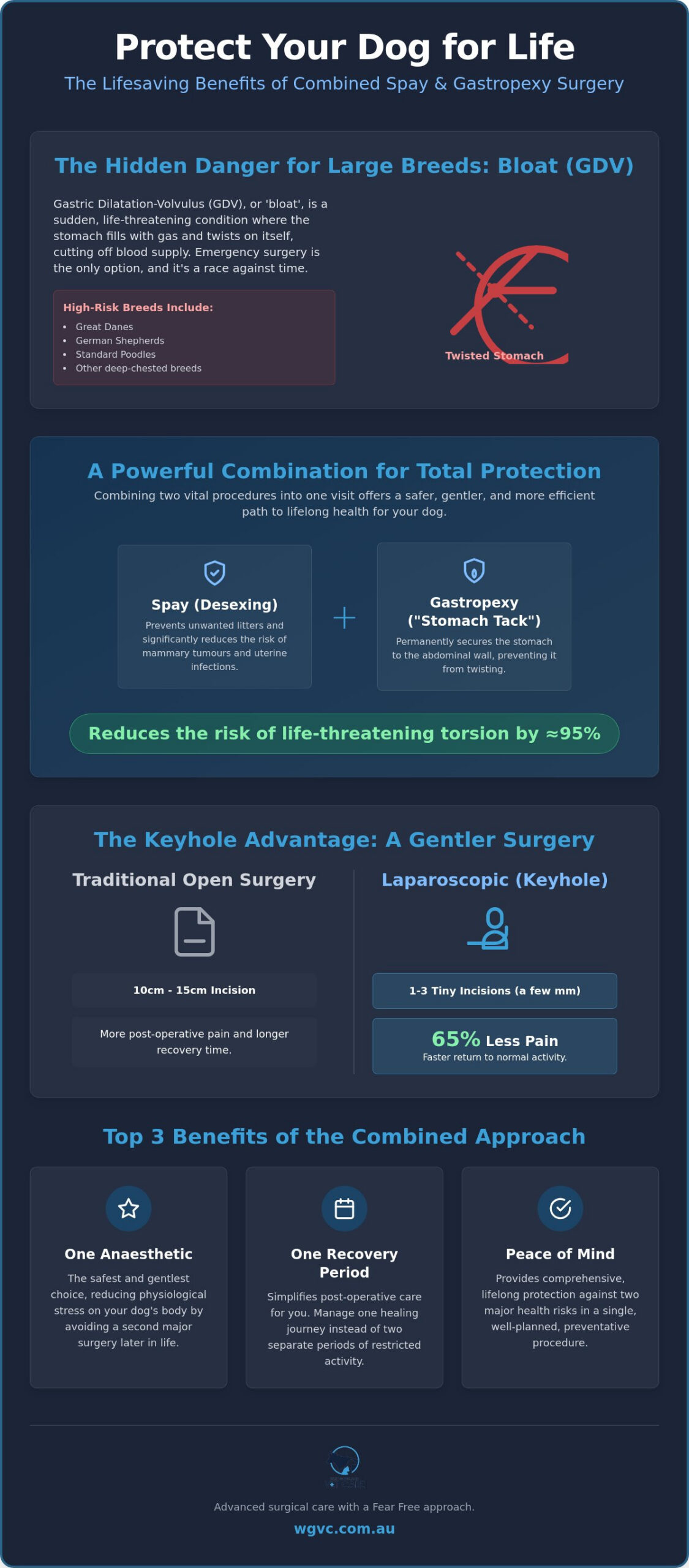
A spay involves the surgical removal of the reproductive organs, which is a vital step in preventing reproductive cancers that can be difficult to treat later in life. On the other hand, a gastropexy is a preventative “stomach tack” designed to stop the stomach from rotating. Specifically, a gastropexy is a permanent attachment of the stomach to the abdominal wall to prevent torsion. By performing both procedures together, we can provide your dog with a comprehensive safety net before any health issues have a chance to arise.
The Threat of Bloat (GDV) in Large Breeds
We often hear the term “bloat” used in casual conversation, but the medical reality is much more serious. Gastric dilatation-volvulus (GDV) is a life-threatening condition where a dog’s stomach fills with gas and then physically twists on itself. This rotation acts like a kink in a hose, cutting off the blood supply to the stomach and other vital organs. It’s a terrifying experience for any owner, often occurring suddenly and requiring immediate, high-stakes emergency intervention.
Dogs with deep, narrow chests are at a much higher anatomical risk because their stomach has more room to move and shift within the abdomen. Breeds like Great Danes, German Shepherds, and Standard Poodles are particularly vulnerable. Choosing a preventative gastropexy is a compassionate way to avoid this trauma. It’s the difference between a calm, elective procedure and a frantic midnight dash to the emergency centre.
Desexing: The Ideal Window for Prevention
The most logical and kindest time to perform a stomach tack is during your dog’s desexing appointment. This window is ideal because your pet is already scheduled for a surgical procedure, meaning they only need to undergo anaesthesia once. This significantly reduces the physiological stress on their body and minimises the number of times they need to be fasted and monitored in a hospital setting.
Bundling these procedures also simplifies the recovery process for you at home. Instead of managing two separate periods of restricted exercise and “quiet time” months apart, you can focus on one single healing journey. It’s a streamlined approach that prioritises your pet’s comfort while ensuring they are protected from the very start of their adult life.
The Keyhole Advantage: Laparoscopic Combined Surgery
Technology has transformed the way we approach pet health, and at West Gippsland Vet Care, we’ve embraced these changes to offer the gentlest care possible. While traditional abdominal surgery has been the standard for decades, modern laparoscopic (keyhole) techniques represent a significant leap forward. One of the most meaningful benefits of combining spay and gastropexy surgery using a keyhole approach is the way it minimises the physical impact on your dog’s body. Instead of a large opening, we use specialised cameras and micro-instruments to perform the procedure with incredible precision.
Our commitment to advanced surgical technology in Warragul means your pet has access to the same level of care you would expect in a human hospital. This minimally invasive method isn’t just about being “high-tech”; it’s about the emotional and physical well-being of the animals we treat. By choosing a laparoscopic approach, we can ensure that the “stomach tack” is performed under perfect visualisation, providing a secure and permanent result that protects your dog for years to come.
Smaller Incisions, Less Discomfort
The most visible difference between traditional surgery and the keyhole method is the size of the wound. A traditional open surgery often requires a 10 to 15cm incision to allow the surgeon enough room to see and work. In contrast, a laparoscopic procedure involves only one to three tiny ports, each just a few millimetres wide. These small entry points cause far less bruising and trauma to the abdominal wall.
Research has shown that dogs experience approximately 65% less pain after a laparoscopic spay compared to the traditional open method. Because there is less internal handling of the organs and a much smaller external wound, your dog’s need for heavy post-operative painkillers is often reduced. This leads to a significantly faster bounce-back, with many dogs feeling like their usual, bouncy selves within just a day or two. If you have any concerns about your pet’s mobility after a procedure, our Orthopaedic Vet Gippsland team is always here to support their long-term comfort and recovery.
Enhanced Visualisation for the Surgeon
Precision is everything when it comes to preventative surgery. The laparoscope acts as a high-definition eye inside the abdomen, giving the surgical team a magnified and crystal-clear view of the ovaries and the stomach. This level of detail is simply not possible through a traditional incision. It allows us to be extremely accurate during the gastropexy, ensuring the stomach is tacked to the abdominal wall in exactly the right position to prevent future rotation.
According to the American College of Veterinary Surgeons on GDV, the security of this attachment is what provides the life-saving protection your dog needs. Using a camera ensures that every step is performed with the highest degree of safety and accuracy. If you’re considering this protective step for your large breed dog, we invite you to reach out to our friendly team to discuss how this advanced technology can benefit your pet.
Top 3 Benefits of Combining Spay and Gastropexy
Moving beyond the advanced technology used in the theatre, let’s look at how this choice impacts your daily life and your dog’s long-term health. The benefits of combining spay and gastropexy surgery extend from the surgical suite right into your living room, simplifying everything from the initial hospital stay to the final day of recovery. By making this proactive choice, you’re not just choosing a procedure; you’re choosing a streamlined path to wellness for your pet.
Reducing Anaesthetic Risk
Safety is always the primary concern for any pet parent. While modern veterinary medicine is incredibly safe, every anaesthetic carries a small, inherent risk. By choosing to bundle these procedures, you’re reducing your dog’s exposure to just one single anaesthetic event. It’s a much gentler approach for her system than being fasted, admitted, and monitored on two separate occasions months or years apart.
Our surgical team in Warragul works with a high level of coordination and efficiency to ensure the process is as smooth as possible. Combining procedures reduces total anaesthetic time compared to two separate surgeries. This efficiency means your dog spends less time under monitoring and can transition more quickly to the comfort of our dedicated recovery ward, where our nursing staff can focus on her gentle wake-up process.
Streamlining the Healing Process
Gippsland is home to active dogs who love their daily walks and outdoor adventures. Managing a recovery period usually involves a period of “restricted exercise,” which can be a bit of a challenge for a high-energy pup or a busy family. By performing both the spay and the stomach tack at once, you only have to manage this quiet time a single time.
You’ll only have one set of post-operative instructions to follow and one follow-up schedule to organise with our clinic. This is particularly straightforward when opting for a Laparoscopic Spay in Warragul, as the tiny keyhole incisions heal remarkably well. Instead of two separate healing journeys, your dog can get back to her favourite Gippsland parks and trails much sooner, with the whole experience firmly behind her.
Cost-Effectiveness and Peace of Mind
There’s a very practical side to this decision as well. Bundling these procedures is more cost-effective for your family because you’re only paying for one set of theatre fees, one hospitalisation stay, and one round of pre-surgical blood tests. It’s a sensible way to access “Gold Standard” care while being mindful of the overall investment in your dog’s health.
While the financial saving is a bonus, the emotional relief is the real reward. As explained by Cornell University on bloat, GDV is a devastating condition that can strike without warning and progress with terrifying speed. Knowing your dog is protected before she even reaches full maturity provides a sense of security that is truly priceless. You can enjoy every mealtime and every play session without that nagging worry in the back of your mind, knowing you’ve provided the best possible protection for her future.
Is Your Dog a Candidate? Breeds and Timing
Identifying whether your dog is at high risk for bloat is the first step toward making an informed decision about her long-term health. While any dog can technically experience stomach torsion, certain physical traits make it far more likely for some companions. One of the primary benefits of combining spay and gastropexy surgery is that it allows us to intervene during a safe, predictable window of your dog’s development, rather than waiting for an emergency to occur.
When we look at the anatomical risk factors, the most significant indicator is the chest depth-to-width ratio. Dogs with deep, narrow “keel-shaped” chests have more room in their abdomen for the stomach to shift. This is why breeds like Great Danes, German Shepherds, Setters, and Standard Poodles are frequently at the top of the list for preventative care. If your dog’s chest is significantly deeper than it is wide, she may be a prime candidate for a “stomach tack” during her desexing.
Common Breeds in West Gippsland
Local families in Warragul and Drouin often share their lives with active, large-breed dogs that thrive in our rural environment. We frequently see Labradors, Golden Retrievers, and various working “mixed breeds” that possess the deep-chested silhouette associated with GDV. Whether your dog is a farm-based kelpie cross or a dedicated hiking partner, her lifestyle matters. Active dogs that run, jump, and play hard after mealtimes may face a higher risk, making the benefits of combining spay and gastropexy surgery even more relevant for Gippsland’s outdoor-loving pets.
Optimal timing is another vital factor. The American Animal Hospital Association suggests a window between 5 and 15 months for large-breed desexing, depending on the specific dog’s growth. Performing the gastropexy during this juvenile spay appointment is ideal. It ensures the protection is in place before the dog reaches full physical maturity, which is often when the risk of bloat begins to increase. Before you schedule the procedure, we recommend you book a desexing consultation with our team to evaluate your dog’s unique build.
Factors Beyond Breed: Size and Temperament
Physical build isn’t the only thing to consider. A dog’s personality and daily habits play a significant role in their digestive health. High-anxiety dogs or those that tend to “scarf” their food quickly are often more prone to swallowing excess air, which can trigger the initial bloating that leads to a twist. If your girl is a fast eater or gets particularly stressed during thunderstorms or travel, these are important details to share with your vet.
Every dog is an individual, and we take the time to tailor a surgical plan that reflects her specific needs. We’ll discuss her history, her eating habits, and her activity levels to ensure the combined surgery is the right choice for her. By looking at the whole dog, not just her breed, we can provide a level of care that prioritises her safety and your peace of mind.
What to Expect: Surgery Day at West Gippsland Vet Care
Deciding to proceed with surgery for your dog is a big step, and we want you to feel completely at ease from the moment you arrive. Our team understands the deep bond you share with your pet, and we view our role as an extension of your dog’s support system. One of the most reassuring benefits of combining spay and gastropexy surgery at our Warragul clinic is the continuity of care your pet receives throughout the day. From the initial pre-operative checks to the final discharge, every step is designed to prioritise her comfort and your peace of mind.
Our approach is grounded in clinical excellence and a genuine love for animals. We don’t just focus on the surgical outcome; we focus on the emotional well-being of our patients. By choosing to bundle these procedures, you’re ensuring that your dog only has to navigate the hospital environment once, allowing her to stay in her favourite home environment where she feels most secure for the majority of her recovery.
A Compassionate Patient Journey
Your dog’s day begins with a gentle admission process where we’ll discuss the personalised anaesthetic protocol we’ve created just for her. We use a Fear Free certified approach to reduce pet anxiety, which might include using calming pheromones, providing non-slip mats, and using gentle handling techniques that respect her individual personality. Our goal is to make the hospital stay feel less like a clinical visit and more like a visit to a trusted friend.
During the procedure, our surgical team in Warragul utilises specialised laparoscopic equipment to maintain a minimally invasive environment. Once the surgery is complete, your dog will wake up in a quiet, warm recovery ward under the constant supervision of our nursing staff. We monitor pain levels closely and provide tailored relief to ensure she stays comfortable. For our surgical patients, we provide the added security of 24-hour emergency support for existing clients, so you’re never alone if you have a concern once you get home.
Next Steps for Your Best Mate
The journey toward long-term protection starts with an open conversation. During a pre-surgical consultation, we can evaluate your dog’s build and discuss the benefits of combining spay and gastropexy surgery in the context of her specific lifestyle. Whether she’s a working dog on a West Gippsland farm or a beloved family pet who loves her walks in Drouin, we’ll help you decide on the best timing for her procedure.
Preparing your home for her return is simple but important. You’ll want to set up a quiet, comfortable space where she can rest without having to climb stairs or jump onto furniture. Most dogs bounce back remarkably quickly after a keyhole procedure, but having a “recovery zone” ready will help her stay calm. If you’re ready to take this proactive step for your dog’s health, we invite you to Book a consultation with our surgical team today to learn more about our gentle approach to preventative care.
Giving Your Best Mate a Lifetime of Protection
Choosing the best care for your large-breed dog is a personal commitment, and we’re here to walk that path with you. We’ve explored how modern keyhole techniques can transform a major preventative step into a gentle, minimally invasive experience. By bundling these procedures, you’re not just saving time; you’re significantly reducing anaesthetic exposure and ensuring your pet has only one recovery period to navigate. The benefits of combining spay and gastropexy surgery offer a gold standard of protection that lets you focus on the joy of your dog’s companionship rather than the worry of “what if.”
As trusted Gippsland locals for over 20 years, our Fear Free certified team is dedicated to making every hospital stay as calm as possible. With our specialised keyhole surgical suite in Warragul, we provide the precision and care your best mate deserves. If you’re ready to give your girl the gift of a safer future, Book a consultation at West Gippsland Vet Care to discuss your dog’s preventative surgery. We look forward to meeting you both and helping your pet live her happiest, healthiest life.
Frequently Asked Questions
Will a gastropexy prevent my dog from ever bloating?
A gastropexy is designed to prevent the life-threatening twist of the stomach, known as torsion, but it doesn’t stop the stomach from filling with gas, which is the “bloat” part of the condition. While your dog might still experience a gassy or distended tummy from time to time, the surgery ensures the stomach stays safely attached to the abdominal wall. This prevents the fatal rotation that cuts off blood supply, turning a potential emergency into a much more manageable digestive issue.
Is the recovery from a combined surgery much harder than a normal spay?
Recovery from a combined keyhole procedure is remarkably similar to a standard spay, typically requiring about 10 to 14 days of restricted activity. Because the laparoscopic approach uses tiny incisions and causes minimal internal trauma, most dogs are comfortable and ready for gentle lead walks within just a few days. Managing only one healing period is one of the most practical benefits of combining spay and gastropexy surgery for busy families.
At what age should my large breed dog have this combined surgery?
Most veterinarians recommend performing this combined surgery between 6 and 15 months of age, depending on when your dog reaches a significant portion of her adult size. The timing is often influenced by the specific breed’s growth rate and the owner’s lifestyle. We prefer to discuss this during a juvenile health check to find the ideal window that balances her physical development with the need for early protection against GDV.
Can a male dog have a gastropexy during his castration?
Yes, male dogs can certainly have a preventative gastropexy performed during the same session as their castration. While the desexing procedure for males is anatomically different, we can still utilise the same anaesthetic event to secure the stomach. This is a very common and proactive choice for owners of male Great Danes, Weimaraners, or German Shepherds who want to provide the same level of safety as female dogs.
What are the signs of bloat I should look for after surgery?
Even after a successful gastropexy, you should stay alert for signs of abdominal distress such as unproductive retching, a swollen or hard tummy, and extreme restlessness. While the surgery prevents the stomach from twisting, a gas-filled stomach still causes significant discomfort and requires professional care. If your dog is pacing, panting heavily, or trying to vomit without anything coming up, it’s important to contact a vet right away.
How long does the combined keyhole surgery take?
A combined laparoscopic spay and gastropexy typically takes about 60 minutes to complete in the hands of an experienced surgical team. This efficiency is achieved through the use of high-definition cameras and specialised instruments that allow for precise movements within the abdomen. Your dog will then spend several hours in our quiet recovery ward waking up gently under the constant supervision of our nursing staff before she is ready to head home.
Does pet insurance usually cover a preventative gastropexy?
Most standard pet insurance policies classify a preventative gastropexy as an elective procedure, which means it’s often not covered under basic accident and illness plans. However, some premium “wellness” or “routine care” add-ons may provide a small contribution toward the cost of preventative surgeries. It’s always a sensible move to check your specific policy disclosure statement or call your provider to see if you have any applicable coverage.