Did you know that radiographic osteoarthritis is observed in nearly every dog after a cruciate ligament injury, regardless of how successful their surgical repair was? It is a sobering thought for any pet owner who has watched their brave companion go through a TPLO or cruciate procedure. You might feel a sharp pang of worry when you see your mate struggle to stand up after a nap, or feel confused by the endless shelves of joint supplements at the shop. We understand that anxiety, especially when you are balancing the hope for a full recovery with concerns about the long-term safety and cost of medications. Effective arthritis management after dog knee surgery isn’t just about pills; it’s about a compassionate, lifelong partnership between you and your vet.
We believe every dog deserves to enjoy their years ahead without constant discomfort. In this guide, we will show you how to protect your dog’s joints and ensure they can still enjoy gentle weekend strolls at Civic Park or Lardner Park. You’ll discover a clear, manageable daily routine that focuses on mobility and comfort while reducing the reliance on heavy painkillers. From the latest breakthroughs in monoclonal antibody therapy to simple home adjustments, we’ll walk through the best ways to keep your dog active and happy in our beautiful Gippsland community.
Key Takeaways
- Understand why joint wear can continue even after a successful operation and why biology, not just the surgery, dictates your dog’s long-term comfort.
- Learn how a multi-modal approach to arthritis management after dog knee surgery uses several small, gentle interventions to create a significant improvement in mobility.
- Clearly distinguish between daily nutritional supplements and professional medical treatments to build a routine that actually works for your dog’s unique situation.
- Discover simple ways to modify your home for Gippsland’s wet weather and hilly landscapes, preventing painful slips and trips on the back deck or slippery floors.
- Explore how regular senior pet health checks provide a vital partnership between you and your vet to monitor and adjust care as your dog grows older.
Why Arthritis Develops After Dog Knee Surgery
Watching your dog recover from a major operation is a journey filled with both relief and new questions. It is a common story we hear in our clinic; a dog has a successful repair, yet they still seem a bit “off” on chilly mornings. The reality is that while surgery focuses on the mechanics of the joint, biology focuses on the inflammation. The cranial cruciate ligament (CCL) acts like a vital stabiliser, similar to a seatbelt for the knee. Once it is damaged, the knee begins a process of wear and tear that surgery cannot entirely reverse. Even with a gold-standard Tibial Plateau Leveling Osteotomy (TPLO), the initial injury often leaves behind microscopic changes in the cartilage before the vet even begins the procedure.
This explains why a “successful surgery” and “ongoing arthritis” can exist at the same time. The procedure stabilises the bone and stops the painful shifting known as “drawer movement,” but it doesn’t “undo” the damage that occurred in the days or weeks leading up to the operation. This is why long-term arthritis management after dog knee surgery is such an essential part of the healing process. We aren’t just fixing a mechanical issue; we’re supporting a living, changing joint environment that needs ongoing care to stay healthy.
The Inflammatory Cycle Post-Surgery
Even after the surgical site has healed, the joint lining can remain sensitive. This condition, called synovitis, involves the soft tissues becoming inflamed and producing excess fluid, which leads to that familiar post-nap stiffness. On those crisp, foggy mornings in Warragul, you might notice your mate is much slower to find their feet than they were in the summer. It helps to remember that osteoarthritis is a progressive but manageable condition that requires a gentle, consistent approach to keep the joint moving smoothly throughout your dog’s life.
Recognising Early Warning Signs
It helps to be a bit of a “detective” at home during the recovery phase and beyond. You might see a subtle “bunny hop” when they try to pick up pace, or notice they are suddenly reluctant to jump into the back of the car after a trip to the park. Often, dogs show a “warm-up” effect. They look stiff for the first few minutes of a walk, but then seem to find their rhythm as the joint fluid circulates and the tissues loosen up. These are the small, quiet signals that tell us the inflammatory cycle is active and that your dog’s arthritis management after dog knee surgery may need a slight adjustment to keep them comfortable.
The Multi-Modal Approach to Arthritis Management
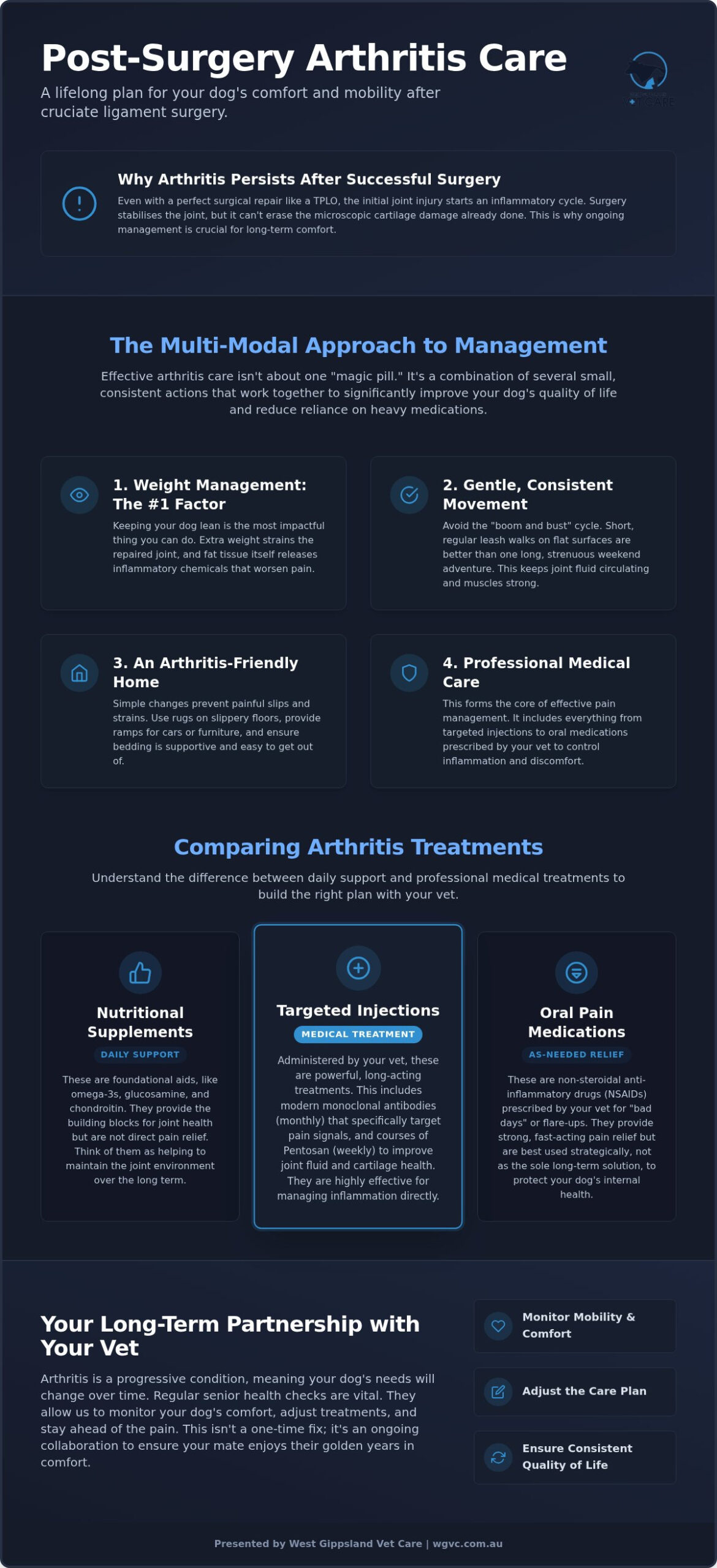
When your dog is recovering from a major joint procedure, it is natural to hope for a “magic pill” that will simply wash the discomfort away. While modern medicine offers some incredible pain relief options, relying on a single medication often leads to disappointing results for post-op dogs. Instead, we focus on a multimodal approach to managing osteoarthritis. This strategy involves using several small, gentle interventions that work together to create a much larger total effect on your dog’s quality of life. By attacking the problem from different angles, we can often reduce the required dosage of stronger “rescue” medications, which is a much kinder long-term option for your dog’s internal health.
Consistency is the real secret to success here. Arthritis thrives on the “boom and bust” cycle, where a dog does too much one day and pays for it the next. By establishing a steady daily routine that includes weight control, gentle movement, and targeted support, you create a stable environment for the joint to function. This predictable routine helps lower the overall level of inflammation in the body, making arthritis management after dog knee surgery a much more manageable part of your daily life together. Our team at West Gippsland Vet Care is always ready to help you coordinate these different layers of care.
Weight Management: The Most Critical Factor
It might surprise you to learn that carrying even one extra kilogram puts significant, unnecessary strain on a surgical site. Fat tissue, or adipose tissue, isn’t just “padding”; it acts like a small inflammatory organ that releases chemicals into the bloodstream, making joint pain worse. Keeping your mate lean is the kindest thing you can do for their recovery. To keep them feeling full without the extra calories, try adding “fillers” like steamed green beans or carrots to their tucker. Using slow-feeder mats can also make a smaller meal feel like a much bigger event, keeping them satisfied and slim.
The Role of Veterinary Rehabilitation
Movement is medicine, but the type of movement is vital. We want to avoid the “weekend warrior” habit where a dog rests all week and then goes for a long, taxing run at the park. This leads to painful flare-ups. Controlled, low-impact exercise like short, frequent walks on flat ground is far more beneficial. Many owners find that hydrotherapy or passive range of motion (PROM) exercises help maintain flexibility without the impact of hard ground. If you want to ensure your dog is moving correctly, seeking guidance from a professional orthopaedic vet in Gippsland can provide you with a tailored exercise plan that evolves as your dog gets stronger.
Comparing Arthritis Treatments: Supplements, Injections, and Meds
Think of your dog’s treatment plan as a toolbox. You don’t use every tool for every job; you need the right one at the right time. For effective arthritis management after dog knee surgery, we generally categorise treatments from “foundational” care, which supports the joint daily, to “rescue” medications used during painful flare-ups. It is vital to understand that a nutritional supplement bought at the local shop works very differently from a pharmaceutical prescribed by your vet. While supplements provide the building blocks for joint health, medications actively block pain pathways or reduce inflammation. Managing your expectations is also part of the process. Some treatments offer relief within hours, while others take several weeks to build up in your dog’s system before you see a visible change.
A vet-prescribed plan is always the safest route for your mate. Many human products, particularly over-the-counter painkillers like Ibuprofen or Aspirin, are highly toxic to dogs and can cause life-threatening stomach ulcers or organ failure. By working closely with our team, you ensure that every part of your dog’s routine is safe, effective, and tailored to their specific recovery stage.
While it’s crucial to use vet-approved treatments for your pet, humans also benefit from professional, tailored care to manage their own wellbeing; for those looking for a gentle and transformative approach to wellness, Livelovelife Chiropractic provides dedicated support to help you stay at your best.
Joint Protective Injections (DMOADs)
In the Australian veterinary landscape, we are fortunate to have access to Disease-Modifying Osteoarthritis Drugs (DMOADs), such as Pentosan or Zydax. Unlike a simple painkiller, these injections aim to “grease the gears” by improving the quality of the joint fluid and helping to protect the remaining cartilage. Most local pets start with a loading dose, typically involving one injection per week for four weeks. This foundational step is often the first line of defence in arthritis management after dog knee surgery because it addresses the underlying joint health rather than just masking the symptoms. Many owners report seeing a “brighter” dog who is more willing to move after their initial course is complete.
Supplements vs. Prescription NSAIDs
Foundation supplements like Glucosamine, Chondroitin, and high-quality Omega-3 fatty acids are excellent for long-term support. For those looking for clean-label solutions to support their dog’s vitality, visit Paws & Whiskers to see their range of science-backed products. They help maintain the joint environment, but they aren’t designed to stop acute pain. When your mate is clearly struggling to get comfortable, we often turn to Non-Steroidal Anti-Inflammatory Drugs (NSAIDs) or modern monoclonal antibody therapies like Beransa. These are powerful tools for comfort, but they require professional oversight. Because some medications are processed through the liver and kidneys, we always recommend regular blood tests for dogs on long-term prescriptions. This ensures we are keeping your dog comfortable without compromising their internal organ health. It’s all about finding that perfect balance between effective pain relief and long-term safety.
Creating an “Arthritis-Friendly” Home in West Gippsland
While the surgical clinic provides the repair, your home is where the lifelong journey of recovery truly takes place. Many owners focus intensely on the first few months after a procedure, but arthritis management after dog knee surgery is a commitment that lasts for the rest of your dog’s life. Your home environment should be a sanctuary that supports easy movement rather than a series of obstacles. This is especially true in our part of the world, where Gippsland’s hilly terrain and high rainfall can make outdoor areas quite slippery and challenging for a dog with a sensitive joint.
It is a common mistake to think that an arthritic dog should simply be kept still. While rest is essential during flare-ups, total inactivity is actually the enemy of joint health. Joints require gentle, regular movement to stay lubricated and to prevent the surrounding muscles from wasting away. The goal is to keep your mate involved in family life without overtaxing their body. This psychological boost is just as important as the physical care; a dog who still feels part of the “pack” is often more resilient and willing to stay mobile. If you need help tailoring a home plan, our team can provide expert advice on arthritis management and pain relief for your companion.
Winter Joint Care in the Region
Our Drouin and Warragul winters are famous for their crisp, cold mornings and damp conditions. Cold weather can cause joint tissues to contract, leading to increased stiffness and discomfort in a surgical site. Using heat mats or well-fitted dog coats can make a world of difference in keeping those deep tissues warm and flexible. When the local parks are too muddy or slippery for a safe stroll, try indoor scent games. Hiding treats around the lounge room provides excellent mental stimulation and gentle movement without the risk of a slip on wet grass.
Flooring and Accessibility
For a dog with a weak stifle, a polished floorboard can feel like an ice rink. A single slip can cause a painful “tweak” that sets their progress back by weeks. We recommend using rugs or yoga mats as “traction paths” for senior dogs to ensure they can move between rooms with confidence. Ramps are another vital addition, particularly for getting into the car or onto the couch. These tools eliminate the high-impact landings that put immense stress on the knee. By making these small adjustments, you create a home that respects your dog’s physical limits while celebrating their continued place in your family.
Long-Term Partnership with West Gippsland Vet Care
Choosing a vet who truly understands your dog’s specific surgical journey makes a world of difference. When we help a family through a cruciate procedure at our Warragul clinic, we don’t see it as a one-off event. It is the beginning of a lifelong commitment to your dog’s mobility. As your mate moves from their active adult years into their senior chapter, their physical needs will naturally shift. This is why regular Senior Pet Health Checks are so vital for post-op dogs. During these visits, we monitor the progression of joint changes through gentle physical exams and gait analysis. Having a local team who knows your dog’s history means we can spot small changes in their comfort levels before they become significant hurdles.
Effective arthritis management after dog knee surgery requires a watchful eye and a steady hand. By keeping a consistent record of your dog’s range of motion and muscle mass, we can adjust their care plan in real-time. This proactive approach ensures that your dog doesn’t just “get by” after surgery, but continues to thrive as a happy, active member of your family. We view ourselves as an extension of your support system, always here to listen to your concerns and celebrate your dog’s milestones.
Customised Pain Management Plans
No two dogs are exactly alike, and neither are their lifestyles. A working dog on a farm near Drouin has different physical demands than a lap-dog who enjoys quiet strolls through town. We take the time to tailor a multi-modal plan that fits your dog’s specific routine and your family’s needs. To make these visits as easy as possible, we utilise fear-free techniques that help your dog feel safe and relaxed in the clinic. Our in-house diagnostics allow us to monitor internal organ health quickly and accurately, ensuring that any long-term treatments remain safe and effective for your mate’s unique biology.
Ready to Support Your Mate’s Mobility
If you have noticed your dog slowing down or if it has been a while since their last post-surgical review, we invite you to book a consultation. Our compassionate, family-oriented team is dedicated to providing the highest level of care for the Gippsland community. We want to help you navigate the years ahead with confidence, knowing your dog is as comfortable as they can be. Please Contact West Gippsland Vet Care to discuss a long-term arthritis management after dog knee surgery plan that will keep your best mate moving happily for years to come.
Supporting Your Mate’s Journey to Better Mobility
Ensuring your dog remains comfortable after a major procedure is a lifelong commitment that requires a gentle, consistent approach. We have explored how a multi-modal strategy, from managing weight to creating a safer home environment, provides the best foundation for long-term health. While surgery repairs the mechanical issue, successful arthritis management after dog knee surgery is what keeps your mate happy and moving through the Gippsland hills for years to come. It’s about those small, daily choices that add up to a big difference in their quality of life.
As local experts in orthopaedic aftercare, we are here to walk this path with you. Our team provides a compassionate, fear-free environment where your pet’s well-being is always the priority. We also offer 24-hour emergency support for our existing clients, giving you peace of mind that help is always close by. If you are ready to review your dog’s comfort levels and create a tailored plan for the future, we invite you to Book a Senior Pet Health Check at West Gippsland Vet Care. We look forward to seeing you and your best mate in our Warragul clinic soon.
Frequently Asked Questions
Is it normal for my dog to limp occasionally years after knee surgery?
Occasional stiffness or a slight limp can be normal after a big day, but it usually indicates a minor flare-up of osteoarthritis in the joint. While the surgery successfully stabilised the bone, the joint still experiences microscopic wear and tear over time. If you notice the limping is becoming more frequent or doesn’t resolve with a bit of rest, it is a sign that your dog’s routine might need a small adjustment.
Can I give my dog human glucosamine or fish oil supplements?
We strongly recommend using veterinary-specific supplements rather than human versions from the chemist. Human products often contain concentrations that aren’t ideal for a dog’s metabolism, and some may even include additives like xylitol or certain sweeteners that are toxic to pets. Veterinary joint supports are precisely formulated with the correct ratios of ingredients to ensure they are both safe and effective for your mate’s recovery.
How much exercise should my dog get after their TPLO recovery is finished?
Your dog should enjoy consistent, low-impact exercise every day rather than high-intensity bursts on the weekend. Short, frequent walks on flat ground are much kinder to a surgical site than long runs or chasing balls at the park. This steady routine helps maintain vital muscle mass and joint lubrication without causing the painful “boom and bust” cycle that often triggers unwanted arthritis symptoms.
Will my dog need to stay on arthritis medication for the rest of their life?
Many dogs do require some level of ongoing support, but the goal of arthritis management after dog knee surgery is to use the lowest effective dose possible. By combining weight control, joint supplements, and simple home modifications, we can often reduce the reliance on stronger daily medications. We always aim to find a balance that keeps your dog active while protecting their long-term internal organ health.
What are the side effects of long-term arthritis injections for dogs?
Modern arthritis injections like Pentosan are exceptionally safe and typically have very few side effects for the vast majority of dogs. Occasionally, a pet might seem a little quiet or lethargic for 24 hours after the jab, or there might be very minor irritation at the injection site. Because these treatments don’t process through the liver or kidneys like oral meds, they are often a preferred long-term option.
How do I know if my dog is in pain if they aren’t crying or whimpering?
Dogs are masters at hiding discomfort, so you should look for subtle behavioural changes rather than waiting for a whimper. You might notice they are slower to get up in the morning, reluctant to jump into the car, or simply “pacing” more at night. These quiet signals are often the first signs that their arthritis needs more active management to restore their comfort and zest for life.
Does cold weather really make my dog’s arthritis worse?
Yes, the damp and chilly Gippsland winters can definitely make joint stiffness feel more pronounced for your dog. Cold weather causes the soft tissues around the joint to contract and become less flexible, which increases sensitivity in the surgical site. Keeping your mate warm with a well-fitted coat and a cosy, draft-free bed is a simple but effective way to help them through the colder months.
Can weight loss alone manage my dog’s post-operative arthritis?
Weight loss is the most influential factor in managing joint health, but it is usually just one piece of the puzzle. While shedding extra kilograms significantly reduces the physical load on the knee, the underlying inflammation in the joint still requires support. A multi-modal approach that combines a lean body weight with other therapies usually provides the most compassionate and successful outcome for your dog’s long-term mobility.