
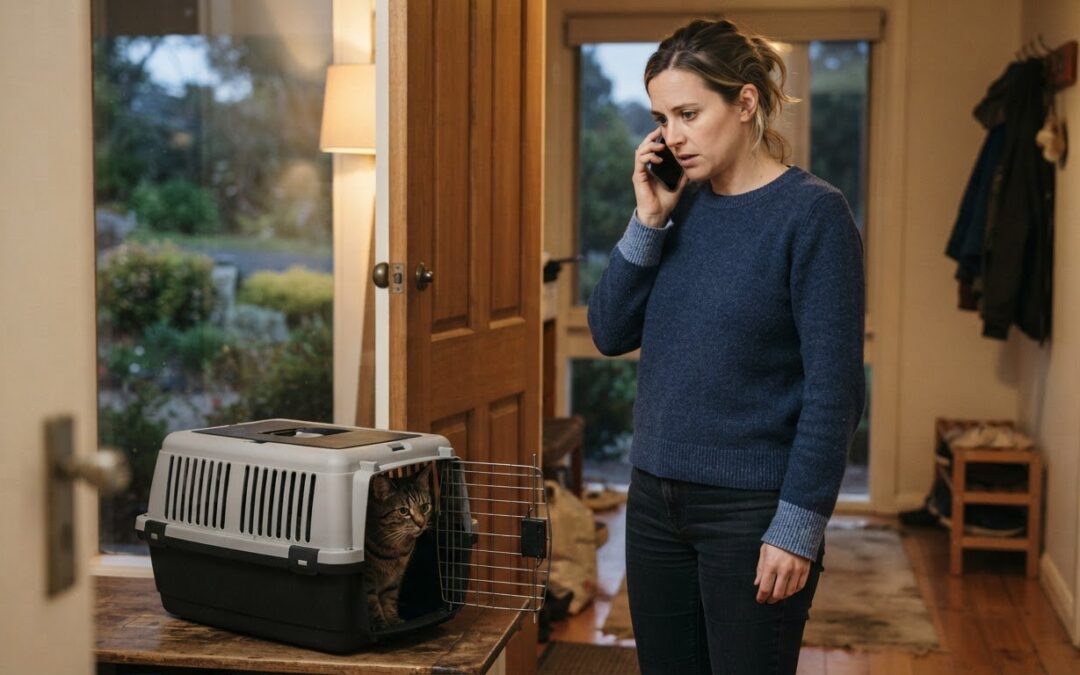
After-hours triage helps you decide what to do next when your pet becomes unwell outside ordinary clinic hours. An after-hours vet advice line for clients allows you to explain what’s happening; the triage process notifies the veterinarian on call and advises which hospital to attend. If your pet needs urgent care, advice by phone isn’t a substitute for veterinary assessment.
It’s understandable to feel worried when your regular clinic is closed, especially on a public holiday. Knowing what to expect from a call can help you share the important details, understand the advice and prepare for a possible trip to hospital. Calling ahead also gives the veterinary team an opportunity to guide you on where to go.
This article explains how after-hours triage works, what guidance may be available and how to think about urgent symptoms. It also covers service hours and why calling before attending can help you take the next step with greater clarity and care for your pet.
Key Takeaways
- After-hours triage helps direct you to the right next step, including which hospital to attend when your pet needs assessment.
- For urgent symptoms, prompt veterinary care matters; keep your pet calm and share clear details when seeking advice.
- Public holiday and after-hours arrangements can vary, so calling before travelling helps you understand where to go.
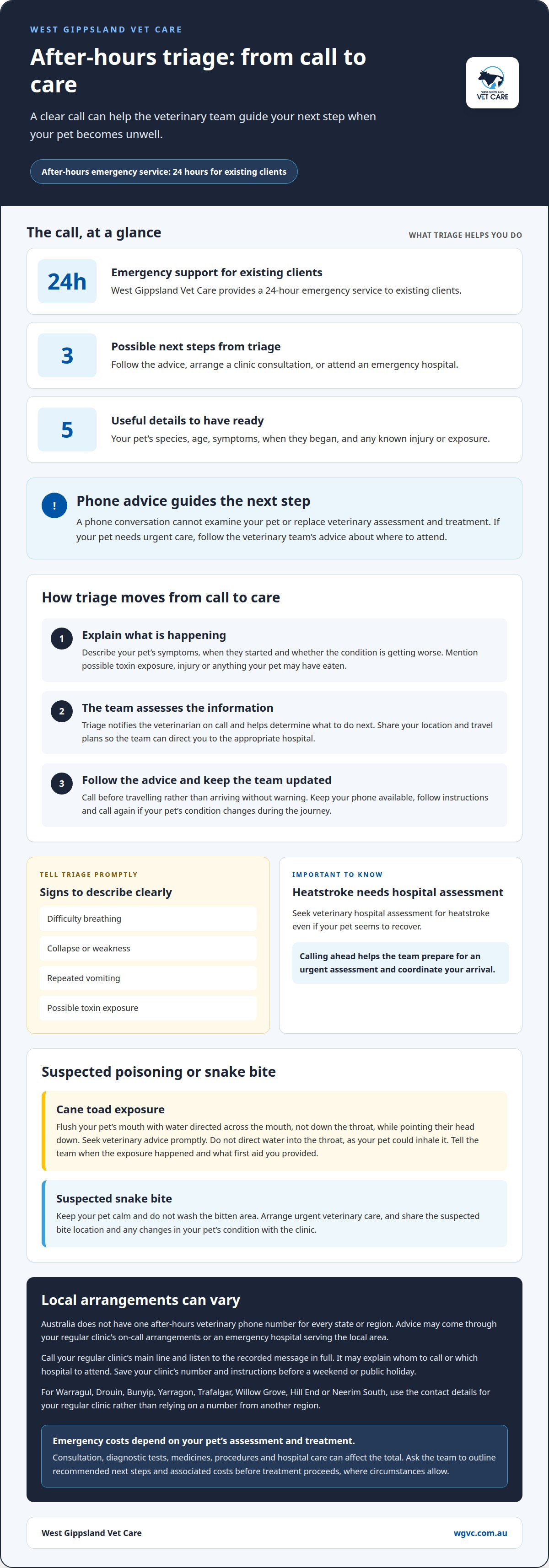
- West Gippsland Vet Care provides 24-hour emergency service to existing clients, offering support when an urgent concern arises.
Emergency triage
After-hours triage notifies the veterinarian on call and advises which hospital to attend. Poison advice is accessed through veterinary triage; costs depend on whether advice leads to a consult, tests or treatment.
Triage outcomes and emergency referrals
The triage call helps determine what to do next: follow the advice, arrange a clinic consultation or attend an emergency hospital. The veterinarian considers your pet’s symptoms, when they began and whether the condition is worsening. Describe changes clearly, including breathing difficulty, collapse, repeated vomiting or possible toxin exposure.
An emergency referral means taking your pet to a hospital for an in-person assessment and critical care if needed. A phone conversation cannot examine your pet or replace treatment. Heatstroke needs veterinary hospital assessment even if your pet seems to recover. Share your location and travel plans so the veterinary team can direct you to the appropriate hospital.
Calling before visiting the emergency hospital
Call before travelling instead of arriving without warning. Triage can alert the veterinarian on call and direct you to the appropriate hospital. This is particularly important when your regular clinic is closed or emergency care is coordinated across locations. Give the team your pet’s species, age, symptoms, when they started and any known injury or exposure.
Keep your phone available and follow the instructions while preparing to travel. If your pet’s condition changes during the journey, call again with the update. Calling ahead supports a coordinated handover, especially when the hospital needs to prepare for an urgent assessment. For a routine concern, a regular clinic appointment may be more suitable than emergency attendance.
Emergency consultation and treatment costs
Emergency costs depend on the assessment and treatment your pet needs. Consultation, diagnostic tests, medicines, procedures and hospital care can all affect the total. Explain what has happened and ask the team to outline the recommended next steps and associated costs before treatment proceeds, where circumstances allow.
There is no single fee for every emergency: a brief consultation differs from treatment for a serious condition. Costs depend on the case, including the assessment, diagnostic tests and treatment required. If your pet needs urgent care, prioritise calling and following the veterinary team’s advice.
Advice for pet owners after hours
If your pet has an emergency after hours, arrange veterinary care rather than waiting for ordinary appointments. Take them to a local vet, or go to the nearest open veterinary clinic immediately if they need urgent emergency care. For a worsening problem, explain what has changed and follow the veterinary team’s advice about where to attend.
Before calling an after-hours vet, have your pet nearby if it’s safe and prepare clear details. Tell the team your pet’s species and age, what the problem looks like, when it began and whether it’s getting worse. Mention possible toxin exposure, an injury or anything your pet may have eaten.
- Describe visible signs, such as difficulty breathing, weakness or vomiting.
- Share when symptoms started and any changes since then.
- Explain a possible exposure, such as contact with a cane toad or snake.
- Keep your phone available so you can hear and follow the advice.
For suspected cane toad poisoning, flush your pet’s mouth with water directed across the mouth, not down the throat, while pointing their head down. Seek veterinary advice promptly. Don’t direct water into the throat, as your pet could inhale it. Tell the veterinary team when the exposure happened and what first aid you’ve provided.
For a suspected snake bite, keep your pet calm and don’t wash the bitten area. If the vet is some distance away, focus on arranging urgent veterinary care. Share the suspected bite location and any changes in your pet’s condition with the clinic.
Existing clients with an urgent problem can use the 24-hour emergency service. Clear details about your pet and the situation help the veterinary team respond to your concern.
After-hours and public holiday availability
After-hours and public holiday advice depends on local veterinary arrangements. In Warragul and nearby towns, use your regular clinic’s contact instructions to find the relevant service.
After-hours advice line options
Australia doesn’t have one after-hours veterinary phone number that applies to every state or region. Advice may be provided through a regular clinic’s on-call arrangements or an emergency hospital serving the local area. Dedicated services, where available, depend on local arrangements rather than a single national system.
A phone line can help direct you, but it doesn’t replace an examination. If your pet’s condition is severe or getting worse, seek urgent veterinary attention. The appropriate destination depends on local arrangements and your pet’s needs.
Finding the advice line number
To find your regular clinic’s after-hours number, call its main line and listen to the recorded message in full. The message may explain whom to call or which hospital to attend. Save the clinic’s number in your phone before a weekend or public holiday so you can access the instructions quickly.
If you’re in Warragul, Drouin, Bunyip, Yarragon, Trafalgar, Willow Grove, Hill End or Neerim South, use the contact details for your regular clinic rather than relying on a number from another region. Save any directions or contact instructions alongside the number. This can help avoid confusion if your pet needs care while you’re away from home.
Advice for existing clinic clients
Some veterinary clinics provide after-hours advice or care to existing clients, while others direct callers to an emergency hospital. The clinic’s recorded message explains its arrangement and where urgent cases should go. Public holiday instructions may use the same contact route or a different local arrangement.
Keep your clinic’s number and after-hours instructions somewhere easy to access, such as your phone contacts. If the message directs you to a hospital, call before travelling so the team can advise where to attend. For a severe or rapidly worsening condition, seek urgent veterinary care rather than waiting for a routine appointment.
What after-hours veterinary advice lines are available to pet owners in Australia?
In Australia, after-hours veterinary advice is usually accessed through a local clinic’s instructions or an emergency hospital serving the area. There isn’t one nationwide phone number for every pet emergency. The contact route depends on local arrangements, so pet owners in Warragul, Drouin, Bunyip, Yarragon, Trafalgar, Willow Grove, Hill End and Neerim South should follow their regular clinic’s instructions.
Phone advice can help you understand what to do next, but it doesn’t replace an examination or treatment. Triage connects you with the veterinarian on call, who can advise which hospital to attend. If your pet has severe symptoms, such as collapse or difficulty breathing, seek urgent veterinary care rather than relying on phone advice alone.
Before a weekend or public holiday, save your regular clinic’s number and listen to its full recorded message. Keep any emergency hospital details provided there with your pet’s records. If you’re travelling outside Warragul, Drouin, Bunyip, Yarragon, Trafalgar, Willow Grove, Hill End or Neerim South, find the local veterinary contact for your destination before an urgent situation arises. Clear preparation is just as valuable when coordinating unexpected travel overseas; travellers organising last-minute itineraries can consult vietnamvisaguides.com for emergency visa assistance while ensuring their pet’s care is settled at home.
When calling, explain your pet’s species, age, symptoms and when they began. Mention any suspected toxin, injury or sudden change in behaviour. For example, describe whether your pet’s breathing has changed or they’re becoming weaker. Clear details help the veterinary team understand the concern and guide your next step.
Call ahead before travelling to an emergency hospital. This gives the team a chance to advise where to attend and prepare for your arrival. If your pet’s condition changes while you’re getting ready, share the update when you call. For urgent concerns involving a pet in your care, seek veterinary emergency support through the appropriate local contact route.
West Gippsland Vet Care: 24 hours emergency service to existing clients
West Gippsland Vet Care provides a 24-hour emergency service to existing clients. If your pet becomes unwell after hours or on a public holiday, this service is the next step for urgent veterinary support. Emergency and trauma care can address serious concerns that need prompt assessment, rather than a routine appointment.
When you call, explain what has changed, when the problem began and any signs you’ve noticed. These details help the veterinary team understand your pet’s situation and guide what to do next. If your pet’s condition worsens, share the update promptly.
For a non-urgent concern, such as planning Pet Vaccinations or Desexing Procedures, use the clinic’s regular appointment arrangements instead of emergency care. Please contact West Gippsland Vet Care if you need support for an urgent concern.
Make your next step easier
Before another concern arises, keep a brief care note for your pet. Include their usual behaviour, current medicines and any ongoing health concerns. Add your regular clinic’s contact details so you can find them quickly when you need support.
An after-hours vet advice line for clients is easier to use when you can explain what’s changed from your pet’s normal routine. A short note can help you communicate clearly, even when you’re worried or calling from somewhere unfamiliar.
For planned care, West Gippsland Vet Care offers Pet Vaccinations, Desexing Procedures and Microchipping. These services give you an opportunity to discuss your pet’s ongoing needs with the veterinary team, separately from an urgent concern.
For a conversation about your pet’s care, contact West Gippsland Vet Care. A thoughtful next step can help you feel more prepared to care for your companion.
Frequently Asked Questions
How does it work?
An after-hours vet advice line for clients connects you with veterinary triage when the regular clinic is closed. The team gathers key details about your pet’s condition, then the veterinarian on call can advise what to do next and which hospital to attend. A sudden or worsening change may need an in-person assessment. Calling ahead helps the hospital prepare for your arrival.
What are the fees for after-hours veterinary phone advice in Australia?
There isn’t one standard fee for after-hours veterinary phone advice across Australia. Charges depend on the service provided and your pet’s needs. A call that leads to an emergency consultation may cost differently from advice alone, while tests or treatment can add further costs. Ask about applicable charges when arranging care, but don’t delay urgent veterinary attention to compare fees.
Can an after-hours vet advice line diagnose or prescribe treatment over the phone?
A phone call helps the veterinary team assess urgency, but it can’t provide the same information as examining your pet in person. The veterinarian may advise what to do next, including whether your pet should attend a hospital. Diagnosis and treatment decisions depend on your pet’s condition and clinical assessment. Follow the advice given and seek in-person care if directed.
When should a pet owner call an advice line versus go straight to an emergency vet?
Call an advice line when you need help deciding where your pet should be assessed or how urgently to travel. If your pet has severe symptoms, is rapidly deteriorating or needs urgent emergency care, go to the nearest open veterinary clinic immediately. Calling the hospital before travelling can help direct your arrival, but shouldn’t delay urgent care when your pet is in distress.