
A dazed pet needs careful handling, not a wait-and-see pause. Keep an injured animal still, support its head and body on a firm, flat surface if trauma is suspected, and apply steady pressure to external bleeding with a clean cloth. If your pet is less responsive after trauma, keep its head level with its body or elevated 20° during transport. These are key steps in how to stabilise a pet for transport to the vet.
It’s natural to want to lift your pet quickly and get moving, but calm, supported handling can help prevent unnecessary movement. This guide explains how to manage bleeding, support suspected fractures or spinal injuries, and move your pet carefully.
You’ll also learn what to do if your pet’s awareness or behaviour changes, including during or after a seizure or when breathing is difficult. Follow these steps while arranging veterinary care, keeping your companion as still and comfortable as possible during transport.
Key Takeaways
- Apply steady pressure to external bleeding with clean cloth or gauze, and leave embedded objects in place.
- If you suspect spinal trauma, keep your pet still and move them on a firm, flat surface with their back and neck as straight as possible.
- Support your pet’s head and body when moving them, and minimise movement around a suspected fracture.
- For altered awareness after trauma, keep your pet’s head level with their body or elevated 20° during transport.
Controlling bleeding
In an emergency, manage visible bleeding while arranging transport to a veterinary clinic or emergency hospital. Use clean materials and gentle handling to limit further injury.
Control external bleeding
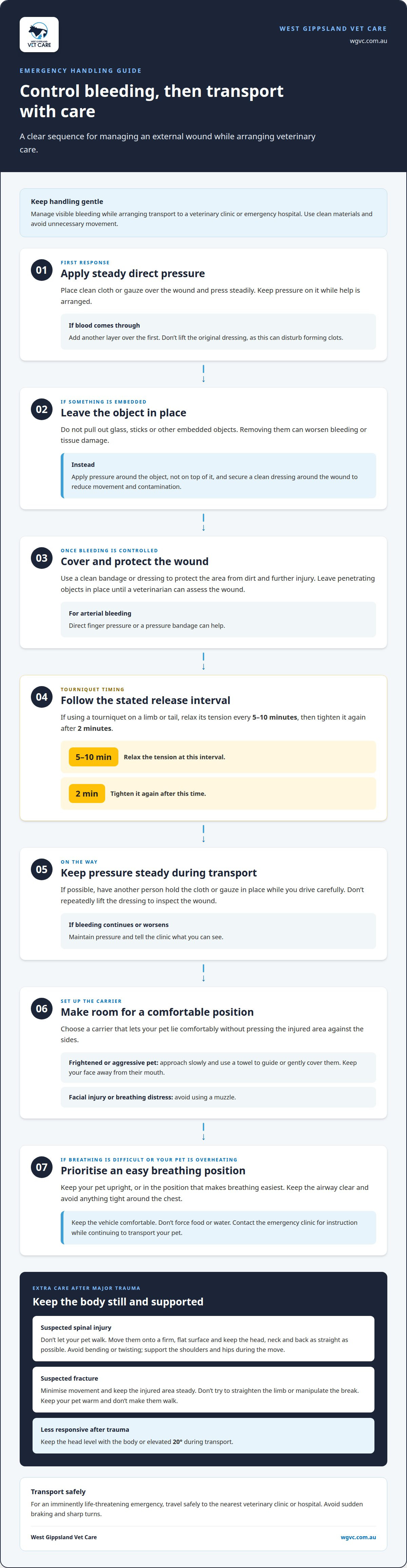
- Apply direct pressure. Place clean cloth or gauze over the wound and press steadily. If blood comes through, add another layer without lifting the first, as lifting can disturb forming clots. Keep pressure on the wound while help is arranged.
- Leave embedded objects in place. Don’t pull out glass, sticks or other objects, as removal can worsen bleeding or tissue damage. Apply pressure around the object rather than pressing it deeper, and secure a clean dressing around the wound to reduce movement and contamination.
- Cover the wound for transport. Once bleeding is controlled, use a bandage to protect the area from dirt and further injury. For arterial bleeding, direct finger pressure or a pressure bandage can help. If using a tourniquet on a limb or tail, relax its tension every 5-10 minutes, then tighten it again after 2 minutes.
Manage bleeding during transport
- Keep pressure steady on the way. If possible, have another person hold the cloth or gauze in place while you drive carefully. Don’t repeatedly lift the dressing to inspect the wound. If bleeding continues or worsens, maintain pressure and tell the clinic what you can see.
- Use a carrier that fits your pet’s body. Choose one that lets your pet lie comfortably without forcing their injured area against the sides. For a frightened or aggressive pet, approach slowly and use a towel to guide or gently cover them; don’t put your face near their mouth. Avoid a muzzle if they have facial injuries or breathing distress.
- Respond to breathing trouble or overheating. Keep your pet upright, or in the position that makes breathing easiest, with their airway clear and nothing tight around their chest. Keep the vehicle comfortable, don’t force food or water, and contact the emergency clinic for instruction while continuing to transport them.
Leave penetrating objects in place until a veterinarian can assess the wound; do not remove embedded objects before veterinary care. Cover wounds with a clean dressing to help protect them from further injury and contamination.
Restraining and moving animals with suspected spinal trauma
After major trauma, such as a car accident, treat your pet as though their spine may be injured. Handle them gently and keep movement controlled from your first response through the journey.
Contact the vet before transport
- Call the veterinary clinic before setting off, if possible. Describe the trauma, your pet’s condition and any changes you’ve noticed, so the team can prepare. Follow their instruction about arrival and handling, but don’t delay transport to watch for more symptoms. In an imminently life-threatening emergency, travel safely to the nearest veterinary clinic or hospital.
Minimise movement after suspected spinal trauma
- Keep your pet still and supported. Don’t let them walk, even if they seem able. For a suspected back or neck injury, move them onto a firm, flat surface, such as a board or rigid carrier. Keep the head, neck and back as straight as possible, and avoid bending or twisting their body.
A car accident is one example of trauma that calls for extra care. Move slowly, as rough handling can worsen an injury or damage surrounding soft tissue. If your pet is conscious, let them remain in a position they tolerate rather than forcing an uncomfortable posture.
Restrain pets safely for transport
- Support the shoulders and hips during the move. If possible, have another person help lift the firm support evenly, keeping your pet’s body aligned. For a cat, use a secure carrier; a towel can help guide them gently inside. Choose a carrier that lets them lie without being cramped, and has enough space for fresh air.
Keep your pet supported during travel and prevent them from sliding without pressing on their spine. In an imminently life-threatening emergency, drive safely to the nearest clinic or hospital, avoiding sudden braking and sharp turns.
Keep pets calm and comfortable
- Reduce noise and unnecessary handling. Speak quietly, keep the car at a comfortable temperature and use soft bedding around your pet without changing their position. A calm passenger can watch for changes and help minimise stress. For a cat, a dark carrier with air holes can limit stimulation while allowing airflow and observation.
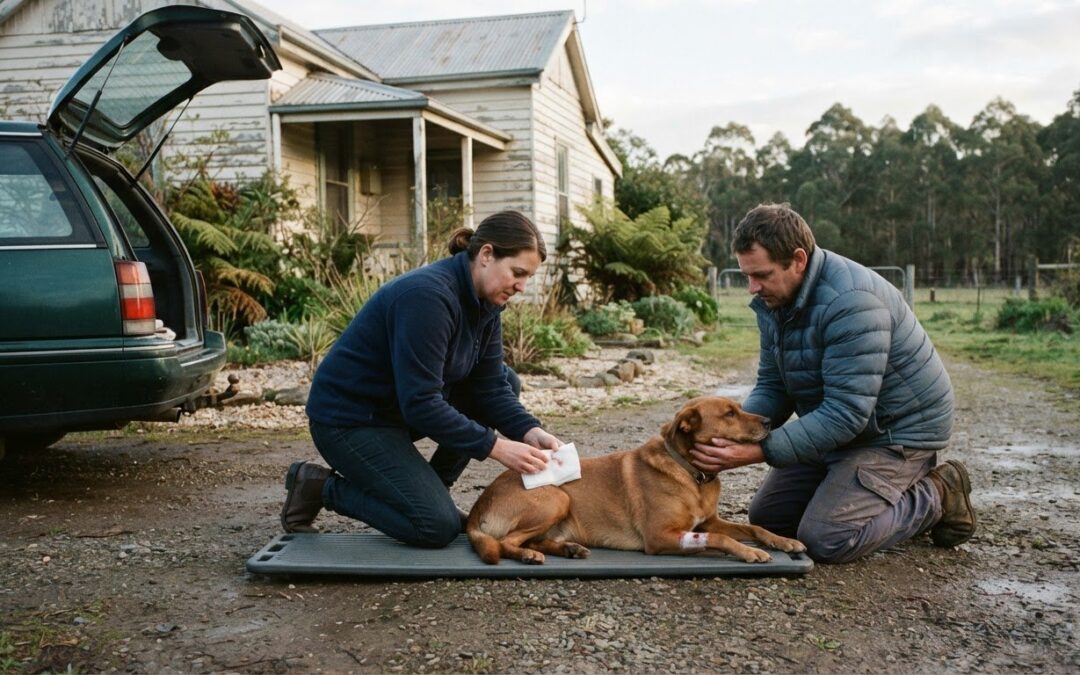
Supporting possible fractures or spine injuries
Move a pet with a suspected fracture or spinal injury as little as possible. A firm support can help keep their body aligned on the way to veterinary care.
Prepare a firm, flat support
- Choose a board, rigid carrier or flat surface. Slide it beside your pet before moving them, then lift their body onto it with their head and body supported. Keep the back and neck straight, and avoid bending or twisting. If a dog struggles with a firm support, use a large blanket as a stretcher, with help to keep it level.
Support fractures during transport
- Keep the injured area steady. For a fracture on the lower part of a leg, a bandage or splint can help limit movement and further injury. Don’t try to straighten the limb or manipulate the break. Fractures above the elbow or stifle are difficult to immobilise, so focus on carrying your pet carefully and keeping them still.
A broken bone needs prompt veterinary attention. Keep your pet warm and do not make them walk, even if they seem able to bear weight.
Position your pet for the car
- Keep your dog on the support during the drive. Place the board or flat carrier on a stable part of the vehicle, with enough room to keep your dog lying down. Have another person gently steady your pet or lightly secure them to the support, without tightening anything across the injury. Avoid sudden braking and sharp turns.
Check support and movement
- Keep the support level as you lift and travel. If two owners are available, one can support the front and the other the hindquarters, moving together on a clear path to the car. Check that bedding or a blanket hasn’t folded under the injured area. For a suspected spine injury, prioritise body alignment over adjusting a limb or bandage.
If available, use a board or carrier as a firm support. Otherwise, gently place your pet in a crate, on a blanket or on another flat surface to minimise movement. Support the head and body throughout, keeping the spine straight and avoiding bending or twisting.
For a fracture in the lower part of a limb, a bandage or splint may help stabilise it and limit further injury and pain. Keep your pet warm and take them to a vet promptly, using a stretcher or getting assistance if needed.
Transporting animals with altered mentation
A pet who is confused, unresponsive or behaving differently after trauma needs careful transport. If you’re working out how to stabilise a pet for transport to the vet, focus first on breathing, reducing stimulation and avoiding unnecessary handling.
- Position the head and body carefully. After trauma, keep your pet’s head level with their body or elevated 20°. Use a firm surface if possible, and avoid bending the neck. If the animal is conscious, allow a position that makes breathing easiest rather than forcing them flat.
- Keep the airway open during breathing difficulty. Make sure nothing blocks your pet’s nose or mouth, and keep pressure off their chest. Don’t force food or water during the trip. If choking is suspected, don’t reach blindly into the mouth; remove an object only if it’s clearly visible and safe to reach.
- Make the journey quiet and supported. Gently wrap a sick or injured pet in a blanket or towel, without covering their airway or restricting their chest. A light cloth over the head can reduce stimulation, but leave the face clear. Keep the vehicle comfortable and drive smoothly.
- Respond safely if a seizure occurs. Move nearby objects away and place soft padding around your pet, but don’t restrain them or put your hands near their mouth. Time the seizure if possible. A seizure lasting longer than 5 minutes, or multiple seizures close together, is a life-threatening emergency.
- Keep things calm after a seizure. Your pet may be disoriented, blind or anxious, so use a quiet, dark space and handle them gently. If possible, call the veterinary hospital before arriving. Share breathing changes, seizure duration and your pet’s response to your voice, helping the team prepare to assess them. Knowing how to stabilise your pet for transport to the vet also means noticing and communicating these changes.
If your pet’s awareness has changed, arrange urgent veterinary assessment rather than waiting to see whether they improve. Existing clients can contact the emergency care team for help with an emergency.
West Gippsland Vet Care
West Gippsland Vet Care provides emergency and trauma care when an injured pet needs veterinary assessment. If you’re an existing client, the clinic’s emergency service is available 24 hours; share your pet’s symptoms and any steps taken during transport so the team can understand the situation.
Suspected fractures may need further assessment and treatment, including orthopaedic surgery where appropriate. The veterinary team can assess your pet and discuss the next steps. Keep your companion as still and supported as possible during transport, especially if you suspect a spinal injury or notice changes in awareness or breathing.
If your pet is injured or their condition has changed, contact West Gippsland Vet Care for guidance.
Help your pet take the next step
Knowing how to stabilise an injured pet for transport to the vet gives you a clear starting point. Once you arrive, help the veterinary team understand what has changed and what your pet may need during recovery.
If you can, bring relevant health information, such as your pet’s usual behaviour, existing conditions and medicines. After assessment, ask what signs to watch for at home, how to keep your pet comfortable and when follow-up care is needed. A clear plan can make the transition from urgent treatment to recovery more manageable for you and your companion.
If you’d like support with your pet’s care, contact West Gippsland Vet Care. You’re taking a caring step for your companion, and you don’t have to work out what comes next on your own.