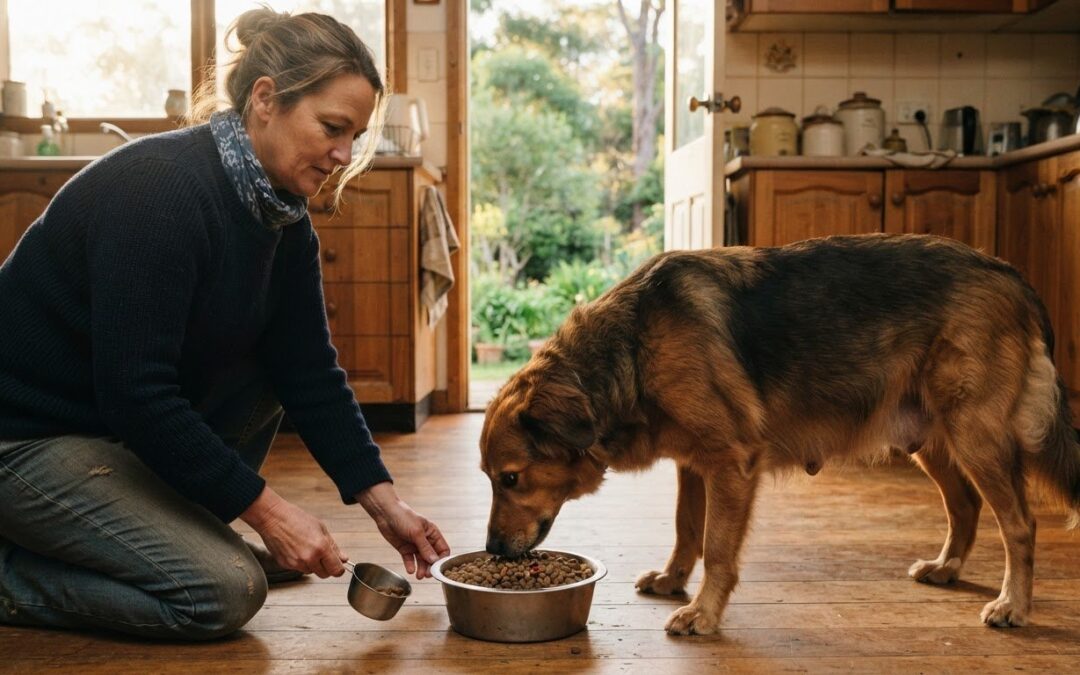
More food isn’t the right answer from day one. Knowing what to feed a pregnant dog starts with her stage of pregnancy: keep her on a complete, balanced adult food early on, then gradually transition to a suitable puppy or growth food as her nutritional needs rise later in pregnancy. Increase portions thoughtfully, rather than adding supplements without veterinary advice.
It’s understandable to want to support healthy weight gain while avoiding overfeeding or missing something important. A steady feeding plan helps you track meals and changing needs without making it feel like guesswork.
Learn how to choose suitable food, adjust meals as pregnancy progresses and monitor weight gain. We’ll also cover when smaller, more frequent meals may help, and why it’s best to discuss supplements or nutrition concerns with your veterinarian.
Key Takeaways
- Choose a complete, balanced food suited to your dog’s stage of pregnancy, and make any change in diet gradually.
- Track her weight and body condition as pregnancy progresses so meal portions can be adjusted without encouraging excess weight gain.
- Plan feeding around her appetite and changing nutritional needs, including whether smaller, more frequent meals may help.
- Discuss supplements with your veterinarian before adding them; extra nutrients, particularly calcium, can be harmful when given unnecessarily.
Can nutritional issues cause problems around pregnancy?
A dog’s nutritional needs change throughout pregnancy, so one feeding plan may not suit every week. During the first five weeks, her energy needs generally remain normal; they rise as the litter develops.
Nutrient requirements during pregnancy
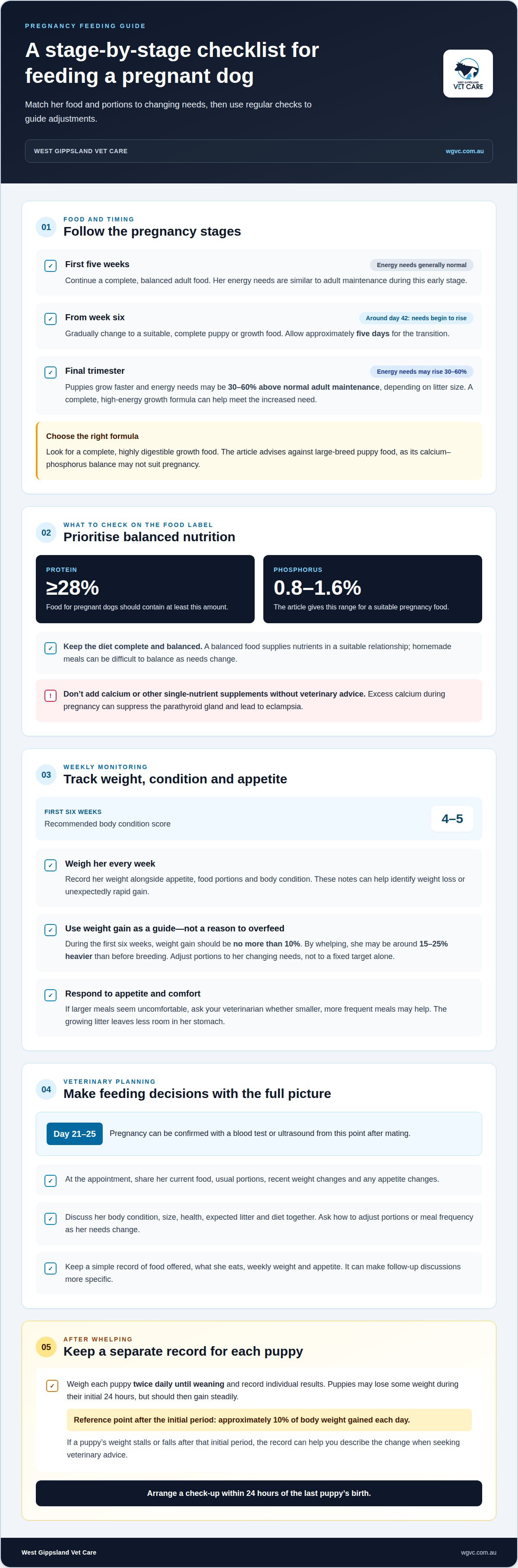
Pregnancy nutrition means providing enough energy and nutrients to support the mother and developing puppies. During the first five weeks, energy needs are similar to adult maintenance; around day 42, they begin to increase. That change matters because a dog’s existing portion may no longer provide adequate nutrition as whelping approaches, particularly if she carries a larger litter.
Nutritional demands in the final trimester
The final trimester brings faster puppy growth and a greater need for energy-dense food. A pregnant dog’s daily energy needs may be 30% to 60% above normal adult maintenance, depending on litter size. A complete, high-energy growth formula can help meet those needs. Smaller, more frequent meals may also help when the growing litter leaves less room in her stomach.
Balanced nutrition during pregnancy
A balanced complete food supplies nutrients in a suitable relationship, rather than relying on isolated additions. Food for pregnant dogs should contain at least 28% protein, with phosphorus levels of 0.8% to 1.6%. Large-breed puppy food isn’t recommended because its calcium-phosphorus balance may not suit pregnancy. Homemade meals can also be difficult to balance across a litter’s changing needs.
Switching to puppy food
Switch to suitable puppy or growth food from week six of pregnancy, when nutritional demands rise. Transition from her current food over approximately five days to give her time to adjust. Choose a complete, highly digestible formula, not large-breed puppy food. A balanced food should not need single-nutrient supplements. Excess calcium during pregnancy can suppress the parathyroid gland and lead to eclampsia.
Avoiding excess weight during pregnancy
Weekly weight checks can help distinguish healthy pregnancy gain from excess weight. Her body condition and appetite also help show whether portions need adjusting.
Monitoring body condition and weight
Monitoring means tracking body condition and weight throughout pregnancy, not relying on appearance alone. During the first six weeks, a body condition score of 4-5 is recommended. Weigh her each week and note changes alongside her appetite and portions. This routine can reveal weight loss or unexpectedly rapid gain, giving you useful information to discuss when adjusting her calorie intake.
Pregnancy weight gain
Weight gain should reflect the puppies’ growth, rather than simply larger portions from the start. During the first six weeks, her weight gain should be no more than 10%; by whelping, she may be around 15-25% heavier than before breeding. A pregnant dog that loses weight or struggles to eat may not be getting enough nutrition. Record weekly weights and adjust portions to her changing needs, not a fixed target alone.
Foods and ingredients to avoid
Avoid large-breed puppy food and homemade diets that aren’t nutritionally balanced. Don’t add calcium or other single-nutrient supplements without veterinary advice. These choices can upset the balance of her diet rather than provide adequate nutrition. If you’re unsure whether a food or ingredient is suitable, choose a complete, balanced formula and raise your concern during a veterinary nutrition discussion.
Monitoring newborn puppies’ weight gain
After whelping, weigh each puppy twice daily until weaning, recording individual results. Puppies may lose some weight during their initial 24 hours, but should then gain steadily. A gain of approximately 10% of body weight each day is a useful reference. If one puppy’s weight stalls or falls after that initial period, the record can help you describe the change clearly when seeking veterinary advice.
Planning meals with a veterinarian
A veterinarian can help match feeding to pregnancy stage, body condition and appetite. A clear plan also makes it easier to adjust meals as her nutritional requirements change.
Pregnancy can be confirmed with a blood test or ultrasound from day 21-25 after mating. At that appointment, share the food she eats, her usual portions, any recent weight changes and changes in appetite. These details help the veterinarian assess her starting point and discuss how her needs may shift as the litter grows.
Meal planning involves more than reading the food label. A veterinarian can consider her body condition, size, health, expected litter and current diet together. For example, a dog maintaining a healthy condition on complete food may need a different portion adjustment from one losing weight or refusing meals. Her nutritional requirements also change later in pregnancy, so revisit the plan as her appetite and body change.
Ask how to adjust portions and meal frequency if larger meals seem uncomfortable for her. In the final trimester, puppies grow rapidly, and smaller, more frequent meals can help some dogs eat enough. A highly digestible, complete growth formula can provide concentrated nutrition. Protein supports dietary balance, while extra supplements should only be included if a veterinarian recommends them.
Keep a simple record of feeding, weekly weight and appetite to make follow-up discussions more specific. Note the food and portion offered, what she actually eats, and any change in body condition. If she struggles to meet her needs, that record can help the veterinarian consider whether meal size, frequency or the food itself needs adjusting. After whelping, arrange a check-up within 24 hours of the last puppy’s birth; the mother’s needs then shift towards milk production and caring for her puppies.
When supplementation may be appropriate
Most pregnant dogs eating complete, balanced food don’t need extra vitamins or minerals. A veterinarian may consider supplements if an assessment identifies a specific dietary need.
Avoiding unnecessary supplements
A supplement adds nutrients to her diet, so it should address an identified need rather than pregnancy alone. If complete food already meets her requirements, adding vitamins or minerals can upset its balance. Bring the food packaging and a list of everything she eats to a veterinary discussion. Include treats and existing supplements so her whole diet can be considered.
Risks of calcium supplementation
Extra calcium during pregnancy can interfere with her body’s calcium regulation and increase the risk of eclampsia. That risk makes routine calcium supplementation a poor substitute for a balanced diet. Calcium should be considered as part of a pregnant dog’s overall diet rather than added without considering the rest of her food. The right approach is to assess the complete formula, rather than adding calcium based on the size of her litter or an assumption about milk production.
Vitamin and mineral supplements
Vitamin and mineral products vary, and combining them can add overlapping nutrients to her daily intake. A veterinarian can assess her food, body condition and energy requirements before recommending a supplement. If her diet is complete and balanced, extra products aren’t routinely needed. If a specific deficiency or dietary gap is identified, follow the veterinary advice on which supplement to use and how it fits with her existing food.
Raw food, homemade diets and supplements
Raw food isn’t automatically a complete pregnancy diet; its nutritional balance depends on its ingredients and formulation. Homemade diets are difficult to balance for the vitamins, minerals and other nutrients a pregnant dog needs, so use complete food as the foundation. Don’t add supplements to a raw or homemade menu by guesswork. Have the whole recipe assessed, including treats and additions, against her needs as pregnancy progresses.
For a calm conversation about your dog’s diet and pregnancy care, speak with a veterinary professional.
West Gippsland Vet Care
West Gippsland Vet Care’s veterinary team can discuss your dog’s pregnancy nutrition concerns. Bring details of her food, portions, appetite and weight changes so the conversation can focus on her needs and any questions about supplements.
If her appetite changes, she loses weight or you’re unsure whether her diet is balanced, veterinary advice can help you decide what to do next. West Gippsland Vet Care also provides services such as Pet Vaccinations, Desexing Procedures, Microchipping and Orthopaedic Surgery.
Contact West Gippsland Vet Care to talk about your dog’s care.
Feel confident about the next step
A clear answer to what to feed a pregnant dog is most useful when it fits her appetite, health and changing needs. If you’re still uncertain, you don’t need to resolve every question at once. Focus on the concern that matters most today, whether that’s choosing a food, understanding a supplement label or responding to a change in her eating. A considered conversation can help you approach each decision calmly and keep her individual needs at the centre.
You can also discuss her wider care as your family prepares for the puppies. West Gippsland Vet Care provides Pet Vaccinations, Desexing Procedures and Microchipping, alongside its other veterinary care. Raise the questions on your mind and talk through what support may help your dog.
Contact West Gippsland Vet Care to talk about your dog’s care and nutrition concerns. Seeking thoughtful guidance is a caring next step for her and the puppies she’s carrying.
Frequently Asked Questions
How should I feed my dog during her pregnancy?
What to feed a pregnant dog depends on her usual complete food and her stage of pregnancy. Keep meals measured and water readily available. Note any uneaten portions, sudden appetite changes or food refusal. That record can help distinguish a brief preference shift from a pattern worth discussing with your vet. Include treats consistently in your notes, as extras contribute to her daily intake.
Why is nutrition important for pregnant and lactating dogs?
Good nutrition supports the mother’s health while her puppies develop and, after whelping, while she produces milk. A litter’s growth and milk production place different demands on her body, so her food needs to provide adequate energy and nutrients. During lactation, energy needs can peak at two to four times those of a healthy, non-pregnant adult dog, particularly while she’s feeding her puppies.
How can these increased nutritional needs for the dog be met?
Meet increased needs with complete, energy-dense growth food suited to pregnancy or nursing, rather than relying on extra treats. If she struggles to eat enough, offer smaller, frequent meals and keep fresh water within easy reach. Her appetite and how much she actually eats matter as much as the portion offered. Share a record of both with your veterinarian if feeding becomes difficult.
How does the dog’s nutritional requirements change during gestation and lactation?
Nutritional needs rise as puppies grow, then increase further when the mother produces milk. A nursing dog’s energy requirements may reach two to four times normal, with demand peaking around three to five weeks after whelping. They then ease as puppies wean; a dog’s energy needs typically return to normal by about eight weeks after whelping. Adjust her feeding as this transition unfolds.
How much food should I feed the future puppy-parent?
There isn’t one portion that suits every pregnant dog; the amount depends on her size, food, pregnancy stage, appetite and body condition. Use the food’s feeding guide as a starting point, measure what you offer and record leftovers. Review her weekly weight alongside those notes. Changes in weight or appetite can help guide a discussion about portions with your veterinarian.
Under what circumstances is it appropriate to supplement the dam’s diet?
Supplements are appropriate when a veterinarian identifies a specific need that her complete diet doesn’t meet. Balanced food formulated for pregnancy or growth generally doesn’t require added vitamins or minerals. Avoid adding calcium routinely: excess calcium during pregnancy can disrupt the body’s regulation and lead to eclampsia. Tell your veterinarian about every supplement and food she receives before adding anything new.