
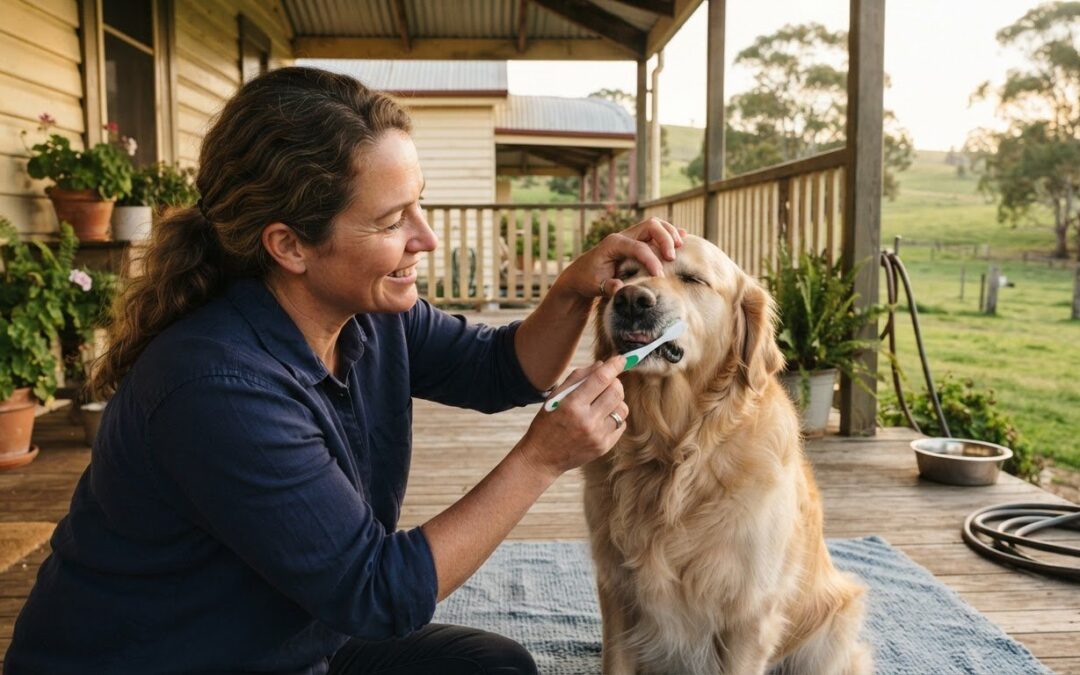
Daily brushing is one of the most effective ways of preventing periodontal disease in dogs. Aim to brush every day, or at least three times a week while you build the habit. Use a soft-bristle toothbrush and toothpaste made for dogs, never human toothpaste.
Brushing matters because plaque can combine with minerals to form tartar within two to three days. As periodontal disease progresses, gums can separate from teeth and the supporting bone can recede. Dental care is about more than fresh breath.
Tooth brushing may feel unfamiliar, and some dogs need time to accept it. This guide explains what periodontal disease is, how it develops, and how to introduce brushing gently. It also covers how home care works alongside veterinary dental examinations and professional cleaning, including why dental X-rays and the cleaning method matter when assessing your dog’s oral health.
Key Takeaways
- Learn how plaque and tartar can irritate gums and progress to damage around a dog’s teeth.
- Understand why a veterinary dental cleaning needs to assess areas beneath the gumline, where problems may be hidden.
- See how dental chews, suitable foods and toys can complement a home dental-care routine.
- Recognise changes in your dog’s mouth or eating habits that can make a veterinary dental assessment important.
Daily tooth brushing
Brush your dog’s teeth daily if possible. If that is not manageable yet, work towards at least three sessions a week, with daily brushing as the goal. Use a soft-bristle toothbrush and dog-safe toothpaste, and introduce the routine gradually with rewards.
Brushing your dog’s teeth at home
Regular brushing disrupts plaque before it hardens into tartar. A soft-bristle toothbrush lets you clean tooth surfaces gently, while short, calm sessions can make oral care easier for both of you.
First, let your dog sniff the toothbrush and reward calm behaviour. Gradually introduce it to the mouth, then build up to brushing rather than forcing a full session straight away. Aim to brush daily; if you are building the habit, at least three times a week is a useful routine to work towards.
Puppies can begin getting used to brushing as early as 8 weeks old. Keep early practice gentle, and avoid uncomfortable brushing while a young dog is actively losing deciduous teeth. Home oral hygiene can begin once permanent teeth have erupted. These gradual steps support preventing periodontal disease in dogs without making brushing a stressful experience.
Using dog-safe toothpaste
Dog-safe toothpaste is made for brushing a dog’s teeth; human toothpaste can be toxic to dogs. Choose toothpaste intended for dogs, and don’t substitute a human product during a rushed brushing session.
Pair dog-safe toothpaste with a soft-bristle brush and introduce the taste gradually, starting with a small amount. Reward your dog for accepting both the taste and the brush. This helps establish a familiar routine without making each session a struggle.
Brushing helps remove plaque, where bacteria collect before tartar forms. Without care, periodontal disease can progress and damage the gums and structures supporting the teeth. Bad breath and other symptoms can signal an oral health problem, but brushing at home cannot replace veterinary assessment or professional dental care. If your dog seems uncomfortable during brushing, pause rather than pushing through. Pain can make future sessions harder to accept.
Are anaesthesia-free dental cleanings recommended?
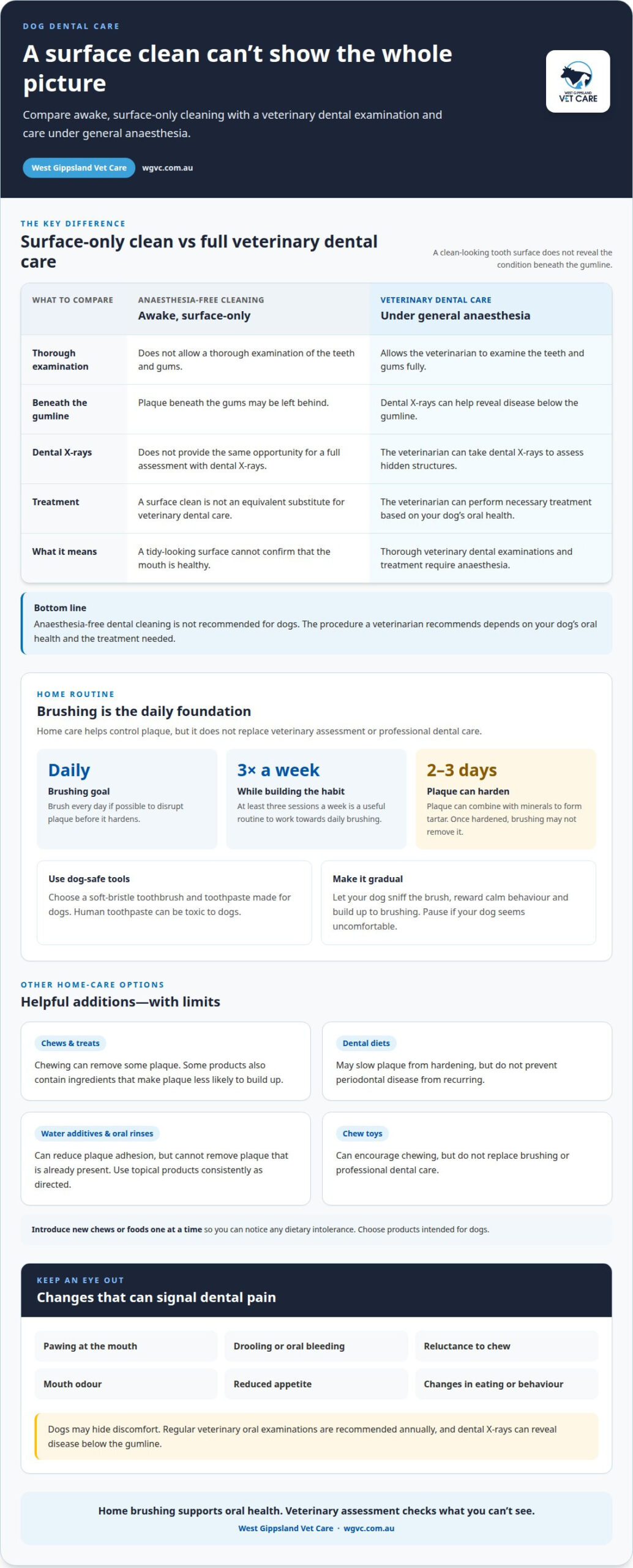
No. Anaesthesia-free dental cleaning is not recommended for dogs because it may leave plaque beneath the gums and does not allow a thorough examination. Under general anaesthesia, a veterinarian can examine the teeth and gums fully, take dental X-rays and perform necessary treatment. A clean-looking surface alone cannot show the condition of the structures supporting the teeth.
For Australian owners, the relevant guidance is clinical: thorough veterinary dental examinations and treatment require anaesthesia. This explains why an awake, surface-only clean isn’t an equivalent substitute. The procedure a veterinarian recommends depends on the dog’s oral health and the treatment needed.
Dental chews and treats can remove some plaque through chewing; some also contain ingredients that make plaque less likely to build up. Dental diets may slow plaque from hardening, but they do not prevent periodontal disease from recurring. Water additives and oral rinses can reduce plaque adhesion, but cannot remove plaque already present. Introduce one new chew or food at a time so you can notice any dietary intolerance. Choose products intended for dogs and use topical plaque-prevention products consistently as directed.
Toys can encourage chewing, but they do not replace brushing or professional dental care. Watch for pawing at the mouth, drooling, oral bleeding, reluctance to chew, mouth odour or reduced appetite. These can be signs of dental pain. Dogs may hide discomfort, so pay attention to changes in eating or behaviour.
Regular veterinary oral examinations can identify problems that are difficult to see at home. Annual examinations are recommended, and dental X-rays can reveal disease below the gumline. West Gippsland Vet Care provides preventative dentistry and dental X-rays to assess your dog’s teeth and plan suitable care.
The cost of a dog dental cleaning in Australia depends on the case and is provided after a quote request; factors include location, the veterinary provider and procedures required. If you’re concerned about hidden dental problems, preventative dentistry and dental X-rays can help assess your dog’s oral health.
What Is Periodontal Disease in Dogs?
Periodontal disease starts when plaque builds up around teeth and bacteria inflame the gums. Early gingivitis can make gums red or swollen; without treatment, disease may damage the tissues and bone supporting teeth.
Plaque and tartar buildup
Plaque is a sticky film of bacteria that forms on teeth; tartar is plaque that has hardened. Tartar can collect near the gumline, where it contributes to ongoing irritation and disease.
In dogs, plaque can combine with minerals to form tartar within two to three days. Once tartar hardens, brushing may not remove it, and inflammation can continue around the tooth. Periodontal disease is more common in small-breed dogs, and risk increases with age. Crowded teeth are harder to keep clean, so plaque can gather between teeth and along the gums.
Gum inflammation and gingivitis
Gingivitis is gum inflammation caused by plaque around the teeth, without loss of tooth support. It is an early sign of periodontal disease, not just a cosmetic change.
Gums may look red or swollen where they meet the teeth. At this early stage, gingivitis is reversible when plaque is controlled and the mouth receives appropriate care. The key distinction is whether the supporting bone and ligaments remain intact. Changes in gum appearance warrant attention, because inflammation can progress if left untreated.
From gingivitis to periodontitis
Periodontitis is more advanced disease, where damage extends from the gums to the structures supporting the teeth. This damage can become irreversible, even when treatment helps manage the disease.
Periodontal disease has four stages, from gingivitis without bone loss to advanced disease with more than 50% bone loss. As it advances, gums can separate from teeth and surrounding bone can recede. This may lead to chronic pain, gum erosion, loose teeth or tooth loss. The progression explains why early assessment matters: gingivitis can be reversed, but later stages require treatment to address damage and limit further progression.
How periodontal disease develops
Periodontal disease progresses as inflammation spreads from the gums into the tissues and bone supporting each tooth. Its four stages describe the extent of damage, which is why early attention matters.
At stage one, gingivitis causes gum inflammation without loss of tooth support. This stage is reversible. If disease continues untreated, later stages damage the ligaments and bone that anchor the teeth. Treatment can manage these stages, but home brushing alone cannot restore lost support.
As tooth attachment weakens, gums can separate from teeth and bone can recede. Advanced disease may loosen teeth, cause chronic pain and eventually lead to tooth loss. In small and toy-breed dogs, severe bone loss can even contribute to jaw fractures. These changes may be hard to spot at home because dogs can keep eating despite discomfort.
Periodontal disease can also affect health beyond the mouth. Bacteria may enter the bloodstream, and untreated disease may contribute to heart, lung and kidney problems. This does not mean every dog with gum disease will develop these conditions, but it explains why oral health deserves attention alongside other signs of wellbeing.
Home brushing helps limit plaque, but established disease may need veterinary treatment. A dental examination assesses the mouth and the extent of damage. Depending on the findings, professional cleaning can remove deposits, while scaling cleans tooth surfaces and areas below the gumline. Dental X-rays can reveal changes hidden beneath the gums, including bone loss that a surface examination may miss.
The practical takeaway is to act before a dog’s teeth become loose or chewing changes. Regular oral examinations help identify disease earlier, when treatment options differ from those available in advanced stages. For help assessing your dog’s oral health, arrange a preventative dental assessment.
West Gippsland Vet Care
If you have noticed changes in your dog’s mouth, eating or behaviour, West Gippsland Vet Care can help. An assessment can clarify whether the symptoms may relate to periodontal disease and what care is appropriate for your dog.
Mention concerns such as bleeding gums, reluctance to chew or persistent mouth odour when discussing your dog’s health. Sharing when you first noticed the change and whether it has progressed can help guide the conversation. Dental problems can be uncomfortable, so seek advice before tooth loss occurs.
Contact West Gippsland Vet Care to discuss your dog’s oral health.
Make oral care part of your dog’s routine
A lasting dental-care habit is easier to maintain when it fits naturally into life with your dog. Choose a regular moment that is already calm, and keep the routine manageable through busy weeks, travel or changes at home. If several people care for your dog, agree on who is responsible so the routine stays consistent.
Notice how your dog responds over time. A change in comfort or willingness to take part is a reason to pause and seek veterinary advice, rather than turning care into a struggle. Preventing periodontal disease in dogs is not about perfection; it is about a thoughtful approach that supports your companion’s wellbeing as their needs change.
If you’d like to talk through your dog’s dental care, contact West Gippsland Vet Care. A conversation can help you consider a suitable next step for your dog and your household routine.
Frequently Asked Questions
How can I prevent gum disease?
Make oral care part of your routine, and use alternatives when brushing is not practical. Dental wipes can remove soft plaque, while approved dental products may support oral hygiene between veterinary visits. Introduce one new chew or product at a time so you can notice any intolerance. If your dog resists mouth handling, build familiarity gradually rather than forcing a session that could make future care harder.
What causes gum disease?
Gum disease begins when plaque bacteria remain on teeth and irritate the gums. Crowded teeth can create hard-to-reach areas where plaque collects, and small-breed dogs may be more prone to periodontal problems. Age also matters: risk increases as dogs get older. Regularly noticing changes around the gumline can help you raise concerns before your dog develops more advanced oral problems.
Which dog toothpaste and toothbrush are recommended, and which products should be avoided?
Choose toothpaste made for dogs and a soft-bristle brush that lets you reach their teeth comfortably. A finger brush may suit a dog that will not accept a handled toothbrush, but gentle contact matters more than the tool. Avoid human toothpaste, which can be toxic to dogs. Do not use a hard-bristled brush or force brushing against sore gums; stop if your dog shows discomfort.
Do dental chews, diets, water additives, or toys help prevent periodontal disease in dogs?
Dental chews and diets can support oral care, but they do not replace a dental-care routine. Chewing may remove some plaque, and some chews contain ingredients that make plaque less likely to build up. Dental diets can slow plaque hardening; water additives may reduce plaque sticking to teeth but will not clear existing deposits. Toys are not a substitute for oral care, so keep them clean and remove damaged items.
How often should dogs have veterinary dental check-ups and professional cleanings?
Arrange a thorough veterinary oral examination at least annually, with more frequent assessments for dogs prone to dental disease. The examination findings guide whether and when a professional cleaning is recommended; one schedule does not suit every dog. Age, crowded teeth, gum changes and previous dental problems can all affect timing. Dental X-rays help assess areas hidden beneath the gumline.
What are the risks of untreated periodontal disease in dogs?
Untreated disease can damage the structures supporting the teeth, causing ongoing pain, gum erosion, bone loss and eventually tooth loss. A dog may still eat despite discomfort, so reluctance to chew or reduced appetite deserves attention. In advanced disease, bacteria may enter the bloodstream and contribute to problems affecting organs such as the heart, lungs and kidneys.