
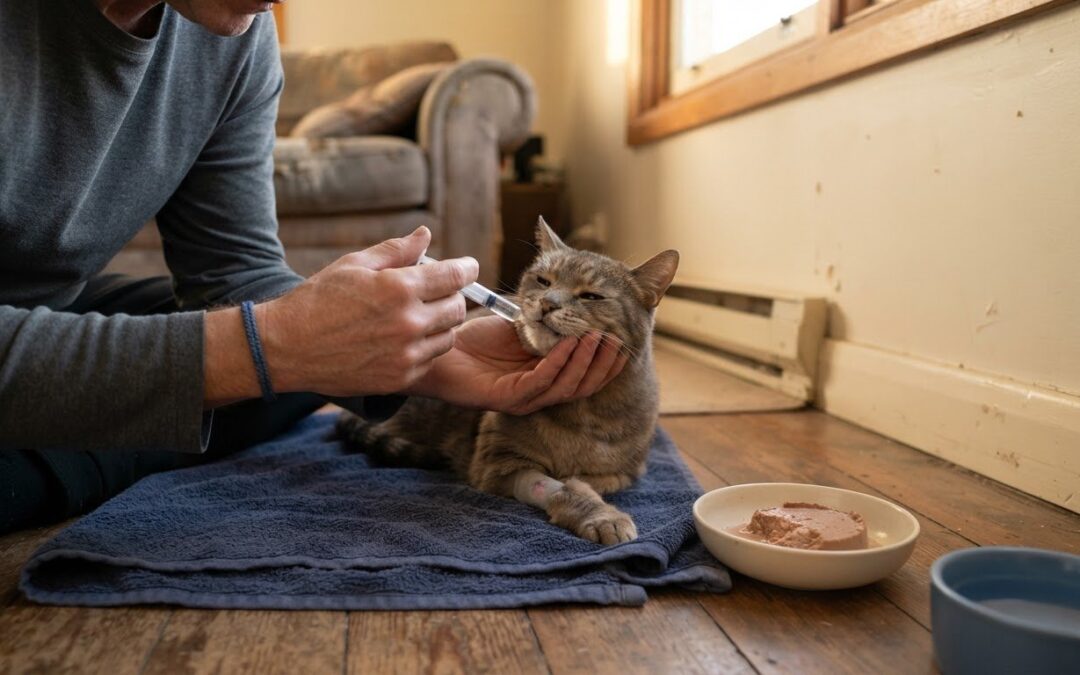
The first few days at home are about rest, soft food and following your pet’s discharge plan. After extractions, offer soft food for 7 days, or as directed by your veterinarian; generally, wait about 14 days before restarting brushing or dental products unless your vet advises otherwise. Good home care after pet dental surgery also means watching for swelling, bleeding or signs of discomfort and contacting your veterinary clinic if you notice them.
It’s natural to feel unsure when your dog or cat is sleepy, eating differently or recovering after dental surgery. This guide explains what to expect, how to manage meals and nutrition, and when to resume brushing and other dental products. You’ll also learn how to keep your pet comfortable at home and recognise changes that warrant veterinary advice.
Key Takeaways
- Give your pet a quiet place to rest, and avoid running, jumping and rough play for the first 24 hours.
- Wait at least 30 minutes after discharge before offering food or water; appetite may be reduced while the anaesthetic wears off.
- A little blood-tinged saliva can occur for 24 hours after extractions, but swelling or bleeding around the wound needs prompt veterinary attention.
- Attend the recommended follow-up so your vet can assess healing and help guide your pet’s ongoing dental care.
Post-operative care after pet dental surgery
After dental surgery, follow the discharge instructions and keep your pet settled at home. Recovery depends on the treatment performed, so note the medication schedule and recommended follow-up appointment.
Pain Relief and Ongoing Care
A veterinarian may give an anti-inflammatory injection after extractions and prescribe pain relief for home use. Give each dose exactly as directed. If your pet resists medication or you have difficulty giving it, contact the clinic for advice. Whimpering during movement or lying in an unusual position can indicate discomfort, so tell your vet about these changes.
If your pet has a bandage on a front leg, remove it about two hours after arriving home. Attend the recommended recheck appointment so the veterinary team can assess healing. A post-dental check-up is commonly scheduled 10-12 days after the procedure, but follow the timing provided for your pet.
Monitoring Dogs After Sedation
Your dog may be drowsy or disoriented after sedation, and anaesthetic effects can continue for several hours at home. Settle your pet in a comfortable, quiet place away from children and other pets, and watch its breathing, heart rate and responsiveness. Avoid exercise, stairs and strenuous activity during early recovery.
Some pets take a few days to recover fully from an anaesthetic. A mild cough after the airway tube is removed can settle within a couple of days; note whether it improves or persists. If your dog remains drowsy and sedate 24 hours after the procedure, contact your veterinarian for advice.
When to Contact a Vet
Contact an Australian vet promptly if you see swelling or bleeding around the surgical wound, or if your pet is not responding to treatment as expected. Blood-tinged saliva can occur for 24 hours after extractions, but bleeding around the wound needs immediate veterinary attention. A cough that continues beyond 5 days after the procedure also warrants a call.
During the first few days, seek veterinary advice if your pet won’t eat, rubs its mouth or appears to be in pain. Contact the clinic if you’re concerned about any change in your pet’s condition. If urgent care is needed, call an emergency clinic. Clear observations about eating, movement and medication help the veterinary team advise you.
Feeding after dental surgery and tooth extractions
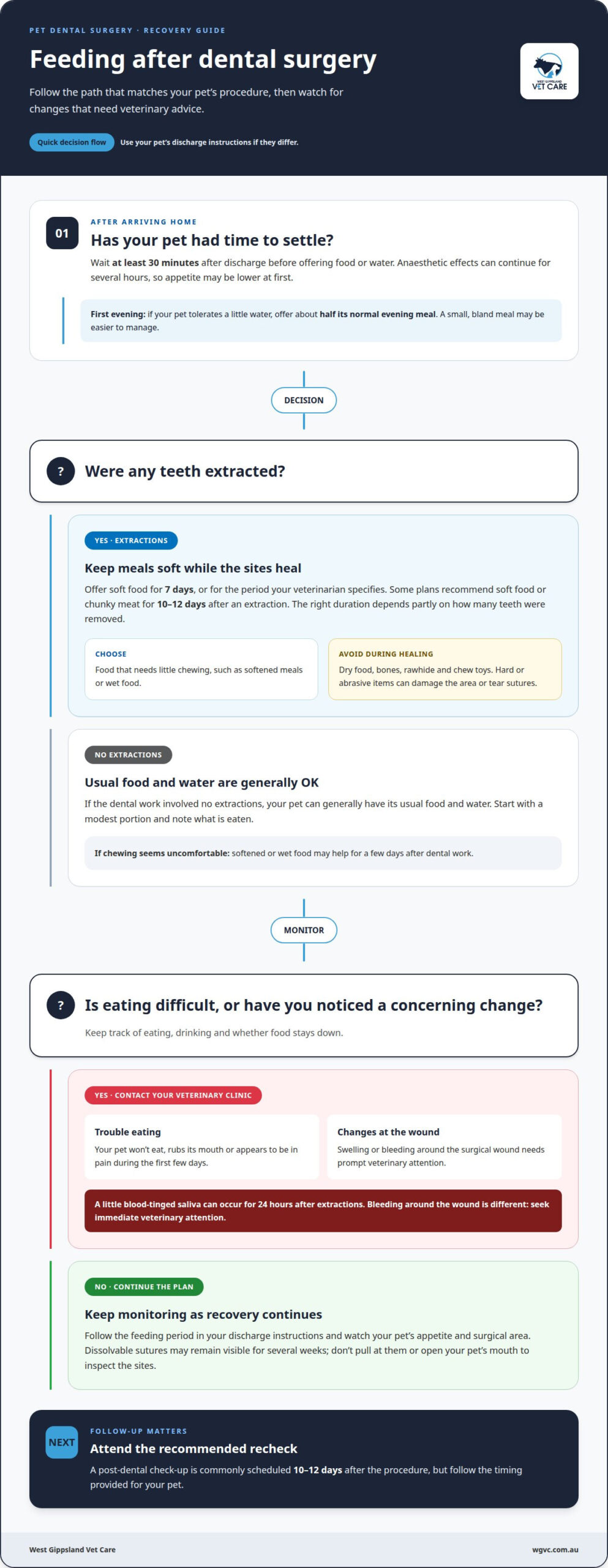
After extractions, offer soft food for 7 days, or for the period stated in your veterinarian’s instructions. Some plans recommend soft food or chunky meat for 10-12 days after a tooth extraction. The right duration depends partly on how many teeth were removed, so follow the instructions for your pet’s dental procedure rather than changing foods early.
Offer food that requires little chewing, such as softened meals or wet food. Avoid dry food, bones, rawhide and chew toys while extraction sites heal, as hard or abrasive items can damage the area or tear sutures. Even if your dog or cat seems eager to eat, keep these items out of reach for the prescribed recovery period.
Dissolvable sutures may remain visible for several weeks while the gums heal. Don’t pull at them or open your pet’s mouth to inspect extraction sites. Look for changes you can see without handling the mouth, such as swelling or bleeding around the wound. Contact your veterinary clinic promptly if either occurs.
Dental disease progresses through 4 stages, and an examination helps the veterinarian assess affected teeth and gums. The findings guide whether treatment involves extractions or gum surgery, as well as the post-operative plan. A dental procedure uses a general anaesthetic for examination and treatment, and the number and location of extractions affect the care needed afterwards.
Give prescribed pain relief exactly as directed. If your pet has trouble eating, rubs its mouth or seems uncomfortable during the first few days after surgery, contact your vet for assessment. Swelling or bleeding around the wound can indicate a complication or infection, so seek veterinary advice promptly rather than waiting for the next appointment.
For ongoing assessment and preventive advice, preventative dentistry and dental X-rays can help address your pet’s individual dental needs.
Food intake and nutrition during recovery
After discharge, let your pet rest for at least 30 minutes before offering food or water. If dental work involved no extractions, your dog or cat can generally have its usual food and water. Appetite may be lower until the anaesthetic wears off, so offer a modest portion and note what’s eaten.
On the first evening, a small, bland meal may be easier to manage. If your pet tolerates a little water, offer about half its normal evening meal. Choose nourishing food that won’t upset its stomach, and keep fresh water available. Follow the discharge instructions if they recommend a different feeding plan.
Track your pet’s meals during recovery, including whether it eats, drinks and keeps food down. Softened or wet food may help for a few days after dental work, particularly if chewing is uncomfortable. After extractions, follow the soft-food period recommended for your pet. The feeding plan depends on the number of teeth removed and the treatment performed.
A dental clean may remove plaque by scaling and polishing teeth; extractions need different aftercare. Anaesthetic effects can last several hours at home, and some pets take a few days to recover fully. Settle your pet in a comfortable, quiet spot, with bedding and water close by. Keep cats indoors overnight after the procedure.
For the first 24 hours, prevent running, jumping and rough play. Some pets also need reduced activity for the first few days, including avoiding stairs and strenuous exercise. Build activity back gradually as your pet becomes more settled, while following its discharge instructions. Recovery after surgery generally takes two to six weeks, depending on the procedure.
Monitor your pet’s eating, energy and surgical area during recovery. Swelling or bleeding around the wound can signal a complication or infection and needs prompt veterinary attention. Contact your vet if your pet won’t eat or seems painful during the first few days. These observations help the veterinary team assess progress and adjust care when needed.
Resuming tooth brushing and dental products
When brushing can restart depends on whether your pet had a cleaning, extractions or another treatment. Give healing gums time to recover, then rebuild a routine that suits your pet.
Resuming Tooth Brushing
After extractions, wait approximately 14 days before restarting brushing or dental products, unless your veterinarian advises otherwise. This gives the extraction sites time to heal without brushing disturbing the gums or sutures. Follow the post-operative instructions if they set a different plan.
After a dental clean without extractions, resume brushing when your pet is comfortable and able. If your pet shows pain, resists having its mouth handled or seems uncomfortable, stop and contact your veterinary clinic for advice. A follow-up appointment can help assess healing before you restart.
A dental clean removes plaque and tartar from tooth surfaces, while an extraction leaves a site that needs to heal. These treatments require different aftercare, so follow the instructions for the procedure your pet had.
Daily Brushing at Home
Once brushing has resumed, aim to brush your pet’s teeth daily. Introduce it gently: let your pet get comfortable with the brush and brief mouth handling before attempting a full clean. Use toothpaste made for pets, not human toothpaste, which isn’t designed to be swallowed and may be toxic to them.
Brushing is the best form of dental hygiene, but a routine can also include dental diets, treats, chews or water additives. Choose products to suit your pet’s needs and the treatment they’ve had. Don’t give chews or treats while extraction sites are healing.
For ongoing guidance on a suitable dental-care routine, book a preventative dental assessment and discuss brushing or other products with the veterinary team.
West Gippsland Vet Care: Preventative Dentistry / Dental X-Rays
West Gippsland Vet Care provides preventative dentistry and dental X-rays to support your pet’s dental health. If your dog or cat has had extractions, follow the recommended recheck plan so healing can be assessed and you can discuss any concerns. Dental X-rays can help veterinarians assess tooth roots, surrounding bone and problems hidden below the gum line, including retained roots or infection.
Once your pet has recovered, a dental examination gives you the opportunity to discuss an ongoing home-care routine, including when to restart brushing and which products may suit your pet. Regular dental assessments can also identify changes that may need attention. If you’re worried about recovery or want advice about your pet’s dental care, contact West Gippsland Vet Care.
Build a dental routine that suits your pet
Recovery can be a good time to make dental care feel manageable in everyday life. Consider what suits your household and your pet’s temperament, such as a calm place, a time when your pet is settled or a gradual introduction to mouth handling. A routine that fits your day is easier to maintain, and small steps can help make dental care familiar.
Talk with your veterinary team about an ongoing plan that suits your pet, especially if brushing is difficult or your pet has needed dental treatment before. Home care after pet dental surgery supports comfort while you build habits your pet can tolerate. Your pet’s response can guide your approach over time.
For support with your pet’s dental care, contact West Gippsland Vet Care. A conversation can help you consider a practical next step for your companion. With patience and a plan that feels right for your household, you can keep caring for your pet’s wellbeing together.
Frequently Asked Questions
What should I expect after my pet’s dental surgery?
Your pet may be quieter than usual as the anaesthetic wears off, and recovery depends on the treatment performed. Blood-tinged saliva may appear during the first 24 hours after extractions. A mild cough can follow removal of the anaesthetic airway tube and usually settles within a couple of days. Keep the discharge instructions handy, as they reflect your pet’s procedure and care plan.
What should I expect after my pet has dental surgery?
Give your pet a calm transition from the clinic to home, and watch for changes in behaviour. Anaesthetic effects can last several hours, and some pets take a few days to recover fully. Cats should stay indoors overnight after the procedure. If your pet seems markedly different from what the recovery instructions describe or isn’t responding as expected, contact the veterinary clinic.
How should I care for my pet at home after dental surgery?
Home care after pet dental surgery starts with a quiet resting place, away from children and other animals. Keep activity gentle and watch for changes in comfort, eating and behaviour. Don’t open your pet’s mouth to inspect extraction wounds; wait for a follow-up appointment to assess healing. If you’re concerned about your pet’s condition, contact the veterinary team and describe what has changed.
When can my pet eat and drink after dental surgery, and what foods are safe?
Let your pet rest for at least 30 minutes after discharge before offering water or food. If there were no extractions, the usual diet may be suitable, though appetite can dip while the anaesthetic wears off. After extractions, follow the discharge plan for soft food. Avoid hard chews that could disturb healing gums, even if your pet seems keen to eat normally.
How do I give my pet pain relief or other prescribed medication after dental surgery?
Give each prescribed medicine exactly as directed, following the timing and amount in the veterinary instructions. A veterinarian may provide pain relief after extractions, including an injection or medication for home use. If your pet spits out a dose or refuses food containing medicine, contact the clinic for advice. Don’t change the dose or give an extra dose without veterinary direction.
How long does recovery take after a pet dental extraction?
Recovery after surgery generally takes two to six weeks, depending on the procedure and the number of teeth removed. Gum healing and a return to normal routines may happen at different rates. Follow the recommended recheck plan for home care after pet dental surgery so healing can be assessed. Continue the prescribed food and activity restrictions until your pet’s veterinary team advises you to change them.