
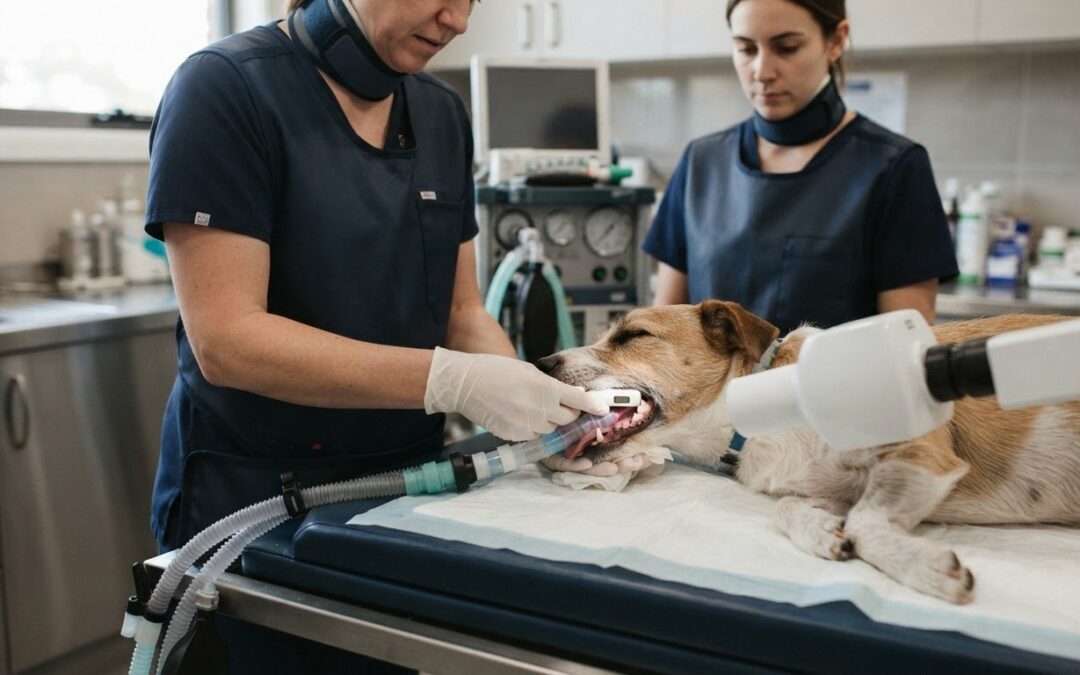
Anaesthesia-free dog dental cleaning may remove some visible tartar, but it can’t clean below the gumline or reveal hidden problems with dental X-rays. The risks of dog dental cleaning without anaesthesia include leaving painful disease undetected, even if your dog’s teeth look whiter afterwards. A veterinary dental procedure under anaesthesia allows a more thorough examination and cleaning.
It’s understandable to want a gentler option for a much-loved dog, especially if anaesthesia makes you uneasy. Here’s how the methods differ, what risks to consider and how veterinary teams help keep dogs safe during dental procedures.
We’ll also cover care between professional cleanings, including daily brushing and other ways to support your dog’s oral health at home. Understanding the options can help you make a considered decision for your companion.
Key Takeaways
- Visible tartar is only part of the picture; problems beneath the gumline can go unnoticed without a thorough examination.
- Learn how veterinary dental procedures use anaesthesia, examination and dental X-rays to assess your dog’s oral health.
- Understand why professional guidance favours veterinary dental cleaning over scraping a dog’s teeth while awake.
- Build a practical home-care routine with daily brushing and other ways to support your dog’s teeth between professional cleanings.
The Truth About Non-Anesthetic Dental Cleanings: Are They Safe for Pets?
The risks of dog dental cleaning without anaesthesia include mistaking a cosmetic result for a healthy mouth. A clean appearance alone can’t show whether disease needs attention.
Disease hidden beneath the gumline
Dental disease can develop out of sight, so visible tooth surfaces don’t tell the whole story. Owners may judge a cleaning by how the teeth look afterwards, while the dog’s underlying oral health remains unknown.
To understand the risks of dog dental cleaning without anaesthesia, separate appearance from assessment. A brighter-looking smile is visible, but it doesn’t prove that disease has been ruled out or treated. The result you can see and the condition of the mouth are not the same thing.
Problems missed during cleaning
A cleaning focused on visible tartar may leave owners without a clear picture of their dog’s overall dental health. Apparent improvement could mean the teeth look cleaner, not that the mouth is healthy.
Anaesthesia-free procedures may cost less initially, but an unidentified dental problem can require more involved treatment later. The key comparison is not just the immediate cleaning: consider whether the procedure provides useful information about your dog’s oral health and helps guide appropriate care.
Limits of below-gumline tartar removal
Removing visible tartar isn’t the same as thoroughly cleaning every affected area. A cosmetic scrape can change what owners see without addressing all the dental concerns that prompted them to seek care.
When weighing the risks of dog dental cleaning without anaesthesia, ask what the procedure achieves beyond appearance. If underlying concerns remain unresolved, a cleaning may create a false sense of progress. A veterinary assessment puts visible changes in context and helps determine whether further dental care is needed. Whiter teeth alone aren’t proof of success.
Differences between anesthesia-free and veterinary dental procedures
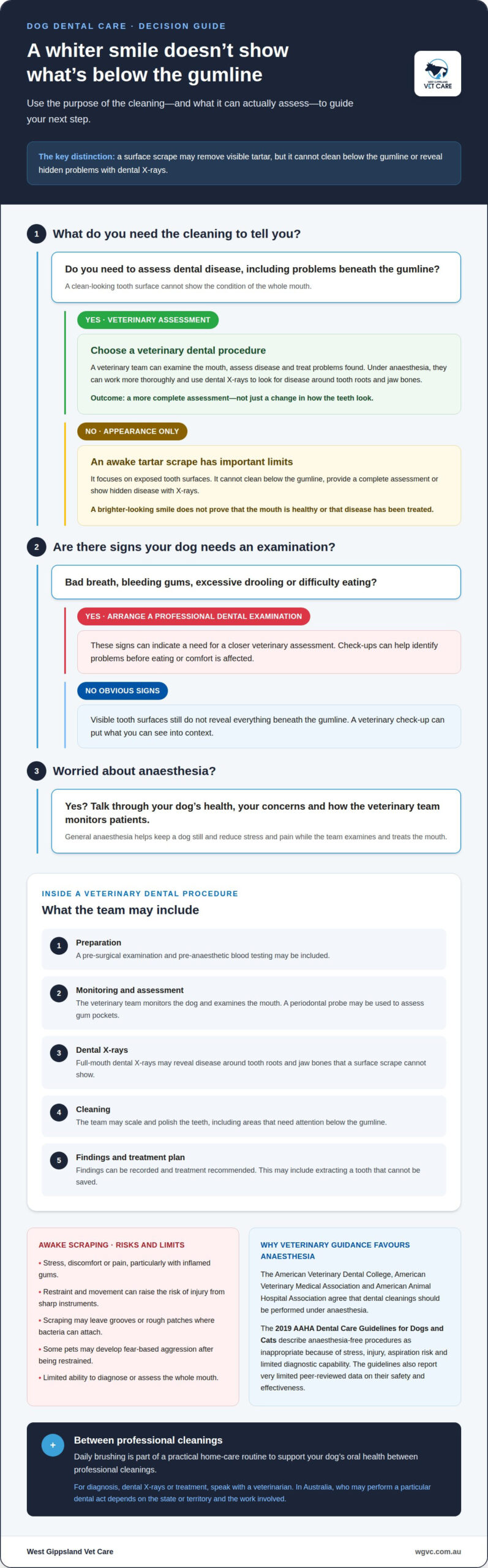
Scraping visible tartar and veterinary dental treatment serve different purposes. A tartar scrape focuses on exposed tooth surfaces; a veterinary procedure can examine the mouth, assess disease and treat problems found. A clean-looking tooth doesn’t show what’s happening beneath the gumline.
The American Veterinary Dental College, American Veterinary Medical Association and American Animal Hospital Association agree that dental cleanings should be performed under anaesthesia. The 2019 AAHA Dental Care Guidelines for Dogs and Cats describe anesthesia-free procedures as inappropriate because of patient stress, injury, aspiration risk and limited diagnostic capability. These recommendations reflect the need to examine and clean areas a conscious dog may not tolerate.
A veterinary dental procedure may include a pre-surgical examination, pre-anaesthetic blood testing, monitoring, full-mouth dental X-rays, scaling and polishing. A veterinary team may also use a periodontal probe to assess gum pockets, record findings and recommend treatment, such as extraction if a tooth can’t be saved. X-rays can reveal disease around tooth roots and jaw bones that a surface scrape can’t show.
In Australia, whether a person may perform a particular dental act depends on the state or territory and the work involved. Removing visible plaque isn’t the same as diagnosing dental disease or providing veterinary treatment. For diagnosis, dental X-rays or treatment, speak with a veterinarian rather than assuming a cosmetic cleaning covers these needs.
Ask what the procedure includes: an examination, X-rays, cleaning below the gumline, polishing and a plan for any disease found. Discuss your dog’s health, your concerns about anaesthesia and how the veterinary team monitors patients. These details clarify the procedure’s purpose and limits.
Bad breath, bleeding gums, excessive drooling or difficulty eating can signal a need for a professional dental examination. Veterinary dental check-ups can identify problems early, before your dog’s eating or comfort is affected. If you’re concerned about your dog’s teeth, preventative dentistry and dental X-rays can support a closer assessment.
What Happens During a Professional Dental Cleaning?
Anaesthesia-free cleaning usually involves holding a dog still while someone scrapes visible tartar from the teeth. The teeth may look cleaner, but the procedure doesn’t provide a complete assessment or treatment plan for dental disease. If the dog moves during scraping, sharp instruments can cause injury.
Professional consensus favours dental cleaning under anaesthesia. The American Veterinary Medical Association, American Veterinary Dental College and American Animal Hospital Association agree that dental cleanings should be performed only under anaesthesia. The 2019 AAHA Dental Care Guidelines for Dogs and Cats describe anaesthesia-free procedures as inappropriate because of stress, injury, aspiration risk and limited diagnostic capability.
Evidence is another concern. The 2019 AAHA guidelines report that peer-reviewed data on the safety and effectiveness of anaesthesia-free dental procedures are very limited. Without reliable evidence, a visible improvement in tooth colour can’t show whether the procedure has addressed plaque or disease across the whole mouth.
Scraping while a dog is awake can be uncomfortable or painful, particularly if the gums are inflamed. Restraint may make a dog squirm or resist, raising the risk of injury from instruments. Scraping can also leave grooves or rough patches on teeth where bacteria may attach. Some pets develop fear-based aggression after being restrained for dental care.
During professional dental cleaning, general anaesthesia helps keep a dog still and reduce stress and pain while the veterinary team works. The team can examine the mouth, take dental X-rays, scale and polish the teeth, and extract a tooth if needed. Anaesthetic monitoring lets the team observe the dog during the procedure. This supports care for visible teeth and problems that need further treatment, rather than relying on a surface scrape.
At-home dental care between professional cleanings
Daily brushing is the foundation of home dental care because it helps prevent plaque build-up. Make it a regular part of your dog’s routine, choosing a calm moment when they’re settled. If brushing causes stress, keep sessions gentle and brief, then gradually help your dog get used to the brush. A comfortable routine is easier to maintain than an occasional struggle.
Brushing supports oral health, but it doesn’t replace a thorough veterinary examination or professional dental procedures. It helps manage plaque between cleanings, but it can’t assess every tooth or confirm that disease is absent. Visible tartar, changes in eating or signs of discomfort still warrant attention, even if you brush regularly.
Other ways to support your dog’s teeth include:
- Offer dental chews designed to help reduce plaque.
- Choose toys that help reduce plaque as part of supervised play.
- Discuss a veterinarian-approved diet suited to your dog’s needs.
These options complement brushing, but they don’t guarantee a healthy mouth. The American Veterinary Medical Association and other veterinary organisations support professional cleaning under anaesthesia because a complete examination and cleaning involve more than care of visible teeth. At-home measures help maintain daily habits, while veterinary assessment addresses concerns that brushing, chews and toys can’t resolve.
Watch for changes as part of your routine. Bad breath, bleeding gums, excessive drooling or difficulty eating can signal a dental problem. If your dog resists having their mouth touched, don’t force brushing. Discomfort can make the experience stressful and may mean they need an examination. Note changes such as avoiding food or chewing on one side to describe at a veterinary visit.
Keep the goal simple: make brushing a consistent habit, use suitable supporting options, and treat home care as one part of ongoing dental health. For guidance on your dog’s teeth and a routine that suits them, discuss your dog’s dental care with our team.
West Gippsland Vet Care: Preventative Dentistry / Dental X-Rays
West Gippsland Vet Care provides preventative dentistry and dental X-rays to help assess your dog’s oral health. If you notice bad breath, bleeding gums, difficulty eating or changes in chewing, a veterinary examination can help identify the issue and whether further dental care is needed.
Dental X-rays can help reveal problems that aren’t visible during a surface check. Preventative dentistry supports a more thorough assessment than an awake tartar scrape. You can also discuss your dog’s comfort, home brushing routine and concerns about dental procedures with the veterinary team.
If you’re concerned about your dog’s teeth, contact West Gippsland Vet Care to discuss their dental care.
Take the next step for your dog’s dental health
Choosing dental care can feel like a big decision, especially when weighing the risks of dog dental cleaning without anaesthesia. Talk through your dog’s mouth, health and comfort with a veterinary team, then decide what assessment is appropriate. Daily brushing also gives you a regular way to support their care at home.
West Gippsland Vet Care offers preventative dentistry and dental X-rays to help assess dogs’ oral health. The practice also provides pet vaccinations, desexing procedures and microchipping as part of its broader veterinary care.
If you’re unsure what your dog needs, a conversation can help you understand the options and plan a suitable next step. Contact West Gippsland Vet Care to discuss your dog’s dental health. You’re taking a thoughtful step towards helping your companion stay comfortable.
Frequently Asked Questions
What is an anesthesia-free dental procedure?
Anaesthesia-free cleaning scrapes tartar from a pet’s visible teeth while they’re awake, without general anaesthesia. The aim is usually to improve the teeth’s appearance rather than provide the full assessment and treatment possible with veterinary dentistry. A cleaner-looking tooth surface, for example, doesn’t show whether there’s a problem around its root.
What really happens during an anesthesia-free cleaning?
Someone holds the dog still and uses dental instruments to scrape tartar from exposed tooth surfaces. The dog remains awake, so movement or resistance can make the process uncomfortable and increase the risk of injury from sharp tools. It doesn’t offer the same conditions as a procedure under anaesthesia, such as a still patient for a full-mouth examination or dental imaging.
Are There Any Records of Dog Death After a Dental Cleaning Procedure?
Deaths following anaesthesia have been reported, but the cited American Veterinary Medical Association study does not give a dental-cleaning-only rate. It found that death following anaesthesia of any kind, including surgery, was less than 0.1%. That figure isn’t specific to dental procedures or an individual dog, whose health and anaesthetic plan affect the risks considered.
But isn’t anesthesia dangerous?
Anaesthesia carries risk, and a veterinarian weighs that against your dog’s health and the care needed. The 2019 AAHA Dental Care Guidelines state that risks are very low for healthy or minimally compromised patients when trained individuals perform anaesthesia. A pre-anaesthetic assessment and blood testing can help identify health concerns and guide an individual plan.
How can I keep my pet’s teeth healthy?
Make daily tooth brushing the centre of your dog’s home-care routine to help limit plaque build-up. Introduce the brush gently and choose a calm moment to avoid turning it into a struggle. Dental chews, plaque-reducing toys and a veterinarian-approved diet can also support oral health. These habits complement professional assessment, not replace it.
Is anesthesia-free dentistry less stressful than going under anesthesia?
Not necessarily. A dog may find being held still while someone scrapes their teeth stressful or uncomfortable, particularly if their gums are sore. Anaesthesia means the dog doesn’t need to stay awake and tolerate that handling during the procedure, while the veterinary team monitors them. If your dog becomes anxious when their mouth is handled, raise this concern with your veterinary team.