
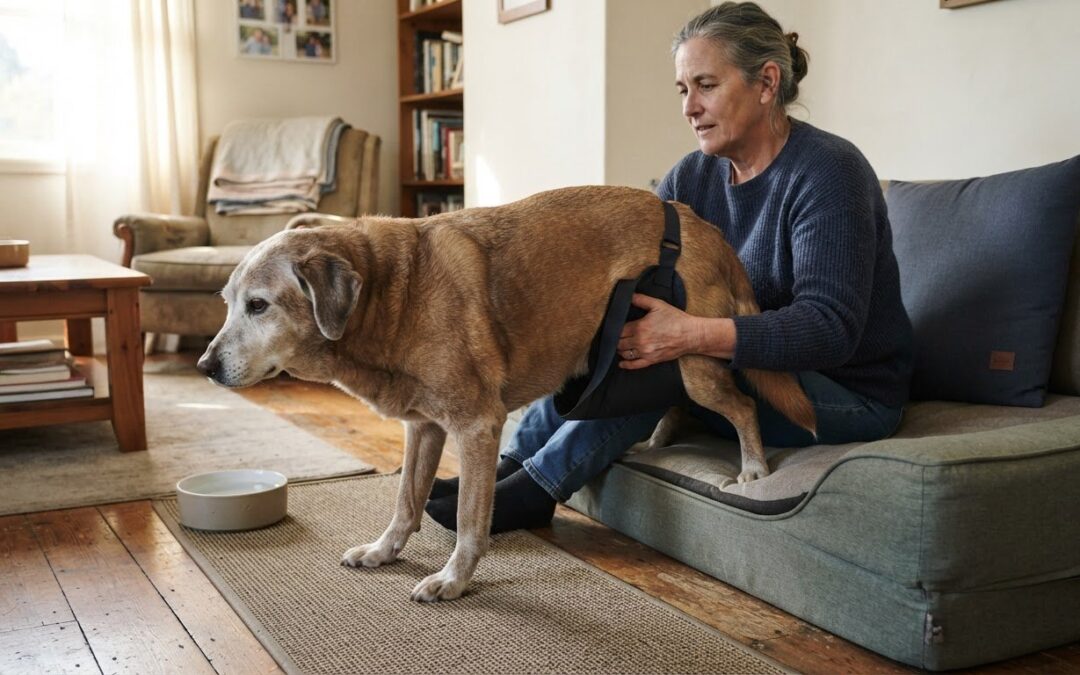
Comfort can still be supported when a cure isn’t possible. Pet palliative care in Warragul focuses on easing pain and other symptoms, protecting quality of life and adapting care as your pet’s needs change. Support may include symptom management, medication and practical changes to help your pet rest, eat or move more comfortably.
It can be difficult to tell what your pet is experiencing, especially when changes happen gradually. Notice whether they still enjoy familiar parts of the day, such as eating, playing or going for walks. These observations can help you explain what has changed and what matters most to them.
This guide explains what palliative care may involve, which signs can prompt a conversation about comfort, and how a care plan may change over time. It also outlines factors to consider when weighing ongoing treatment and end-of-life choices, so you can approach decisions with clear information and support.
Key Takeaways
- Track changes in pain, appetite, movement and behaviour so you can describe your pet’s symptoms clearly.
- Consider comfort alongside prognosis, treatment demands and the everyday activities your pet still enjoys.
- Notice signs of nausea, anxiety or breathing difficulty and share what you observe during a veterinary discussion.
- Keep a simple wellbeing record and revisit the care plan as your pet’s needs and comfort change.
Pain management and symptom support
For pet palliative care in Warragul, a veterinary assessment can identify symptoms and guide comfort-focused support. As an illness progresses, clear observations from home can help your vet adapt the plan to your pet’s changing needs.
Pain relief approaches
A veterinary assessment can guide treatment around your pet’s condition, symptoms and daily routine. Note when discomfort appears, such as during meals, after resting or when being lifted. Share changes in appetite, sleep and behaviour with your vet. This helps show whether symptoms follow a pattern or affect particular activities.
Support may include medication, a suitable diet or changes to your pet’s resting space. Keep a simple record of what helps and what remains difficult, then discuss it at follow-up. Don’t change prescribed treatment without veterinary guidance. Your observations can help shape a palliative care plan in Warragul around your pet’s comfort.
Dental discomfort can make eating harder, so mention dropped food, reluctance to chew or changes at mealtimes. Preventative dentistry and dental X-rays can help assess dental concerns as part of veterinary care. If your pet has arthritis, describe stiffness after resting or hesitation on stairs. Pain management and arthritis care can support a discussion about symptoms and treatment options.
Pain and mobility support
Mobility support considers how pain affects everyday movement, not just whether your pet can walk. Note difficulty standing, shorter walks or reluctance to reach a favourite bed. These examples help explain changes in comfort and function during a veterinary discussion.
At home, make a comfortable resting area easy to reach and keep essentials nearby. Place water within easy access, for example, and reduce the need to climb stairs. Record which adjustments help your pet move or rest more comfortably. Review the care plan when symptoms or routines change, and share new concerns with your veterinary team.
Palliative care for comfort and quality of life
Palliative care supports comfort when an ongoing or life-threatening condition has no evident cure. It can also help families plan end-of-life care with less uncertainty.
Quality-of-life assessments
Pet owners in Warragul can arrange a palliative or end-of-life assessment through a local veterinary clinic. Dogs, cats and other pets can be assessed according to their condition and daily needs. Describe the diagnosis, current treatment and changes you’ve noticed, then discuss what support could help at home. Bring questions so you can talk through your options and priorities.
Recognising quality-of-life changes
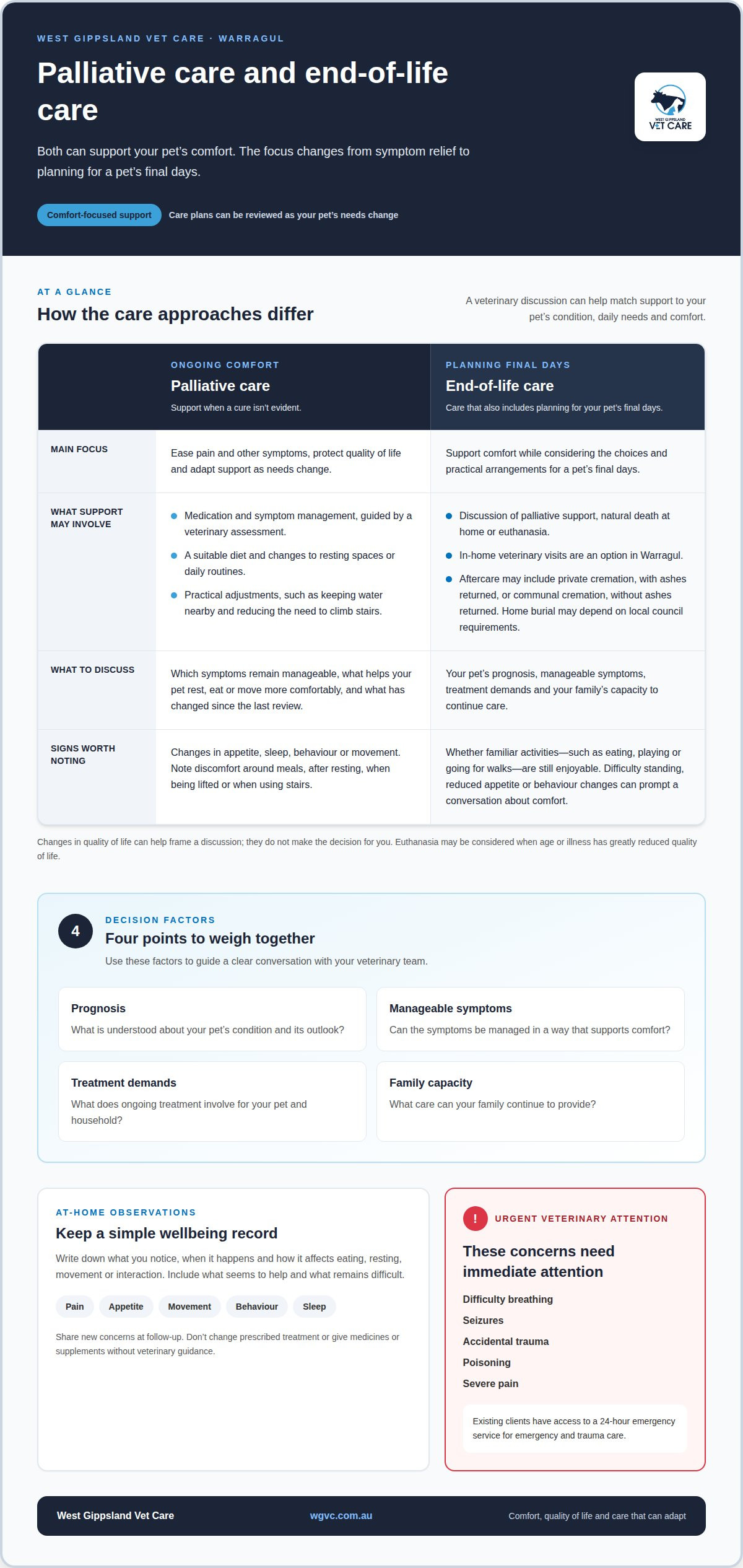
Consider whether your pet still enjoys familiar activities, such as eating, playing or going for walks. Difficulty standing or moving, reduced appetite and behaviour changes are signs to raise with a vet. These changes don’t make the decision for you, but can help frame a conversation about comfort, prognosis and whether symptoms remain manageable. Euthanasia may be considered when age or illness has greatly reduced quality of life.
Palliative and end-of-life care
Palliative treatment focuses on comfort and symptom relief; end-of-life care also includes planning for a pet’s final days. In-home veterinary visits are an option in Warragul. For urgent concerns, difficulty breathing, seizures, accidental trauma, poisoning or severe pain need immediate veterinary attention. Existing clients have access to a 24-hour emergency service for emergency and trauma care. For a planned discussion, veterinary support can help you understand care options.
Planning end-of-life decisions
Discuss your pet’s prognosis, manageable symptoms, treatment demands and your family’s capacity to continue care. These factors can help you weigh palliative support, natural death at home or euthanasia. If you’re considering at-home euthanasia, discuss arrangements with your Warragul vet. Aftercare may include private cremation, where ashes are returned, or communal cremation, where they aren’t. Home burial may depend on local council requirements.
Nausea, anxiety, and respiratory distress support
Nausea, anxiety and breathing changes can make an already difficult illness harder for pets and their families. Record what you notice, when it happens and how it affects eating, resting or interaction. For example, note whether your pet leaves food untouched or seems unsettled during rest. These details help a veterinarian consider symptom relief alongside the underlying condition.
Complex palliative cases may require care that addresses several needs together. A plan can include medication, a suitable diet and changes to your pet’s surroundings. Ask how each part aims to improve comfort and what to observe at home. Fluid therapy may be considered as part of individual medical care; its suitability depends on your pet’s condition and treatment goals. Don’t give medicines or supplements without veterinary guidance.
Difficulty breathing requires immediate veterinary attention. Keep your pet calm and describe the change clearly when seeking urgent help. Existing clients have access to a 24-hour emergency service. Anxiety can also arise around examinations or end-of-life care. A gentle, low-stress approach and clear explanations can help families understand what is happening. In most cases, a gentle sedative is given before euthanasia to ease anxiety and help a pet relax.
Emotional support matters for people, too. Difficult decisions can bring sadness, doubt and grief, even when made with care for an animal’s comfort. Talk openly with family about what your pet enjoys and which changes concern you. If grief feels difficult to carry alone, counselling or personal therapy support from services like LEAPS may offer a dedicated space to talk. Your veterinary team can also explain practical next steps, so you don’t have to work through every decision at once.
Animal Comfort Care describes palliative care as medical support and management plans for ongoing or life-threatening conditions when a cure is not evident.
End-of-life planning may include considering natural remedies, such as herbal supplements and holistic therapies, for relief from chronic conditions or ageing-related symptoms. Discuss any remedies with your veterinarian before using them, so they can be considered alongside your pet’s care plan.
Monitoring wellbeing and adapting care
A simple daily record can show how your pet’s comfort changes as illness progresses. Note whether they eat, drink, rest and engage with familiar people. Add observations about movement, toileting and interest in favourite activities. Comparing these details over time gives you clearer examples to discuss during veterinary reviews.
Keep your notes practical. Record what changed, when you noticed it and what happened afterwards. For instance, note whether your pet ate less after medication or seemed more settled in a quieter room. A short record can distinguish a difficult day from a pattern that may prompt a care-plan review.
- Write down changes in appetite, sleep and daily routines.
- Record symptoms such as nausea, restlessness or breathing changes.
- Note which adjustments, such as moving a bed, seem to help.
- List questions for the next veterinary conversation.
Share your record during follow-up discussions, including what your pet can still enjoy and which tasks have become stressful. A veterinarian can use those details to review symptom management and whether the current plan still fits. If your pet’s needs change, discuss practical adjustments to treatment, diet or their surroundings rather than relying on memory alone.
Some changes need prompt attention. Difficulty breathing, seizures, accidental trauma, poisoning or severe pain require immediate veterinary care. For less urgent changes, such as reduced interest in food or familiar activities, contact your veterinary clinic to arrange a discussion. Clear notes can help explain what has changed and when it began.
Reviewing care can also help families prepare emotionally for a possible goodbye. Talk together about the signs that matter most to your pet’s comfort and the support you may need. To discuss changing care needs, get in touch with the veterinary team.
West Gippsland Vet Care: Pet Vaccinations
West Gippsland Vet Care provides pet vaccinations for dogs and cats. If your pet needs vaccination while you’re discussing changing health needs, the team can help you talk through the care relevant to each concern.
West Gippsland Vet Care also provides desexing procedures, microchipping and orthopaedic surgery. These services address different needs, including reproductive care, permanent identification and surgical treatment for orthopaedic conditions. For a pet receiving palliative support, keep the focus on comfort and discuss what is appropriate for their current circumstances.
Share the changes you’ve noticed and what matters most to your pet. Open communication can help you understand the veterinary support available and decide what to discuss next.
Contact West Gippsland Vet Care or visit wgvc.com.au to start a conversation.
Take the next step at your pet’s pace
A care decision doesn’t need to happen all at once. Start with one concern you’d like to discuss, such as changes in comfort, appetite or a familiar routine. If you’re considering pet palliative care in Warragul, sharing what you’ve noticed can begin a thoughtful conversation about your pet’s needs and your family’s priorities.
West Gippsland Vet Care can talk with you about veterinary support and the next steps for your pet. You can bring your observations and questions, then take time to consider the options. Contact West Gippsland Vet Care to start a conversation. You know your pet’s personality and daily habits best, and those insights can help guide a caring way forward.
Frequently Asked Questions
What palliative care services are available for pets in Warragul, including pain relief and mobility support?
In Warragul, West Gippsland Vet Care offers pain management and arthritis care, senior pet health checks, and advanced diagnostics and medical care. These services can help address changing comfort and mobility needs. To make an appointment more useful, bring your pet’s current medication list and recent test results, and describe which everyday movements have become difficult, such as getting into the car or standing after a nap.
What does pet palliative care cost in Warragul, including consultations and medications?
The cost depends on your pet’s needs and is provided after a quote request. Consultation, medication, diagnostic tests and the proposed treatment plan all affect the total. For a clearer discussion, outline your pet’s diagnosis, current medicines and the symptoms you want to address. You can also discuss which care priorities matter most, such as comfort at home or support with movement.
What quality-of-life scales or signs can help assess a pet receiving palliative care?
A simple daily record can help you notice whether your pet’s comfort and enjoyment are changing. Rather than relying on one observation, note how they manage familiar routines, respond to people and settle after activity. Use consistent descriptions, such as “ate usual meal” or “needed help standing”, and compare entries over time. Share the record with your veterinarian to guide a care discussion.