

Arthritis is a progressive, long-term joint condition that can cause pain and stiffness, and it has no cure. It is more common in older dogs, typically those over seven years of age. Managing arthritis in older dogs in Warragul may involve a veterinary pain-management plan, gentle regular exercise and support for a healthy body weight.
Changes can be gradual: your dog may take longer to get up, move less freely or lose interest in walks and play. These signs can be worrying, but noticing them gives you a useful starting point for discussing your dog’s comfort and mobility with a vet. This guide explains what arthritis is, what to look for and how an individual care plan may combine pain relief, appropriate activity and practical adjustments at home.
Key Takeaways
- Understand how joint inflammation and cartilage wear can affect mobility, including in younger dogs with contributing risk factors.
- Learn why short, regular walks and suitable low-impact activity can support movement without overdoing exercise.
- Notice changes such as difficulty rising, limping or reduced interest in play, and discuss them with a vet.
- See how veterinary assessment can guide a tailored pain-management plan and help support your dog’s comfort.
Is Arthritis common in younger or older pets?
Arthritis is more common in older dogs, typically those over seven years of age, but younger dogs can develop it too. Joint disease involves inflammation and wear of the cartilage lining, which can lead to swelling and pain. It may affect any joint, although the limbs and spine are commonly involved. Previous injury, obesity, inherited risk and poor joint development can contribute, so age alone does not explain every case.
Cartilage helps joints move smoothly. As it wears, movement may become uncomfortable, and a dog may use an affected leg less. Over time, reduced use can contribute to visible muscle loss around that limb. Compare the muscles on both sides of your dog’s body and note any differences alongside changes in walking or standing. These observations can help you describe what you have noticed during a veterinary assessment.
What diet, weight management and supplements can help canine arthritis? A lean body condition reduces extra joint strain; for an overweight dog, weight loss should be gradual, at no more than 2% of body weight per week. Prescription joint diets may ease discomfort and improve joint function, while omega-3 fatty acids can help limit inflammation and an enzyme associated with cartilage damage. A vet may also recommend a joint supplement such as 4CYTE.
Some veterinary plans include pentosan polysulfate, which has been shown to slow arthritis progression and help control related pain. Anti-inflammatory medicines can also help control pain, but do not slow the disease’s progression. These options have different roles, so medication and supplements should be selected as part of a veterinary plan, not combined without guidance.
When should an older dog with arthritis see a vet urgently? Arrange an appointment if you notice stiffness, limping, muscle loss or reduced interest in movement, as these signs can also have other causes. A sudden or marked change in comfort or mobility calls for prompt veterinary assessment.
Gentle exercise, walking and swimming
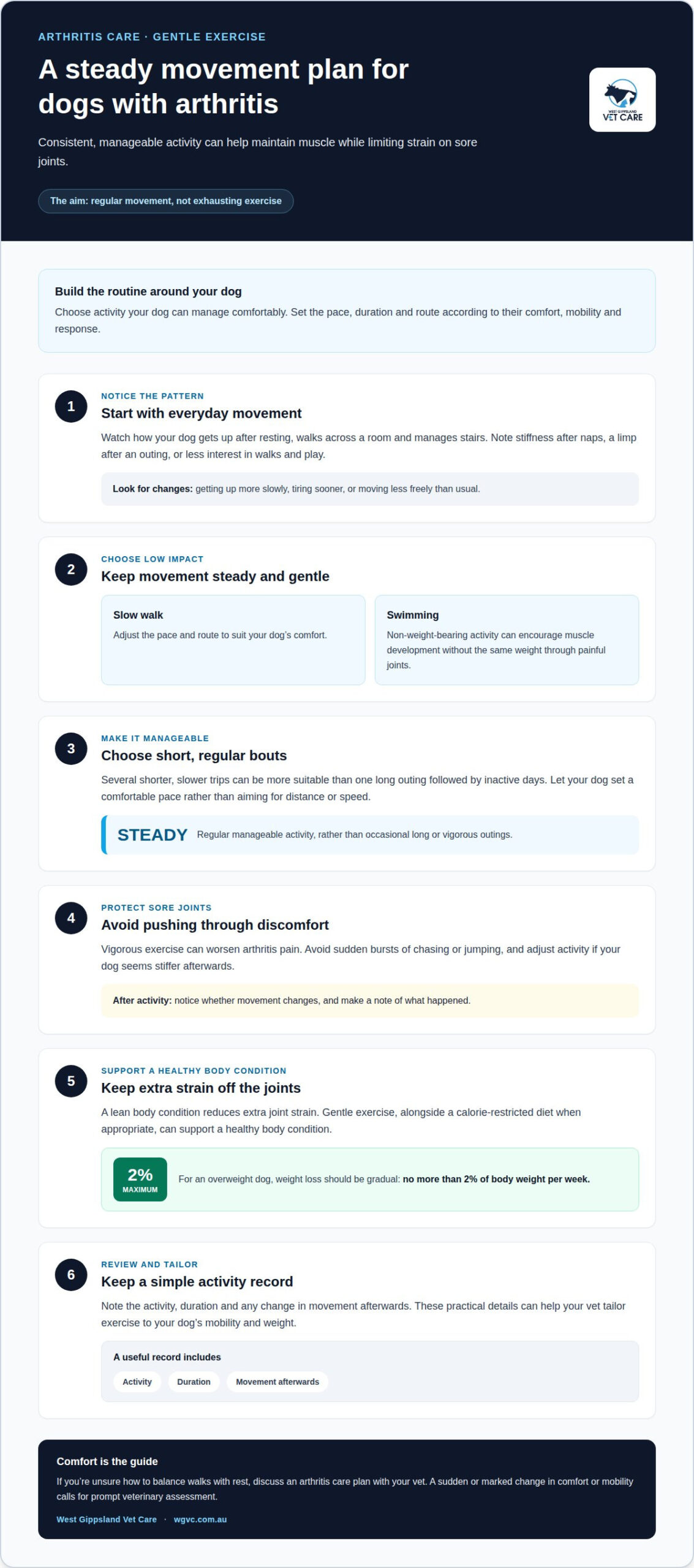
Regular, gentle activity can help maintain muscle while limiting strain on sore joints. The aim for a dog with arthritis is consistent movement, not exhausting exercise.
Low-impact walking and swimming
Low-impact exercise involves steady movement, such as a slow walk or swimming, to work muscles while limiting joint loading. Walking lets you adjust the pace and route to your dog’s comfort. Swimming is non-weight-bearing, so it can encourage muscle development without placing the same weight through painful joints. Choose activity your dog can manage comfortably rather than pushing for distance or speed.
Moderate exercise and weight management
Moderate exercise means regular, manageable activity instead of occasional long or vigorous outings. Short, slow walks can support movement while helping your dog stay active. Keeping your dog lean matters because extra body weight adds stress to joints. Gentle exercise, alongside a calorie-restricted diet when appropriate, can support a healthy body condition. Set exercise duration according to your dog’s comfort, mobility and response.
Try regular, short bouts of activity rather than one long outing followed by several inactive days. For example, split a longer walk into shorter, slower trips and let your dog set a comfortable pace. Arthritis pain can worsen after vigorous exercise, so avoid sudden bursts of chasing or jumping. If your dog seems stiffer after activity, note what happened and discuss the pattern with your vet.
Consistency is more useful than asking a sore dog to keep up with a previous routine. Keep a simple record of the activity, duration and any changes in movement afterwards. This gives your vet practical details for tailoring exercise to your dog. If you’re unsure how to balance walks with rest, discuss an arthritis care plan that considers your dog’s mobility and weight.
What are the signs of arthritis in older dogs?
Arthritis can develop gradually, so everyday movement changes may be easier to spot than an obvious limp. Watch how your dog gets up after resting, walks across a room, climbs stairs or settles into bed. Slowness or stiffness after rest can be a sign, and discomfort may worsen after vigorous exercise or in cold weather. Compare your dog’s usual routine with what they manage now.
Physical signs can include limping, tiring more quickly, reduced interest in walks or play, and difficulty standing from a lying position. Your dog may hesitate before jumping into the car or onto furniture, even if they managed it comfortably before. Look for repeated licking or chewing at a joint, or sensitivity when you gently touch the area. Degenerative joint disease can also affect behaviour: discomfort may make a dog irritable or less willing to interact.
Look for patterns rather than relying on a single moment. For example, note whether stiffness appears after naps, your dog avoids the same stairs, or a limp follows a longer outing. Toileting accidents can also happen when getting outside or positioning becomes difficult. These signs can have other causes, so arrange a veterinary appointment when you notice a change. A physical examination and, when needed, tests such as X-rays or blood tests can help assess what is happening.
For dogs near Warragul, a veterinary assessment can guide pain management and whether options such as injections or physiotherapy belong in an individual care plan. These approaches aren’t interchangeable; the dog’s mobility, examination findings and response to treatment help shape the plan. If movement changes suddenly or your dog struggles to stand, seek prompt veterinary advice rather than waiting for a routine review.
Veterinary prescription pain-management plans
A veterinary pain plan aims to improve comfort and everyday movement while recognising that arthritis is progressive. Anti-inflammatory medication can control pain but does not slow the disease’s progression. Pentosan polysulfate has been shown to help control associated pain and slow arthritis progression. These treatments have different roles, so the choice depends on your dog’s assessment and response.
Assessment starts with your observations and a veterinary physical examination. Describe specific changes, such as hesitating before stairs, taking longer to rise or shortening walks. A vet may use diagnostic tests, including blood tests or X-rays, as part of the arthritis assessment. For many dogs, owner observations, examination findings and response to treatment help guide management.
Monitoring is part of the plan, not an afterthought. Keep a simple record of your dog’s comfort, activity and ability to manage familiar tasks, such as getting into the car. Once a prescription begins, these details help show whether movement or rest has changed. Tell your veterinary team about new symptoms or difficulty giving medicine so the plan can be reviewed with a clear picture of your dog’s daily life.
There is no single prescription that suits every dog. The type and location of joint disease, current mobility and response to treatment all inform the approach. Your vet can explain the intended role of each medicine and how progress will be assessed. Do not give human pain medicines or change a prescribed plan without veterinary direction; treatment must be chosen for your individual dog.
For managing arthritis in older dogs in Warragul, a clear pain plan can bring together veterinary assessment, prescribed treatment and observations from home. Talk with a vet about pain management and arthritis care if your dog’s discomfort is affecting everyday movement.
West Gippsland Vet Care: Pet Vaccinations
West Gippsland Vet Care can help assess your older dog’s mobility concerns and discuss possible next steps. If your dog’s examination indicates a surgical issue, the clinic offers orthopaedic surgery. Your vet can explain whether surgery is relevant to your dog’s condition and how it fits into their care plan.
For ongoing care, share changes in movement, comfort and daily routines during veterinary appointments. This helps the team understand what your dog manages at home. West Gippsland Vet Care also provides pet vaccinations, desexing procedures and microchipping as part of its veterinary care.
If you would like to discuss your dog’s mobility or arrange veterinary care, contact West Gippsland Vet Care in Warragul or Drouin.
Make comfort part of your dog’s everyday routine
Choose a small, meaningful goal for your dog’s day, such as settling comfortably near the family or joining you for a calm outing. This gives you a practical way to notice what matters most to your companion, rather than measuring their wellbeing against past routines. Minimising everyday strain also means adapting routine maintenance like coat care and nail trimming; services such as pawgo.com illustrate how mobile doorstep grooming can help keep senior pets comfortable without the joint stress of car travel. As needs change, these priorities can guide care conversations and help keep decisions centred on your dog.
For families managing arthritis in older dogs in Warragul, the next step can be a conversation about your dog’s individual needs. Share what you hope they can keep enjoying and discuss care options that may support their comfort. West Gippsland Vet Care welcomes you to start that discussion and consider a plan together.
Contact West Gippsland Vet Care to talk about your dog’s care. With thoughtful support and attention to what brings them comfort, you can help make each day feel more manageable.
Frequently Asked Questions
What is arthritis?
Arthritis is a long-term condition affecting a dog’s joints, where inflammation and cartilage wear can make movement painful. It may involve one joint or several, including joints in the limbs or spine. The condition can progress over time, so noticing changes in how your dog moves, rests or joins familiar activities can help you describe their needs during a veterinary appointment.
What are the treatment options?
Treatment may combine prescribed pain relief, suitable activity, weight support and changes to your dog’s home routine. A vet selects options according to your dog’s examination, mobility and response to treatment. For example, a plan might pair prescribed medication with shorter walks and a supportive resting place. Follow the prescription instructions and report changes in comfort or movement at review appointments.
What is degenerative joint disease?
Degenerative joint disease is another term for osteoarthritis, a progressive condition involving changes to a joint and its cartilage. It can affect how comfortably a dog bears weight, rises or moves through familiar spaces. The term describes ongoing joint changes rather than identifying which joint is affected; a veterinary assessment helps clarify your dog’s individual situation.
What is the best joint supplement for dogs?
There isn’t one joint supplement that suits every dog. Omega-3 fatty acids may help limit joint inflammation, while vets may recommend products such as 4CYTE as part of an arthritis plan. The useful choice depends on your dog’s health, current medicines and overall care approach. Discuss supplements with your vet before adding them, especially if your dog already has a prescription plan.
What are common signs of arthritis in older dogs?
Common signs include reluctance to jump into the car, difficulty rising after a nap, limping or slowing down on a familiar walk. Some dogs lick or chew at a sore joint, become irritable when touched, or have toileting accidents because moving is uncomfortable. Note when each change happens, such as after rest or activity, to give your vet a clearer picture.
How is arthritis diagnosed in dogs by a veterinarian?
A veterinarian considers your observations alongside a physical examination, checking movement and affected joints. Depending on the findings, diagnostic tests may include X-rays or blood tests. Your dog’s response to treatment can also help assess suspected osteoarthritis. Before the appointment, note changes in walking, standing and daily activities, and bring details of any medicines or supplements your dog receives.