
A single score can’t decide when it’s time, but a quality of life scale for senior dogs can help you see changes more clearly. The scale can help you consider your dog’s quality of life, but it is only one part of the picture. One or two poor scores may still signal an overall concern, even when other parts of your dog’s life are going well.
It’s understandable to want a clear answer when your dog’s health or behaviour changes. Comparing how they’re doing now with their familiar, healthy self can help you spot changes, while keeping in mind that every dog’s needs and experience are individual.
This guide explains how to assess pain, eating, hygiene, mobility, activity and enjoyment, then track good and bad days. You’ll also learn how to use those observations to discuss your dog’s comfort, treatment and next steps with your veterinary team.
Key Takeaways
- Give urgent attention to breathing difficulty and pain that remains uncontrolled, rather than letting strong scores in other areas distract you.
- Use photos or videos from your dog’s healthier days to spot gradual changes in grooming, toileting and everyday behaviour.
- Compare your dog’s current walks and favourite activities with what they used to manage, including how pain relief affects their movement.
- Score each area regularly and look for patterns across the week to make changes easier to discuss with your veterinary team.
Quality of Life Assessment- How Do I Know When it’s Time?
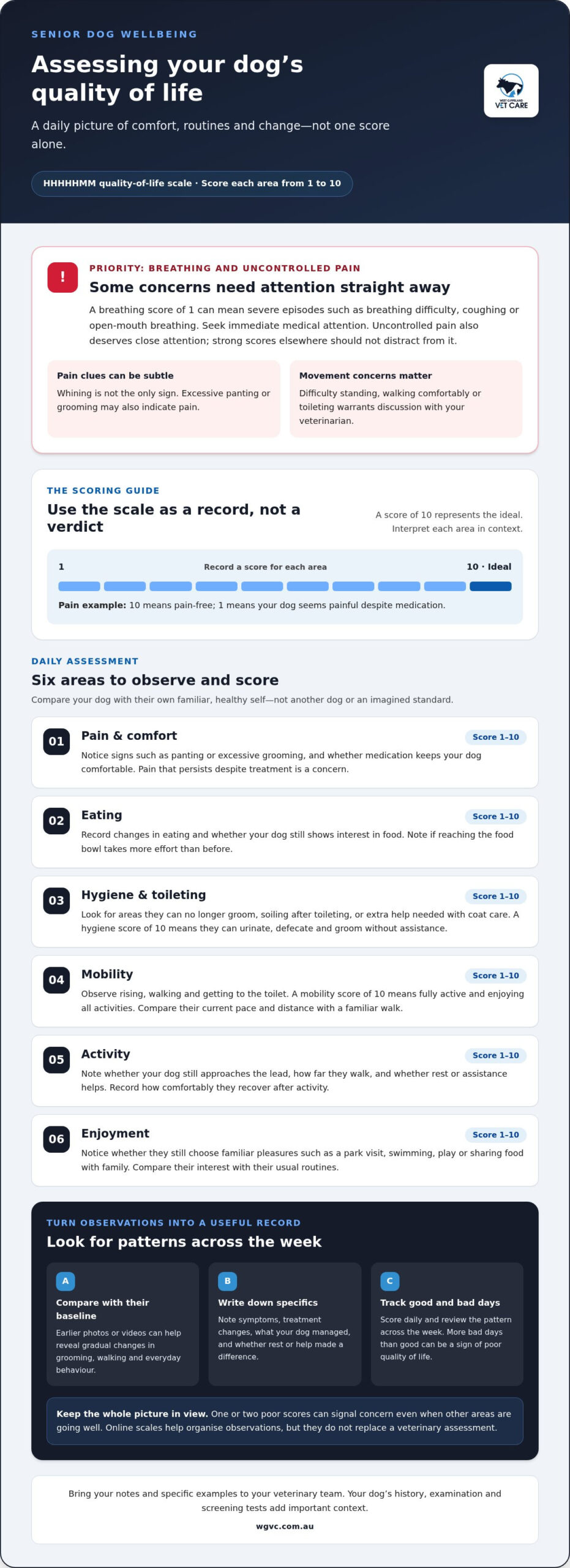
A practical option is the HHHHHMM quality-of-life scale, which rates each area from 1 to 10. A score of 10 represents the ideal, while 1 for pain means your dog seems painful despite medication. The scale considers several parts of wellbeing, rather than treating one score as the whole picture.
Pay close attention to uncontrolled pain and whether your dog can stand, walk and toilet. Whining isn’t the only clue: excessive panting or grooming may also indicate pain. A low mobility score, difficulty rising or trouble walking comfortably warrants discussion with your veterinarian. A serious concern in one or two areas may affect overall quality of life, even if other scores are positive.
Breathing takes priority. A score of 1 for breathing indicates severe episodes, such as breathing difficulty, coughing or open-mouth breathing; seek immediate medical attention. Pain assessment also includes whether medication keeps your dog comfortable. A score of 10 means pain free, while a score of 1 means pain persists despite treatment.
Online scales can help organise your observations, but they can’t replace a veterinary assessment. Your veterinarian can review your dog’s history, examine them and use screening tests to assess their comfort and health. Discuss symptoms and possible treatment side effects, as some checklist signs may be related to treatment. Also note changes in eating, drinking and interest in familiar routines.
Complete the assessment daily and look for patterns across the week, rather than relying on a single difficult day. The HHHHHMM checklist gives Australian owners a structured way to record concerns and prepare questions for a veterinary visit. Signs of poor quality of life can include uncontrolled pain, breathing trouble, difficulty moving or more bad days than good.
If you’re considering end-of-life decisions, your veterinarian can discuss your dog’s circumstances, comfort and options. The decision remains yours. Ask your veterinary practice to explain euthanasia costs and what they cover. A daily record of good and bad days can help clarify the conversation, especially when difficult days begin to outweigh comfortable ones.
Comparing a pet’s current condition with their healthy state
Start with your dog’s own healthy baseline, not an imagined standard for their age or breed. Photos and videos from earlier years can reveal gradual changes that are hard to notice day to day. Compare familiar details, such as how they greeted you, kept their coat clean or managed the walk to the water bowl.
- Compare familiar routines with earlier examples. Note changes in sleeping places, interest in family time, and the effort needed to reach food or go outside. A video of your dog walking comfortably can help you recognise a shorter stride or hesitation now.
- Record changes in the medical condition and treatment. Note a new symptom, a treatment adjustment, and whether the condition seems stable, improving or worsening. This timeline helps you and your veterinarian determine whether a change follows treatment or suggests the underlying problem is progressing.
- Check coat condition and hygiene during ordinary care. Look for areas your dog no longer reaches, soiling after toileting, or a coat that needs more help than before. On the scale, 10 points for hygiene means your dog can urinate, defecate and groom without assistance.
- Notice what support makes daily care manageable. Brush and clean your dog, particularly after elimination, and provide soft bedding to help avoid pressure sores. Record which tasks need your help, such as cleaning their coat or keeping their resting area comfortable.
- Compare the whole picture, not one isolated change. A less tidy coat may reflect difficulty grooming, while a changed routine may relate to discomfort or illness. Pair each observation with your dog’s usual behaviour and any recent treatment changes before drawing conclusions.
Bring these comparisons to a veterinary appointment, where your dog’s history, examination and screening tests can add context. A senior pet health check can help assess changing comfort and care needs. Sharing specific examples, such as a familiar walk now taking more effort, makes the discussion more useful.
Mobility and activity
Compare what your dog can do now with their own former routine. A mobility score of 10 means they’re fully active and enjoy all their activities. A lower mobility score may reflect difficulty with familiar activities or walks, so compare it with your dog’s usual routine. These points help describe change, not measure your dog against another pet.
Consider both ability and enthusiasm. Is your dog still willing and able to enjoy familiar things, such as a park visit, swimming or food? They might approach the lead but stop after a short walk, or enjoy a meal while avoiding the stairs. Record what happens, including whether rest or assistance helps.
- Observe standing. Note whether your dog rises smoothly from their bed or needs repeated attempts and support.
- Watch a familiar walk. Compare their current distance and pace with a route they previously managed comfortably.
- Notice recovery. Record whether they settle comfortably after activity or seem reluctant to move again.
- Check favourite activities. Note whether they still choose the park, a swim, play, or sharing food with family.
Make your observations specific: “needed help getting up” is more useful than “seemed slow”. Note the surface and situation, such as struggling on slippery flooring or pausing before a step. These details help show whether your dog’s strength or confidence has changed, rather than simply their preference for shorter outings.
A mobility score doesn’t explain why movement has changed. Pain, a medical condition or treatment effects may all affect activity, so bring your notes to a veterinary appointment. Describe which movements seem difficult and whether your dog remains comfortable during favourite routines. The aim is to understand what support may help them enjoy familiar activities and whether their current care keeps them comfortable.
Use the same familiar activity to compare days, such as walking to the gate or greeting a family member. Note changes in willingness, distance and need for assistance. A pattern across several observations gives a clearer picture than one unusually energetic or quiet moment.
Scoring quality of life from all the time to never
The HHHHHMM scale rates seven areas: hurt, hunger, hydration, hygiene, happiness, mobility, and more good days than bad. Score each from 1 to 10, with higher numbers indicating better quality of life. If a form uses frequency choices such as “all the time” or “never”, choose the response that best reflects your observations for that category.
Record each category separately before considering any total. Your dog might still enjoy family company but struggle with hydration or mobility. A strong physical or social score doesn’t cancel out a serious concern elsewhere. Note the observation behind each rating so the score has useful context.
- Hurt: Rate comfort and whether pain is controlled, because pain affects daily wellbeing.
- Hunger: Consider willingness and ability to eat, as well as interest in food.
- Hydration: Note whether your dog drinks enough and remains hydrated.
- Hygiene: Score whether your dog can stay clean and manage toileting.
- Happiness: Consider interest in people, surroundings and familiar pleasures.
- Mobility: Rate movement and ability to enjoy ordinary routines.
- More good days than bad: Consider the overall pattern of comfortable and difficult days.
For the HHHHHMM scale, a total over 35 points represents acceptable quality of life to continue pet hospice care. Treat that threshold as one part of the assessment, not a substitute for reviewing individual scores and your dog’s circumstances. A low category score can point to an issue worth discussing, even when the total is higher.
How does it work? Score each HHHHHMM category from 1 to 10, then review the individual ratings and total. Higher numbers mean better quality of life; the total over 35 points indicates acceptable quality for continuing hospice care.
If breathing becomes severely difficult, seek immediate medical attention. Existing clients can contact the 24-hour emergency and trauma service for urgent veterinary care.
West Gippsland Vet Care: Pet Vaccinations
West Gippsland Vet Care provides Pet Vaccinations and Orthopaedic Surgery, which may be relevant when a senior dog’s changing mobility needs veterinary attention. Vaccinations support preventative care, while a discussion about difficulty standing or walking can help clarify whether an orthopaedic assessment is appropriate. The quality-of-life scores and your notes about movement give the veterinary team useful context.
Desexing Procedures and Microchipping are also available, though they don’t address pain or mobility changes directly. If your dog has trouble moving, share what you’ve observed and ask about suitable care. For breathing difficulty or another urgent concern, seek prompt veterinary attention.
Contact West Gippsland Vet Care to discuss your dog’s needs.
Take the next step with your dog’s changing needs
A quality of life scale for senior dogs can help organise what you’re noticing, but your observations also deserve a thoughtful conversation with your veterinarian. Bring your notes and questions to an appointment, especially if your dog’s comfort, routines or interest in familiar activities have changed. You don’t need to wait until every score is clear before discussing support.
West Gippsland Vet Care offers Senior Pet Health Checks and Pain Management and Arthritis Care for older pets. The clinic also provides Pet Vaccinations, Desexing Procedures and Microchipping as part of its wider veterinary care. A conversation can help you focus on the support that fits your dog’s needs.
Contact West Gippsland Vet Care to discuss your dog’s care. Taking this step can help you make considered decisions with your companion’s comfort at heart.
Frequently Asked Questions
How do I know when it’s time?
Consider revisiting your dog’s care when their daily needs repeatedly exceed what treatment can comfortably manage. Look for a sustained change in their ability to settle, interact or complete ordinary routines, rather than one difficult afternoon. Write down what has changed and what still brings them enjoyment, then discuss comfort and realistic care options with your veterinarian.
What is a quality of life scale for pets?
A quality of life scale for senior dogs is a structured prompt for noticing how health affects everyday experience. It offers a consistent way to organise observations instead of relying only on an overall impression. Use the same wording and scoring approach each time, and add a brief example beside an unexpected rating, such as refusing a meal they usually enjoy.
How can I assess pain and mobility in an older dog?
Observe your dog during ordinary movements without asking them to repeat anything uncomfortable. Note how they move from resting to standing, turn on a familiar route and settle after activity. Record changes in pace, posture, willingness and recovery, then compare similar situations. Don’t press sore areas or encourage a walk to test their limits; share concerning changes with your veterinarian.
Can dog quality-of-life scales help decide when euthanasia may be appropriate?
Yes. A scale can help you explain and discuss difficult changes, but it can’t make the euthanasia decision for you. Use your notes to describe what your dog’s days are like and which needs remain difficult to meet. Your veterinarian can discuss comfort, treatment options and likely effects, helping you consider the choices in light of your dog’s individual circumstances.