
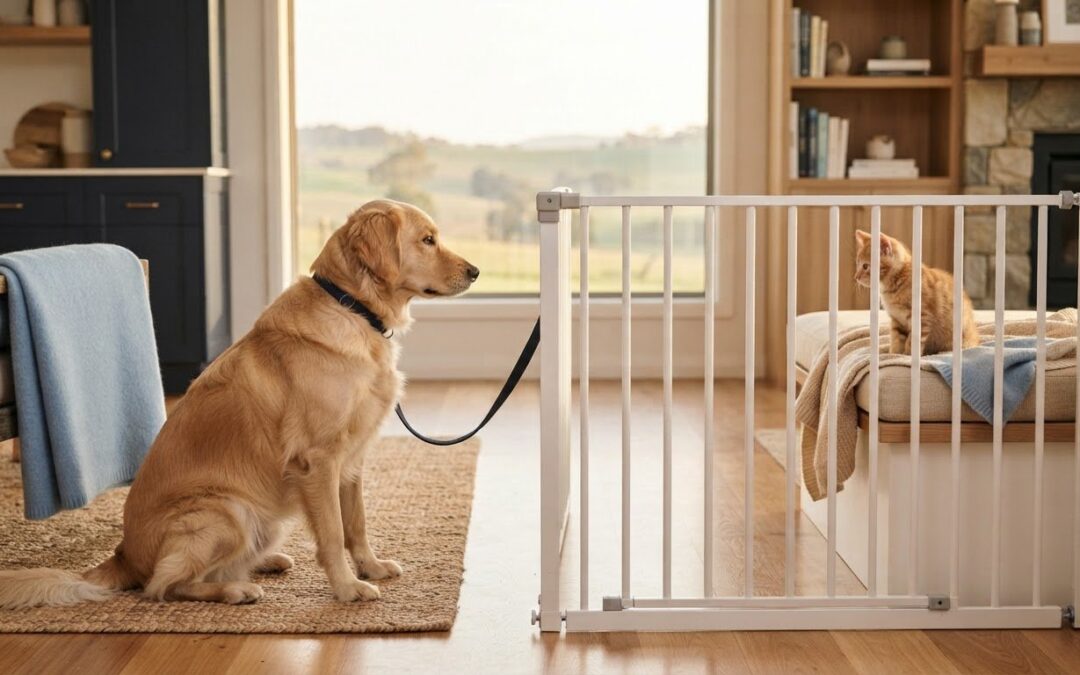
A calm introduction is built before your kitten and dog ever share a room. How to introduce a new kitten to my dog comes down to moving in stages: let them get used to each other’s scent and sounds, keep them apart with a barrier at first, then allow short, supervised meetings with your dog on lead. The process may take at least a week and possibly a few weeks, so let both animals’ comfort guide the pace.
It’s natural to hope your kitten and dog will become friends quickly, but rushing their first meeting can make either pet uneasy. Hissing, avoidance or excitement are cues to pause, create space and try again calmly, rather than force contact.
You’ll learn how to prepare separate spaces, introduce familiar scents, manage the first visual meetings and decide when to progress. You’ll also learn when persistent stress or intense chasing calls for veterinary or behaviour support, so you can help both pets feel secure as they adjust.
Key Takeaways
- Start with scent and sound, then use a barrier for the first visual introductions before allowing close contact.
- Keep early meetings short and supervised, with your dog on lead and calm behaviour rewarded.
- Progress to off-leash time gradually; don’t leave the pets alone together until they’re comfortable and your dog won’t chase.
- If either pet remains stressed or your dog fixates on the kitten, pause the introductions and seek veterinary or behaviour support.
Gradually allowing off-leash and unsupervised interaction
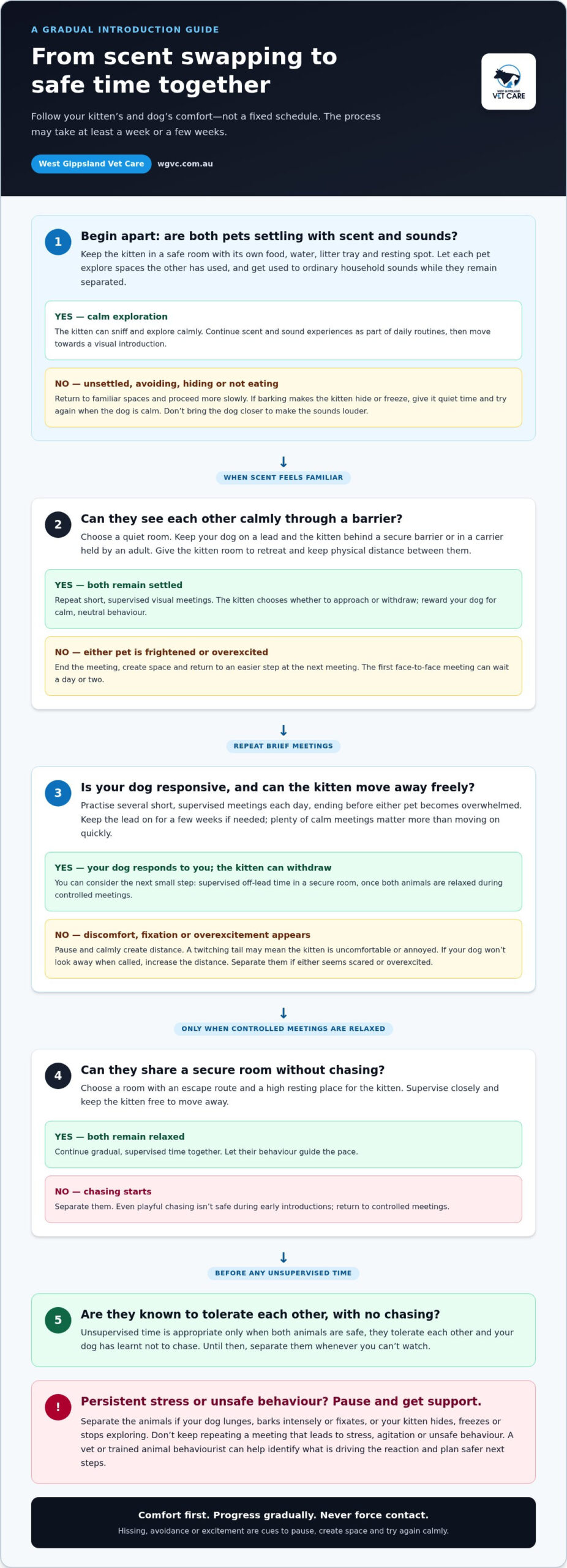
Move from controlled face-to-face meetings to off-leash time in small steps. Introductions can take a week or a few weeks, so follow the animals’ behaviour rather than a fixed schedule.
- Repeat brief, supervised meetings. Keep your dog on a lead and let the kitten choose whether to approach. Practise several short meetings each day, ending each one before either pet becomes overwhelmed. Reward your dog for calm, neutral behaviour, such as looking at the kitten and then turning back to you.
- Watch for signs to pause. A twitching tail can mean the kitten feels uncomfortable or annoyed. If your dog becomes intensely focused and won’t look away when called, calmly create distance. Separate them if either seems scared or overexcited, then return to an easier step at the next meeting.
- Keep the lead on for a few weeks if needed. Your dog may need to stay on lead around the kitten for a few weeks before off-leash interactions. Progress when your dog can respond to you and the kitten can move away freely. Plenty of calm meetings matter more than reaching the next stage quickly.
- Try off-leash time in a secure room. Once both animals are relaxed during controlled meetings, choose a room with an escape route and a high resting place for the kitten. Supervise closely. If chasing starts, separate them. Even playful chasing isn’t safe during early introductions.
- Delay leaving them alone together. Unsupervised time is appropriate only when they’re known to tolerate each other, your dog has learnt not to chase, and both animals are safe. Until then, separate them whenever you can’t watch. Careful, gradual steps help each pet accept the other without being forced into contact.
Using scent and sounds before visual introductions
Let your kitten and dog become familiar with each other’s presence before they meet face-to-face. Slowly build positive associations through scent and everyday sounds, then observe how each animal responds.
Exchange the kitten’s and dog’s scents
- Let each pet explore a room the other has recently used while keeping them apart. For example, allow your dog into the kitten’s room after the kitten has left, then let the kitten investigate a space where your dog has rested. This gives both animals time to notice the other’s scent without having to approach.
- Keep the kitten’s food, water, litter tray and resting place in its safe room. Don’t move the litter tray into the dog’s area or put the kitten among your dog’s belongings. If either pet avoids a room, seems unsettled or won’t eat there, return to familiar spaces and continue more slowly.
Get the kitten used to the dog’s scent
- Let the kitten investigate a room your dog has used at its own pace. Keep your dog elsewhere, and leave the kitten free to retreat to its safe space. A sniff followed by calm exploration is a useful response. Don’t carry the kitten towards a dog-scented bed or encourage it to stay near an item it avoids.
- Let ordinary household sounds become familiar while the pets remain separated. The kitten might hear your dog walking, drinking or responding to your voice from another room. Keep the home settled, and don’t bring the dog closer to make the sounds louder. If barking makes the kitten hide or freeze, give it quiet time and try again when the dog is calm.
- Repeat these scent and sound experiences as part of daily routines instead of presenting everything at once. Patience helps you see whether the kitten is comfortable enough for the next stage. Wait until it explores the dog’s scent calmly before arranging a visual introduction.
Using separate rooms, crates, carriers and leashes
Keep your kitten in a safe room away from your dog for a few days. The first meeting can wait a day or two. To combine scent swapping with a barrier, let them smell each other beneath a closed door before arranging a supervised meeting with your dog on lead.
-
Keep the dog on a leash initially
For the first face-to-face meeting, keep your dog on a lead and let the kitten stay behind a secure barrier or in a carrier held by an adult. Choose a quiet room where the kitten can retreat, rather than bringing the dog into its hiding place. Keep physical distance between them, and end the meeting if either animal becomes frightened or overexcited.
-
Reward calm behaviour during leashed introductions
Hold the lead loosely enough for your dog to stand comfortably, but keep control if it moves towards the kitten. Reward calm behaviour, such as sitting, looking away or responding to its name. If your dog stiffens, pulls, barks or fixates, increase the distance and pause. Repeat short, supervised meetings, keeping the kitten free to approach or withdraw.
-
Use separate rooms, crates and carriers
Give the kitten a safe room with its own food, water, litter tray and resting spot. For the next few days, let each pet explore shared areas separately, without confronting the other. If they need a slower introduction, feed them on opposite sides of a closed door for several weeks before a meeting with your dog on lead. A crate can provide a barrier only if your dog is already comfortable resting in it. Never trap the kitten beside an excited dog.
Getting help from a vet or animal behaviourist
Seek professional guidance if bringing your kitten into your dog’s presence repeatedly leads to stress, agitation or unsafe behaviour. A vet or trained animal behaviourist can help identify what is driving the reaction and plan safer next steps.
- Pause introductions when stress persists. Separate the animals if your dog lunges, barks intensely or fixates, or your kitten hides, freezes or stops exploring. Don’t keep repeating a meeting that leaves either pet distressed. Return to separate spaces and note what happened just beforehand, such as the dog approaching the kitten’s room or the kitten trying to pass.
- Record specific behaviours. Write down what each animal does, where it happens and what helps them settle. For example, note whether your dog can respond to its name across a barrier, or whether the kitten eats after hearing the dog. These details give a vet or behaviourist a clearer picture than saying the pets simply “don’t get along”.
- Talk with a vet about changes in behaviour. Explain when the reaction began and describe any changes in appetite, sleep or activity alongside the introductions. A vet can assess your pet’s health and help decide whether behaviour support would be useful. Bring your notes so the discussion focuses on your animals’ actual responses.
- Ask a trained behaviourist for a tailored plan. They can help you adjust the distance, barriers and pace of meetings to suit your dog and kitten. Follow the plan consistently, and share updates if your dog still chases or your kitten remains fearful. If the steps feel difficult to manage safely, pause direct contact.
- Get support before problems escalate. Professional advice is especially helpful when repeated attempts increase fear or agitation. You can discuss your pets’ behaviour and the support that may help your household.
West Gippsland Vet Care: Pet Vaccinations
West Gippsland Vet Care provides pet vaccinations as part of your kitten’s care. As you help your new arrival settle alongside your dog, keeping up with routine veterinary care can support their wellbeing. Contact the clinic to discuss vaccinations and care suited to your kitten’s needs.
If you’re unsure how to fit a vet visit around the settling-in process, keep your kitten’s safe room and familiar routine in place when you return home. A calm, predictable space can help your kitten relax after an outing without rushing introductions with your dog.
For help with your kitten’s vaccinations, contact West Gippsland Vet Care.
Build a settled routine for both pets
As your kitten and dog adjust, notice what helps each feel secure. A peaceful day might mean the kitten explores while the dog rests elsewhere, or both relax in the same room with space between them. Let those small signs guide your next step, and make room for each animal’s individual needs.
Learning how to introduce a new kitten to your dog is one part of welcoming a new companion. Planning their ongoing care is another. West Gippsland Vet Care offers pet vaccinations, desexing procedures and microchipping, supporting practical conversations about your kitten’s health as they grow. You can also discuss concerns about how the pets are settling together.
Contact West Gippsland Vet Care to talk about your kitten’s care. With a thoughtful routine and the right support, your household can keep moving towards a calmer life together.
Frequently Asked Questions
Can you Train a Dog to be Good With Cats?
Yes, dogs can learn calm behaviour around cats, although their past experiences and responses matter. Practise cues such as “look at me” and “stay” away from the kitten first, then use them during controlled exposure. A dog that stays fixed on the kitten or cannot respond to you needs more distance and support. In Warragul and nearby areas, a behaviour consultation can help you plan suitable training steps.
How Do I Get My Dog to Accept a Kitten?
If you’re wondering how to introduce a new kitten to my dog, establish a routine where your dog still gets attention and rest as the kitten settles in. For example, give your dog a familiar activity while the kitten explores another part of the home. Avoid scolding warning signals, such as growling. Calmly interrupt unsafe behaviour and create space so both pets can settle.
How Long Does it Take For a Cat to Get Used to a Dog?
It can take a week or a few weeks for a kitten and dog to adjust. A kitten may need several days or even a couple of weeks to feel confident in its new home before it is ready for more contact. Progress depends on each animal’s comfort and responses, so keep the routine steady and don’t treat the calendar as a deadline.
Reading body language: Is it play or predatory?
Play tends to include relaxed movement and pauses, while stalking, a hard stare and silent pursuit are reasons to stop the interaction. Watch whether your dog can break focus and respond to you. Intense attention that doesn’t shift when called is a warning sign. Don’t assume chasing is harmless because the dog seems excited. Separate the pets and return to a safer level of contact.
How to prepare the home before introducing a kitten to a dog
Set up a kitten-only room with food, water, a litter tray and a comfortable sleeping spot before bringing the kitten home. Keep the dog’s food and resting area separate, and check that doors and gates close securely. Clear the kitten’s route to a hiding place or elevated perch. These arrangements let the kitten explore its territory without needing to pass close to the dog.
What is the step-by-step process for introducing a kitten to a dog
A practical answer to how to introduce a new kitten to my dog is to progress in stages. Prepare a separate room, let each pet become familiar with the other’s scent, then introduce them visually through a secure barrier. Next, arrange supervised meetings with your dog under control and the kitten free to retreat. Keep them apart when you can’t supervise, and seek professional help if fear, agitation or chasing continues.