
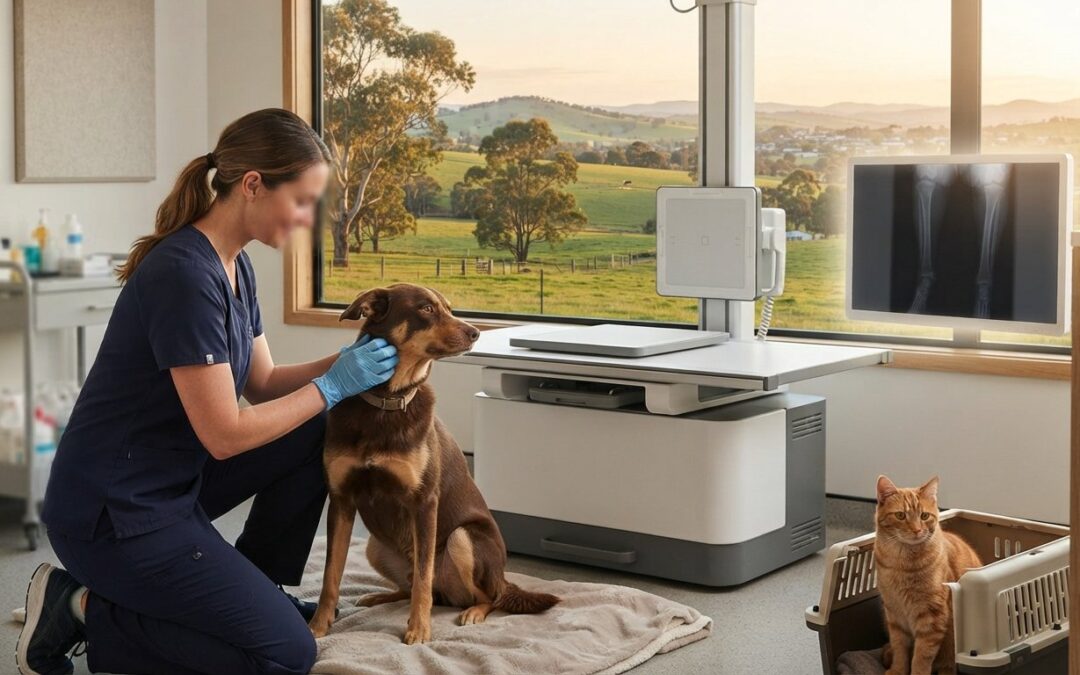
A suspected fracture needs clear answers, not guesswork. The cost of diagnostic imaging for pets in Warragul depends on the imaging method, the complexity of the case and whether the images are taken on-site or reviewed remotely. For X-rays, the number of images needed and whether your pet needs sedation can also affect the estimate.
It’s understandable to want a clearer idea of costs while you’re worried about your pet’s comfort and what an injury might mean. This guide explains what can influence specialist imaging and X-ray costs, how imaging can help assess fractures and bone injuries, and what to expect when requesting an estimate.
You’ll also learn why a vet may recommend different imaging methods and how sedation or anaesthesia may fit into the process. This can help you prepare for a conversation about the next step for your pet.
Key Takeaways
- Imaging costs vary with the type of scan, case complexity and whether images are taken on-site or reviewed remotely.
- For X-rays, the number of images needed and whether sedation is required can affect the estimate.
- Imaging can help assess fractures and other bone injuries, giving your vet useful information to guide treatment.
- Ask for an estimate before imaging begins so you can understand the expected steps and costs for your pet’s case.
- Consultation, sedation or anaesthesia may be considered separately depending on what your pet needs to remain comfortable and still.
Specialist imaging costs and pricing factors
There’s no single price for specialist imaging in Warragul. The cost depends on the imaging method, the case complexity and whether images are taken on-site or reviewed remotely.
Specialist imaging pricing factors
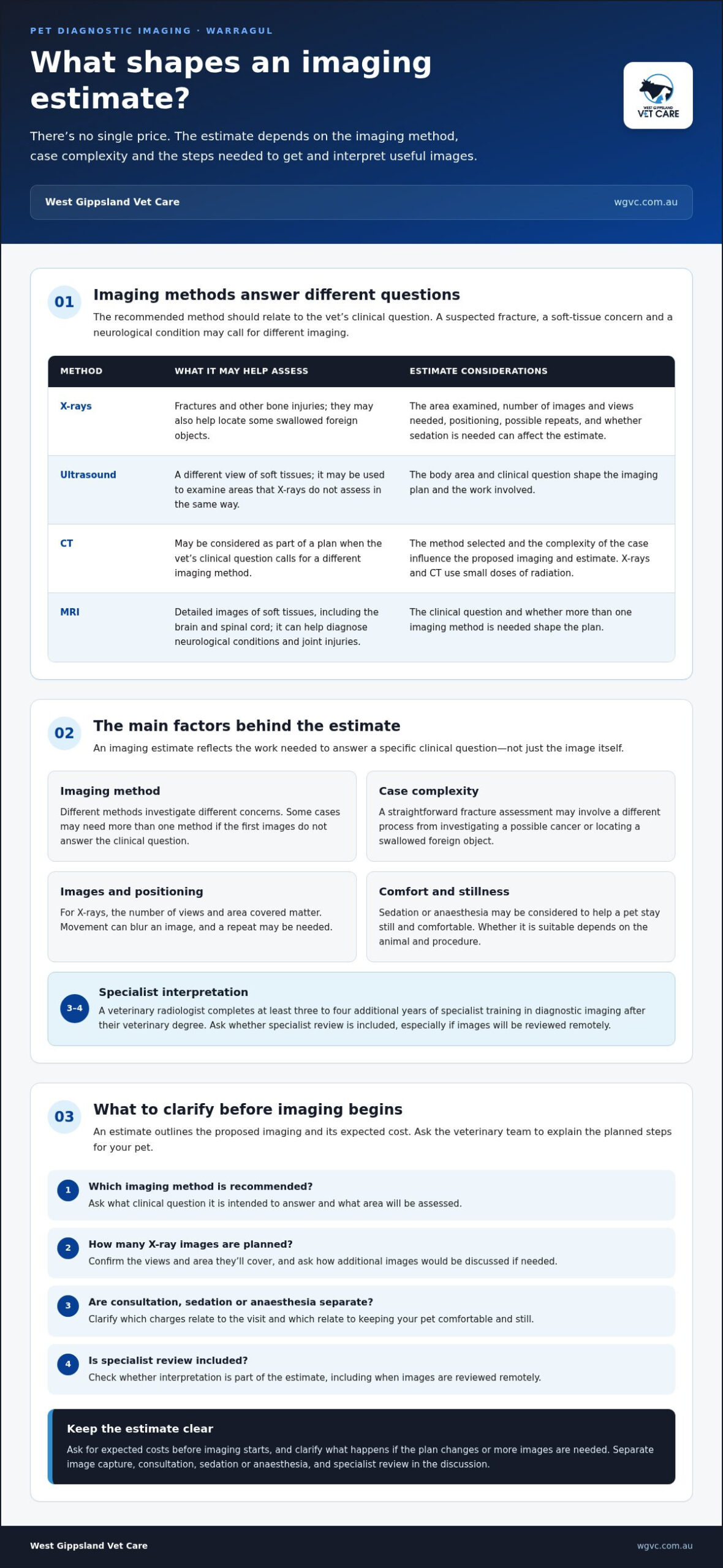
Start by identifying the imaging method your pet needs. X-rays can help assess fractures, while ultrasound may be used to examine other areas. The body part being investigated, the number of images required and the need for specialist interpretation all affect the work involved and the estimate.
The clinical question matters because imaging methods are used to investigate different concerns. A straightforward X-ray for a suspected fracture may involve a different process from imaging to investigate a possible cancer or locate a swallowed foreign object. X-rays and CT use small doses of radiation, as in human medical imaging. Your vet’s clinical question helps determine which images are needed.
Some cases need more than one imaging method. A vet may use X-rays to examine a bone injury, then consider another method if the images don’t answer the clinical question. MRI provides detailed images of soft tissues, including the brain and spinal cord, and can help diagnose neurological conditions and joint injuries.
Specialist review can also affect the cost. A veterinary radiologist completes at least three to four additional years of specialist training in diagnostic imaging after their veterinary degree. The cost of diagnostic imaging for pets in Warragul may therefore reflect both capturing the images and the expertise needed to interpret them.
Separate consultation and sedation charges
Imaging may be one part of a broader veterinary visit. Some studies require sedation or anaesthesia to help keep a pet still and comfortable and maintain image quality. Ask for an estimate that separates imaging from any consultation or sedation-related charges.
Whether sedation is needed depends on the procedure and your pet’s ability to remain still. A fracture assessment, for example, may require careful positioning of the affected area. Your vet can explain how your pet’s comfort and image quality shape the plan before imaging begins.
Estimates before imaging begins
An estimate outlines the proposed imaging and its expected cost before the procedure starts. For a pet X-ray, the number of images required and whether sedation is needed can affect the estimate.
Ask what clinical question the images are intended to answer. A suspected fracture, for example, may require images of a particular bone or joint. The area being examined and the images needed shape the plan. Understanding the purpose makes it easier to discuss the estimate.
Ask for expected costs before imaging begins. Clarify which charges relate to image capture, consultation, sedation or anaesthesia, and specialist review. An imaging study may involve more than taking an image, so the estimate should reflect the steps planned for your pet.
- Confirm the imaging type: Ask whether the recommendation is for X-rays, ultrasound, CT or another method, and what it is intended to assess.
- Discuss image numbers: For X-rays, ask how many images are planned and what area they’ll cover.
- Ask about sedation: Find out whether sedation or anaesthesia forms part of the plan to help your pet remain still and comfortable.
- Clarify interpretation: Ask whether specialist review is included in the estimate, particularly if images will be reviewed remotely.
These questions also help you understand why one imaging plan may differ from another. For example, an X-ray to assess a suspected fracture has a different purpose from imaging to investigate soft tissues or a possible disease. The recommended method should relate to the vet’s clinical question, not simply the equipment available at a clinic or hospital.
If your pet’s needs change during the process, ask how that will affect the estimate before further imaging proceeds. The vet may need additional images if the first set doesn’t provide enough information to assess the injury. Find out how changes will be discussed, so you can distinguish the original estimate from a revised plan.
Keep the estimate and note any questions you want answered before imaging begins. You can ask the clinic to explain unfamiliar terms, such as specialist interpretation, in plain language. For guidance on the imaging process and an estimate for your pet’s needs, discuss diagnostic imaging with the veterinary team.
Factors affecting pet X-ray costs
A pet X-ray estimate reflects the work needed to answer a specific clinical question. For a suspected fracture, the vet considers the affected area, the image views required and whether your pet can stay still during the procedure.
The number of images is one direct factor. One view may not show enough detail to assess a bone injury, so the vet may need additional angles. Imaging a joint can also require views of the surrounding bone and alignment. Each image should help answer the clinical question.
Positioning matters, too. A sore or frightened pet may struggle to hold still for clear images. If movement causes blurring, an image may need to be repeated. Sedation can help some pets remain still and comfortable, but its suitability depends on the animal and procedure.
The area being examined also shapes the plan. X-rays show bones and may help locate some swallowed foreign objects. Ultrasound uses sound waves and provides a different view of soft tissues. If a vet is investigating a lump or possible tumour, they’ll consider which method is best suited to the question.
Advanced imaging or specialist review may be considered when standard X-rays don’t provide enough information. A referral can add another step, such as transferring images for review or arranging a different scan. These choices depend on the clinical question and whether the results are likely to guide treatment, rather than simply on the clinic or centre performing the imaging.
- Area and views: Which bone, joint or body region needs imaging, and how many views are required?
- Positioning: Can your pet stay still, or might sedation be part of the procedure?
- Diagnostic question: Is the vet assessing a fracture, foreign objects, soft tissues or possible tumours?
- Further expertise: Is specialist interpretation or a referral needed to clarify the findings?
These factors work together. A comfortable dog with a localised injury may need a different imaging plan from a distressed pet with pain in several areas. The vet’s examination helps identify the area to investigate, while the images show whether further assessment may help.
For an exact figure, your pet’s quote depends on the imaging required, the number of images, case complexity and any sedation or specialist review. Discuss these details before the procedure so the estimate reflects the proposed plan.
Do Warragul veterinary clinics charge separately for consultation, sedation, or anaesthesia for imaging?
The bill may include more than imaging, and charges may be grouped differently. A consultation, imaging, sedation or anaesthesia may appear as separate items in an estimate or account. Ask for an itemised estimate before imaging starts, so you can see which steps are included.
A consultation helps the veterinarian assess your pet and decide which images could answer the clinical question. For a suspected fracture, the examination helps identify the painful area and guide the imaging plan. Ask whether the consultation is included with imaging or listed separately.
Sedation or anaesthesia may be needed for some imaging studies. These can help keep a pet still and comfortable while supporting image quality. Whether either is included in the plan depends on the study and your pet’s ability to remain still. Ask how it affects the overall estimate.
Before agreeing to the procedure, ask the veterinary team to explain each listed item in plain language. You might ask:
- Does the estimate include the consultation and imaging?
- Is sedation or anaesthesia planned, and why is it being considered?
- Does the estimate include image interpretation?
- What would change the plan or require further imaging?
These questions are useful because a straightforward X-ray assessment may involve different steps from a study requiring sedation. If your pet is uncomfortable or anxious, discuss how the team will help them stay settled. The answer can clarify whether sedation is being considered for comfort, stillness, image quality or a combination of these needs.
For a clear comparison, look at what each estimate covers, not just the total. One estimate might group consultation and imaging together, while another lists them separately. Check whether the imaging method, any sedation or anaesthesia, and image interpretation are included.
Ask for the estimate before imaging starts and raise any unclear items with the veterinary team. If the plan changes because the first images don’t answer the clinical question, ask what further imaging involves and what it will cost before it proceeds. This helps you understand the likely account and make informed decisions about your pet’s care.
Veterinary imaging can help locate a swallowed foreign object, giving the veterinarian information to decide whether surgery or other treatment is needed. Ask how the proposed imaging relates to the next steps in your pet’s care.
West Gippsland Vet Care notes that the cost of a pet X-ray depends on the number of images required and whether sedation is needed, and that it provides an estimate before starting. Ask how many images are anticipated and whether sedation is part of the plan, so you understand the estimate before agreeing to proceed.
Which veterinary clinics in Warragul offer diagnostic imaging for pets?
Veterinary diagnostic imaging is available in Warragul, but the right approach depends on what your pet needs. Start with the clinical question: an X-ray may help assess a suspected fracture, while another method may be better suited to soft tissues or a different concern.
When choosing a local veterinary clinic, look for diagnostic imaging and a team that can explain how it fits into your pet’s care. Ask whether imaging is performed on-site or reviewed remotely. These arrangements, along with the imaging method and case complexity, can affect the process and cost.
Not every scan answers the same question. X-rays can help assess bones and fractures, while MRI provides detailed images of soft tissues, including the brain and spinal cord. Veterinary imaging can help identify abnormalities, diagnose disease and inform treatment plans. Your pet’s symptoms and the veterinarian’s examination guide the choice.
A referral may be part of the process if a case needs specialist imaging or interpretation. In many cases, the referring veterinarian is billed directly for specialist veterinary imaging, and the charge becomes part of the pet owner’s overall veterinary account. Ask how imaging and specialist review fit into the estimate.
When comparing clinics in Warragul, focus on practical details that affect your pet’s plan:
- Imaging method: Which scan is recommended, and what question will it answer?
- Location of imaging: Will the images be taken on-site or reviewed remotely?
- Specialist input: Is a referral or specialist image review part of the plan?
- Estimate: Does it explain imaging, consultation and any sedation or anaesthesia?
For a suspected fracture, ask how the planned images will help assess the injured area and guide treatment. If your pet needs to stay still, sedation or anaesthesia may be considered to support comfort and image quality. These details clarify what the proposed service includes.
Digital radiography images can be captured in seconds and appear on a computer screen almost instantly. That describes image capture and viewing, not the full diagnostic process. The veterinarian still needs to interpret the images alongside your pet’s examination and history.
Choose the pathway that matches your pet’s clinical needs, rather than assuming every clinic offers the same imaging or specialist review. A clear discussion of the scan, referral steps and estimate can help you understand where each part of care will take place.
West Gippsland Vet Care: Pet Vaccinations
West Gippsland Vet Care offers diagnostic imaging to help assess fractures and other bone injuries. If your pet’s results point to a need for surgical treatment, the team also offers orthopaedic surgery. Your veterinarian can explain how the imaging results relate to your pet’s condition and discuss suitable care.
Clear information can make decisions feel more manageable. Bring your questions about the images, your pet’s comfort and the treatment options you’d like explained. West Gippsland Vet Care also provides pet vaccinations, desexing procedures and microchipping.
For a supportive conversation about your pet’s care, contact West Gippsland Vet Care.
Take the next step with confidence
If your pet may have a fracture, a clear discussion about recommended care can help you decide what to do next. The cost of diagnostic imaging for pets in Warragul depends on the imaging plan and your pet’s needs, so ask what each step is intended to achieve.
West Gippsland Vet Care can discuss diagnostic imaging and, where appropriate, orthopaedic surgery. The team also offers pet vaccinations, desexing procedures and microchipping, supporting your pet’s care at different stages of life. Bring along any questions about your pet’s symptoms, the proposed imaging or what the results could mean for treatment.
When you’re ready to talk through your pet’s needs, contact West Gippsland Vet Care. A thoughtful conversation is a positive first step towards making informed decisions for your companion.
Frequently Asked Questions
How much does specialist imaging cost?
Specialist imaging costs depend on the scan type, case complexity and image review arrangements. The cost of diagnostic imaging for pets in Warragul can differ between a straightforward X-ray assessment and imaging that requires specialist interpretation. Ask for an estimate outlining the planned imaging and related steps, so you have a case-specific figure to consider before proceeding.
How much does a CT scan cost?
A CT scan’s cost depends on the area being examined, the case complexity and how the images will be reviewed. Sedation or anaesthesia may also be part of some imaging plans. These details shape the estimate, rather than one figure applying to every pet. A quote for your animal’s proposed scan clarifies the expected cost and what it covers.
How much does an ultrasound for a dog or cat cost in Warragul?
The cost of an ultrasound for a dog or cat in Warragul depends on the clinical question and the area being examined. An assessment of one particular area may involve a different plan from a broader investigation. Ask for an estimate based on the recommended examination and any associated steps before the scan.
What is the cost of a CT scan or MRI for pets near Warragul?
CT and MRI costs near Warragul vary with the scan required, case complexity and specialist review arrangements. MRI can provide detailed images of soft tissues, including the brain and spinal cord. When a specialist service is involved, the referring veterinarian is generally billed directly, with the charge included in the pet owner’s overall veterinary account. Ask for a case-specific quote outlining the proposed pathway.
How can pet owners get an estimate for diagnostic imaging from a Warragul vet?
To get an estimate, explain your pet’s symptoms and why imaging has been recommended, then request a quote before the scan. If another veterinarian has examined your pet, share the referral and relevant clinical records. Ask the estimate to identify the proposed imaging method and any consultation, sedation, anaesthesia or specialist review. This helps you understand the planned care and expected account.
What factors affect the cost of pet diagnostic imaging in Victoria?
In Victoria, imaging costs depend on the method selected, the clinical complexity and whether images are taken on-site or reviewed remotely. For X-rays, the number of images required can affect the estimate. Sedation or anaesthesia may also be needed for some studies. The clinical question, such as assessing a fracture or investigating soft tissues, guides the appropriate imaging plan.