The most humane calf disbudding plan starts before anyone picks up a tool. If you’re weighing up humane calf disbudding techniques, it’s understandable to be concerned about pain, stress and recovery. The right approach involves more than choosing a method: timing, pain relief, calm handling and follow-up all matter.
This guide covers the main approaches, including hot-iron disbudding and chemical methods, without unsafe do-it-yourself instructions. You’ll learn why early timing and a considered pain-relief plan support welfare, and what to discuss with your farm vet before setting a date. Requirements can vary across Australia, so local veterinary advice matters too.
For farmers in West Gippsland, calf disbudding can be part of a broader herd health plan. West Gippsland Vet Care provides calf dehorning, herd health advice and on-farm veterinary support, helping you plan care around your calves and farm routine.
Key Takeaways
- Understand how removing horn buds before horns become established differs from dehorning, and why horns can pose injury risks.
- Learn how humane calf disbudding techniques are assessed alongside pain management and trained handling, rather than as a choice of tool alone.
- Compare approaches by considering each calf’s age and horn-bud development, as well as the veterinary support available.
- Prepare for the procedure by planning calf assessment, handling, pain relief, follow-up and record-keeping with your farm vet.
- See how West Gippsland Vet Care’s calf dehorning and herd health support can help shape welfare planning for your farm.
Humane calf disbudding: why welfare starts before the procedure
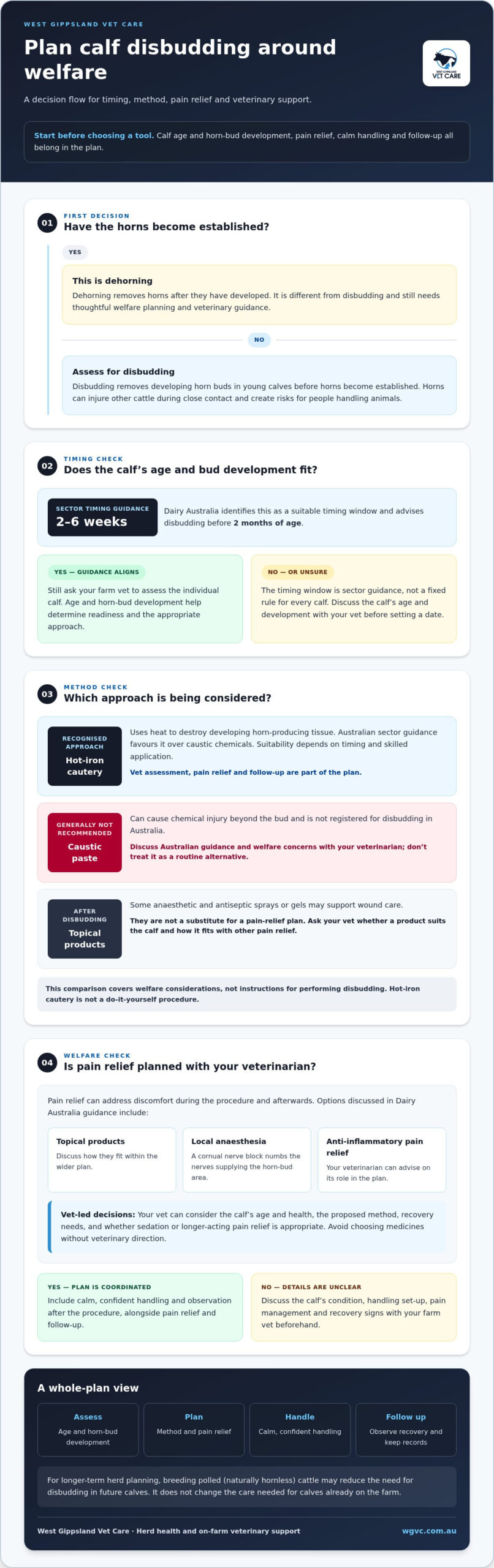
Good welfare planning begins well before the procedure. A calf’s age and horn-bud development help determine timing, while pain relief, calm handling and appropriate follow-up contribute to a considered plan. Looking at the whole process helps farmers make decisions for each calf instead of treating disbudding as simply a choice of tool.
Disbudding removes developing horn buds in young calves before horns become established; dehorning removes horns after they have developed. The distinction matters because the procedures involve different stages of development and should not be treated as interchangeable. Both require thoughtful welfare planning and veterinary guidance.
Disbudding and dehorning: what is the difference?
Disbudding targets the small, developing horn buds of a young calf. Dehorning takes place after horns have grown. Dairy Australia discourages dehorning where early disbudding can prevent horns from becoming established. For a general explanation of the terms and welfare considerations, see this Dehorning and Disbudding Overview.
Horns can injure other cattle during close contact and create risks for people handling animals. Preventing horn growth early can support safer day-to-day work and reduce the chance of horn-related injuries within the herd. The aim is not to rush the decision, but to plan an appropriate approach while the calf is young.
Why timing and welfare planning matter
Dairy Australia identifies two to six weeks as a suitable timing window and advises disbudding before two months of age. Treat this as sector guidance, not a fixed rule for every calf. The right timing depends on the calf’s age and horn-bud development, so a veterinary assessment can help determine whether the animal is ready and which approach is appropriate.
Timing is only one part of welfare. A plan should also cover effective pain relief, calm and confident handling, and observation after the procedure. Discuss these elements with your farm vet beforehand. This gives you time to consider the calf’s condition, the handling set-up and which signs during recovery may need attention. Humane calf disbudding techniques are best considered as part of this broader care plan, not in isolation.
There’s also a longer-term option to consider in herd planning: breeding polled, or naturally hornless, cattle. Over time, polled genetics may reduce the need for disbudding in future calves. This won’t guide the care needed for calves already on the farm, but it can form part of a broader conversation about herd health and welfare goals.
Calf disbudding techniques: how method and pain relief work together
Choosing an approach means weighing more than how horn-bud tissue is treated. Calf age and development, the handling set-up, pain management and veterinary support all influence how a procedure can be planned for welfare. The comparison below outlines key considerations, not instructions for performing disbudding.
Hot-iron cautery and developing horn buds
Hot-iron cautery uses heat to destroy the developing tissue that would produce a horn. It’s a recognised approach for young calves with developing horn buds, and Australian sector guidance favours it over caustic chemicals. Suitability depends on timing and skilled application. An individual assessment helps avoid treating a calf at the wrong stage or without an appropriate welfare plan.
This is not a do-it-yourself procedure. Your veterinarian can assess the calf and plan handling, pain relief and follow-up together. The AVMA Guidelines for Calf Disbudding also discuss welfare considerations and pain management, providing useful background alongside Australian advice.
| Approach | Welfare considerations | Veterinary involvement |
|---|---|---|
| Hot-iron cautery | Recognised for developing horn buds; timing, skilled handling and pain relief matter. | Supports assessment of suitability and planning for pain relief and aftercare. |
| Caustic paste | Generally not recommended; it can cause chemical injury beyond the bud. It is not registered for disbudding in Australia. | Discuss Australian guidance and welfare concerns with your veterinarian; don’t treat it as a routine alternative. |
| Topical products after disbudding | Some anaesthetic and antiseptic sprays or gels may support wound care, but aren’t a substitute for a pain-relief plan. | A veterinarian can advise whether a product suits the calf and how it fits with other pain relief. |
Pain relief options and the veterinarian’s role
Pain relief can address discomfort during the procedure and afterwards. Options discussed in Dairy Australia guidance include topical products, local anaesthesia and anti-inflammatory pain relief. A cornual nerve block is an injection that numbs the nerves supplying the horn-bud area. A veterinarian can also advise whether sedation or longer-acting pain relief is appropriate.
Different calves and farm situations may call for different plans. Your vet can consider the calf’s age and health, the proposed method and how pain may be managed during recovery. Avoid relying on a topical product alone or choosing medicines without veterinary direction. The aim is a coordinated plan, not simply adding a product after the procedure.
Humane calf disbudding techniques bring the method and pain-relief plan together. For farm-specific advice, West Gippsland Vet Care’s calf disbudding and herd health support can help you plan care with your veterinarian.
How to compare calf disbudding approaches for your farm
A method that suits one calf group may not suit another. Compare the options against the calves in front of you, the people and facilities available, and the veterinary support needed to manage pain and recovery. Sector guidance can help set a welfare baseline, but it can’t replace an assessment of an individual calf or determine the best plan for every farm.
Start your comparison with a few practical questions:
- Are the calves at a suitable stage? Age matters, but horn-bud development and general health also affect readiness. A vet can assess calves that are unwell, difficult to handle or at a different stage of development from the rest of the group.
- Can the handling set-up support calm care? Consider whether the facilities allow secure, steady restraint and whether the team can work without rushing or repeated handling.
- Is the pain-relief plan clear? Discuss how pain will be managed during and after the procedure, and who will provide and oversee that care.
- Is experienced help available? A tool on its own doesn’t make a procedure humane. Staff experience, preparation and veterinary involvement all contribute to safe, considered care.
The appropriate approach balances welfare, the calf’s circumstances and trained care. If facilities are busy or staff are unfamiliar with the procedure, adjust the farm plan. That could mean arranging veterinary support or choosing a time when calves can be handled calmly and observed afterwards. Don’t press ahead simply because a group has been scheduled. Seek veterinary advice if a calf’s health, readiness or handling needs raise concerns.
Which welfare and handling factors should guide the choice?
Think through the entire handling experience, from bringing calves into the working area to settling them afterwards. Suitable facilities and calm restraint can help minimise avoidable stress for calves and handlers. Humane calf disbudding techniques depend on skilled care and an appropriate pain-relief plan, not equipment alone. If a calf is distressed, unwell or hard to restrain safely, pause and discuss the next step with your veterinarian.
Can polled genetics reduce future disbudding needs?
Polled cattle naturally don’t develop horns, so selecting polled sires may help reduce the need for disbudding in future generations. It’s a breeding decision, not an immediate alternative for calves already born, and should be considered alongside the farm’s longer-term herd goals. Dairy Australia provides breed-specific information that can help farmers explore polled genetics and sire selection with their breeding advisers.
A practical calf disbudding plan: preparation, care and records
A written plan helps everyone understand what to expect, who is responsible and when veterinary advice is needed. It also makes it easier to fit calf care around the farm routine without letting a busy day rush decisions. Use the steps below as a planning framework, with your veterinarian guiding decisions about each calf and the procedure.
Before the procedure: assess, schedule and prepare
- Assess the calf. Review age, horn-bud development and general health with your veterinarian. If a calf is unwell, unusually unsettled or difficult to handle, discuss whether to proceed or reschedule.
- Choose the timing together. Use sector guidance as a starting point, not a substitute for individual assessment. Allow time for calm handling and appropriate observation afterwards, rather than scheduling the work when staff are stretched.
- Agree on pain relief and responsibilities. Before the day, clarify the plan with the attending veterinary team, including who oversees pain relief, who handles the calves and who monitors them afterwards.
- Prepare people and facilities. Set up a suitable, secure handling area and make sure everyone involved understands their role. A calm, organised flow can reduce unnecessary movement and repeated handling.
Australian cattle welfare standards provide a national framework, but requirements and their implementation can vary between states and territories. Don’t assume guidance or rules elsewhere apply unchanged in Victoria. Discuss current requirements with your veterinarian as part of planning, and use current Victorian guidance to check what applies to your farm. Keep welfare planning distinct from legal compliance: both matter, but one doesn’t replace the other.
After disbudding: observation and follow-up
Plan who will check each calf and when, following the veterinary team’s advice. Observe comfort, behaviour, appetite and general recovery, and note anything that seems different from what you were told to expect. If you notice unusual distress, bleeding or another concern, seek prompt veterinary advice rather than trying to manage a complication without guidance.
Clear records help you follow up consistently and review your approach as part of herd health management. For each calf or group, record:
- Calf identification and the date of the procedure
- Veterinary assessment and the agreed care plan
- Pain relief and other care provided, as directed by the vet
- Who carried out or supervised the work
- Follow-up observations, concerns and any veterinary advice received
Good records can also help identify patterns, such as handling challenges or recurring recovery concerns, that may be worth discussing with your farm vet. Humane calf disbudding techniques work best within a plan that covers preparation as carefully as follow-up. Arrange farm veterinary support for calf disbudding with West Gippsland Vet Care to discuss welfare planning and care for your herd.
Humane calf disbudding support from West Gippsland Vet Care
Every farm has its own routines, facilities and calf-care needs. West Gippsland Vet Care works alongside local farmers to plan calf dehorning with welfare in mind, taking account of the calves, handling arrangements and the practicalities of the property. Veterinary guidance helps you make informed decisions about suitability, timing, pain relief and follow-up instead of relying on a one-size-fits-all approach.
This support is part of the practice’s broader Farm Animal Services. West Gippsland Vet Care provides herd health advice and programs, as well as on-farm veterinary support. This wider perspective connects decisions about humane calf disbudding techniques with the ongoing health and management of your herd.
Farm animal veterinary care across West Gippsland
Calf care doesn’t sit apart from the rest of herd management. A conversation with your farm vet can bring together individual calf needs, your planned approach to disbudding and wider herd health considerations. West Gippsland Vet Care’s Warragul and Drouin clinics serve farmers across West Gippsland, with on-farm veterinary support as part of its farm animal care. The team supports farmers in Warragul, Drouin, Bunyip, Yarragon, Trafalgar, Willow Grove, Hill End and Neerim South.
For a broader look at how local veterinary support can fit into livestock care, explore the West Gippsland livestock vet guide. It provides context for considering calf care within a farm’s wider herd health needs, rather than treating one procedure as a standalone decision.
Plan calf care with your local veterinary team
Before settling on a plan, talk through the questions that matter on your farm. You might discuss:
- Whether each calf is suitable for the planned timing and approach
- How pain relief will be managed and who will oversee it
- How calves will be handled calmly and safely
- What follow-up observations are appropriate and when to seek advice
Bringing these points to your vet helps turn general guidance into a practical plan for your calves and farm routine. It also gives you a chance to raise concerns about a particular calf or the handling set-up before the procedure is scheduled. Your veterinary team can help you consider the options and make decisions based on the circumstances, without assuming every calf or farm needs the same approach.
If you’re in West Gippsland and planning calf care, the team at West Gippsland Vet Care welcomes a conversation about calf dehorning and herd health support. Contact West Gippsland Vet Care to discuss your farm’s needs with the local veterinary team.
Make your next calf-care plan a considered one
Use your next herd-planning conversation to turn welfare priorities into a practical routine for your farm. Consider who will assess calves, how the team will prepare and how observations after the procedure will be shared. A clear plan helps everyone understand their role and respond thoughtfully if a calf needs extra attention.
Keep the discussion open as your herd and farm routines change. Your vet can help you revisit your approach, consider individual calf needs and work through questions about humane calf disbudding techniques. Shared planning keeps calf welfare part of everyday farm care, not just a decision made on procedure day.
West Gippsland farmers can talk with West Gippsland Vet Care about calf care and plan a next step with the veterinary team. Get in touch to discuss calf dehorning and herd health support.
Frequently Asked Questions
Is calf disbudding painful?
Yes, disbudding can cause pain, so welfare-conscious care includes appropriate pain relief and gentle handling. Dairy Australia strongly recommends pain relief, which may involve sedation, a cornual nerve block to numb the area, and longer-acting relief. The right combination depends on the calf and the planned procedure. Discuss humane calf disbudding techniques with your veterinarian, who can advise on suitable care rather than relying on medicines or products without clinical guidance.
What is the best age to disbud a calf?
Dairy Australia describes two to six weeks as an effective timing window and supports completing disbudding before calves are two months old, with pain relief. These are sector recommendations, not a fixed rule for every animal. For example, a calf whose horn buds are developing differently from its pen mates may need an individual assessment. Your veterinarian can consider horn-bud development, overall health and current requirements when helping plan appropriate timing.
Can a calf be disbudded if it is unwell?
A calf that seems unwell should be assessed by a veterinarian before a planned procedure goes ahead. For instance, a calf with reduced appetite or unusual behaviour may need its health concerns addressed first, and the timing may need to change. The calf’s condition can affect handling, pain management and recovery. Don’t use a general guide to decide whether an individual animal is fit for disbudding; ask your farm vet for advice.
What happens if a calf’s horn buds are missed during disbudding?
If horn growth continues after disbudding, arrange a veterinary assessment to understand what has happened and what care is appropriate. The next step depends on the calf’s age, horn development and welfare, so don’t attempt a repeat procedure yourself. Keep the original procedure date and any observations, such as when horn growth became noticeable, to help your veterinarian assess the situation and advise on follow-up.
Are there alternatives to disbudding calves?
Yes. Polled cattle naturally don’t develop horns, so selecting sires that carry the polled gene can help reduce the need for disbudding in future generations. It’s a longer-term breeding decision, not an immediate option for calves already born with horn buds. Dairy Australia encourages polled sire selection, and farmers can discuss breed-specific information, breeding choices and herd goals with their advisers.
Is calf disbudding regulated in Victoria?
Australian cattle welfare standards provide a national framework, while legal requirements and implementation can vary by state. As at October 2026, Victoria intends to adopt the national standards into new legislation that is under development, so don’t assume every national recommendation is a Victorian legal requirement. Dairy Australia notes a pain-relief requirement for dehorning cattle over six months. Check current Victorian requirements through official guidance and discuss calf-specific welfare planning with your veterinarian.