
What if your pet’s teeth look fine, but a problem is hiding beneath the gumline? If you’re searching for a vet that does dental charting Warragul, you may want to know what a thorough assessment involves, especially if you’re concerned about anaesthesia or what might happen next.
Dental charting creates a structured record of each tooth and the surrounding gums. It helps the veterinary team document findings and plan appropriate care. Dental X-rays add information about areas below the gumline that can’t be assessed by sight alone. West Gippsland Vet Care provides preventative dentistry and dental X-rays, with dental procedures performed under anaesthetic and care delivered by a Fear Free Certified team.
In this guide, you’ll learn what charting can record, how it works alongside dental X-rays, and what to expect before and after your pet’s appointment. We’ll also explain how findings can shape the next steps, so you’re better prepared to discuss your companion’s care with the Warragul veterinary team.
Key Takeaways
- A tooth-by-tooth chart gives the veterinary team a clear record to refer to when discussing findings and possible next steps.
- The vet determines the appropriate assessment. Thorough charting may take place during a dental procedure under anaesthesia.
- A visual examination, dental charting and dental X-rays each contribute different information to an assessment.
- Note changes you’ve noticed and share relevant health history before the appointment. Follow the clinic’s instructions for your pet.
- West Gippsland Vet Care provides preventative dentistry and dental X-rays for pets in Warragul and nearby communities.
What does a vet dental charting appointment in Warragul involve?
It can be hard to tell how your pet’s teeth are doing at home. They may not let you look closely, and a tooth that seems normal from the outside can leave you wondering whether you’re missing something. Dental charting gives the veterinary team an organised way to record what they find, rather than relying on a brief overall impression.
A dental chart is a structured, tooth-by-tooth record of the teeth and surrounding oral tissues. It helps the vet document observations and gives you a reference for discussing your pet’s dental health and possible care. If you’re looking for a vet that does dental charting Warragul, understanding the purpose of the chart can help you know what questions to ask and how findings may guide the next steps.
What information can a dental chart record?
The vet assesses individual teeth and the tissues around them, recording changes identified during the examination. Depending on the findings, the chart may note a tooth’s condition or the appearance of nearby gums. This creates a clearer picture of the mouth while keeping track of observations at each tooth.
The record supports communication between you and the veterinary team. Rather than hearing only that your pet has a dental concern, you can discuss the observations behind that assessment and what they may mean for care. Charting is one part of veterinary dentistry, the field concerned with assessing and treating animals’ teeth and mouths. The Veterinary dentistry overview offers further general context.
Why might a pet need more than a quick look?
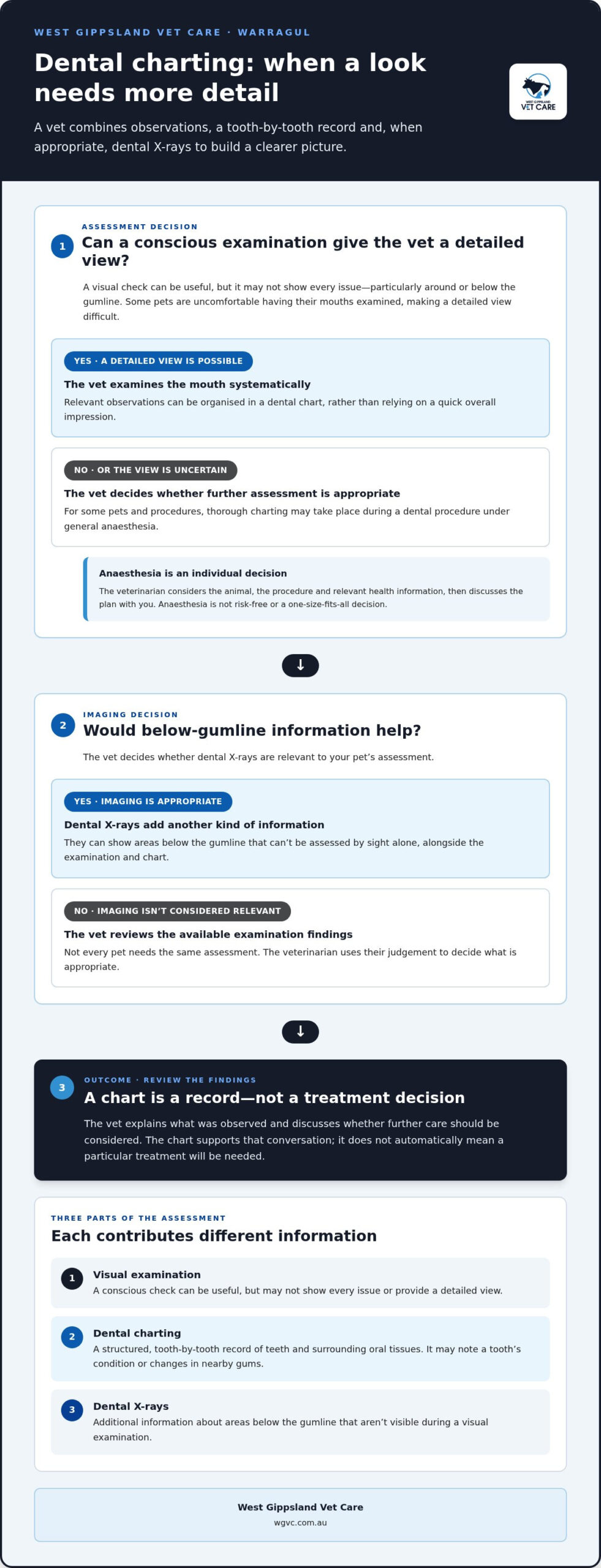
A conscious visual check can be useful, but it may not show every issue, particularly around or below the gumline. Some pets are also uncomfortable having their mouths examined, which can make a detailed view difficult. A quick look and a thorough dental assessment are not always the same thing. The veterinarian considers the individual pet and recommends an appropriate examination.
Not every pet needs the same assessment, and a particular finding can’t be assumed in advance. The vet evaluates what can be seen and decides whether further examination or diagnostic information is appropriate. Dental charting organises clinical observations, but it does not replace the veterinarian’s judgement or mean that a specific treatment will be needed.
Cats can be especially challenging to assess at home. For feline-specific oral health context, you may find the clinic’s cat dental cleaning guide helpful. If you’ve noticed a change in your cat’s mouth or are unsure what an examination involves, share your observations with the veterinary team. They can assess your cat and explain the approach and next steps.
How does a vet create a dental chart for a pet?
Knowing what to expect can make a dental appointment feel more manageable, especially if you’re concerned about anaesthesia. The exact approach depends on your pet and the reason for the assessment. A veterinarian can explain the proposed steps and discuss your questions before decisions are made.
In broad terms, the process follows a clear sequence:
- Discuss your pet’s needs. The veterinary team considers your observations, your pet’s health and what the vet needs to assess.
- Examine the mouth. The vet looks at the teeth and surrounding tissues systematically, rather than relying on a quick glance.
- Record findings. Observations are organised in your pet’s dental chart, creating a reference in their medical record.
- Review the assessment. The vet explains the findings and discusses whether further care should be considered.
What happens during the dental assessment?
During the examination, the veterinary team works through the mouth in an organised way and records relevant observations. This keeps findings associated with the right areas instead of leaving them as a general impression. Your vet can explain what each observation means for your pet. You don’t need to interpret the chart yourself.
If imaging is appropriate, dental X-rays provide another kind of information alongside the examination and chart. The Oral Radiology in Veterinary Dentistry resource discusses how images can help assess structures that aren’t visible during a visual examination. The vet decides whether imaging is relevant to your pet.
How are comfort and anaesthesia considered?
A detailed examination can require your pet to remain still while the vet assesses different areas of the mouth. For some pets and procedures, thorough charting takes place during a dental procedure under general anaesthesia. Anaesthesia is not a one-size-fits-all decision or risk-free. The veterinarian considers the individual animal, the procedure and relevant health information, then discusses the plan with you.
West Gippsland Vet Care performs dental procedures under anaesthetic to support a thorough examination. The team is Fear Free Certified, which informs the care environment, although every pet responds differently and no particular experience can be guaranteed. Raise any concerns about your pet’s comfort, health history or the proposed approach before the appointment.
After the assessment, the veterinary team can talk you through the findings and explain whether further care is recommended. You can discuss the options and make decisions with the vet. A chart records what was observed, but it doesn’t automatically mean your pet will need a particular treatment. If you’re looking for a vet that does dental charting Warragul, explore West Gippsland Vet Care’s veterinary services and preventative dentistry.
Dental charting vs dental X-rays: what does each one tell the vet?
Dental charting and dental X-rays both contribute to a veterinary dental assessment, but they show different things. A chart records the vet’s clinical observations, while an X-ray creates an image of structures inside the mouth. A visual examination adds what the vet can see directly. Used together when appropriate, these methods provide different information. One is not a universal substitute for another.
| Assessment method | What it tells the vet |
|---|---|
| Visual examination | What can be seen directly during an examination of the mouth. |
| Dental charting | Clinical observations recorded in an organised, tooth-by-tooth format. |
| Dental X-rays | Images that help assess tooth roots and supporting structures that aren’t visible directly. |
For example, the vet may notice and record an observation during the examination, while an X-ray provides an image to help assess what lies below the visible surface. The vet interprets the findings together in the context of your pet’s individual assessment.
What can dental X-rays reveal that charting cannot?
Charting records what the veterinarian observes clinically. It doesn’t create an image of the tooth’s root or the bone around it. Dental X-rays can show these less visible structures and provide additional diagnostic information. They don’t replace an examination or guarantee that every problem will be identified. The vet decides whether imaging is appropriate and interprets the images alongside other findings.
This distinction matters because a tooth’s appearance can differ from what its deeper structures suggest. An X-ray helps the vet assess areas that can’t be viewed directly, while charting keeps clinical observations organised. Neither tool should be read in isolation or treated as a complete answer for every pet.
How can chart findings guide the next conversation?
A written chart gives the veterinary team a reference when explaining what they observed and why additional assessment or treatment might be discussed. Ask the vet to talk through the relevant findings and explain the options in plain language. The chart supports that conversation, but it doesn’t determine treatment by itself. Recommendations depend on your pet’s individual findings.
West Gippsland Vet Care provides dental X-rays as part of its diagnostic imaging and preventative dentistry. For owners seeking a vet that does dental charting Warragul, knowing how observations and images work together can help make discussions about assessment clearer. The veterinary team can explain what each part contributes and how the findings relate to your companion’s needs.
How to prepare your pet for a dental charting appointment
A little preparation helps you give the veterinary team a useful picture of your pet’s health and what you’ve noticed. You don’t need to diagnose a dental problem yourself. Clear observations and relevant history give the vet helpful context to assess your companion and explain the next steps.
What information should owners share?
Before the appointment, jot down changes you’ve noticed in your pet’s usual routine. Small details can be useful, even if they don’t happen every day. Consider noting:
- Changes while eating or chewing, such as taking longer with meals or favouring one side.
- Differences in behaviour or daily habits that you think may be relevant.
- Current medicines, known health conditions and other relevant medical history.
- Previous dental assessments or procedures, including when they took place if you know.
If you have questions or aren’t sure whether an observation matters, add it to your notes and raise it with the team. Share the information in your own words. The veterinarian can ask follow-up questions and consider it alongside the examination, rather than relying on your interpretation of the signs.
What should owners clarify before and after the visit?
Follow the clinic’s specific appointment and preparation instructions for your pet. This is particularly important if the planned assessment involves anaesthesia, as instructions may depend on the procedure and your pet’s circumstances. If anything is unclear, ask the veterinary team for guidance rather than relying on general advice intended for another animal.
It can also help to think ahead about what you’d like explained. You might ask:
- What will the assessment involve for my pet?
- Will dental X-rays be recommended, and what additional information might they provide?
- How will the findings be recorded and explained to me?
- What follow-up or next steps should I expect after the assessment?
After the examination, ask the treating veterinary team to talk through any findings in everyday language. You can ask what was observed, whether imaging contributed to the assessment and what options are being considered. If further care is recommended, ask what the plan involves and what to do next. Your pet’s findings and recommendations are individual, so a clear conversation is more useful than comparing their chart with another animal’s.
For pet owners looking for a vet that does dental charting Warragul, West Gippsland Vet Care provides preventative dentistry and dental X-rays as part of companion animal care. Contact West Gippsland Vet Care to discuss your pet’s dental assessment and share any questions that would help you feel prepared.
Dental charting and dental X-rays at West Gippsland Vet Care in Warragul
Understanding what a dental chart records is useful, and it helps to know how local care fits in. West Gippsland Vet Care provides preventative dentistry and dental X-rays as part of companion animal care. Dental charting organises clinical observations, while X-rays add images of structures that can’t be seen directly. When appropriate for an individual pet, these tools can contribute to a more informed veterinary dental assessment.
Local veterinary dental care for Warragul pets
The Warragul clinic is at 1 Bona Vista Rd, Warragul VIC 3820, serving pet owners in Warragul and nearby West Gippsland communities. Opening hours are:
- Monday to Friday, 8:00 am to 5:30 pm
- Saturday, 8:00 am to 12:00 pm
If you’re looking for a vet that does dental charting Warragul, West Gippsland Vet Care provides preventative dentistry and dental X-rays as part of local veterinary care. The veterinarian can assess your pet and explain how charting, examination and imaging contribute to their individual assessment. You can discuss what’s being considered and how each part relates to your companion’s needs.
What makes WGVC a reassuring local option?
West Gippsland Vet Care has served the local community since 1989. Dental X-rays are part of the clinic’s diagnostic imaging, connecting dental assessment with broader diagnostic capabilities. The whole team is Fear Free Certified, which informs the care environment and the way the team approaches interactions with animals. Each pet is different, so this certification isn’t a promise that every appointment will feel the same.
You may have questions about what a chart could show, whether X-rays might be useful or what happens if the vet identifies a concern. The team can explain your pet’s assessment, findings and possible next steps to help you make informed decisions. You don’t need to arrive with all the answers. Sharing what you’ve noticed and asking questions can make the conversation more useful for you and your pet.
For pet owners in Warragul, Drouin, Bunyip, Yarragon, Trafalgar, Willow Grove, Hill End and Neerim South, West Gippsland Vet Care provides local access to preventative dentistry and dental diagnostics. To discuss your pet’s dental assessment or arrange an appointment, Talk with our caring veterinary team.
Take a considered next step for your pet
Dental care decisions can feel easier when they begin with a conversation, not assumptions. Your pet’s assessment is individual, and you deserve to understand the reasoning behind any recommendation before deciding how to proceed. Discuss what the vet observed, what those findings mean for your companion and which options may suit their needs. Your observations and questions are valuable, even if you can’t name a particular tooth or explain exactly what seems different.
If you’re searching for a vet that does dental charting Warragul, make clear communication part of your next step. Ask for unfamiliar terms to be explained and check that you understand what the veterinary team recommends. You don’t need to arrive knowing what care your pet will need. A thoughtful discussion can help turn uncertainty into a plan that makes sense for your animal.
Arrange a conversation with West Gippsland Vet Care about your pet’s dental care. One considered step can help you feel more prepared for the path ahead.
Frequently Asked Questions
Is dental charting the same as a dental cleaning?
No, charting and cleaning serve different purposes. Charting documents the veterinarian’s observations, while cleaning removes plaque and other deposits from tooth surfaces. They may both form part of a veterinary dental procedure, but one doesn’t replace the other. A cleaning alone doesn’t provide the same written record of clinical findings. Ask the treating team which parts of care are planned for your pet and what each is intended to address.
How often should my pet have dental charting?
There isn’t one charting schedule that suits every dog or cat. Your vet can advise based on factors such as your pet’s age, oral health, previous findings and overall needs. A previous chart may help the team compare observations at a later assessment, but it doesn’t replace regular veterinary check-ups. If you’ve noticed a change in eating or behaviour since your pet’s last visit, mention it when discussing when to review their mouth.
Can dental charting help with a second veterinary opinion?
Yes, a dental chart can help another veterinarian understand what was observed during an earlier assessment. If dental X-rays were taken, those images may also provide useful context. Ask the clinic that holds your pet’s records how relevant notes and images can be shared, then provide them to the veterinarian giving the second opinion. They’ll interpret the information alongside your pet’s history and their own examination, rather than relying on a chart alone.
What happens if dental charting identifies a problem?
A finding is a starting point for a conversation with the veterinarian, not an automatic decision about treatment. The vet can explain what was recorded, whether more assessment is recommended and which options may suit your pet. For instance, they may discuss how an imaging result relates to a particular observation. Ask what the finding means for your animal, what the proposed plan involves and whether there are alternatives to consider.
Can cats have dental charting as well as dogs?
Yes, dental assessment and charting can be relevant for cats as well as dogs. The veterinarian considers the individual cat’s health and comfort when deciding how to assess them. Cats may not make oral discomfort obvious, so your observations can be helpful context. For more feline-specific information, West Gippsland Vet Care’s cat dental cleaning guide can provide additional background to discuss with your veterinary team.
Should I book a dental appointment if my pet still eats normally?
Eating normally doesn’t rule out an oral health concern, so share any changes you’ve noticed with your veterinary team. That might include a new preference for softer food, chewing differently, changes in breath or a shift in usual behaviour. The vet can advise whether an examination is appropriate. For pet owners around Warragul, Drouin, Bunyip, Yarragon, Trafalgar, Willow Grove, Hill End and Neerim South, West Gippsland Vet Care can discuss your pet’s individual needs and dental charting.