Could a sudden limp mean your dog needs an operation, or is there more to the story? Seeing your dog favour a back leg can be worrying, especially when you’re unsure what’s causing the discomfort. If you’re looking into dog cruciate ligament surgery Warragul, remember that a limp doesn’t automatically mean surgery is the only option.
A veterinary assessment can help clarify what’s happening and guide the next steps. West Gippsland Vet Care supports pet owners in Warragul and nearby communities with advanced diagnostics, diagnostic imaging and orthopaedic surgery. The team considers your dog’s examination findings and individual needs when discussing suitable care.
This guide explains how a vet assesses a suspected cruciate injury, what can influence the choice between surgical and non-surgical management, and what to consider when planning treatment and recovery. It also covers practical ways to prepare for aftercare, from organising transport to setting up a quiet resting space. With the right information and veterinary guidance, you can take the next step with greater confidence.
Key Takeaways
- A limp can have different causes, so symptoms alone can’t confirm a cruciate injury or determine whether surgery is needed.
- The cranial cruciate ligament helps stabilise the knee. A vet will consider your dog’s history and examination findings before discussing treatment.
- Surgical and non-surgical care may both be considered, depending on your dog’s individual findings and needs.
- Planning transport, a quiet resting space and daily support can help you prepare for recovery.
- For dog cruciate ligament surgery Warragul, local diagnostic and orthopaedic care can help guide your next steps.
Dog cruciate ligament surgery in Warragul: recognising the problem
It’s unsettling to see your dog suddenly favour a back leg, especially when they can’t tell you where it hurts. A limp may raise concerns about a cruciate injury, but it doesn’t confirm one or mean surgery is automatically needed. If you’re researching dog cruciate ligament surgery Warragul, start by noting what you’ve observed and arranging a veterinary assessment if the lameness is sudden or persists.
The cranial cruciate ligament sits inside the stifle, the joint commonly called a dog’s knee. It helps keep the joint stable as your dog stands, walks and turns. People sometimes call it a dog ACL because it has a similar role to the anterior cruciate ligament in a human knee, although the anatomy and terminology aren’t identical. The Cruciate ligaments in dogs overview offers general background on these ligaments.
What does a cruciate injury look like in a dog?
Changes can be obvious or subtle. Your dog might avoid putting weight on one hind leg, take shorter steps, hesitate before getting up, or seem less keen to walk, play or climb stairs. Some dogs appear more comfortable after resting, then limp again when they move. These signs can have several causes, so treat them as useful details to share with your vet, not as a diagnosis.
Make a note of when you first saw the change and whether it came on suddenly or gradually. Record which movements seem difficult and whether your dog’s ability to bear weight changes. If it’s safe, a short video of their natural walk can help you describe what you’re seeing. Don’t make your dog run or jump to capture footage.
Why the canine knee needs a veterinary assessment
The cranial cruciate ligament helps stabilise a dog’s knee, or stifle, during movement. Similar hindlimb lameness can arise from different injuries or conditions, so appearance alone can’t tell you whether the ligament is affected. A vet can consider your dog’s history alongside an examination and decide whether diagnostic imaging is appropriate. West Gippsland Vet Care provides advanced diagnostics and diagnostic imaging to support assessment and treatment planning.
Before the appointment, think about any recent changes in activity, when the limp is most noticeable and whether your dog seems uncomfortable when rising or walking. Share these observations rather than trying to test the leg yourself. A calm, clear account helps the veterinary team build a fuller picture and discuss appropriate next steps with you.
For owners in Warragul and surrounding areas, an assessment is about understanding the cause of the lameness, not jumping straight from a limp to an operation. The findings help shape a plan around your dog’s needs, which may include further investigation or a discussion of treatment options. Getting veterinary guidance can replace guesswork with a clearer way forward.
How vets assess a suspected cruciate ligament injury
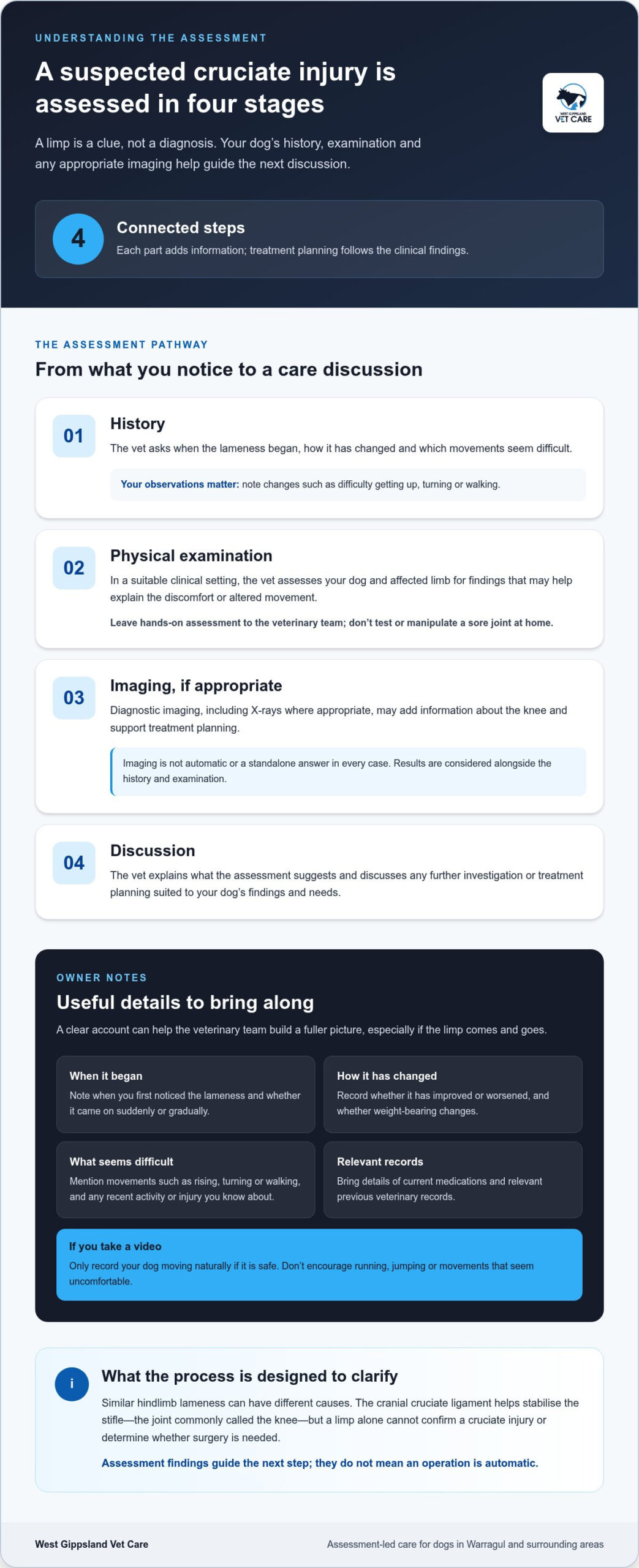
A veterinary assessment is a step-by-step process, not a decision based on a limp alone. Your observations help the vet understand what has changed, while an examination and, where appropriate, diagnostic imaging help investigate possible causes. The findings then guide a discussion about suitable next steps for your dog.
- History: The vet asks when the lameness began, how it has changed and what movements seem difficult.
- Physical examination: They assess your dog and the affected limb in a suitable clinical setting, looking for findings that help explain the discomfort or altered movement.
- Imaging, if appropriate: Diagnostic imaging may help assess the knee and add information to the examination findings.
- Discussion: The vet explains what the assessment suggests and talks through any further investigation or treatment planning.
Each step informs the next. Imaging can be useful, but it isn’t an automatic requirement or a standalone answer in every case. The Cranial Cruciate Ligament Disease in Dogs resource from the American College of Veterinary Surgeons provides further background on the condition and its assessment.
What information should owners bring to the appointment?
A few notes can make it easier to describe changes that may not be visible during the appointment. Jot down when you first noticed the lameness, whether it has improved or worsened, and what your dog now finds difficult, such as getting up, turning or walking. Mention any recent activity or injury you’re aware of, along with current medications and relevant previous veterinary records.
If the limp comes and goes, a short video of your dog moving naturally may help show what you’ve observed. Only record it if you can do so safely. Don’t encourage running, jumping or other movements that seem uncomfortable.
What examination and imaging can help establish
The vet may observe how your dog stands and moves, then examine the affected limb and knee. Their findings help them consider whether the signs fit a cruciate problem or point towards another cause. You don’t need to test the joint at home. Leave hands-on assessment to the veterinary team, as manipulating a sore limb may cause discomfort.
Diagnostic imaging, including X-rays where appropriate, can provide additional information about the knee and support treatment planning. Results are considered alongside your dog’s history and physical examination, rather than treated as a guaranteed answer by themselves. Your vet will explain the findings and discuss whether more investigation or a treatment conversation is the next step.
Treatment planning follows clinical findings, not a symptom checklist alone. For dog cruciate ligament surgery Warragul, West Gippsland Vet Care offers local owners advanced diagnostics and orthopaedic care to support assessment and treatment planning. An assessment with the veterinary team can help turn your observations into a clearer understanding of what to do next.
Does every dog with a cruciate injury need surgery?
No. A limp, breed or search for dog cruciate ligament surgery Warragul can’t determine whether an operation is right for your dog. The decision follows a veterinary assessment and a discussion of the likely benefits, demands and alternatives for that individual. It’s reasonable to feel concerned about surgery and recovery. The veterinary team can explain the options before you decide on a plan together.
Both surgical and non-surgical care may be considered to manage the problem and support your dog’s comfort and mobility. Neither is a one-size-fits-all answer. Your vet will explain what the clinical findings mean, what each approach involves and how progress will be reviewed.
What factors shape a treatment recommendation?
The conversation may take account of the injury findings, your dog’s size, usual activity and general health. These details help the vet consider what demands the knee may face and what care is appropriate. No single factor settles the decision. A dog’s age or breed, for example, shouldn’t be used on its own to decide whether surgery is needed.
Your home routine matters, too. Be open about what rest and follow-up could look like for your household, including stairs, other pets, work commitments and help with daily care. These aren’t reasons to feel judged. They help the veterinary team shape a practical plan and talk through the support your dog may need during recovery.
How surgical and non-surgical care differ
Non-surgical management is an active, veterinary-guided approach, not simply leaving the injury untreated. Surgical care may be discussed when examination findings support it. Both options need a clear plan and reassessment, although the specific care and follow-up depend on your dog and the treatment chosen.
West Gippsland Vet Care provides orthopaedic surgery and diagnostic services for pets in Warragul and nearby West Gippsland communities. The next step is a discussion based on your dog’s findings, your questions and what’s manageable at home.
Planning cruciate surgery and recovery around life in West Gippsland
Preparing for cruciate surgery involves more than getting to the clinic on the day. Think through how your dog will travel home, where they can rest and how you’ll manage everyday routines while following the veterinary team’s instructions. For owners considering dog cruciate ligament surgery Warragul, discussing these details early can make the next stage feel more manageable.
Your veterinary team will explain preparation, aftercare and follow-up according to your dog’s treatment plan. Activity restrictions and review appointments depend on the procedure and your dog’s progress, so avoid relying on a generic recovery timeline. If you live outside Warragul, planning the journey to and from appointments may also help you organise support around your dog’s needs.
Preparing your home and routine for aftercare
Before treatment, think about setting up a comfortable, quiet place where your dog can rest without needing to navigate stairs or slippery floors. Keep water and other essentials close by, and consider how your dog will move between their resting spot and the areas they need to access. The veterinary team can advise what arrangements suit the specific procedure and your home.
Plan transport for the trip home and any follow-up visits. If lifting or helping your dog move may be difficult, arrange another person’s support in advance. It can also help to organise who’ll manage meals, medication as prescribed and toilet breaks if your usual routine is busy. These preparations can make it easier to give your dog calm, consistent care.
Follow-up care and questions to discuss
Before leaving an appointment, make sure you understand the instructions for your dog. You might ask how progress will be reviewed, which changes should prompt a call and whom to contact if you’re worried. Write down the answers, especially if more than one person at home will help with care. Clear guidance can help everyone follow the same plan.
Give medication only as prescribed, and follow the veterinary team’s directions for pain management and activity. Don’t increase walks or allow jumping simply because your dog seems brighter. Ask the team how and when to adjust activity. If anything about the instructions feels difficult to manage, raise it early so you can discuss practical options together.
Recovery is individual. Your dog’s comfort, mobility and response to treatment help inform follow-up advice, so the plan may be adjusted as the veterinary team reviews progress. West Gippsland Vet Care provides orthopaedic surgery and diagnostic care for pets, with treatment planning guided by each patient’s needs. The orthopaedic vet Gippsland guide offers broader context about orthopaedic care.
If you’re preparing for an assessment or treatment discussion, arrange an appointment with West Gippsland Vet Care to talk through your dog’s needs and the next steps.
Arrange a cruciate injury assessment near Warragul
Noticing a change in your dog’s movement is the first step. Next, arrange a veterinary assessment, understand what the findings mean and talk through a plan that suits your dog. An appointment doesn’t commit you to surgery. It gives you and the veterinary team a chance to make sense of the problem and consider what care may be appropriate.
West Gippsland Vet Care provides advanced diagnostics, diagnostic imaging and orthopaedic surgery for pets. The team supports owners in Warragul and nearby communities, including Drouin, Bunyip, Yarragon, Trafalgar, Willow Grove, Hill End and Neerim South. An assessment can help you discuss what further care, if needed, could involve.
What to expect when arranging an appointment
When you contact the clinic, explain that your dog is limping or moving differently and describe what you’ve observed. For example, mention whether your dog is putting weight on the leg, seems slower to get up, or has become reluctant to take their usual walk. Share when the change started and whether it has altered over time. These details help the team understand your concern and guide you on arranging an assessment.
It may help to have your dog’s current medication details and relevant veterinary history to hand. If their movement changes from one day to the next, mention that too. There’s no need to arrive with a diagnosis or decide in advance whether surgery is needed. The purpose of the appointment is to assess your dog and discuss the findings together.
Local orthopaedic care for your dog
After the assessment, the veterinary team can explain what they’ve found, whether diagnostic imaging or further investigation is appropriate, and which treatment options may suit your dog. If surgery is discussed, ask about the preparation and aftercare involved, as well as how follow-up will be guided by your dog’s progress. A clear conversation helps you understand the choices and plan for the care your dog may need at home.
For families travelling from across West Gippsland, including Drouin, Bunyip, Yarragon, Trafalgar, Willow Grove, Hill End and Neerim South, it can be useful to note down questions before the visit and bring another person if you’d like support remembering the discussion. West Gippsland Vet Care’s team can work with you through assessment and treatment planning, keeping your dog’s individual needs at the centre. The orthopaedic care guide for Gippsland also provides broader context about the clinic’s surgical care.
If you’ve noticed a limp or a change in how your dog moves, contact West Gippsland Vet Care to arrange an assessment and talk through the next step. A discussion about dog cruciate ligament surgery Warragul starts with understanding your dog’s needs, without assumptions about the right treatment before they’ve been assessed.
Contact the veterinary team to arrange an assessment when you’re ready.
Take the next step with confidence
It’s natural to feel unsure about what a limp might mean. You don’t need to work out the cause or make a treatment decision on your own. A conversation with a veterinary team can help you understand what your dog needs and what options may be appropriate, one step at a time.
For owners considering dog cruciate ligament surgery Warragul, West Gippsland Vet Care offers orthopaedic surgery and advanced diagnostic services for pets in Warragul and surrounding West Gippsland communities. The focus is on understanding your dog’s individual situation and helping you feel informed as you consider what comes next.
If you’ve noticed a change in your dog’s movement, take the next step by arranging an assessment with West Gippsland Vet Care. Talk through your concerns with the veterinary team and get guidance on the care that may suit your dog.
Frequently Asked Questions
How much does dog cruciate ligament surgery cost in Warragul?
There isn’t one standard fee for dog cruciate ligament surgery in Warragul because the total depends on your dog’s assessment, recommended treatment and individual care needs. Diagnostic, treatment and follow-up requirements can differ from one dog to another. An assessment is the appropriate starting point for a case-specific discussion with the clinic team, so you can understand the proposed care before making decisions.
Can a dog’s cruciate ligament heal without surgery?
Some dogs may be managed without surgery, but the appropriate approach depends on examination findings, overall health and mobility needs. Non-surgical care should still be guided by a vet, with a clear plan for activity, comfort and review. Simply resting your dog without advice, or overlooking ongoing lameness because it seems to ease at times, may leave important changes unassessed. A vet can discuss suitable options after examining your dog.
Is cruciate ligament surgery an emergency for dogs?
A suspected cruciate injury needs veterinary assessment, but how urgently your dog needs care depends on their signs and general condition. Contact a vet promptly if your dog has sudden severe pain, can’t use the affected limb or is deteriorating quickly. If you’re unsure how urgent the situation is, phone a veterinary clinic for advice about your dog’s circumstances. This general information can’t replace individual assessment or emergency guidance.
Can a dog injure the cruciate ligament in both knees?
Yes, problems can affect both knees, either around the same time or at different times. However, symptoms alone can’t determine whether a particular dog’s other knee is injured or predict what may happen. If your dog develops new hindlimb lameness, discuss the change with their treating vet, even if the other knee has already been assessed. Note when the new signs began and how they affect everyday movement.
How long does a dog need to rest after cruciate ligament surgery?
There’s no single rest period that suits every dog. Activity restrictions and recovery depend on the procedure, your dog’s individual needs and their progress at follow-up. Follow the treating veterinary team’s written instructions, even if your dog seems keen to resume normal activity. Before increasing exercise, returning to usual activities or stopping prescribed care, ask the team for guidance specific to your dog’s recovery.
What happens if a dog’s cruciate injury is left untreated?
Ongoing knee instability and discomfort may affect how a dog moves, but the likely course varies between individuals. A limp that comes and goes still deserves attention if it persists or changes, as it can be difficult to judge the cause at home. Arrange a veterinary assessment to investigate the lameness and discuss suitable management. Understanding the findings can help you consider a plan without assuming a particular outcome.