
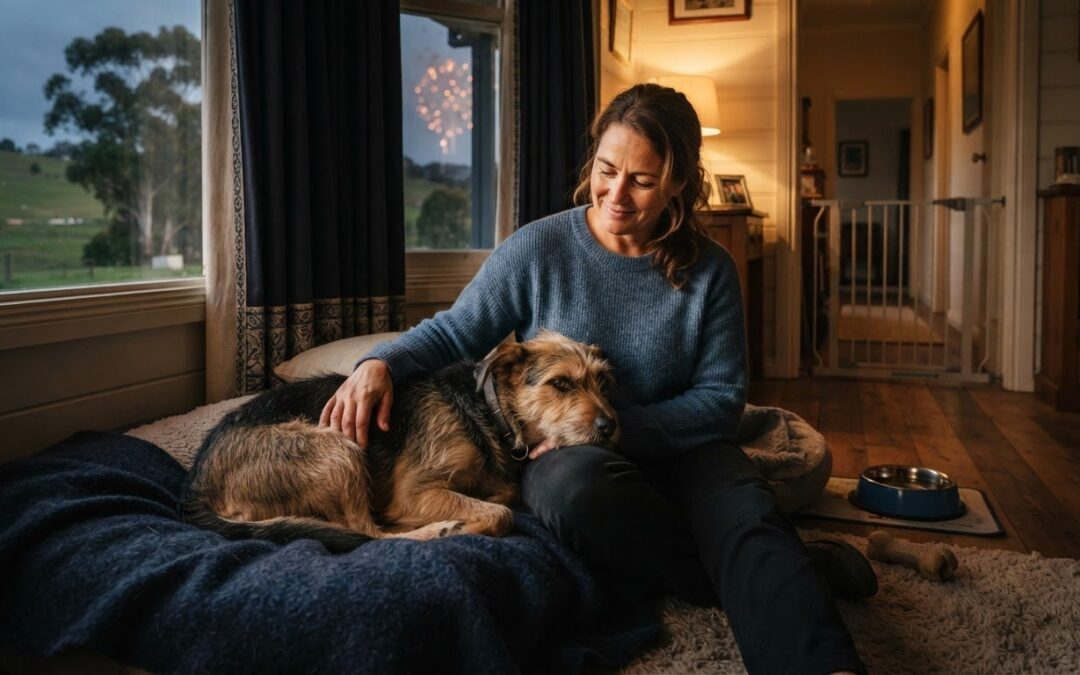
As fireworks crack outside, your dog may pace, pant, hide or cling to you, and it can be hard to know what will help. If you’re looking for vet advice for dog noise phobia, start with this reassurance: comforting your frightened dog won’t reinforce their fear. You can offer calm support while helping them feel safer.
It’s upsetting to see a much-loved companion distressed, especially when advice about training, supplements and medication seems to conflict. There isn’t one plan that suits every dog, but observing your dog’s reactions can help you decide what support to try and when to seek veterinary advice.
This guide explains how to recognise noise phobia, what you can do during loud events and when to speak with your vet. It covers ways to reduce noise and escape risks, gradual behaviour strategies, and how veterinary care can help assess health factors and guide treatment options. A behaviour consultation at West Gippsland Vet Care can help you build an individual plan around your dog’s needs and comfort.
Key Takeaways
- Learn to tell a brief startle from recurring or worsening fear that affects your dog’s day-to-day life.
- Notice which sounds and surrounding cues trouble your dog, as triggers can differ.
- Understand how practical comfort measures, gradual behaviour work and veterinary care may fit together.
- Prepare for loud events with a safe retreat, secure doors and gates, and up-to-date identification.
- Make a consultation more useful with a trigger diary, safely captured videos and notes about previous treatment.
Vet advice for dog noise phobia: how to recognise fear and know when it matters
Seeing your dog struggle with loud sounds can be upsetting, especially if they seem unable to settle. Their response isn’t disobedience or an attempt to be difficult. Fear is a real emotional response. Recognising what your dog is communicating can help you decide what support they need.
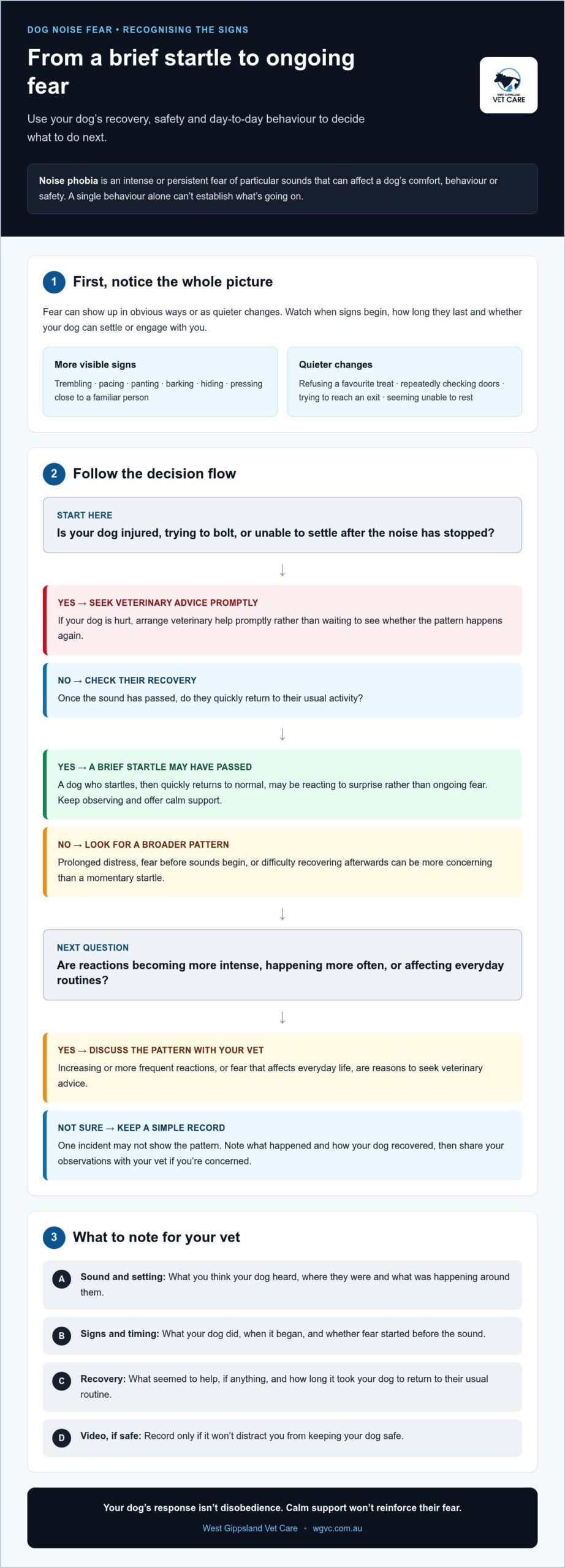
Noise phobia is an intense or persistent fear of particular sounds that can affect a dog’s comfort, behaviour or safety. A dog who briefly startles at a sudden bang, then quickly returns to normal, may be reacting to surprise rather than experiencing ongoing fear. The Noise phobia in dogs overview describes common signs and approaches to treatment, but a single behaviour alone can’t establish what’s going on for your dog.
What can noise fear look like in dogs?
Some signs are easy to spot: trembling, pacing, panting, barking, hiding or pressing close to a familiar person. Other changes can be quieter. Your dog might refuse a favourite treat, repeatedly check doors, try to reach an exit or seem unable to rest somewhere they’re usually comfortable.
Look at the whole picture, including when the behaviour starts and how long it lasts. Signs may appear before a sound begins, when your dog notices cues linked with an approaching event or hears distant noise. Dogs show fear differently, so don’t assume a quiet dog is settled. Watch their posture, movement and ability to engage with you.
When is a dog’s noise reaction more than a momentary startle?
A brief startle usually eases once the sound has passed, and the dog returns to their usual activity. A more concerning pattern may involve prolonged distress, fear in anticipation of sounds or difficulty recovering afterwards. If reactions are becoming more intense, happening more often or affecting everyday routines, discuss them with your vet.
Some behaviours need prompt attention because they create a risk of harm. Seek veterinary advice if your dog is injuring themselves, trying to bolt or remains unable to settle after the noise has stopped. If your dog is hurt, arrange veterinary help promptly rather than waiting to see whether the pattern happens again.
Keep a simple record instead of drawing conclusions from one incident. Note the sound or situation, what you observed, when the signs began and how your dog recovered. A short video can also help, but only if recording doesn’t distract you from keeping your dog safe. This information gives your vet a clearer picture and supports individualised vet advice for dog noise phobia.
Why dogs develop noise phobia and how to identify their triggers
There isn’t one explanation for every dog’s fear of noise. Some react to a particular sound, while others become unsettled by a combination of noise, setting and surrounding activity. A storm, for example, may involve thunder as well as flashes of lightning, changes in air pressure and people moving around the house.
Past experiences, changes in routine or anticipation of a sound may also play a part, but it’s not always possible to identify a single cause. A dog might begin reacting before fireworks start because they’ve noticed familiar cues, such as household preparations or distant bangs. Another may respond to a quieter sound that people barely notice. Treat these patterns as clues to observe, not proof of why your dog is afraid.
Which sounds and situations might trigger a fearful response?
Possible triggers include thunder, fireworks, smoke alarms, other alarms and construction noise. The context can matter as much as the sound itself. A noise may be harder to cope with when a dog is alone, outdoors or unable to reach a familiar safe spot. Some dogs react to indirect cues, including flashes, vibration or a change in household activity.
Notice what happens before, during and after the noise. Don’t deliberately play loud sounds or take your dog closer to a trigger to test their reaction. Exposure that overwhelms a frightened dog can add to their distress. Plan any gradual sound-based training carefully, at a level your dog can cope with, and discuss it with your vet.
How can a noise diary help your vet understand the pattern?
A short diary can turn a worrying experience into useful information for a veterinary discussion. Record what you suspect your dog heard, the time and setting, any cues beforehand, and the behaviour you observed. Include what seemed to help and how long your dog took to return to their usual routine.
- Sound and context: Note the likely noise, where your dog was and what was happening around them.
- Signs and timing: Record what your dog did and whether fear began before the sound.
- Recovery: Describe what helped, if anything, and how long it took your dog to settle.
- Recording: Take a video only if you can do so without moving closer to the sound or taking attention away from your dog’s safety.
Patterns may emerge over time, but you don’t need to work out the cause alone. Sharing your notes can help your vet offer tailored advice for dog noise phobia. If you’re in West Gippsland, a behaviour consultation for your dog can provide a supportive setting to discuss what you’ve noticed and consider an individual plan.
Comparing dog noise-phobia options: comfort, training and veterinary treatment
There isn’t a single answer for every dog. Environmental changes can make a loud event easier to manage in the moment, gradual behaviour work aims to change how a dog responds over time, and veterinary treatment may be considered when fear is intense or disruptive. These approaches can complement one another. The right combination depends on your dog’s needs and health.
Think of them as parts of a tailored plan, not competing choices. Comfort and safety matter whatever else you try, and veterinary guidance can help you decide which steps are suitable.
What can environmental changes do during a noise event?
Set up a secure indoor retreat where your dog can choose to rest. Close windows and reduce visual exposure where practical. A familiar bed or open crate may suit some dogs, but don’t shut them in or make them stay there. Background sound, such as a fan or quiet music, may soften outside noise for some dogs, but it won’t work for every dog.
Let your dog approach or leave their resting place freely, provided the space is safe. This can reduce exposure and help your dog feel less trapped, but it doesn’t necessarily change their underlying fear.
Environmental support
Purpose: Make the surroundings feel safer during a noise event.
Limitations: May not prevent fear or suit every dog.
Discuss with your vet: If your dog remains distressed despite practical changes.
Gradual behaviour work
Purpose: Build a more settled response to a sound or cue over time.
Limitations: Needs careful pacing and may not be appropriate to attempt alone.
Discuss with your vet: Before starting sound-based exercises, especially if your dog is already very fearful.
Veterinary treatment
Purpose: Assess health factors and consider whether additional support may help.
Limitations: Requires an individual veterinary assessment; no option suits every dog.
Discuss with your vet: If fear is severe, persistent or affecting welfare and daily life.
How do gradual training and veterinary treatment differ?
Desensitisation means introducing a sound at a level the dog can tolerate, then building up gradually. Counterconditioning pairs that manageable sound with something positive, such as a valued treat, to help create a different association. Your vet can advise whether this approach is suitable. Don’t force exposure or play recordings loudly to test your dog. If they show distress, stop and seek guidance.
Medication is an individual veterinary decision, not a replacement for a safe environment or behaviour support. It doesn’t inevitably change a dog’s personality, but possible benefits and risks depend on the dog, their health and the treatment being considered. Don’t give medication or supplements without discussing them with your vet.
For personalised vet advice for dog noise phobia, a behaviour consultation can help you consider a plan that fits your dog. Discuss your dog’s noise fear with the West Gippsland Vet Care team.
How to help a noise-phobic dog before, during and after loud sounds
A simple plan can make a frightening event safer and more manageable for both of you. Prepare the space and secure exits before the noise, stay calmly available while your dog is distressed, then give them time to recover and note what happened. You can comfort your dog: offering gentle company doesn’t reinforce fear.
What should you prepare before a predictable noise event?
Set up a familiar indoor retreat before the sound begins. Add your dog’s bedding and water, and make sure they can choose to rest there or stay near someone they trust. Keep windows closed if practical, and reduce visual exposure if flashes or movement outside seem unsettling. Don’t shut your dog into a space they might find frightening.
Check gates, doors and other exits, and make sure your dog’s identification is up to date. Plan walks and toileting before anticipated fireworks or a storm, rather than taking them out once the noise has started. If your vet has already provided a treatment plan, follow its instructions. Don’t trial new medication or supplements without veterinary advice.
What should you do while your dog is frightened?
Stay nearby and keep your voice and movements calm. Offer contact if your dog seeks it, but let them decide whether they want to be patted, sit beside you or retreat to their safe spot. Some dogs prefer company; others cope better with a little space. You can respond warmly without insisting that they interact.
Keep your dog indoors and away from open doors, windows and other escape hazards. Avoid punishment, dragging them towards the noise or holding them still for convenience. These actions can add pressure when your dog is already frightened. If you need to move around, do so calmly and take care not to leave an exit unsecured.
How should you respond after the sound has passed?
Recovery may take time. Let your dog rest somewhere they feel comfortable, and return to familiar routines at their pace rather than encouraging activity straight away. Once things are calm, jot down what happened, what seemed to help and how long it took for your dog to settle. These notes can help you prepare more thoughtfully next time.
Contact your vet promptly if your dog is injured, remains severely distressed or behaves in a way that puts them at risk of escape or harm. If you’re unsure how serious the reaction is, ask for guidance. A behaviour consultation can help you and your veterinary team shape a plan around your dog’s experience and needs.
Keep your dog safely indoors, stay calm and let them choose whether to seek comfort or retreat. For tailored vet advice for dog noise phobia, book a behaviour consultation to discuss a plan for your dog.
When to seek vet advice for dog noise phobia in West Gippsland
If your dog’s noise fear is getting worse, keeps returning or is disrupting everyday life, a veterinary conversation can help you decide what to do next. You don’t need to wait until a reaction becomes dangerous. Hiding for long periods, struggling to recover after noise or becoming fearful well before a sound is expected are all good reasons to seek individual advice.
A behaviour consultation gives you time to talk through what you’ve noticed and consider a plan suited to your dog. West Gippsland Vet Care provides behaviour consultations and fear-free veterinary care, taking your dog’s comfort seriously. There’s no single plan or guaranteed outcome, but a careful discussion can help you identify practical next steps.
What happens when a vet assesses noise-related fear?
Your vet will discuss your dog’s history, the situations that bring on fear, the behaviours you’ve seen and how long recovery takes. They may also ask about changes in your dog’s health, as discomfort or other health concerns can affect behaviour. Together, you can consider suitable support, which may include changes at home, behaviour work and veterinary treatment where appropriate.
Each dog responds differently, so the plan and any review needs will depend on their circumstances. Share what feels manageable for your household and raise concerns about any suggested approach. Keep communicating as you put the plan into practice, particularly if your dog’s reactions change.
How can owners prepare for a behaviour consultation?
You don’t need a perfect record. A brief timeline can help your vet understand the pattern and make the conversation more focused. Include the sounds or situations you suspect, what your dog did, when the signs began and how long it took them to settle. If you’ve captured a video safely, it may also help show behaviour that’s difficult to describe.
- Bring your notes: Include dates or approximate timing, possible triggers and recovery patterns.
- Share health information: Note any changes you’ve noticed and list current medicines or supplements.
- Describe previous attempts: Explain which strategies you’ve tried and how your dog responded, including anything that seemed to increase distress.
Be open about what happens at home, even if you’re unsure whether a detail matters. Your observations help the veterinary team understand your dog as an individual and build on what you’ve already learned together. Don’t try to recreate a frightening event during the appointment to demonstrate the reaction.
If you’re looking for vet advice for dog noise phobia in West Gippsland, a behaviour consultation is a supportive place to begin. West Gippsland Vet Care supports pet owners in Warragul, Drouin, Bunyip, Yarragon, Trafalgar, Willow Grove, Hill End and Neerim South. Arrange a behaviour consultation to discuss your dog’s noise-related fear and explore a plan together.
Take the next step towards a calmer plan
Your dog’s fear doesn’t have to be something you manage without support. A thoughtful plan can start with one useful conversation about what you’ve noticed and what feels realistic for your household. Seeking vet advice for dog noise phobia is a positive step towards understanding your dog’s needs, not a sign that you’ve failed to help them.
West Gippsland Vet Care offers behaviour consultations and fear-free veterinary care for dogs and their people across West Gippsland. You can talk through your concerns and consider an individual approach, without expecting every dog to respond in the same way.
If you’re ready to discuss your dog’s noise-related fear, arrange a behaviour consultation for your dog. With understanding and steady support, you can take the next steps at a pace that feels right for both of you.
Frequently Asked Questions
Can I comfort my dog during fireworks or thunder?
Yes, offer calm company if your dog wants it. If they come to sit beside you, let them; if they choose a familiar hiding place, give them space. You don’t need to ignore a frightened dog to avoid rewarding anxiety. Keep your own voice and movements steady, and avoid coaxing them out for a cuddle. If their fear keeps returning or feels difficult to manage, discuss support with your vet.
Will my dog grow out of noise phobia?
It’s hard to predict how an individual dog’s response will change, so don’t rely on fear fading by itself. A dog might seem more settled at one event and struggle at the next. Keep a brief record of the sounds involved, how your dog behaves and what recovery looks like. If fear is becoming more disruptive, ask your vet whether health changes or other factors should be considered and what next steps may suit your dog.
Can I train my dog to stop being scared of loud noises?
Gradual training may help some dogs, but it should stay within your dog’s comfort level rather than ask them to endure fear. For example, a vet-guided plan may start with a sound so quiet your dog can remain relaxed, pairing it with a pleasant experience. If your dog starts scanning, hiding or refusing a reward, the exercise may be too much. Get guidance before trying sound exercises, particularly if your dog panics or tries to flee.
Should I give my dog medication for noise phobia?
Medication may be appropriate for some dogs, but a veterinarian needs to assess your pet and explain the options, risks and timing. Never give human medication or leftover prescriptions without veterinary direction. Before your appointment, write down all medicines and supplements your dog takes, including how often you give them. This helps your vet consider the whole picture and discuss whether medication belongs in a broader plan for your dog.
Do calming products or music help dogs with noise phobia?
They may help some dogs, but responses vary. If you try background sound, keep it at a comfortable level and watch whether your dog relaxes or becomes more unsettled. Stop if it seems to add stress. A calming product shouldn’t be treated as a substitute for veterinary advice when fear is severe or recurring. Discuss supplements and other treatments with your vet before using them, especially if your dog takes medication or has health concerns.
When should I contact a vet about my dog’s fear of noise?
Arrange veterinary advice if noise fear is recurring, worsening, lasting well beyond the sound or interfering with ordinary routines. Seek prompt guidance if your dog is at risk of injury, repeatedly tries to escape or cannot settle safely. Notes about what happened can make the discussion more useful. West Gippsland Vet Care offers behaviour consultations and fear-free veterinary care for owners in Warragul, Drouin and across West Gippsland.
What should I do if my dog tries to escape during a storm?
Keep your dog indoors and calmly reduce access to exit points without chasing or cornering them. If they’re already trying to bolt, avoid pulling them towards the noise or forcing them into a confined space where they may panic. Once they’re safe, note what set off the escape attempt and tell your vet, especially if it happens again. If your dog is injured or in immediate danger, seek urgent veterinary guidance.