
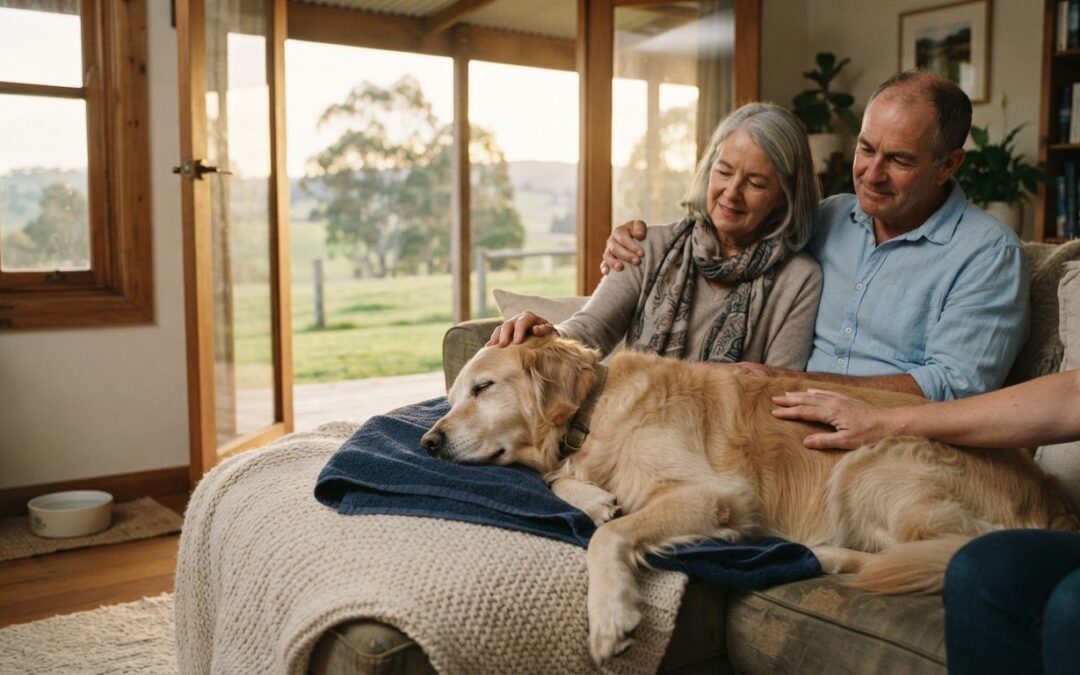
What if the kindest end-of-life plan is less about choosing the “right” setting and more about what supports your pet’s comfort? When you’re considering end of life pet care Warragul, it’s understandable to feel unsure about changes in your pet’s quality of life or worry that a clinic visit could add stress during an already emotional time.
These decisions are deeply personal, and you don’t have to make sense of every change alone. A veterinarian can help you talk through your pet’s comfort, health and needs, while making space for your family’s questions. A senior pet health check or a discussion about pain management may also help clarify what support could be appropriate.
This guide explains how to notice changes in comfort, compare home and clinic settings without judgement, and prepare for a conversation with a veterinarian. You’ll find practical questions and arrangements to consider, so you can feel more prepared for what may happen before, during and after euthanasia.
Key Takeaways
- Changes in your pet’s comfort, behaviour or daily routine are worth discussing with a veterinarian, even if you’re unsure what they mean.
- Comfort-focused care is tailored to your pet’s needs; ongoing symptom support doesn’t automatically mean a decision about euthanasia.
- When considering end of life pet care Warragul, weigh how home and clinic settings may suit your pet and family differently.
- Prepare for a veterinary conversation by noting changes, gathering questions and considering what support your family may need.
- Senior health checks and pain-management discussions can help you understand your pet’s comfort and consider possible next steps with the veterinary team.
End-of-life pet care in Warragul: recognising when comfort needs attention
It can be unsettling when your pet starts eating less, moving differently or no longer greeting you as usual. You may wonder whether it’s a passing change, a treatable concern or a sign that their needs are shifting. If you’re looking into end of life pet care Warragul, a veterinary conversation can help you understand what you’re seeing without requiring you to make a decision before you’re ready.
Changes in comfort, behaviour or daily routines are worth discussing, particularly if they persist, recur or appear together. They aren’t a diagnosis, and noticing a change doesn’t mean euthanasia is the next step. A veterinarian can consider your pet’s health and history, discuss possible support and help you decide what to monitor.
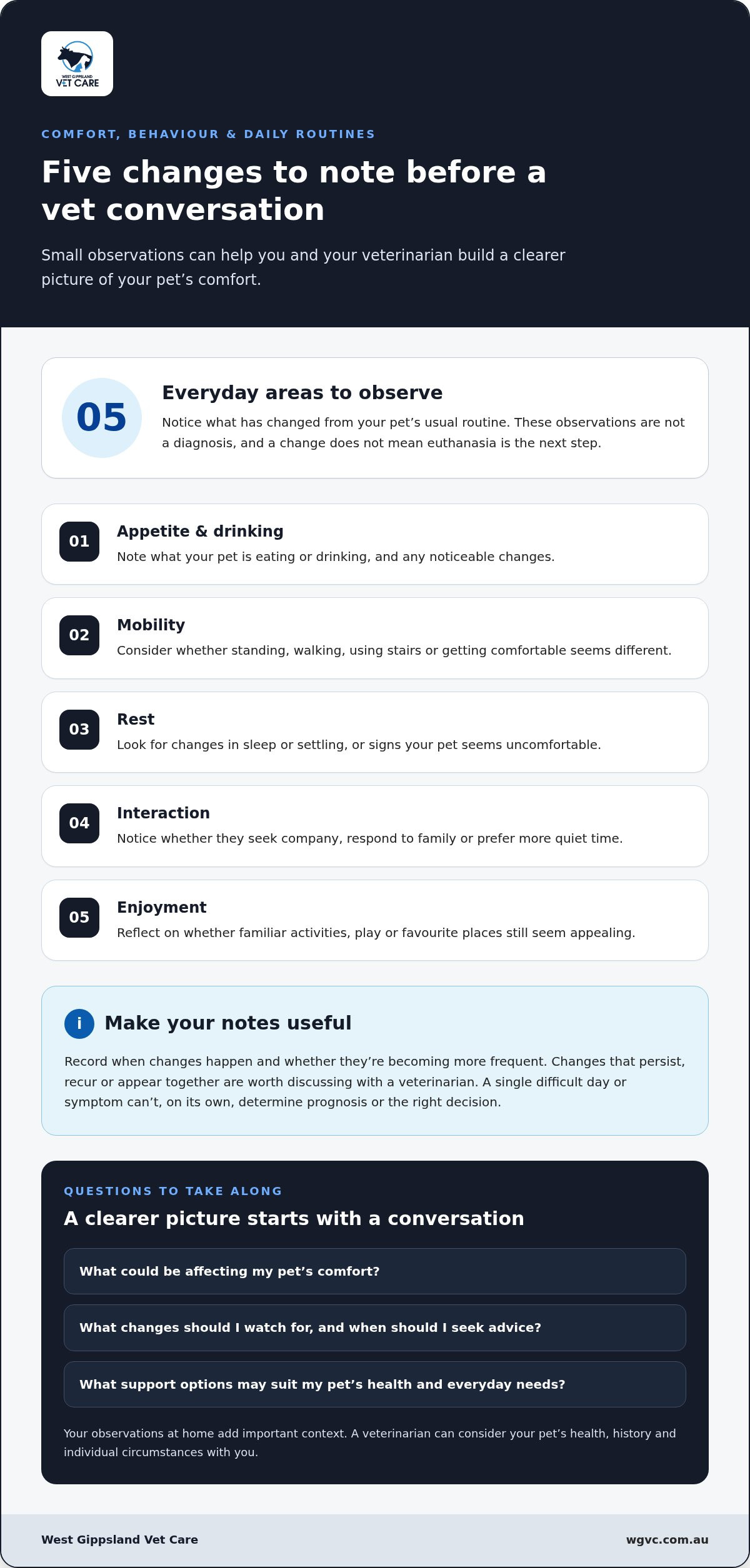
Before an appointment, note observations such as:
- Appetite and drinking: what your pet is eating or drinking, and any noticeable changes.
- Mobility: whether standing, walking, using stairs or getting comfortable seems different.
- Rest: changes in sleep or settling, or signs that your pet seems uncomfortable.
- Interaction: whether they seek company, respond to family or prefer more quiet time.
- Enjoyment: whether familiar activities, play or favourite places still seem appealing.
Record when changes happen and whether they’re becoming more frequent. A single difficult day or symptom can’t, on its own, determine prognosis or the right decision. Your notes can give you and your vet a clearer picture to discuss.
What changes might prompt an end-of-life conversation?
A conversation can help when you’re unsure how to interpret a pattern or your pet’s usual routines have changed enough to concern you. Bring examples and questions, even if they seem small. You could ask what might be contributing to the change, what signs to watch for and whether an assessment could clarify your pet’s needs.
For general background, the Animal euthanasia overview explains the topic broadly. It can’t assess an individual animal, so discuss your pet’s circumstances and care options with a veterinarian.
How can a quality-of-life discussion help?
A quality-of-life discussion is an opportunity to review your pet’s comfort, health changes and familiar routines. You know what a normal day looks like for your companion, while a veterinarian can help interpret those changes and talk through suitable assessment and support options. The conversation should be specific to your animal, not based on one sign or a one-size-fits-all rule.
“Quality of life is an individual veterinary discussion about your pet’s comfort, health and everyday experience.”
Grief and uncertainty can make the conversation difficult. Raising concerns doesn’t commit you to euthanasia. You can ask for explanations, take time to consider what you’ve heard and talk it through with family. The aim is to understand your pet’s needs and possible next steps, guided by their individual circumstances.
Comfort-focused care and end-of-life decisions for pets
Comfort-focused care means veterinary support centred on your pet’s wellbeing and individual needs. It can include reviewing health changes and discussing ways to support comfort. It isn’t another name for euthanasia, and ongoing support doesn’t automatically lead to that decision. What may be appropriate depends on your pet, a veterinarian’s assessment and your family’s circumstances.
There’s no single path that fits every pet. Your veterinarian can help you understand what may be contributing to a change, what to keep an eye on and what support might suit your pet. The aim is to make decisions with a clearer picture, rather than feeling you must choose between doing everything and making an immediate end-of-life decision.
A veterinarian can help families weigh their pet’s comfort and care choices in light of that animal’s needs and circumstances.
What can a veterinarian assess during a comfort review?
A review begins with what you’ve noticed and how it differs from your pet’s usual routine. Share when changes began, whether they’re becoming more noticeable and what matters most to your pet day to day. An examination and discussion of health history help the veterinarian consider the situation. Your observations at home add important context, but no single detail tells the whole story.
For older animals, a senior pet health check can be a chance to discuss changing needs. Pain-management and arthritis-care discussions may also be relevant if comfort or movement is a concern. These conversations don’t promise a particular result or treatment. They help the veterinarian consider your pet’s circumstances and explain what support may be appropriate.
- What could be affecting my pet’s comfort?
- What changes should I watch for, and when should I seek advice?
- What support options may suit my pet’s health and everyday needs?
How should families approach a difficult decision?
Writing down questions before an appointment can help if you’re worried emotion will make it hard to remember what you wanted to ask. Invite household members who know your pet’s routines to share what they’ve noticed. Different family members may see different parts of the day, and comparing observations can build a fuller picture.
The AVMA guidance on pet euthanasia offers general information about end-of-life discussions. It’s from the United States, so discuss your animal’s individual care with your veterinarian in Warragul.
Seeking advice doesn’t commit you to a particular choice. You can ask for an explanation, take time to reflect and return to the conversation as your pet’s needs become clearer. If you’re considering end of life pet care Warragul, the team at West Gippsland Vet Care can discuss comfort, senior health checks and pain-management concerns.
At-home or clinic euthanasia in Warragul: weighing the setting
Choosing a setting is a personal part of an end-of-life conversation, not a test of how much you care. Some families value the familiarity of home; others feel more comfortable in a clinic, where veterinary care is close by. Neither option is automatically gentler for every pet. Suitability depends on your animal’s needs, clinical circumstances and the arrangements for that individual case.
Use this comparison to identify what matters to your family. It’s a starting point for discussion, not a substitute for veterinary advice.
Familiarity
At home, your pet may be in surroundings they know. A clinic may be less familiar, but the veterinary team can discuss ways to support a calmer visit.
Travel
A home setting avoids a trip to the clinic, which may matter if travel or mobility is difficult. A clinic visit involves transport, so consider how your pet generally copes with the journey.
Privacy
Home may offer a private space for family members to be together. A clinic provides a dedicated veterinary setting, with the experience shaped by the clinic’s arrangements.
Practical support
At home, families may need to think through the space and who will be present. In a clinic, the veterinary team is on site to guide the appointment and respond to clinical needs.
Clinical setting
A clinic provides access to a veterinary environment. At home, the veterinarian needs to consider whether that setting suits the pet’s needs and circumstances.
What might families value about a home setting?
The ASPCA End-of-Life Care guidance discusses comfort and end-of-life considerations from a US perspective. It can offer general background, while your veterinarian can advise on your pet’s circumstances in Warragul.
When might a clinic setting be considered?
A clinic may suit a pet whose needs call for a veterinary clinical environment, or a family who would find it reassuring to have the team and clinical facilities present. Your veterinarian can talk through what the setting may involve and whether it fits your pet’s situation. The decision should reflect your animal’s needs, rather than an assumption that one location is always calmer or kinder.
If your pet’s condition causes urgent concern, seek timely veterinary advice rather than delaying to plan a preferred setting. Existing West Gippsland Vet Care clients have access to 24-hour emergency care. For a planned discussion about end of life pet care Warragul, share your questions and concerns with the veterinary team.
Preparing for an end-of-life appointment: questions and practical steps
A little preparation can make a difficult conversation more manageable. You don’t need every answer before speaking with a veterinarian. Notes about your pet’s health and routines, alongside the questions on your mind, can help keep the discussion focused on what matters to you and your companion.
Use this simple sequence to prepare:
- Note your observations. Record what has changed, when you first noticed it and whether it varies from day to day.
- Gather your questions. Write down anything you’re unsure about, including concerns you want explained in plain language.
- Discuss the setting. Share what you’re considering and ask how different arrangements might fit your pet’s clinical needs.
- Plan support. Think about who you’d like with you, what would help you feel prepared and whether other family members want to take part in the conversation.
Bring relevant health history and details about current concerns, including changes in appetite, movement, rest or activities your pet usually enjoys. Mention changes to everyday routines, too. For example, you might explain that your dog now needs help getting settled at night, or that your cat has stopped visiting a favourite sunny spot. These details help the veterinary team understand what you’re seeing at home.
Questions to bring to the veterinarian
You don’t need to phrase everything perfectly. A short list can help you make the most of the appointment, especially if the subject feels emotional. Consider asking:
- What might be affecting my pet’s comfort, and what assessment or support could help clarify the situation?
- What changes should I watch for, and when should I seek further veterinary advice?
- What care settings and arrangements could be considered for my pet’s individual circumstances?
You can ask the veterinarian to explain unfamiliar terms, revisit a point or summarise the options discussed. If family members have different concerns, note them down so they can be included without turning the appointment into a debate about who is right.
Making the day feel more supported
If an appointment is planned, consider inviting a trusted support person who can listen, take notes or simply be there. Allow time for questions rather than feeling you must rush through the conversation. A familiar blanket or another comforting item may be appropriate, depending on your pet and the setting. Share who you’d like present and what would help your family feel more at ease, then ask the veterinarian about arrangements for your pet.
Families don’t all need the same process. If you’re thinking about end of life pet care Warragul, West Gippsland Vet Care’s local veterinary team can help you talk through your concerns and prepare relevant questions. Discuss your pet’s comfort with the veterinary team as a starting point for an open, individual conversation.
End-of-life pet support in Warragul: speak with West Gippsland Vet Care
Thinking about your pet’s comfort can bring difficult questions, especially when you’re trying to understand what has changed and what to do next. You don’t need to arrive with a decision already made. A conversation with a local veterinary team can help you discuss your concerns, understand your pet’s needs and consider possible next steps at a manageable pace.
West Gippsland Vet Care supports pets and families in Warragul and surrounding West Gippsland communities. Senior pet health checks and discussions about pain management and arthritis care can help the team consider changes in comfort, movement and everyday life. Recommendations depend on the individual animal and veterinary assessment.
How a local veterinary conversation can support your family
Your knowledge of your pet is valuable. Sharing their health history, current concerns and changes to familiar routines gives the veterinarian useful context. Mention new difficulty settling, a change in mobility or a shift in activities your pet usually enjoys. Details that seem small can help shape a more informed discussion.
Fear-free veterinary care is part of the practice’s approach. Every pet responds differently, so the team can discuss your concerns and consider your animal’s needs without promising a particular experience or outcome. The conversation may clarify what further assessment or support could be suitable; it doesn’t require your family to settle every decision at once.
Tell the team what matters most to your household. Perhaps you’re unsure how to interpret a change or want to understand which signs to monitor. Bring your questions, ask for plain-language explanations and invite family members who know your pet’s routines to share their observations. These details can support an individual conversation about comfort and possible next steps.
What to do if your pet needs urgent attention
If your pet’s condition changes suddenly or seems urgent, seek veterinary advice promptly rather than waiting for a planned appointment. Describe what has changed and when it began so the veterinary team can respond to your concern. Urgent concerns need timely veterinary guidance and are different from a gradual comfort discussion.
West Gippsland Vet Care provides 24-hour emergency care for existing clients. The team can discuss your pet’s needs in the context of their history and current condition.
For families considering end of life pet care Warragul, a calm, informed conversation can be a useful first step. You can raise concerns, ask what an assessment may involve and discuss support that may suit your pet. Speak with the West Gippsland Vet Care team about your pet’s comfort and the questions on your mind.
Take the next step at your own pace
You don’t have to carry uncertainty alone or wait until you have a perfect way to explain what’s worrying you. A conversation can begin with one concern and develop as you and your veterinarian learn more about your pet’s needs. The next step isn’t about reaching a decision before you’re ready; it’s about making space for thoughtful, individual guidance.
For end of life pet care Warragul, West Gippsland Vet Care can support comfort discussions through senior pet health checks and pain-management and arthritis-care support. The practice’s fear-free approach recognises the importance of your pet’s experience, with recommendations guided by their individual circumstances. Existing clients also have access to 24-hour emergency care if an urgent concern arises.
When you feel ready, speak with the West Gippsland Vet Care team about your pet’s comfort. Start with the questions you have today and take the conversation one step at a time.
Frequently Asked Questions
How do I know when it may be time to discuss euthanasia for my pet?
Raise the question when your pet’s health or everyday experience is causing concern, or you’re unsure what changes may mean. A discussion doesn’t commit you to euthanasia. For end of life pet care Warragul, ask a veterinarian to help interpret what you’re observing and explain what further assessment or support may be relevant. If your pet’s condition changes suddenly or seems urgent, seek veterinary advice promptly.
Is at-home euthanasia less stressful for pets?
Not necessarily. A familiar home may suit some pets, while others may be more settled with the care and support available in a clinic. Consider how your pet responds to travel, unfamiliar people and changes to their surroundings. Their health and clinical needs matter too. A veterinarian can discuss whether a home or clinic setting may be appropriate for your pet, rather than assuming one option will feel calmer for every animal.
What happens during at-home pet euthanasia?
The arrangements and sequence can vary, so ask the veterinarian to explain what would happen in your pet’s case before making plans. You can ask what the visit involves, who will be present, how your pet’s comfort will be considered and what choices your family may have. If you’re unsure, ask for each step to be explained in clear language. This can help you decide whether the setting feels right for your family.
Can I stay with my pet during euthanasia?
Ask the veterinarian about being present and the arrangements for your pet’s appointment. Families have different needs: you may want to stay close throughout, or prefer to say goodbye beforehand. You can also ask whether a trusted support person can accompany you. Discussing these preferences ahead of time gives the veterinary team a chance to explain the arrangements for the setting and circumstances.
What should I prepare before an end-of-life appointment?
Bring your pet’s relevant health history, a current list of medicines if applicable, and notes on recent changes you haven’t yet discussed. Write down your main questions and decide whether another family member would like to join or contribute observations. West Gippsland Vet Care serves families in Warragul, Drouin, Bunyip, Yarragon, Trafalgar, Willow Grove, Hill End and Neerim South. Note any travel or mobility concerns to raise when arranging an appointment.
Can my other pets be present when a pet is euthanised?
It depends on the animals, the setting and what the veterinarian considers suitable. Think about whether your other pet is calm around unfamiliar people and changes in routine, and whether their presence might make the situation harder for anyone involved. Share your concerns with the veterinarian beforehand. They can discuss practical considerations for your household and help you decide what feels appropriate for the animals and family members.
What should I ask about aftercare following euthanasia?
Ask what aftercare choices are available in your circumstances, what each involves and whether ashes or other keepsakes may be returned. You can also ask about timing, arrangements you need to make and options that reflect your family’s wishes. Understanding how services like Companion Memorial Crematorium structure private, individual, and group options can give you a clearer idea of what to ask. Discussing these details before the appointment may help, rather than trying to decide while you’re grieving. There’s no single choice that suits every family.