
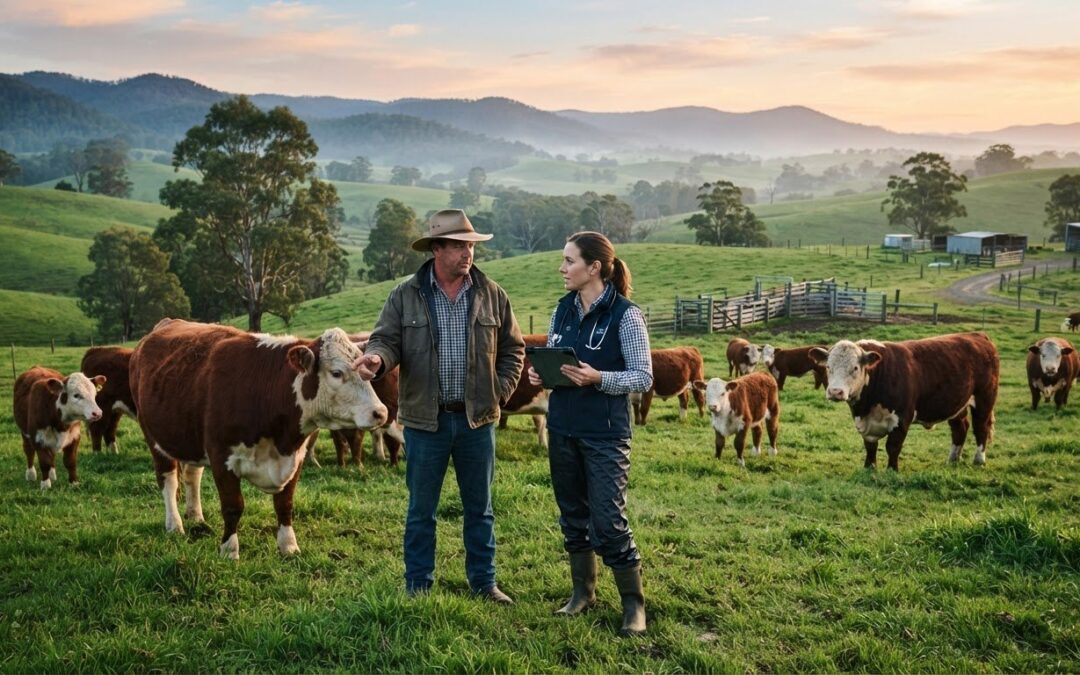
What if a low pregnancy result is pointing to a joining-season bottleneck you can identify and address? Working out how to improve cattle herd conception rates starts with looking beyond the final figure. Bulls, cow condition, heifer readiness, health and joining management can all play a part, and the pattern in your herd matters.
It’s understandable to feel unsure what to change when pregnancy-test results show fewer cows in calf than you’d hoped. A test provides a useful snapshot, but reviewing it alongside herd records can help reveal where a problem may lie and avoid changes based on guesswork.
This guide explains how to measure conception and interpret pregnancy results, identify common reproductive bottlenecks, and build a practical plan for your next joining season. We’ll cover bull fertility, nutrition and body condition, heifer management, health and timing, and how veterinary herd-health advice can help you investigate further. For West Gippsland producers, pregnancy testing and bull fertility testing can help turn results into useful decisions for the herd.
Key Takeaways
- Use a clearly defined conception measure and time period so your results are meaningful and comparable.
- Consider nutrition, cow condition, health, bulls and joining management together. A low result may have more than one contributing factor.
- Review records by cow class, joining group, bull and season where possible to spot patterns in empty cows.
- Build your pre-joining plan around your herd’s calendar, feed outlook and opportunities to address issues early.
- Use pregnancy-test findings and bull fertility information to guide focused follow-up on how to improve cattle herd conception rates.
What conception rate means for your West Gippsland cattle herd
For a defined joining period, herd conception rate is the percentage of cows exposed to bulls that are confirmed pregnant at pregnancy testing. It gives you a snapshot of how many cows became pregnant during that period, but terminology can vary between farms and reports. Some producers use “pregnancy rate” for the same calculation. When comparing results, record exactly what you counted and when you measured it.
Conception is one stage in the breeding cycle. Pregnancy-test results show which cows are pregnant at the time of testing; calving records show which went on to produce a calf, while weaning records show how many calves were ultimately weaned. Background on beef cattle breeding can help explain the broader breeding cycle, but your herd records are what make the figures useful for local decisions.
How do you calculate a herd conception rate?
Choose a measurement window, such as one joining period, then use the cows exposed to bulls during that period as the denominator. Count each eligible cow once and include in the numerator those confirmed pregnant at the planned pregnancy test. Record how you treat cows that were sold, died, were removed from joining or had uncertain exposure. Apply the same rules when comparing groups.
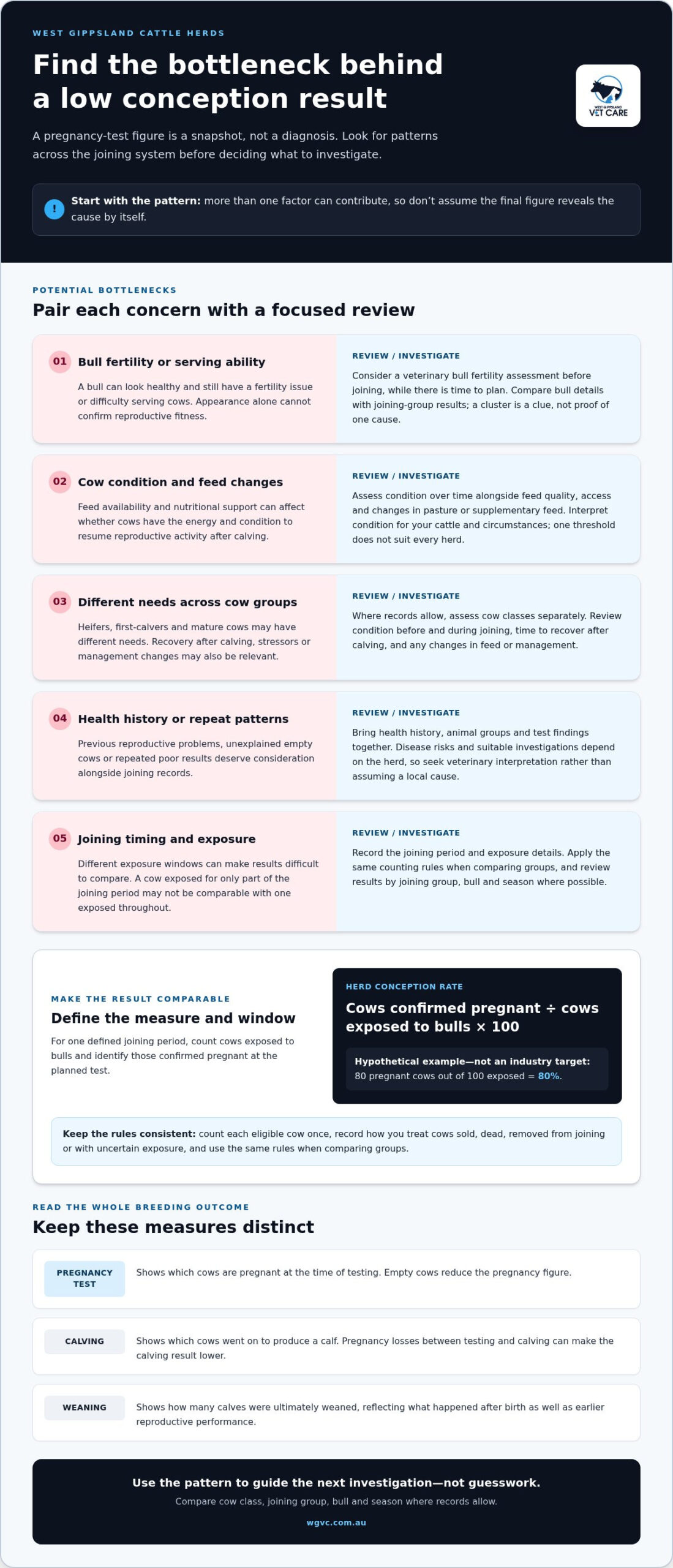
Calculation: cows confirmed pregnant ÷ cows exposed to bulls × 100.
Hypothetical example, not an industry target: If 80 of 100 cows exposed during a joining period are confirmed pregnant at testing, the defined joining conception rate is 80%. If some cows were exposed for only part of the period, record that too. Different exposure windows can make two apparently similar results difficult to compare.
Which reproductive measures should you track together?
Keep pregnancy-test results separate from calving and weaning outcomes, then link them by cow or management group where possible. Empty cows reduce the pregnancy figure. Late conceptions may mean calves arrive later in the calving period, while pregnancy losses between testing and calving can make the eventual calving result lower than the pregnancy result. Weaning outcomes reflect what happened to calves after birth as well as earlier reproductive performance.
Use consistent definitions, dates and denominators each year and when comparing cow classes, joining groups or bulls. That gives you a fairer view of where results differ and a sounder starting point for investigating how to improve cattle herd conception rates. Useful targets depend on herd type, joining system and reliable records, so avoid treating one general benchmark as right for every West Gippsland herd.
The main factors that can limit cattle conception rates
Conception depends on several parts of the joining system working together. Cow condition and nutrition, bull fertility and ability to serve, herd health, reproductive history, and the timing and management of joining can all influence results. A low pregnancy figure doesn’t identify the cause by itself, so look for patterns across animals and groups before deciding what to change.
Feed availability can shift over the season, affecting whether cows have the energy and condition to resume reproductive activity after calving. Assess condition over time alongside feed quality, access and changes in pasture or supplementary feed. There isn’t one body-condition threshold that suits every herd, cow class and production system. Interpret condition in the context of your cattle and circumstances.
How can bull fertility affect the whole joining group?
A bull may look healthy and still have a fertility issue or difficulty serving cows. Appearance alone can’t confirm reproductive fitness, and serving capacity matters too. A veterinary bull fertility assessment before joining can help identify concerns while there is time to plan. Mississippi State University Extension’s reproductive management guide for beef herds also discusses the importance of managing breeding as a whole system.
Review bull information alongside joining-group records. If poorer results cluster around a particular bull or group, that pattern can help guide further investigation. It is a useful clue, not proof of a single cause.
How do cow condition and herd health influence joining?
Review whether cows had enough time and nutritional support to recover after calving, and whether their condition changed before or during joining. Heifers, first-calvers and mature cows may have different needs, so assess them as separate groups where your records allow. Stressors and changes in feed or management may also affect readiness to breed.
Health history matters. Previous reproductive problems, unexplained empty cows or a repeated pattern of poor results deserve consideration alongside joining records. Disease risks and appropriate investigations depend on the herd, so don’t assume a local cause without veterinary interpretation. Herd-health advice can help connect the history, animal groups and test findings into a focused investigation.
To work out how to improve cattle herd conception rates, avoid changing several things at once without a clear reason. Bring together bull details, cow condition, feed changes, health history and pregnancy outcomes, then use the patterns to decide what to investigate or adjust. Discuss herd-health advice and bull fertility testing as part of a plan shaped around your cattle and joining system.
How to investigate low conception rates using herd records
A disappointing result is a reason to investigate, not a diagnosis. A consistent review can show whether the pattern sits with a particular cow class, joining group, bull or season, and help guide your next steps. Use this five-part process to turn records into practical questions:
- 1. Define the measure. Write down the joining period, which cows were exposed and how you calculated the result. Use the same definition for each comparison.
- 2. Check the records. Confirm cow identification, joining dates, bull groups and pregnancy-test outcomes. Note gaps or uncertain exposure rather than treating incomplete information as fact.
- 3. Segment the results. Compare like with like, such as heifers with heifers or one joining group with another. Where records allow, review bull and season as well.
- 4. Investigate the pattern. Check whether empty cows cluster by age, group or bull, and consider relevant feed, health or management changes. MLA breeding and genetics resources provide broader context for breeding decisions, while herd-specific patterns need to be interpreted in context.
- 5. Plan follow-up. Choose a practical action linked to the pattern, record what changes, and review the next joining and pregnancy-test results using the same measure.
What records help reveal a reproductive pattern?
Useful records include cow identification and class, joining dates, bull groups and pregnancy-test outcomes. Add calving information, and note relevant changes in nutrition, health or management. Missing IDs or shifting group definitions can make a comparison misleading, so flag uncertainty and avoid firm conclusions from incomplete records.
Consistent records make year-to-year comparisons more meaningful because they show whether you are comparing the same animals, time period and measure.
How can pregnancy testing guide the next decision?
Pregnancy testing identifies which animals are pregnant and which are empty at the time of examination. With reliable identification and joining records, results can help you plan appropriate management for each group and investigate where a pattern may have developed. Discuss testing timing and method with the attending veterinarian, as these depend on your herd and the decisions you need the results to support.
For West Gippsland producers, livestock pregnancy testing can be part of that review, alongside herd records and follow-up advice. Used this way, testing supports a focused investigation into how to improve cattle herd conception rates, rather than leaving you with a single figure and no clear next question.
A practical pre-joining plan for West Gippsland cattle producers
Start with your planned joining period, then work backwards through the checks and decisions that need to happen beforehand. This gives you time to respond to findings rather than discovering a concern once bulls are already with the cows. The right schedule depends on your herd, calving pattern, feed system and farm calendar, so use this as a working plan rather than a fixed regional timetable.
What should be checked before bulls join the herd?
Review each bull’s health, identification, previous performance and intended group allocation. Appearance alone can’t confirm fertility, so schedule bull fertility testing early enough to discuss concerns before joining. A pre-joining assessment is commonly planned around 8-10 weeks ahead, allowing time to consider next steps if a problem is identified.
Assess cow condition and feed availability early too, especially where cows are still recovering after calving or pasture and supplementary feed may change. Include relevant reproductive history, such as previous empty cows or late calvings, in the review. If findings concern you, discuss them with a veterinarian before making broad changes across the herd.
How can you make the plan fit your farm?
Adapt the sequence to your cattle and records. A herd with different calving groups may need separate checks, while a changing feed outlook could prompt an earlier review of condition. Farms around Warragul, Drouin, Bunyip, Yarragon, Trafalgar, Willow Grove, Hill End and Neerim South do not all share the same seasonal conditions or operating calendars. Use what you observe on your property rather than relying on a one-size-fits-all schedule.
Put the plan in writing. A short checklist can keep responsibilities clear and make follow-up easier:
- Before joining: record your baseline measure, planned joining dates, cow groups and bull allocations.
- Ahead of joining: review cow condition and feed, and arrange bull fertility testing with enough time to consider the findings.
- After joining: plan pregnancy testing with your veterinarian, including when results will best support herd decisions.
- At review: note changes made, compare outcomes using the same measure, and set a date to discuss any unresolved pattern.
This approach makes how to improve cattle herd conception rates a practical question for your own herd: what will you check, who will act on it, and how will you measure the result? Pregnancy testing and herd-health advice can help connect pre-joining decisions with follow-up. Arrange bull fertility testing and herd-health advice as part of your next joining plan.
When West Gippsland herd-health advice can help improve conception
Veterinary input can help when poor pregnancy results repeat, empty cows don’t fit an obvious pattern, or you have concerns about a bull’s fertility or ability to serve. A single result may not explain what happened, but repeated outcomes and well-kept records can point to questions worth investigating. You don’t need to have worked out the cause before seeking advice.
West Gippsland Vet Care supports local livestock clients with bull fertility testing, cattle pregnancy testing and herd-health advice. These services can form part of a considered reproductive review, focused on understanding your herd’s results and planning useful follow-up rather than applying a standard fix to every situation.
What can a cattle reproductive review cover?
A review can bring together joining dates and groups, pregnancy outcomes, bull history, cow class and relevant herd-health information. Your veterinarian can discuss what the records suggest and what further examination or testing may help answer the clinical question. The approach depends on the animals and their history. No single test or protocol suits every herd, and a review can’t guarantee a particular conception result.
Bring clear identification and records showing which cows were exposed, which were tested and when, alongside details of management or health changes. This context can help distinguish a group-specific concern from a herd-wide pattern and make the discussion more focused. If records are incomplete, note what’s missing so conclusions can be made with appropriate care.
How can you turn this season’s results into next season’s plan?
Compare results with your own baseline using the same measure, time period and counting rules. Record what you changed, when you made the change and which cows or joining groups it affected. At the next review, you’ll have a clearer basis for discussing what appears to have helped, what remains uncertain and where to focus further investigation.
This is a practical way to approach how to improve cattle herd conception rates: combine the figures with the herd’s history, then make and assess changes deliberately. Pregnancy testing can help identify pregnant and empty animals for follow-up, while bull fertility testing and herd-health advice can support investigation of reproductive concerns.
If you’re seeing repeated poor results, unexplained empty cows or a bull concern, a herd-specific discussion can help you decide on sensible next steps. Discuss herd-health advice with West Gippsland Vet Care and develop a reproductive plan shaped around your cattle and records.
Make your next joining season a more informed one
Improving conception starts with understanding what your herd’s results are showing. Use a consistent measure, review pregnancy and calving records for patterns, and consider bulls, cow condition, nutrition, health and joining management together. This gives you a clearer basis for deciding how to improve cattle herd conception rates without relying on guesswork or one-size-fits-all changes.
A practical next step is to set a baseline, note the changes you make and decide when you’ll review the outcome. If results remain poor, empty cows are unexplained or you have concerns about a bull, veterinary input can help make the investigation specific to your herd.
West Gippsland Vet Care supports local livestock clients with bull fertility testing, cattle pregnancy testing and herd-health advice across West Gippsland. Talk with West Gippsland Vet Care about your herd’s reproductive plan, and take the next season forward with a clearer plan and support tailored to your cattle.
Frequently Asked Questions
How can I improve cattle herd conception rates?
Start by defining your measure and reviewing records for patterns in empty cows, joining groups, bulls and cow classes. Then assess likely contributors, including bull fertility, cow condition, feed availability, health history and joining management. Avoid changing several things at once without a clear reason. A focused plan, followed by consistent pregnancy and calving records, helps you assess whether your actions appear to have made a difference in your herd.
What is a good conception rate for cattle?
There isn’t one conception-rate target that suits every cattle herd. A useful result depends on factors such as herd type, joining system, cow class and how the rate is calculated. Before comparing figures, check that the same time period, denominator and pregnancy-testing approach were used. Your own consistent results are a helpful starting point, and a veterinarian can help interpret them in light of your herd and production system.
Can bull fertility affect conception rates?
Yes. A bull with reduced fertility or difficulty serving cows can affect the results of the group he joins. A healthy appearance alone doesn’t confirm reproductive fitness, so consider bull fertility testing as part of pre-joining preparation. Keep bull identification and joining-group records, then compare pregnancy outcomes across groups where possible. If you have concerns about a bull, discuss the history and suitable assessment with your veterinarian before the next joining period.
When should cattle pregnancy testing be done?
The right timing depends on when cows were joined and how the results will guide management. Discuss timing and testing method with your veterinarian, taking account of the joining period and the information you need. Testing can identify pregnant and empty cows, while pregnancy ageing may help show whether conceptions occurred earlier or later in joining. Keep joining dates and cow identification available so test findings can be interpreted usefully.
Does cow body condition affect conception?
It can. Cow condition and nutrition influence reproductive readiness, and changing feed availability may affect whether cows maintain or regain condition after calving. Rather than relying on one threshold for every animal, assess condition over time and consider cow class, calving history and feed system. If a particular group is thinner or has poorer pregnancy outcomes, discuss the pattern with your veterinarian and consider practical adjustments that suit your herd.
How long should cattle be joined for?
Joining length should suit your herd’s calving pattern, production goals and management system. A six-week joining period is advocated in some guidance as a way to concentrate calving, but it isn’t a universal prescription for every herd. Review previous joining and calving records before changing the period. If you’re considering a shorter joining, plan how you’ll manage the transition and measure its effect on pregnancy and later calving outcomes.
Can pregnancy testing help improve next season’s conception rate?
Yes. Pregnancy testing shows which cows are pregnant and which are empty at the time of testing, helping you investigate patterns and plan follow-up. Used alongside joining dates, cow identification and bull-group records, results can guide questions for the next season rather than just providing a single herd figure. West Gippsland Vet Care supports producers in Warragul, Drouin, Bunyip, Yarragon, Trafalgar, Willow Grove, Hill End and Neerim South with cattle pregnancy testing and herd-health advice.