
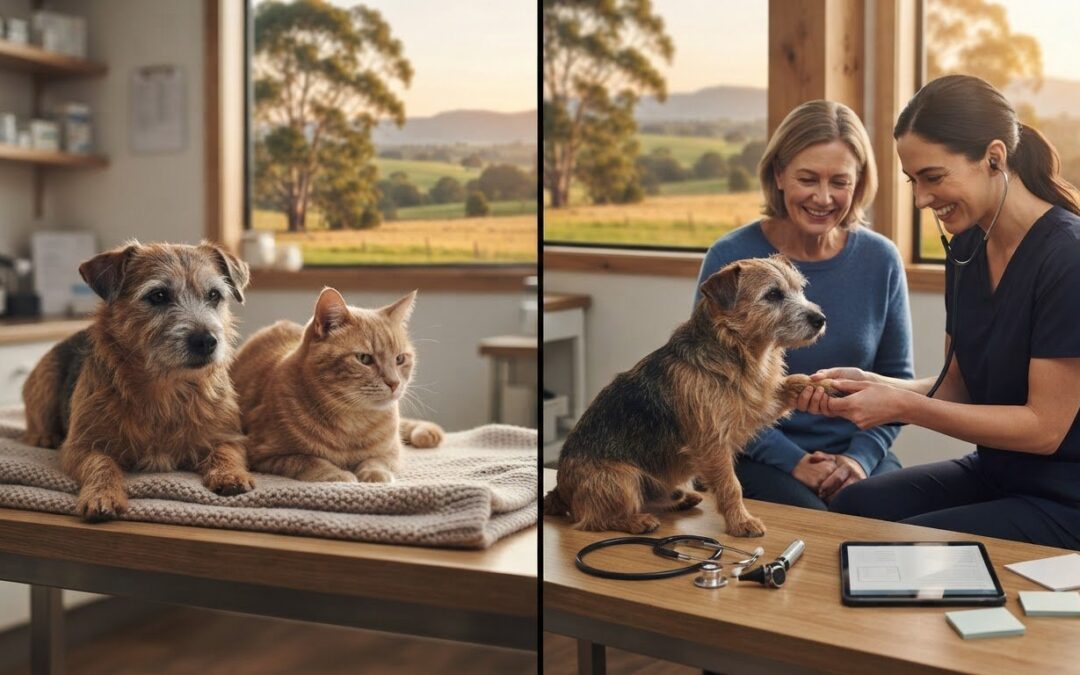
Could a slower walk, a change in appetite or a new reluctance to jump be part of getting older, or a sign your pet needs support? It can be hard to tell, and you know your companion’s usual habits best. A senior pet wellness exam Drouin gives you a chance to discuss these changes and consider them alongside your pet’s history and veterinary assessment. Ageing itself isn’t an illness, but noticing changes can help shape care around comfort and quality of life.
This guide explains what a senior health check may involve, which changes in mobility, behaviour, appetite, thirst or daily routines are useful to mention, and how to prepare for the visit. Your vet can assess your pet’s general health and discuss whether further checks or follow-up may help. Recommendations are tailored to the individual animal. At West Gippsland Vet Care’s Drouin clinic, fear-free techniques are used in the waiting room, consultations and hospital care to help make visits more manageable. Together, you can develop a considered plan for your pet’s changing needs.
Key Takeaways
- A senior pet wellness exam Drouin helps your vet consider subtle changes in comfort, movement and daily habits in context.
- The consultation is tailored to your pet, so checks and follow-up depend on their needs and the assessment findings.
- Keep a brief record of what has changed, when it began and whether it varies with meals, activity or time of day.
- Bring your pet’s health history and questions to make the conversation focused and useful.
- Depending on the findings, a shared care plan may include monitoring, comfort support or further assessment.
What a senior pet wellness exam in Drouin is designed to uncover
Age-related changes can happen gradually and be easy to miss. Your dog may take longer to get up, or your cat may groom less often. These observations don’t automatically mean something is wrong, but they’re worth sharing with your vet. A senior wellness exam is a veterinary assessment guided by your pet’s history, current health and your concerns, to help inform care as they age.
There isn’t one age that makes every pet senior. Species, breed and individual health all play a part, so your vet can consider your companion’s life stage in context. Ageing may affect a pet’s body and behaviour in different ways. The general overview of Aging in dogs offers background, while an individual assessment focuses on your pet.
What changes are worth mentioning to your vet?
You know your pet’s everyday habits best. Mention changes in appetite, thirst, weight, sleep, mobility or toileting, as well as shifts in behaviour, interaction or grooming. You might notice your pet hesitating before a jump, avoiding stairs, showing less interest in play or reacting differently to touch.
Small or gradual changes still matter, even if your pet remains cheerful and active. Note what you see, when it started and whether it happens consistently or comes and goes. This can help your vet understand the pattern and decide what needs closer attention.
Why routine assessment matters when a pet seems well
A pet may seem comfortable at home while still experiencing changes worth discussing. A consultation gives you and your vet a chance to build a picture of their wellbeing, bringing your observations together with their health history and the vet’s findings. This conversation can be useful even when you haven’t noticed a particular concern.
An appointment doesn’t mean a problem is assumed, and tests aren’t automatic. The assessment is tailored to the individual pet, with further checks considered in light of what you share and what the vet observes. The aim is to make thoughtful decisions, not to treat ageing itself as an illness.
For owners arranging a senior pet wellness exam Drouin, discussing changes early can turn questions about new habits into a practical conversation about comfort and quality of life. If your pet finds visits unsettling, the Drouin clinic uses fear-free techniques in the waiting room and consultations to help make veterinary care more manageable.
What happens during a senior pet wellness exam at a Drouin vet
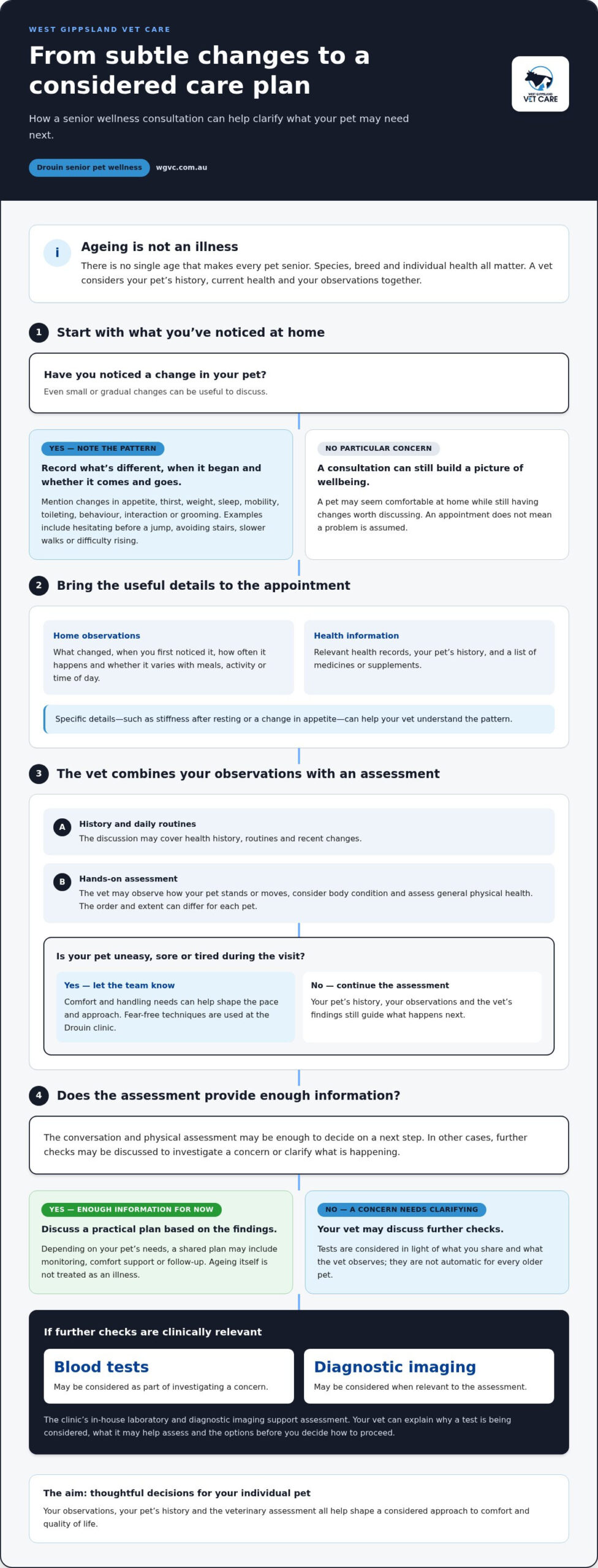
A senior pet consultation is shaped around the animal in front of the vet, rather than a fixed checklist. The discussion and assessment may vary with your pet’s history, current health, comfort and the concerns you bring. At a senior pet wellness exam in Drouin, your observations help guide the conversation alongside what the vet sees during the visit.
History, home observations and a hands-on assessment
The appointment may begin with questions about your pet’s health history, daily routines and recent changes. Bring a list of medicines or supplements, and share when you first noticed a change and whether it comes and goes. Specific details, such as stiffness after resting or a change in appetite, can help give the vet a clearer picture.
The vet may observe how your pet stands or moves, consider their body condition and assess aspects of their general physical health. The order and extent of the assessment can differ. If your pet is uneasy, sore or tired, let the team know. Their comfort and handling needs can help shape the pace and approach. West Gippsland Vet Care uses fear-free techniques during consultations to help make the experience more manageable.
When diagnostic tests may be discussed
Sometimes the conversation and physical assessment provide enough information to decide on a next step. In other cases, the vet may discuss further checks to investigate a concern or clarify what’s happening. Blood tests or diagnostic imaging may be considered when clinically relevant. The clinic’s in-house laboratory and diagnostic imaging support this assessment, but they don’t mean every older pet needs the same tests.
Your vet can explain why a test is being considered, what it may help assess and the options before you decide how to proceed. The senior pet care guidelines from the American Veterinary Medical Association also offer general background on caring for older pets. They provide useful context, while your vet’s recommendations are tailored to your companion.
To make the conversation easier, bring medication details, relevant health records and a short timeline of what you’ve observed. You can also explore senior pet health checks at our Drouin clinic as part of your pet’s ongoing care.
Are changes in an older pet just normal ageing? What the exam can clarify
It’s understandable to wonder whether a new habit is simply part of getting older. But age alone doesn’t explain every change, and similar signs can have different causes. A vet can consider what you’ve noticed alongside your pet’s history and examination, then discuss whether anything needs further attention.
A change may be age-related, but only an individual veterinary assessment can help clarify what it means for your pet. The AAHA Senior Care Guidelines provide clinical guidance for vets caring for older dogs and cats. For you, a useful starting point is to describe what’s different, when it began and how it affects everyday life.
| Observed change | Why mention it? | What the vet may assess |
|---|---|---|
| Slower walks, stiffness or difficulty rising | These changes may affect comfort and usual activities. | Movement, joints and signs of discomfort. |
| Reluctance to jump or use stairs | A change in confidence or ability can be easy to adapt around at home. | Mobility and whether pain or another concern may be contributing. |
| Chewing differently, avoiding food or preferring softer food | Eating habits can offer clues about comfort in the mouth. | Oral health and whether further dental assessment may be appropriate. |
| Changes in breath, interaction or behaviour | These may be subtle signs that your pet feels different. | General health and any concerns raised by your observations. |
Mobility, stiffness and changes in comfort
A pet who takes longer to stand, walks more slowly or no longer jumps onto a favourite spot may be adjusting their routine without making it obvious. Share examples of what they avoid and whether movement seems easier or harder at different times. The vet can consider whether pain management or arthritis care may be relevant. For more on mobility concerns, see our orthopaedic care guide for Gippsland pets.
Mouth, appetite and behaviour changes
Tell your vet if your pet drops food, chews on one side, turns away from familiar meals or has a change in breath. These observations don’t confirm a dental problem, but they can help guide an oral health assessment. Preventative dentistry and dental X-rays may be considered when appropriate. Cat owners can also read our cat dental health guide for Gippsland for more feline-specific detail.
At a senior pet wellness exam Drouin, sharing small changes helps your vet understand the full picture without assuming that ageing itself is an illness.
How to prepare for your pet’s senior wellness appointment in Drouin
A little preparation can help you make the most of the conversation and remember details that are easy to miss on the day. You don’t need to work out what a change means yourself. Your notes, questions and knowledge of your pet’s usual routine give the vet helpful context.
A simple list to bring to the consultation
Use this short plan to prepare for a senior pet wellness exam in Drouin:
- Record changes. Note shifts in appetite, thirst, weight, toileting, sleep or mobility. Include when each change began and whether it varies with activity, meals or time of day.
- Gather relevant history. Bring medication and supplement details, including names and doses if you know them, along with any previous veterinary information that may be useful.
- Write down your questions. If you’ve noticed several changes, list the ones that concern you most so you can raise them first.
- Plan your arrival. Organise your pet’s transport and leave enough time to get to the clinic without rushing. Bring the notes and items you’ll need for the appointment.
Some changes don’t happen on cue. If a limp, unusual movement or behaviour comes and goes, a short video recorded at home may help show what you mean. Only take one if it’s safe and doesn’t upset your pet. Describing what you’ve seen is useful too.
Helping your pet feel more at ease
Every pet responds differently to a clinic visit, so there’s no promise it will be stress-free. West Gippsland Vet Care uses fear-free techniques in its Drouin waiting room, consultations and hospital care to help make visits more manageable. Tell the team about handling sensitivities, fears or past stressful experiences so they can take your pet’s needs into account.
Keep your own approach calm and steady, and follow any specific instructions for your appointment. If your pet has a familiar carrier or lead they’re comfortable with, have it ready for the trip. A little preparation can make the journey more predictable for both of you.
With your observations and questions at hand, you can focus on a thoughtful discussion about your pet’s needs. Explore senior pet care at West Gippsland Vet Care and arrange supportive care for your companion.
Senior pet care in Drouin: turning exam findings into a practical plan
An examination is most useful when it leads to clear next steps that suit your pet and household. Your vet can talk through their observations, consider your concerns and work with you on a practical approach. That might mean monitoring a change at home, supporting comfort or discussing further assessment. There’s no single plan that suits every older pet.
What a tailored follow-up plan may include
Recommendations depend on the consultation findings and what matters most to you for your pet’s wellbeing. Your vet may suggest tracking a particular change, such as how easily your pet gets up or whether their appetite varies, then sharing updates with the veterinary team. This can help you notice patterns and decide together whether the plan needs adjusting.
If discomfort or stiffness is a concern, pain management and arthritis care may be relevant. Changes in eating or oral health could prompt a discussion about preventative dentistry. Blood tests through the in-house laboratory or diagnostic imaging may also be considered if they could help assess an individual concern. Your vet can explain the reason for any proposed test or treatment and discuss the options with you. These steps aren’t automatic; they’re considered in relation to your pet’s needs and the assessment findings.
A plan can also set out what to watch for and when to share an update. Clear guidance can make it easier to care for your companion at home and keep the conversation open if something changes.
Arrange a senior pet wellness exam in Drouin
You don’t need to arrive with all the answers. Your questions and observations are an important part of a collaborative consultation, and it’s fine to raise concerns about comfort, handling or what a suggested next step involves. At West Gippsland Vet Care’s Drouin clinic, the team can discuss your pet’s health and help shape care around their individual needs.
If you’ve noticed changes or would value a conversation about your pet’s wellbeing, make an appointment enquiry. Send an appointment enquiry to West Gippsland Vet Care and take the next step towards a considered senior care plan.
Take the next step towards comfortable senior years
Ageing can bring gradual changes, but they don’t have to be dismissed as “just getting older”. A senior pet wellness exam Drouin gives you space to share what you’ve noticed and understand how your vet may assess your companion’s comfort and general health. The exam is tailored to your pet, and any monitoring, treatment or further assessment is discussed in light of their individual needs.
Preparing a few notes about changes at home can make the conversation clearer. At West Gippsland Vet Care, senior pet health checks are supported by fear-free techniques in the waiting room, consultations and hospital care. If needed, the team can discuss relevant care such as pain management and arthritis support, with diagnostic imaging and an in-house laboratory available to assist veterinary assessment.
Your observations matter, and your questions are welcome. Arrange a senior pet wellness visit with our Drouin team to talk through your pet’s needs and plan supportive care together. West Gippsland Vet Care also supports pet owners in Warragul, Bunyip, Yarragon, Trafalgar, Willow Grove, Hill End and Neerim South. A thoughtful next step can help you feel more confident as you care for the companion who’s been by your side.
Frequently Asked Questions
When should a pet start having senior wellness exams?
There isn’t one age that applies to every pet. Species, breed, size and individual health all influence when a pet may benefit from senior-focused checks. Your vet can help decide what’s appropriate for your companion rather than relying on a universal age cut-off. If you notice a change in comfort, appetite, movement or behaviour at any age, mention it instead of waiting for your pet to reach a particular milestone.
What happens during a senior pet wellness exam?
A senior pet wellness exam Drouin typically involves a conversation about your pet’s health history, daily routine and any changes you’ve observed, alongside a veterinary assessment. The vet may consider your pet’s movement, body condition and general physical health, adapting the approach to their comfort. Further checks, such as blood tests or diagnostic imaging, may be discussed if relevant, but there isn’t a fixed protocol for every pet.
How often should an older dog or cat have a wellness check?
The right interval depends on your pet’s health, history and changing needs, so your vet can recommend a suitable follow-up plan. Some pets may need closer monitoring if a concern is being assessed, while others may have a different routine. There’s no single schedule that suits every older dog or cat. If you notice a new or worsening change between planned visits, share it with your veterinary team rather than waiting for the next check.
Can a senior wellness exam find health problems before symptoms are obvious?
An exam may help your vet notice changes or identify reasons to investigate further, sometimes before signs are easy to recognise at home. However, no check can guarantee that every health problem will be found or provide a diagnosis on its own. Your observations are valuable too. Describe changes in your pet’s habits, even if they seem small, so the vet can consider them alongside examination findings and discuss whether further assessment may help.
Are blood tests always needed for an older pet?
No. Blood tests aren’t automatic for every older pet. Your vet may discuss them if your pet’s history, examination or particular concerns suggest they could provide useful information. West Gippsland Vet Care has an in-house laboratory to support veterinary assessment, but whether testing is appropriate depends on your individual pet. Your vet can explain what a proposed test may help assess and talk through the options before you decide on next steps.
What signs in an older pet should I mention to the vet?
Tell your vet about changes in appetite, thirst, weight, sleep, toileting, mobility or usual behaviour. You might mention slower walks, hesitation before jumping, difficulty rising, altered grooming, reduced interaction or signs of discomfort. Changes in chewing, food preference or breath are also worth raising. Note when you first noticed them and whether they vary with meals, activity or time of day. Gradual changes are useful to discuss, even if your pet still seems cheerful.
How can I help my senior pet feel calmer at a vet appointment in Drouin?
Tell the team about your pet’s handling sensitivities or previous stressful experiences, and allow time to travel without rushing. A familiar carrier or lead may help your pet feel more secure. West Gippsland Vet Care uses fear-free techniques in its Drouin waiting room, consultations and hospital care, while recognising that each pet responds differently. The clinic supports pets and families from Drouin, Warragul, Bunyip, Yarragon, Trafalgar, Willow Grove, Hill End and Neerim South.