
What if a high liver enzyme result is a clue, rather than a diagnosis? If you’re wondering “what does high liver enzymes in a cat mean”, it’s understandable to worry that the result points to serious liver disease. But an abnormal reading doesn’t tell the whole story on its own.
Liver enzymes can rise when cells are stressed or damaged, and changes can also be linked to conditions elsewhere in the body. Your vet interprets the results alongside your cat’s signs, history and examination, so the same result can lead to different next steps for different cats.
This guide explains what the test measures, what your vet may investigate next and which signs call for prompt advice. Further checks might include additional laboratory tests or diagnostic imaging, depending on your cat’s individual assessment. West Gippsland Vet Care has an in-house laboratory and diagnostic imaging to support that process when appropriate. If your cat stops eating, develops yellowing of the eyes or skin, vomits or seems very weak, contact a vet promptly. A cat that hasn’t eaten for more than 24 hours needs veterinary attention.
Key Takeaways
- A high liver enzyme result in a cat is a finding to interpret, not a diagnosis of a specific illness.
- Raised enzymes can have different possible causes. A vet considers them alongside your cat’s health, history and other test results.
- Your cat’s assessment may guide further checks, such as reviewing blood results or considering diagnostic imaging.
- Your cat’s symptoms and overall condition matter when deciding how promptly to seek veterinary advice.
- Ask your vet whether monitoring or further investigation is appropriate, and what changes at home to watch for.
What does a high liver enzyme result in a cat actually mean?
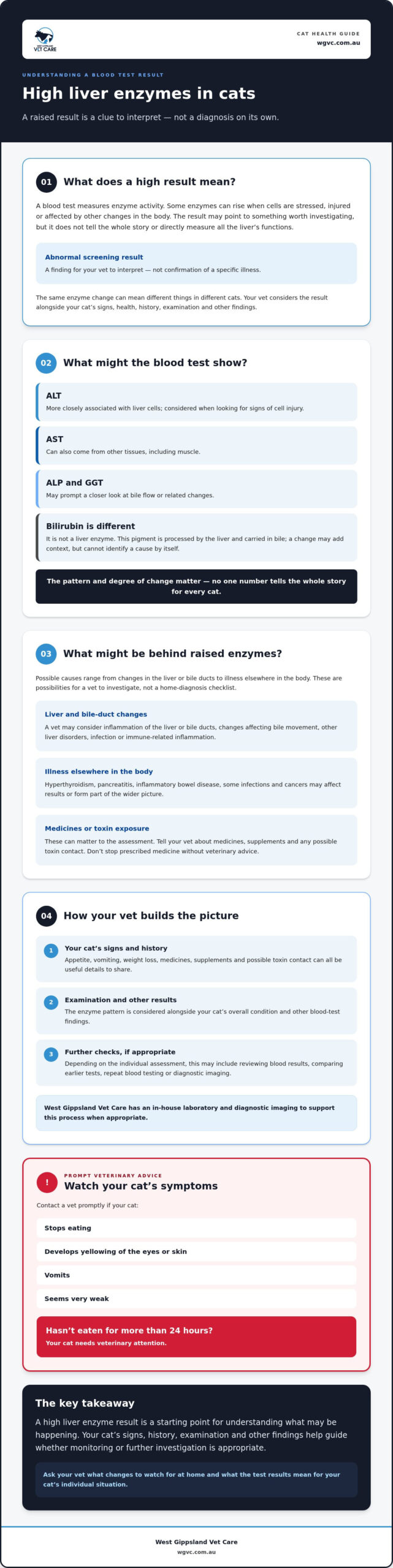
An elevated liver enzyme result can be unsettling, but it needs context. On its own, it doesn’t diagnose a specific disease. A blood test measures the activity of enzymes, proteins that help cells carry out chemical processes. When cells are injured or affected by other changes, some enzymes can enter the bloodstream or rise there.
That activity is a clue about what may be happening, not a direct measure of how well the liver is doing all its jobs. A vet considers the result alongside your cat’s health, examination and other findings. An abnormal screening result is a reason to investigate, not a confirmed diagnosis. Put simply, what does high liver enzymes in a cat mean? It means your vet has a finding to interpret, not a complete answer about its cause.
Which liver enzymes might appear on a cat’s blood test?
Blood results may include ALT and AST, enzymes vets consider when looking for signs of cell injury. ALT is more closely associated with liver cells, while AST can also come from other tissues, including muscle. ALP and GGT may prompt a closer look at bile flow or related changes. The pattern and degree of change matter, as do your cat’s signs and the rest of the test results. There isn’t one number that tells the whole story for every cat.
Why one abnormal number cannot tell the whole story
The same enzyme change can mean different things in different cats. Before deciding what a result may suggest, a vet may consider your cat’s age, symptoms, medical history, medicines and other blood-test findings. For example, a cat that has stopped eating and has raised enzymes needs a different assessment from a cat that seems well and has an unexpected change on routine testing. Conditions such as Feline hepatic lipidosis are one possible area for investigation, but an enzyme result alone can’t confirm it.
Your vet may compare current results with earlier tests or recommend repeat blood testing when clinically appropriate. A change over time can add useful context, but your vet will decide whether and when another test is suitable. If you’re unsure what the figures on your cat’s report mean, ask which results are outside the reference range and how they fit with your cat’s overall picture.
What can cause raised liver enzymes in cats?
There isn’t one explanation for every raised result. If you’re asking what does high liver enzymes in a cat mean, possible causes range from changes in the liver or bile ducts to illness elsewhere in the body. These are possibilities for a vet to investigate, not a checklist for diagnosing your cat at home. The result needs to be considered alongside your cat’s signs, examination and other tests.
Liver and bile-duct conditions vets may investigate
Inflammation of the liver or bile ducts, problems affecting the movement of bile, and other liver disorders may be considered. Infection or immune-related inflammation can also be part of the investigation. Enzyme results alone can’t confirm any of these possibilities. The Merck Veterinary Manual outlines conditions that may affect a cat’s liver and gallbladder, but a vet needs to interpret your cat’s individual findings.
Bilirubin is another blood-test finding that may add context. It isn’t a liver enzyme. It’s a pigment processed by the liver and carried in bile. A change in bilirubin, especially alongside other results or yellowing of the eyes or gums, may influence what a vet investigates next. It still doesn’t identify a cause on its own.
Other factors that may influence a cat’s results
Some enzyme changes occur alongside illness that doesn’t start in the liver. For example, hyperthyroidism, pancreatitis, inflammatory bowel disease and some infections or cancers may affect results or form part of a wider clinical picture. Medicines and toxin exposure can also matter. This is why a vet may ask about your cat’s health more broadly instead of focusing on one blood-test number.
Before an appointment, note any medicines or supplements your cat receives and mention any possible contact with toxins, even if you’re unsure whether it’s relevant. Don’t stop prescribed medicine without veterinary advice. Changes in appetite, vomiting and weight loss are useful details to share too. Note when they began and whether they’re getting worse. This information can help the vet decide which possibilities to explore and whether further tests are appropriate.
An enzyme result alone cannot identify its underlying cause. If you’re in Warragul, Drouin, Bunyip or nearby, you can discuss your cat’s test results with the veterinary team at West Gippsland Vet Care.
How do vets assess high liver enzymes in a cat?
There isn’t a single test or fixed pathway for every cat. Your vet will usually start by asking about your cat’s health and examining them, then review the enzyme results alongside the rest of the blood test and any symptoms. This helps determine whether to monitor the finding or investigate further.
Diagnostic choices depend on your cat’s symptoms and the complete pattern of test results. That’s why the question “what does high liver enzymes in a cat mean” can’t be answered from one number alone. The vet’s assessment brings together the test report, your observations at home and your cat’s examination.
What information should I take to the vet?
If you have them, bring the blood-test report and details of when the sample was taken. A simple record of changes at home can help your vet understand when your cat’s health concerns began and how they’ve changed.
- Note changes in appetite, drinking, toileting, weight or behaviour, and when you first noticed them.
- List all medicines and supplements, along with any recent diet changes.
- Mention possible access to toxins, even if you’re unsure whether it’s relevant.
These details give the veterinary team useful context and help guide what to check next. For instance, appetite loss may be especially relevant: Cornell University explains that not eating can contribute to hepatic lipidosis, or fatty liver syndrome, in cats.
When might further blood tests or imaging be considered?
Depending on the initial findings, your vet may recommend additional laboratory tests, such as a urinalysis or bile acids test, to build a clearer picture. Repeat blood testing may also be appropriate to see whether an enzyme change persists, shifts or moves towards normal. Your vet will advise whether this is useful for your cat and when it should be considered.
Imaging, such as an abdominal ultrasound, is another possible step. It can help the vet examine the liver and nearby structures, but it isn’t automatically needed for every cat with an abnormal result. West Gippsland Vet Care has an in-house laboratory and diagnostic imaging available as part of veterinary assessment. Your vet can explain what each recommended test may help clarify, along with its limitations, so you can consider the options together.
When are high liver enzymes in a cat urgent?
Urgency depends on how your cat is feeling, not just the enzyme number on a blood test. A mildly abnormal result in a cat who seems well may call for planned follow-up, while concerning symptoms need prompt veterinary advice regardless of the result. If you’re unsure, call a veterinary team and describe what you’re seeing.
Signs that should prompt a call to a vet
Contact a vet promptly if your cat has marked lethargy, repeated vomiting, significant appetite loss, weakness or an unusual change in behaviour. Yellow discolouration of the eyes, gums or skin, known as jaundice, needs prompt assessment too. Don’t wait for these signs to resolve on their own. If your cat worsens, call your vet or an appropriate emergency veterinary service.
Some signs call for urgent help. Seek veterinary advice straight away if your cat collapses, has difficulty breathing or experiences a seizure. Suspected contact with a toxin also warrants an urgent call, even if your cat hasn’t developed obvious symptoms. Tell the veterinary team what your cat may have encountered and when, if you know.
What to do while arranging veterinary advice
Keep your cat calm and indoors while you contact a veterinary team. Explain the symptoms, when they started, and any known changes in eating, drinking or behaviour. Follow the team’s instructions about what to do next, and take any relevant blood-test results or medicine details with you if advised.
Don’t give human medicines or supplements to try to change the test result. Cats can be sensitive to some substances, and an unadvised treatment could cause harm or complicate your cat’s assessment. Don’t stop prescribed medicines unless a vet advises you to. The immediate priority is getting guidance suited to your cat, not trying to manage the enzyme reading at home.
West Gippsland Vet Care provides 24-hour emergency service to existing clients. If you’re an existing client and your cat needs urgent attention, contact the clinic for advice. If you’re not an existing client, contact your regular vet or an appropriate emergency veterinary service to ask where to seek care. Contact West Gippsland Vet Care about urgent advice if your cat is an existing client.
What happens next after a cat’s liver enzymes are found to be high?
Once your vet has reviewed your cat’s results and overall health, they’ll talk you through a plan suited to your cat. Some cats may need monitoring, while others may benefit from further investigation or care for an underlying issue. A raised result doesn’t mean every cat needs the same tests or treatment, and it doesn’t confirm the cause.
It’s reasonable to want clear answers. Your vet can explain what the results suggest, what remains uncertain and the potential benefits and limitations of the options. Together, you can discuss a practical next step, including what changes at home to watch for and when to get back in touch.
Questions to ask your vet about the blood test
Having a few questions ready can help you feel more confident during the conversation. You might ask:
- Which enzymes are elevated, and how do they fit with the rest of the blood-test pattern?
- Could my cat’s symptoms, medicines or other health issues be affecting these results?
- Do you recommend monitoring or further investigation, and when should we review the results?
- Which changes in appetite, behaviour or general health should prompt me to contact you sooner?
If a recommendation isn’t clear, ask your vet what the proposed step may help establish and what it can’t tell you. You can also discuss concerns about your cat’s comfort and the practicalities of follow-up. Good decisions start with a conversation where you have space to ask questions.
Getting support from a local veterinary team
For cat owners in Warragul, Drouin, Bunyip, Yarragon, Trafalgar, Willow Grove, Hill End and Neerim South, discussing the report with a vet can help put the result into context. West Gippsland Vet Care has an in-house laboratory and diagnostic imaging to support an individual veterinary assessment when indicated. These capabilities can inform the process, but the appropriate next step depends on your cat’s particular findings.
If you’re still wondering what does high liver enzymes in a cat mean, your cat’s vet is best placed to interpret the report alongside their health and history. You don’t need to work it out from the numbers alone. Talk with the West Gippsland Vet Care team to discuss your cat’s results and possible next steps, without assuming a particular diagnosis or outcome.
Take the next step with confidence
If you’re still asking, “what does high liver enzymes in a cat mean?”, remember that a blood-test result is a clue for your vet to interpret, not a diagnosis by itself. Your cat’s symptoms, history and other findings help shape what happens next. Some cats may need monitoring; others may need further investigation.
Discuss which results were abnormal, what they may mean in your cat’s case and what changes at home should prompt follow-up. West Gippsland Vet Care supports local communities with veterinary care, an in-house laboratory and diagnostic imaging when appropriate as part of an individual assessment.
If you’d like help understanding your cat’s report, talk with the West Gippsland Vet Care team. A conversation with your vet can help you feel better prepared to support your cat, one step at a time.
Frequently Asked Questions
Does high ALT in a cat mean liver disease?
No, a high ALT result doesn’t confirm liver disease. ALT can increase when cells are injured, but the result alone can’t establish the cause or show how well the liver is functioning. Your vet will interpret it alongside other blood-test findings, your cat’s symptoms, medical history and examination. Depending on that full picture, they may recommend monitoring or further tests to clarify what’s behind the change.
Can a cat have high liver enzymes and seem well?
Yes, a cat may seem well despite an abnormal enzyme result. Some changes are first noticed on blood tests before obvious signs appear, while other results need to be checked in context. Keep observing your cat’s appetite, energy, drinking, toileting and weight, and share any changes with your vet. Even if your cat appears normal, ask the veterinary team what follow-up they recommend rather than assuming the result can be ignored.
What are the most common causes of high liver enzymes in cats?
Possible causes include fatty liver disease, inflammation of the liver or bile ducts, and conditions such as hyperthyroidism or pancreatitis. Illness elsewhere in the body, some infections, medicines and toxin exposure may also be considered. These are examples for veterinary investigation, not diagnoses owners can make from a blood report. The likely possibilities depend on your cat’s signs, examination and the pattern of results, so individual assessment matters.
How do vets investigate elevated liver enzymes in a cat?
Vets usually begin by asking about your cat’s health and examining them, then review the blood-test pattern and any symptoms. Depending on those findings, they may consider further laboratory tests, repeat blood testing, a urine test or diagnostic imaging such as an ultrasound. Not every cat needs every test. Your vet can explain what each recommended investigation may help clarify, its limitations and how the results could guide the next step.
When should I worry about high liver enzymes in my cat?
Contact a vet promptly if your cat has yellow eyes or gums, repeated vomiting, marked lethargy, weakness or stops eating. Collapse, breathing difficulty, seizures or suspected toxin exposure need urgent veterinary advice. The enzyme number alone doesn’t determine urgency: your cat’s condition matters too. If they’re getting worse, call your vet or an appropriate emergency service and follow their instructions rather than waiting to see if signs pass.
Can medication cause high liver enzymes in cats?
Some medicines may affect liver enzyme results, and cats can be sensitive to certain drugs. Tell your vet about every prescribed medicine, supplement and recent treatment your cat has received, including when it was given. Don’t stop a prescribed medicine or add a supplement without veterinary advice. Your vet can weigh the timing of the treatment against the test results and your cat’s health before deciding whether any follow-up is appropriate.
What happens if my cat’s liver enzymes stay high?
If results remain elevated, your vet may compare them with earlier tests and consider further investigation based on your cat’s signs and overall health. This might involve additional blood or urine tests, or imaging to examine the liver and nearby structures. The next step varies between cats, and persistent enzymes don’t identify a cause by themselves. Cat owners in Warragul, Drouin, Bunyip, Yarragon, Trafalgar, Willow Grove, Hill End and Neerim South can discuss their cat’s report with West Gippsland Vet Care.