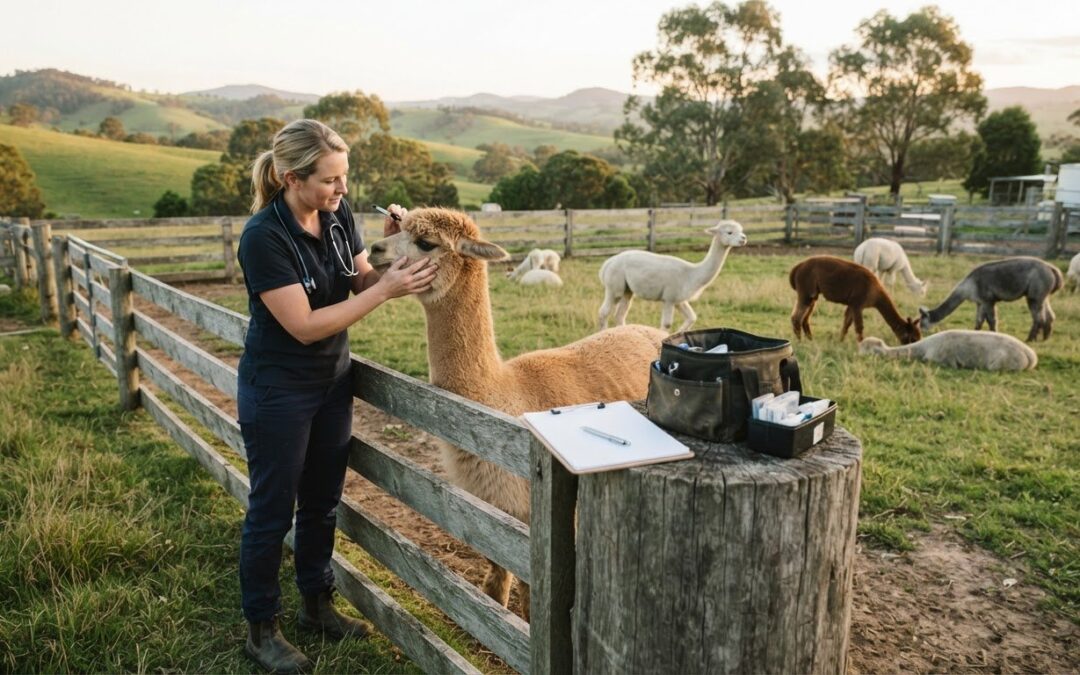
You notice one alpaca hanging back from the herd, but you’re not sure whether it needs a vet’s attention or a closer watch. Preparing for an alpaca herd health check Yarragon owners can discuss with a vet starts with recording what has changed across the group, not just focusing on one animal.
When you’re organising checks for several alpacas, it can be hard to remember dates, treatments and day-to-day observations. A clear record helps you explain what you’ve noticed and gives the veterinarian a useful starting point.
This checklist will help you organise notes for each animal, plan safe handling and prepare questions about follow-up. It also offers prompts for discussing herd-level concerns such as vaccination, parasite management, feet, teeth and nutrition. West Gippsland Vet Care provides livestock and herd health advice in the Yarragon area. Contact the clinic to ask whether it currently examines alpacas, what an appointment can cover and whether on-farm arrangements are available. The practice also serves communities including Warragul, Drouin, Bunyip, Trafalgar, Willow Grove, Hill End and Neerim South.
Key Takeaways
- An alpaca herd health check can bring individual concerns and herd-wide patterns into one practical discussion with your vet.
- Use a checklist to organise observations and questions, not to diagnose an animal or decide on treatment.
- Ask about alpaca experience, appointment scope, location and how follow-up will be communicated before booking.
- The veterinarian will choose the appropriate assessment after discussing your animals and concerns. Confirm any preparation instructions with the clinic.
- West Gippsland Vet Care offers livestock and herd health advice in the Yarragon area. Contact the practice to ask whether it currently examines alpacas and what arrangements are available.
Why arrange an alpaca herd health check near Yarragon?
An alpaca herd health check is a veterinary discussion and assessment shaped around your animals, their history and the concerns you’ve noticed. It brings individual observations together with questions about herd care, so you can work with a veterinarian to decide what needs closer assessment. If you’re looking for an alpaca herd health check Yarragon, first confirm that the practice examines alpacas and ask what its appointment can cover.
Looking at the herd as well as each animal can make the conversation more useful. One alpaca moving differently from usual raises a different question from several animals showing a similar change. A shared pattern does not identify a cause, but it can help you explain what you’ve seen and when it began. Any assessment will depend on the animals, their history, how they’re managed and the veterinarian’s clinical judgement.
Alpacas have their own behaviours and care needs. For a general introduction to the species, Alpaca characteristics offers background on behaviour and diet. Use general information as context for a conversation with your vet, not as a way to assess or diagnose an individual animal.
What can an alpaca herd health check help you discuss?
Bring forward changes you’ve noticed in behaviour, appetite, body condition or movement. Make your account specific: identify the alpaca, describe what seems different, note when you first noticed it and say whether the change has continued. If more than one animal is affected, record which ones and whether you noticed the change at a similar time.
You can also mention changes to feed, water, pasture, grouping or routine and ask whether they may be relevant. The veterinarian will decide which concerns need an examination and what assessment is appropriate. A checklist organises your observations; it is not a diagnosis or a substitute for a veterinary examination.
When should Yarragon alpaca owners contact a vet?
If an alpaca’s health or behaviour concerns you, contact a veterinarian and describe what you’ve observed. Ask how soon the animal should be assessed rather than relying on a generic online symptom list. Mention if more than one alpaca is affected or if the situation is changing. A herd health check helps organise observations and veterinary assessment, but it cannot diagnose an animal without appropriate examination.
West Gippsland Vet Care provides livestock and herd health advice in the Yarragon area. For broader information about local livestock support, see the West Gippsland livestock vet guide. Contact the clinic to ask whether it currently examines alpacas, what an appointment can cover, where it would take place and whether on-farm arrangements are available.
What to include in an alpaca herd health check checklist
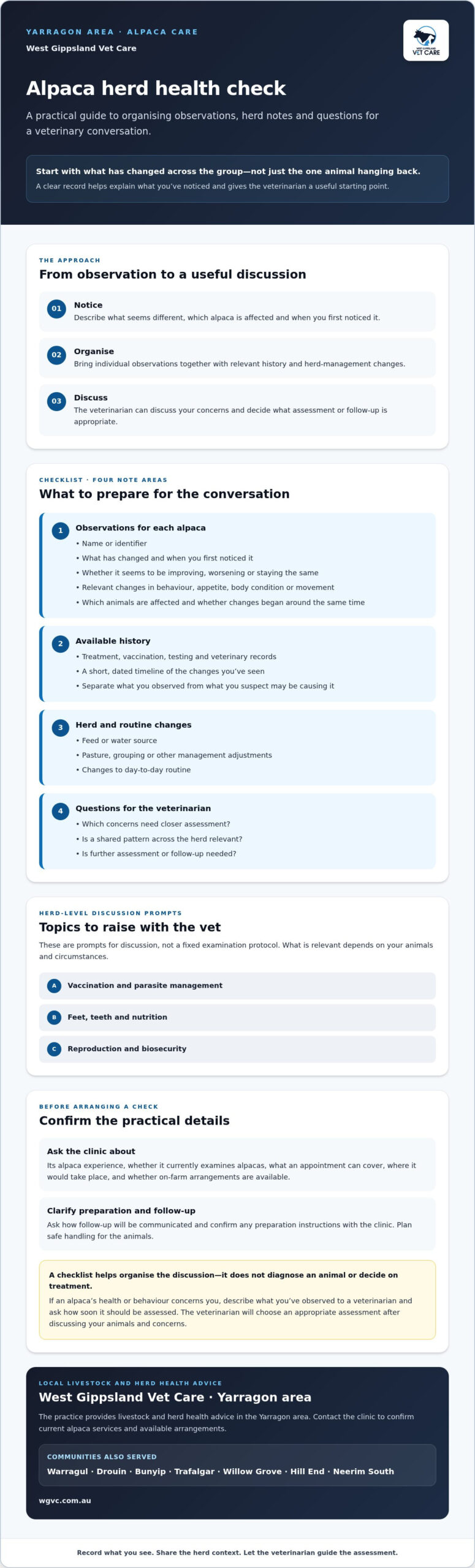
A little preparation can make a veterinary conversation more focused, especially when several animals are involved. For an alpaca herd health check Yarragon owners are arranging, group your notes into four areas: observations, available history, herd management and questions for the vet. You don’t need to work out what the signs mean. Describe what you’ve noticed and let the veterinarian discuss the concerns and decide what assessment is appropriate.
Health observations and history to share with the vet
For each alpaca you’re concerned about, note its name or identifier, what has changed and when you first noticed it. Record whether it seems to be improving, worsening or staying the same. Include relevant details about behaviour, appetite, body condition or movement, and distinguish what you saw from what you suspect might be causing it.
Gather available treatment, vaccination, testing and veterinary records. Note any recent changes that may provide context, such as a different feed or water source, pasture changes, regrouping or other management adjustments. You don’t need to delay an enquiry while looking for every record. A short, dated timeline and clear identifiers are a practical place to start.
Herd management topics to raise during the appointment
Use your notes to ask whether broader topics should be discussed for your herd. Depending on your animals and circumstances, these might include reproduction, parasite management, nutrition or biosecurity. They are prompts for discussion, not a fixed examination protocol, and not every topic will apply. Your veterinarian can help you decide what is relevant and whether further assessment or follow-up is needed.
If biosecurity is one of your questions, Agriculture Victoria provides information and templates for developing a farm biosecurity plan. Ask your vet how general planning guidance relates to your herd and management practices.
Owner observations are not veterinary findings. Your notes record what you’ve seen and when. A veterinarian assesses the animals and provides clinical findings or a diagnosis. Keep those points distinct when explaining your concerns.
Questions to take along
- Which observations need an individual assessment, and are any concerns shared across the herd?
- Which management topics are relevant to these animals?
- What follow-up should I arrange, and what changes should prompt me to contact the vet again?
The scope of a herd health check should reflect the herd’s history and current concerns. You can discuss your herd’s needs with the clinic and ask whether it currently examines alpacas, what an appointment can cover and what arrangements are available.
How to choose alpaca veterinary support in the Yarragon area
Choosing veterinary support for alpacas means checking more than whether a practice provides livestock care. Ask about experience with alpacas, what an appointment can cover and how advice or follow-up will be communicated. This helps you assess whether the service suits your animals without assuming that general livestock experience automatically means alpaca-specific experience.
Questions to ask before booking an alpaca health check
Before arranging an alpaca herd health check Yarragon owners can ask the practice:
- Does a veterinarian at the practice currently examine alpacas, and what information about the animals would be useful before booking?
- Would an appointment take place at the clinic or on-farm, and what arrangements are available for alpacas?
- How should I describe an urgent concern, and who should I contact if an animal’s condition worsens?
- How will the veterinarian explain findings and any recommended follow-up?
Clear answers help you understand the service before making plans. If you’re unsure how soon an animal needs attention, explain what you’ve observed and ask the veterinary team for guidance on urgency.
Matching the appointment to your herd’s needs
Herd size, the number of animals you’re concerned about and your handling setup can all affect appointment planning. Tell the practice how many alpacas you’d like to discuss, whether you can safely gather and handle them, and what you hope to cover. Ask whether several animals can be discussed or assessed during one visit and whether any preparation is recommended. The clinic can confirm what is practical.
West Gippsland Vet Care provides livestock and herd health advice for Yarragon and surrounding West Gippsland communities. Contact the practice to confirm whether it currently examines alpacas, what an appointment can cover and what location arrangements may be possible.
| Detail to compare | What’s confirmed | What to ask |
|---|---|---|
| Livestock support | West Gippsland Vet Care offers herd health advice. | Does the practice currently examine alpacas? |
| Appointment scope | Alpaca-specific examination details aren’t confirmed. | What can the veterinarian assess or discuss for your herd? |
| Appointment location | Alpaca appointment arrangements aren’t confirmed. | Is the appointment clinic-based or on-farm, and what options are available? |
| Follow-up | Alpaca-specific follow-up arrangements aren’t confirmed. | How will you receive advice, and who should you contact if concerns change? |
Compare practical fit rather than making assumptions. A brief conversation with the practice can clarify what to prepare and whether its current service matches your herd’s needs.
How to prepare your alpacas for a veterinary herd health check
Organisation can make an appointment easier for you, your alpacas and the veterinary team. For an alpaca herd health check Yarragon owners are arranging, confirm the details with the clinic first. Ask what information to provide, where the appointment will take place, what facilities are available and whether the practice has instructions for you. Don’t assume you need to fast, restrain, medicate or change your alpacas’ routine unless the veterinarian specifically advises it.
Records and observations to have ready
Gather what’s available rather than delaying veterinary advice while you search for every record. A short, factual timeline can help: identify the alpaca, note what you observed and when, and record whether anything has changed since. Include relevant previous veterinary records, test results and treatment information if you have them. A herd overview and individual identifiers can also help clarify which animals you’re asking about.
List your questions in order of importance so the main concern is discussed first. Keep notes dated and describe what you saw instead of trying to diagnose the cause.
Planning access and follow-up around Yarragon
Before the appointment, confirm its location and discuss how the animals can be accessed safely. Explain your handling setup and ask what facilities or assistance may be needed. If you’re concerned about an animal getting worse, contact the clinic for advice rather than waiting to finish your notes or checklist.
Use this simple preparation sequence:
- 1. Contact the clinic. Ask whether it currently examines alpacas and share a brief outline of your concerns.
- 2. Confirm the appointment plan. Check the location, available facilities, safe access arrangements and any instructions to follow.
- 3. Gather useful information. Bring herd details, individual identifiers and available records or results.
- 4. Write dated observations. Note which alpacas are affected, what you’ve noticed and when it began.
- 5. Agree on follow-up. Ask who will provide advice and how results or recommendations will be communicated.
Contact the practice to ask whether it currently examines alpacas, what an appointment can cover and whether on-farm arrangements are available. To discuss your herd’s needs, contact West Gippsland Vet Care.
Arrange an alpaca herd health check with West Gippsland Vet Care
A useful enquiry starts with a clear picture of your herd and what you’d like help with. West Gippsland Vet Care provides livestock and herd health advice and serves Yarragon and surrounding West Gippsland communities. Contact the practice to check whether it currently examines alpacas, what an appointment can cover and whether on-farm arrangements are available. Confirm these details before assuming the clinic can provide the assessment you need.
What to share when you enquire
When you contact the clinic, offer a concise overview so the team can understand your situation and advise on a suitable next step. Include:
- Your location and the number of alpacas in your herd.
- Whether one alpaca or several are affected, and what changes you’ve observed.
- When you first noticed the concern and whether it has changed.
- Your preferred appointment location, if you have one.
- Which records you have available, and whether you’d like advice about what to prepare.
Factual details are most helpful. For instance, say that an alpaca has been eating less since a particular day rather than trying to identify the cause. If you’re concerned the animal’s condition is worsening, explain that when you call and ask how urgently it needs attention.
Agree on the next step with your local vet
Before booking, ask whether the practice currently examines alpacas and whether it can assist with the concern you’ve described. Confirm what the appointment may cover, whether it would be clinic-based or on-farm, and what arrangements are possible for your herd. You can also ask which records or practical details the team would like you to prepare.
Finish the conversation by agreeing on how to proceed. Check who to contact if the situation changes before an appointment and how any findings or recommendations will be shared. This leaves you with a clear plan, even if the clinic needs to clarify the most suitable pathway for your alpacas.
If you’re in Yarragon and would like to discuss livestock support, contact West Gippsland Vet Care. Sharing your herd’s needs gives the team a helpful starting point for confirming what support may be appropriate.
Take the next step for your alpaca herd
A well-prepared alpaca herd health check Yarragon discussion starts with clear observations and useful records. The veterinarian can then shape the assessment around your animals and concerns. Before making plans, confirm the practice’s alpaca experience, what an appointment can cover, where it can take place and what follow-up may involve.
West Gippsland Vet Care provides livestock services, including herd health advice, to Yarragon and surrounding West Gippsland communities. Whether you’re in Yarragon, Warragul, Drouin, Bunyip, Trafalgar, Willow Grove, Hill End or Neerim South, contact the clinic to explain your herd’s needs and ask whether it can assist with your alpaca-specific concern. You can also ask what details or records to have ready.
Contact West Gippsland Vet Care to discuss your alpaca herd’s needs.
Frequently Asked Questions
What happens during an alpaca herd health check?
An alpaca herd health check is a veterinary discussion and assessment tailored to your animals and concerns. The vet may ask about changes you’ve observed, relevant history and herd management, then decide what examination or further assessment is appropriate. The scope can vary between herds, so it isn’t a fixed checklist or a diagnosis based on owner observations alone. Ask the practice what its appointment includes before booking.
Can a vet near Yarragon check alpacas on the farm?
Ask the practice directly whether a vet examines alpacas and whether on-farm appointments are available. West Gippsland Vet Care serves communities including Warragul, Drouin, Bunyip, Yarragon, Trafalgar, Willow Grove, Hill End and Neerim South, but alpaca-specific service and visit arrangements need to be confirmed. Ask about appointment location, safe access and handling requirements before making plans for your herd.
How do I prepare alpacas for a herd health check?
Contact the clinic first, describe your concerns and ask for any appointment instructions. Note which alpacas are affected, what you’ve observed and when it began. Discuss safe access and handling with the practice, and ask what facilities may be needed. Don’t fast, restrain, medicate or change your alpacas’ routine unless the veterinarian advises you to. If an animal worsens, seek veterinary advice rather than delaying to finish your preparations.
What records should I bring to an alpaca vet appointment?
Bring available veterinary records, test results and treatment information relevant to the animals or concerns you’re discussing. A herd list with each alpaca’s identifier can help clarify which animals are affected. Add a dated timeline of changes and note relevant management updates, such as a change in feed or grouping. You don’t need to interpret the information; clear, factual notes help the veterinarian ask useful questions.
How often should alpacas have a herd health check?
There isn’t a single interval that suits every alpaca herd. Ask a veterinarian to recommend an appropriate plan based on your animals, their history, management and any current concerns. Contact the vet sooner if an animal’s health or behaviour changes or worries you. If you’re unsure how urgent the concern is, describe what you’ve noticed and ask the veterinary team for guidance instead of relying on a general online schedule.
Does West Gippsland Vet Care provide alpaca health checks?
West Gippsland Vet Care provides livestock services, including herd health advice, and Yarragon is within its local service area. Contact the practice to check whether it currently examines alpacas, what an appointment can cover, where it would take place and whether on-farm arrangements are available. You can also ask what records or preparation the team recommends.