What if the extra care you provide at the calf cradle wasn’t just an animal welfare obligation, but a direct investment in your herd’s lifetime growth? Sourcing and applying practical pain relief for calf castration and disbudding can sometimes feel daunting when you are already juggling tight yard schedules, added labour, and complex veterinary prescription rules.
Every dedicated cattle producer wants their young stock back on their feet and thriving, rather than watching them sulk in the paddock with dropped heads and paused milk intake. Managing this discomfort makes good business sense, as calves supported with multimodal pain relief reliably bounce back faster and maintain daily gains compared to untreated calves. By pairing targeted local numbing with long-acting anti-inflammatories, you can protect both animal welfare and farm productivity. In this practical guide, we walk through current Australian Animal Welfare Standards, clarify your medication options, and share workable on-farm strategies to keep your calves suckling vigorously and thriving without missing a beat.
Key Takeaways
- Explore how combining local numbing agents with systemic anti-inflammatories delivers effective, multimodal pain relief for calf castration and disbudding.
- Clarify Australian Animal Welfare Standards alongside Victorian state rules to ensure your livestock operations remain compliant and well prepared.
- Master on-farm timing and gentle handling workflows that let pain relief take full effect before procedure work begins.
- Discover how actively reducing inflammatory pain protects daily weight gains, preserves strong suckling behaviour, and supports immune resilience.
- Learn how professional vet-led disbudding and tailored herd health advice can take the physical stress out of calf marking for both stock and handlers.
Understanding Pain Responses in Calf Castration and Disbudding
Caring for livestock means understanding how calves process surgical and thermal interventions. While generations of graziers worked under the assumption that young animals bounce back immediately, modern veterinary science reveals a clear reality: calves feel pain just as acutely as older stock. Providing effective pain relief for calf castration and disbudding isn’t simply an ethical choice; it forms the foundation of sound herd health and steady weight gains.
The Two Phases of Procedural Pain: Acute and Inflammatory
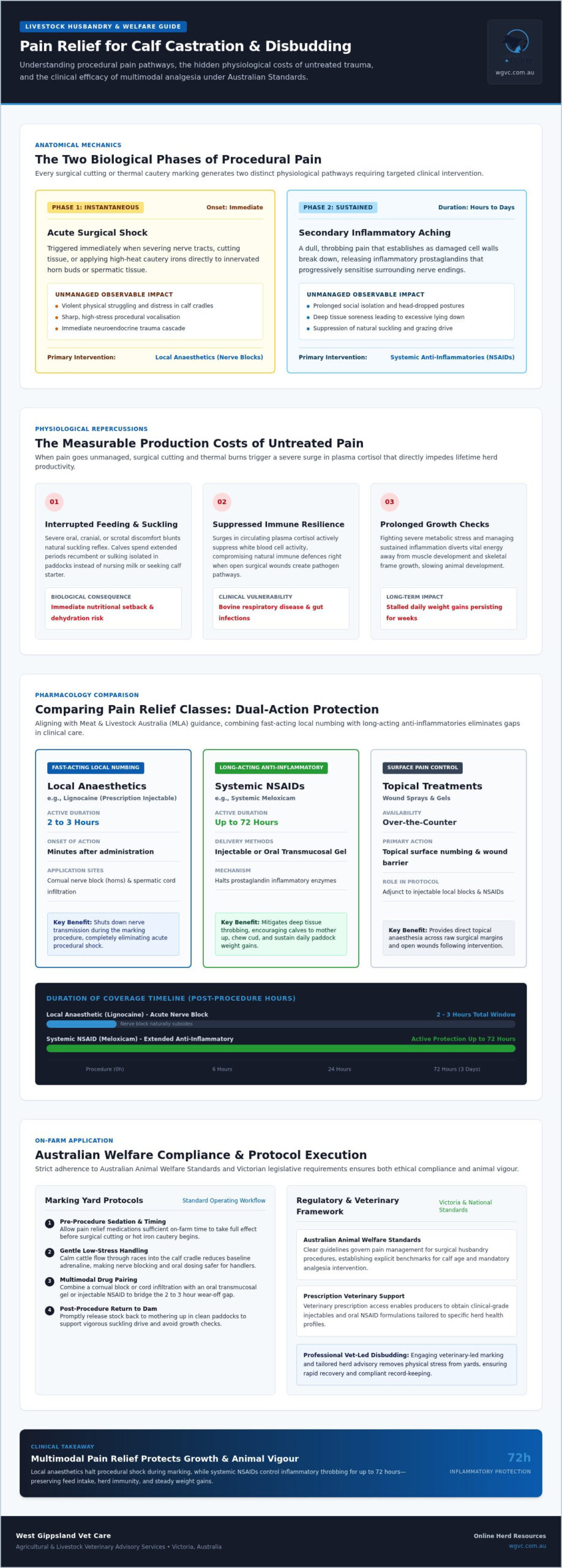
Every marking procedure generates two distinct pain pathways that require deliberate intervention:
- Acute surgical shock: The instant pain response triggered when severing nerve tracts, cutting tissue, or applying thermal cautery irons. Without local numbing, this produces immediate struggling, sharp vocalisation, and sudden distress.
- Secondary inflammatory aching: The dull, throbbing pain that sets in as tissue breaks down over the following hours and days. Damaged cell walls release prostaglandins, sensitising local nerves and causing prolonged discomfort.
Because these phases operate through different biological mechanisms, relying on a single medication rarely solves the problem. A comprehensive approach addresses both the immediate cut and the lingering ache.
The Measurable Production Costs of Untreated Pain
When pain goes unmanaged, calves pay a steep physiological price. Surgical cutting or thermal cautery triggers a sharp surge in plasma cortisol. This neuroendocrine cascade triggers concrete production setbacks:
- Interrupted feeding and suckling: Discomfort suppresses natural suckling drive. Instead of nursing or seeking calf starter, affected calves often stand isolated, head dropped, or spend excessive time lying down.
- Depressed immune response: High circulating cortisol levels blunt white blood cell activity, leaving calves open to bovine respiratory disease and gut infections right when their natural defences need to be strongest.
- Prolonged growth checks: The metabolic cost of fighting pain diverts vital energy away from muscle development, leading to stalled daily weight gains that can persist for weeks.
Understanding the anatomical differences in livestock disbudding and dehorning methods makes it obvious why dual-action protection matters. Young horn buds are heavily innervated by the cornual nerve, and heat cautery creates deep thermal tissue burns that take days to heal. By implementing targeted pain relief for calf castration and disbudding, you protect vital calf vigour, help maintain uninterrupted milk intake, and give your calves the best start in the paddock.
Comparing Pain Relief Options: Local Anaesthetics vs NSAIDs
Choosing the right pain relief for calf castration and disbudding comes down to matching the medication to the specific type of trauma. No single product handles both the initial cut and the days of tissue healing that follow. Achieving true comfort requires a multi-modal approach, combining fast-acting local numbing with long-lasting systemic anti-inflammatories. Aligning with current Meat & Livestock Australia pain relief guidance, pairing these drug classes delivers the best welfare outcomes and keeps calves gaining weight steadily.
Local Nerve Blocks: Halting Immediate Procedural Pain
Local anaesthetics, such as lignocaine, temporarily shut down pain signal transmission along specific nerve pathways. Administering a cornual nerve block desensitises the entire horn bud within minutes, while local infiltration into the spermatic cords prevents procedural shock during castration. These prescription injectables deliver complete numbness during the procedure itself, though their protective effects naturally subside after two to three hours.
Systemic NSAIDs: Managing Sustained Inflammatory Soreness
Non-steroidal anti-inflammatory drugs (NSAIDs) target the lingering ache that develops once local anaesthetics wear off. Systemic meloxicam, available in injectable formulations or convenient oral transmucosal gels given inside the cheek, halts inflammatory enzymes for up to 72 hours. By dampening deep tissue throbbing, systemic NSAIDs encourage calves to mother up, chew their cud, and resume normal grazing without nursing an aching head or groin.
Topical Anaesthetic Sprays and Gels
Over-the-counter wound gels and sprays provide valuable surface numbing, antiseptic protection, and blood clotting for open surgical wounds. Applied directly to raw tissue, they soothe superficial nerve endings almost immediately. While helpful on castration incisions or cautery margins, topical options cannot reach deep underlying nerves or replace systemic anti-inflammatories. They work best as an extra layer of comfort rather than a standalone fix.
Selecting the safest, most practical combination of prescription pain relief for calf castration and disbudding depends on your herd size, handling facilities, and labour setup. If you want help designing an efficient marking protocol that fits your yard flow, the team at West Gippsland Vet Care can tailor practical herd health advice to your operation.
Australian Welfare Standards and Legislative Requirements in Victoria
Staying on top of livestock regulations protects your business while ensuring animals receive thoughtful, humane care. Navigating pain relief for calf castration and disbudding means understanding both national baseline guidelines and specific Victorian legislation. In Victoria, managing invasive procedures responsibly is not just an ethical duty; it is an active legal and commercial expectation across beef and dairy sectors.
Mandatory Age Limits and Legal Obligations in Victoria
Under the Australian Animal Welfare Standards and Guidelines for Cattle, appropriate pain relief is mandatory when castrating or dehorning stock over six months old, or over 12 months at first yarding. Victoria operates under the Prevention of Cruelty to Animals Act 1986 and the Code of Accepted Farming Practice for the Welfare of Cattle. Under Victorian law:
- Castration using surgical cutting or rubber rings without anaesthesia is restricted to calves under six months of age; bulls older than six to eight months require anaesthesia.
- Dehorning cattle older than 12 months must be carried out by a registered veterinarian with pain management.
- Performing these tasks at the earliest practical age reduces wound surface area, shortens healing times, and minimises calf distress.
Quality Assurance Schemes and Market Access Expectations
Commercial market frameworks increasingly set higher welfare thresholds than minimum state laws. For instance, the Australian Dairy Industry Council and Dairy Australia mandate that all dairy calves be disbudded before eight weeks of age, with pain management supplied every time. Similarly, red meat integrity systems, processor audits, and consumer-facing sustainability frameworks reward producers who demonstrate proactive pain mitigation. Meeting these expectations safeguards market access and maintains public trust in Australian agriculture.
Partnering with Your Livestock Vet for Scheduled Medications
Accessing reliable systemic pain relief for calf castration and disbudding requires an established Veterinarian-Client-Patient Relationship (VCPR). While certain topical wound formulations can be purchased over the counter, effective local anaesthetics and systemic meloxicam are scheduled veterinary medicines. These products require formal dispensing from a licensed professional who knows your farm.
You can work closely with our livestock vet west gippsland team to establish customised herd protocols, train station hands in safe injection techniques, and maintain compliant on-farm drug storage logs. Having dedicated protocols in place ensures your team handles calf marking safely, legally, and calmly every season.
Step-by-Step Practical Protocols for Calf Marking and Disbudding
Fitting pain management into an already busy marking day requires sensible yard organisation rather than extra hands. When you sequence treatments correctly, calves move through the race smoothly without stressful delays. Integrating pain relief for calf castration and disbudding into your standard routine protects animal comfort while keeping your workflow steady and safe.
Pre-Procedure Preparation and Correct Timing of Analgesia
Timing determines success. If you apply a hot iron or scalpel immediately after giving medication, the calf feels the full brunt of the procedure before the drugs kick in. A dependable timeline looks like this:
- 15 to 30 minutes prior: Administer systemic meloxicam via oral gel or subcutaneous injection while calves stand in the lead-up race, letting the anti-inflammatory circulate early.
- 5 to 10 minutes prior: Deliver your local anaesthetic block to the horn buds or spermatic cords.
- At the cradle: Confirm tissue desensitisation, clean your instruments with fresh disinfectant, and proceed calmly.
Administering the Cornual Nerve Block for Disbudding
Placing a cornual nerve block is straightforward once you know the anatomical landmarks. Run your thumb along the temporal ridge halfway between the outside corner of the calf’s eye and the horn bud base. Insert an 18 to 20 gauge needle parallel to the skull under the ridge, draw back to confirm you haven’t entered a blood vessel, and deposit 4 to 5 mL of lignocaine. Within several minutes, an upper eyelid droop confirms the area is completely numb.
Post-Procedure Monitoring and Paddock Recovery
Once marking wraps up, quietly draft mothers and calves together in a sheltered, clean holding yard. Watch closely to ensure calves latch on and nurse quickly without excessive tail swishing or prolonged recumbency. Avoid turning animals out into muddy sacrifice paddocks where open surgical wounds can collect dirt and bacteria. Checking them again at 12 and 24 hours lets you catch any rare signs of bleeding or infection early.
Getting your yard layout and injection timing dialled in makes a world of difference to stock behaviour. To review your herd strategy or secure prescription products ahead of marking, book a livestock consultation with West Gippsland Vet Care today.
Professional Veterinary Disbudding and Husbandry Support
Paddock days during peak calving season are notoriously stretched. Managing muster logistics, monitoring springers, and shifting allocations takes every spare hour. While administering your own pain relief for calf castration and disbudding is entirely achievable, many producers find that bringing in an experienced veterinary team transforms marking from a physically exhausting chore into a swift, orderly morning.
The Benefits of Vet-Administered Sedation and Disbudding
Vet-led disbudding relies on veterinary-only sedation paired seamlessly with local nerve blocks and long-acting anti-inflammatories. Rather than wrestling agitated animals into a mechanical head bail or calf cradle, stock rest peacefully in a clean, straw-bedded pen. This delivers major practical benefits:
- Zero handling trauma: Sedation eliminates violent thrashing, protecting young spines and joints from injury while keeping farm workers safe from unexpected kicks.
- Efficient multi-tasking: While calves sleep comfortably, our team can remove extra teats, ear-tag, apply ear notches, and deliver primary clostridial vaccinations without procedural panic.
- Surgical precision: An immobilised calf allows the operator to seat the cautery iron with exact precision, minimising heat transfer to the skull and promoting rapid wound healing.
Calves gently wake up alert and hungry, completely bypassing the acute fear and distress often linked with traditional yard processing.
Customised Herd Health Protocols for West Gippsland Farms
Every dairy platform and beef enterprise runs on distinct seasonal rhythms, stocking densities, and handling setups. Working alongside a local veterinary team gives you access to flexible husbandry support tailored directly to your property. We regularly visit commercial herds across Warragul, Drouin, Bunyip, and neighbouring districts to streamline calf rearing and safeguard animal welfare.
Whether you need our team to handle batch disbudding or require hands-on training to refine your own farm team’s injection technique, having sound herd health advice ensures your stock get the best possible start. Contact West Gippsland Vet Care to coordinate on-farm calf disbudding or discuss a pain management protocol that fits your seasonal schedule.
Building a Healthier, More Resilient Herd
Adopting proactive pain relief for calf castration and disbudding is one of the most rewarding investments you can make for your livestock. Combining fast-acting local numbing with long-lasting anti-inflammatories doesn’t just satisfy Victorian welfare standards; it preserves suckling drive, guards against disease checks, and keeps your young stock gaining weight steadily from day one.
Whether you want to refine your on-farm handling workflow or prefer our experienced livestock veterinary team to take care of batch disbudding under peaceful sedation, you don’t have to tackle marking season alone. We work alongside commercial dairy and beef producers across West Gippsland to design safe, stress-free protocols tailored to each property’s layout. Ready to make this season easier on both your team and your animals? Take a moment to discuss calf pain relief options with our local veterinary team and give your calves every opportunity to thrive.
Frequently Asked Questions
Why is pain relief necessary for calf disbudding and castration?
Pain relief is vital because unmanaged surgical trauma causes severe physiological stress, acute distress, and measurable growth checks. Providing effective pain relief for calf castration and disbudding stops cortisol surges from depressing immune defences. This proactive approach ensures calves maintain their natural appetite, continue suckling strongly, and avoid setbacks that can linger for weeks across your herd.
What is the difference between local anaesthetic and NSAID pain relief for calves?
Local anaesthetics block immediate nerve signals during cutting or burning, providing complete numbness for two to three hours. Non-steroidal anti-inflammatory drugs (NSAIDs) work differently by controlling inflammatory prostaglandins over the subsequent 24 to 72 hours. While local injections eliminate acute procedural shock, systemic NSAIDs manage post-operative swelling and ongoing soreness once the local block wears off.
How far in advance should pain relief be given before disbudding calves?
Systemic anti-inflammatories like meloxicam should be administered 15 to 30 minutes before handling so the medication circulates before tissue trauma occurs. Local anaesthetic nerve blocks require 5 to 10 minutes to numb the horn bud fully. Verifying complete numbness before applying hot cautery irons prevents procedural panic and unnecessary struggling in the race.
Is pain relief legally mandatory for calf castration and disbudding in Victoria?
Under Victorian welfare legislation, pain relief is legally mandatory when castrating bulls over six months of age or dehorning cattle over 12 months. In the commercial dairy sector, Australian Dairy Farmers policy requires pain relief for disbudding on all dairy calves before eight weeks. Administering multimodal pain relief for calf castration and disbudding also satisfies stringent red meat quality assurance programs.
Can cattle producers administer prescription pain relief themselves?
Yes, producers can administer prescription analgesics once a registered veterinarian establishes an active Veterinarian-Client-Patient Relationship on farm. Producers across Warragul, Drouin, and Bunyip regularly partner with our veterinary team to receive training in injection methods, obtain prescription stock, and safely integrate approved medications into their standard calf cradle routines.
What are the observable signs of pain in young calves after marking?
Calves in pain typically isolate themselves from the mob, stand with hunched backs, and display lowered ears and dull eyes. You might also notice frequent tail swishing, teeth grinding, kicking at the belly, or a refusal to nurse. Calves treated with appropriate analgesia return quickly to the mob and resume normal social play, rumination, and nursing behaviour.
How does veterinary sedation improve calf welfare during disbudding?
Veterinary sedation eliminates physical restraint stress by allowing calves to rest calmly in a clean pen throughout the entire process. While sedated, animals receive precise nerve blocks, cauterisation, vaccinations, and extra teat removal without distress or spinal strain. Calves wake quietly without procedural fear, saving significant labour for farm operators across the West Gippsland district.