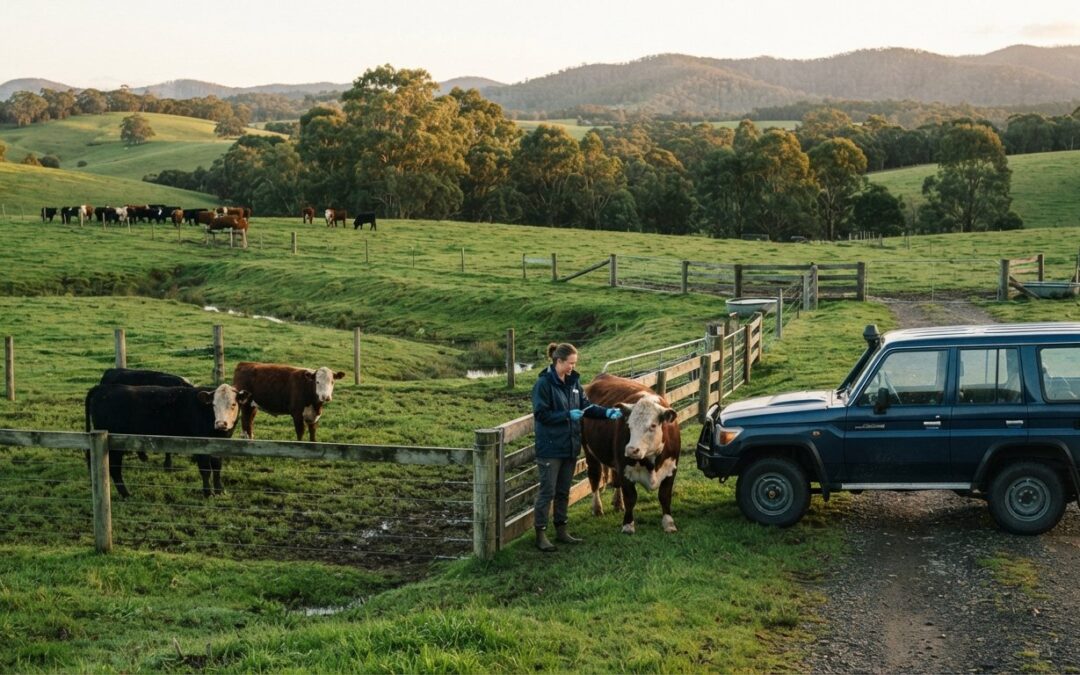
Imagine the excitement of bringing home a new line of heifers from the Warragul sales, only to find your established mob struggling with a mystery illness just weeks later. It’s a heartbreak no Gippsland farmer wants to face, especially when “silent killers” like Pestivirus or Johne’s Disease can hitch a ride on even the healthiest-looking animal. Establishing a clear quarantine protocol for new cattle is the only way to ensure your newest additions don’t bring unwanted surprises into your home paddocks.
We know that your cattle are more than just an investment; they’re your livelihood and a source of pride. While isolation is essential, we also understand the practical reality of managing stock in often muddy Gippsland conditions. This guide will show you how to implement a robust biosecurity shield that keeps your existing herd safe while giving you total peace of mind. We’ll cover the essential testing and drenching schedules, the importance of secure fencing, and the simple, repeatable steps you can take to make sure every new arrival is healthy and productive before they ever join the main group.
Key Takeaways
- Discover why a 28-day isolation period is the most effective way to identify “Trojan Horse” pathogens before they reach your main mob.
- Learn how to select the right isolation paddock to prevent fence-line contact and manage West Gippsland’s unique drainage challenges.
- Master a professional quarantine protocol for new cattle by screening for high-risk diseases like BVDV (Pestivirus) and Johne’s Disease.
- Implement a strategic “clean-out” treatment plan, including 7-in-1 vaccinations and drenching to protect your land from resistant parasites.
- Understand the safest way to merge your new stock by using sentinel animals to ensure a healthy transition into your established herd.
The “Trojan Horse” Risk: Why Quarantine is Non-Negotiable in West Gippsland
Bringing new stock onto your property is always a moment of pride and potential. Whether you’ve picked up a few heifers at the local yards or invested in a new bull to level up your genetics, those fresh arrivals represent the future of your farm. However, even the most robust-looking animal can act as a “Trojan Horse,” carrying silent pathogens that threaten your entire livelihood. In our lush West Gippsland region, where high-density grazing is the norm, diseases can sweep through a mob with devastating speed. This is why a strict quarantine protocol for new cattle isn’t just a recommendation; it’s a vital shield for the animals you already know and love.
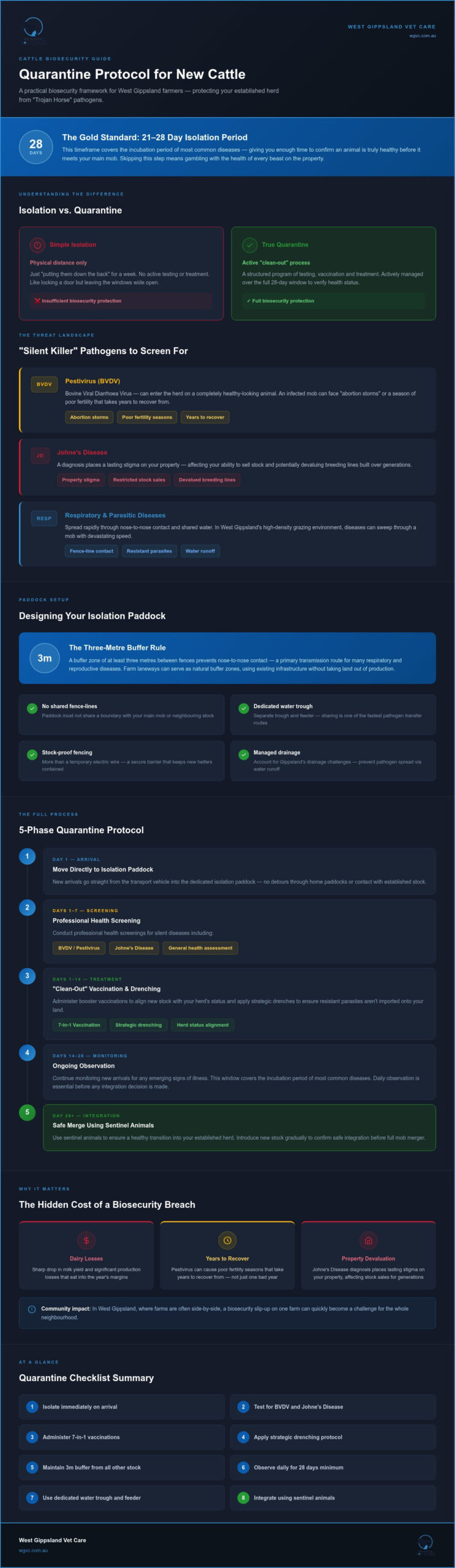
A proper quarantine period lasts between 21 and 28 days. This timeframe isn’t arbitrary. It’s designed to cover the incubation period of most common diseases, giving you enough time to see if an animal is truly healthy before they meet your main group. When we skip this step, we’re essentially gambling with the health of every beast on the property. In a community like ours, where farms are often side-by-side, a biosecurity slip-up on one farm can quickly become a challenge for the whole neighbourhood.
The Hidden Costs of Biosecurity Breaches
An outbreak doesn’t just mean a few sick cows; it carries a heavy emotional and financial toll. For our local dairy farmers, a breach often leads to a sharp drop in milk yield and significant production losses that eat into the year’s margins. If Pestivirus (BVDV) enters the mix, you might face “abortion storms” or a season of poor fertility that takes years to recover from. Then there’s the long-term shadow of Johne’s Disease. A diagnosis can place a lasting stigma on your property, affecting your ability to sell stock and potentially devaluing the hard work you’ve put into your breeding lines for generations.
Quarantine vs. Isolation: Understanding the Difference
It’s easy to think that putting new arrivals “down the back” for a week is enough, but there’s a big difference between simple isolation and a true quarantine protocol for new cattle. Isolation is just physical distance, while quarantine is an active process of testing and treatment. We look at this window as a “clean-out” phase. It’s the time to:
- Conduct professional health screenings for silent diseases.
- Administer booster vaccinations to align new stock with your herd’s status.
- Apply strategic drenches to ensure you aren’t importing resistant parasites.
Simply putting them in a separate paddock without active management is like locking a door but leaving the windows wide open. By committing to the full four-week process, you’re giving yourself the peace of mind that your home mob remains protected while your new additions settle into their new life in Gippsland.
Designing Your Isolation Paddock: Logistics for Local Farms
Setting up a dedicated space for new arrivals is about more than just finding an empty corner of the farm. In West Gippsland, our environment presents unique challenges that require a thoughtful approach. A successful quarantine protocol for new cattle relies on physical separation that actually works. This means choosing a paddock that doesn’t share a fence-line with your main mob or even your neighbour’s stock. We want to create a safe “biosecurity bubble” where new animals can settle in without any risk of cross-contamination.
Pathogens can be surprisingly mobile. Some travel through the air, while others hitch a ride on shared equipment or in water runoff. When you’re designing this space, think about the “three-metre rule.” A buffer zone of at least three metres between fences prevents nose-to-nose contact. This is a primary transmission route for many respiratory and reproductive diseases. It’s also vital to ensure your isolation mob has its own dedicated water trough and feeder. Sharing these resources is one of the fastest ways for a “silent killer” to move from a new arrival to your established herd.
Fence-line Integrity and Buffer Zones
We’ve all seen how a single electric wire can fail when a new heifer decides she wants to meet the neighbours. For a secure biosecurity barrier, you need more than just a temporary setup. Using existing farm laneways as natural buffer zones is a clever way to use your current infrastructure. It provides that essential distance without taking too much land out of production. Remember, your quarantine paddock needs to protect your cattle from what’s outside just as much as it protects your farm from what’s inside. Ensuring the fences are stock-proof and the buffer is wide enough gives everyone room to breathe safely.
Managing Effluent and Runoff
Gippsland is known for its high rainfall, and while that’s great for pasture, it’s a risk factor for disease spread. Pathogens like Johne’s Disease can survive in moist soil and move with water across slopes. Ideally, your isolation area should be at the “bottom” of the farm slope. This ensures that any runoff from the quarantine paddock doesn’t wash down into the paddocks where your healthy breeders graze. Drainage is also vital for hoof health; standing in deep mud for three weeks can lead to foot rot or other infections that complicate your health screening. If you’re feeling overwhelmed by the logistics, our team can help you map out the best spots on your property with our professional herd health advice. Simple habits, like cleaning your boots and equipment after visiting the isolation mob, add that final layer of safety that keeps your home herd thriving.
Essential Health Screening: Testing for Silent Pathogens
While a secure paddock provides the physical barrier your farm needs, the real work of a quarantine protocol for new cattle happens through diagnostic testing. You can’t see a virus or a bacterial load just by looking at a beast’s coat or checking their weight. Many of the most damaging conditions are “silent,” meaning animals can appear perfectly healthy while shedding pathogens that could devastate your home mob. In West Gippsland, we focus on the “Big Four”: Bovine Viral Diarrhoea Virus (BVDV), Johne’s Disease, Vibriosis, and Leptospirosis. These are the primary threats that can quietly erode your farm’s productivity if left unchecked.
Relying on a visual check is a risk that few local producers can afford. Testing gives you a definitive answer. It transforms a “hopeful” purchase into a “guaranteed” healthy addition. Working with a vet to collect samples during the first week of isolation ensures that you aren’t just waiting for symptoms to appear; you’re actively searching for any hidden issues before they have a chance to spread.
Pestivirus: The Invisible Profit Killer
Pestivirus, or BVDV, is a particularly tricky foe. The biggest risk comes from “Persistently Infected” (PI) animals. These cattle were infected in the womb and will shed the virus every single day of their lives. Just one PI animal in your yards can ruin conception rates and cause a wave of weak or deformed calves. We often recommend an ear notch test or a blood sample to identify these individuals. Ideally, this testing should happen before the animals even leave the truck or within the first 48 hours of arrival. Identifying a PI animal early means you can manage the risk before it ever touches your soil.
Johne’s Disease and Long-term Farm Safety
Johne’s Disease (JD) is a marathon, not a sprint. It’s a chronic wasting disease that is notoriously difficult to manage because the bacteria can survive in Gippsland’s moist soil for a long time. When buying in stock, understanding the Beef Assurance Score (J-BAS) or checking vendor declarations is your first line of defence. However, these scores are only part of the story. A proactive screening plan, developed with your Livestock Vet West Gippsland, allows you to assess the specific risk level of your new arrivals.
Our team uses our in-house laboratory to get you results quickly. We don’t just hand over a lab report; we sit down with you to interpret what those numbers mean for your specific herd strategy. Whether it’s a simple blood test or a more complex screening, having a professional eye on your results ensures that your biosecurity shield remains strong. By the time that 28-day window closes, you’ll have the confidence that your new stock is as clean and healthy as the rest of your hard-earned mob.
The “Clean-Out” Treatment: Drenching and Vaccination Protocols
Once you’ve settled your new stock into their isolation paddock, the next phase of your quarantine protocol for new cattle is the active “clean-out.” This isn’t just about giving them a quick once-over; it’s a strategic effort to ensure no hitchhikers make it onto your pastures. We often suggest starting with an “empty out” period on a sacrifice pad. This gives the animals time to drop any weed seeds or parasite eggs before they ever touch your productive soil. It’s a simple step that saves a lot of heartache later on, especially when dealing with invasive weeds that aren’t native to our Gippsland hills.
While the cattle are on the pad, it’s the perfect time to check for external parasites like lice or ticks. If you’ve bought stock from out of the area, they might be carrying pests that your local mob hasn’t built resistance to. A thorough physical check and a targeted treatment can prevent a farm-wide infestation that would otherwise require multiple rounds of expensive chemicals. We see this as a vital part of the nurturing process, ensuring your new arrivals are comfortable and healthy as they adjust to their new environment.
Managing Drench Resistance in Gippsland
Drench resistance is the ability of parasites to survive standard treatments. In our region, where the climate is often perfect for worm larvae, this is a growing concern for every producer. We recommend a combination drench for all new arrivals to ensure we’re hitting any resistant strains hard from day one. It’s also wise to conduct a Faecal Egg Count (FEC) about 10 to 14 days after treatment. This check confirms the drench actually worked, giving you the green light to proceed with the rest of your integration plan with total confidence.
The Vaccination Schedule for New Arrivals
Vaccination is your herd’s long-term insurance policy. Most local producers rely on a 7-in-1 vaccine to protect against Leptospirosis and five major Clostridial diseases. Even if the vendor says the stock is up to date, giving a booster during quarantine ensures their immunity is at its peak when they finally meet your mob. For those of you bringing in new bulls, a Vibriosis vaccination is a critical step before joining to protect your herd’s reproductive health and future calving rates.
Don’t forget to record every treatment in your farm management log. Keeping these records accurate is vital for NLIS compliance and helps you track the health history of every animal on your property. If you’re unsure which products are best for your specific situation, we can help you design a custom herd health advice plan that covers all your testing and drenching needs. Taking these proactive steps today ensures that your farm remains a safe, productive haven for all your animals.
Monitoring and Integration: Safely Merging Your Mob
Reaching the end of the 28-day isolation period is a significant milestone for any producer. Your new stock has been tested, drenched, and vaccinated, but the final step of your quarantine protocol for new cattle requires just as much care as the first day. Before you open the gate to the main paddock, it’s vital to perform one last thorough health check. We look for those subtle signs that might have been missed: a slight nasal discharge, a hint of lameness, or any scouring. This final inspection is your last chance to ensure that you aren’t introducing a lingering issue into your hard-earned herd.
Even when everything looks perfect, we often suggest a period of long-term monitoring. Some conditions, particularly those affecting reproductive health or chronic wasting, can take months to manifest clearly. Keeping a close eye on the new mob for at least six months after integration allows you to catch any delayed symptoms. It’s about being a proactive guardian for your animals, ensuring that the transition into their new home is as smooth and stress-free as possible.
The Sentinel Animal Strategy
One of the smartest moves you can make before a full merger is using “sentinel” animals. This involves taking a few of your own lower-value stock, such as cull cows, and putting them into the quarantine paddock with the new arrivals for the final week. It’s a practical way to see if any cross-transmission occurs in a controlled setting. If your sentinels remain bright and healthy after seven days of close contact, you can feel much more confident about the broader integration. If any animal shows symptoms during this phase, it’s a clear signal to keep the gate shut and call for a professional review before the rest of your mob is at risk.
Partnering with West Gippsland Vet Care
At West Gippsland Vet Care, we view our relationship with local farmers as a true partnership. We’re here to be your local guides, helping you navigate the complexities of biosecurity with a steady hand and a friendly chat. Our professional herd health advice is designed to save you money in the long run by preventing the “silent killers” from taking hold on your property. Whether you need a final sign-off for high-value breeders or rapid results from our in-house lab in Warragul, we’re just a phone call away.
As you look ahead to your 2026 joining plan, we invite you to have a yarn with our livestock team. We can help you refine your testing schedules and ensure your biosecurity shield is as strong as it can be. Together, we can make sure your farm remains a healthy, productive environment for every animal in your care, giving you the peace of mind you deserve.
Building a Healthier Future for Your West Gippsland Herd
Protecting your mob is about more than just a sturdy fence; it’s about the peace of mind that comes from a proactive quarantine protocol for new cattle. By committing to a four-week isolation period, you’re not just preventing disease; you’re honouring the years of hard work you’ve put into your breeding lines and your land. We’ve explored how strategic testing for silent killers like Pestivirus and implementing a robust drenching schedule can save your farm from the heartache and cost of an unplanned outbreak.
Our team of expert livestock vets live and work in the same Gippsland conditions you do every day. We provide dedicated on-farm service across Warragul, Drouin, and Neerim South, and we’re proud to offer 24-hour emergency care to our existing clients. If you’re ready to strengthen your biosecurity shield for the 2026 season, book a herd health consultation with our livestock team today. Let’s work together to keep your animals thriving and your farm’s future secure. We’re always here for a yarn and ready to help you protect what matters most.
Frequently Asked Questions
How long should I keep new cattle in quarantine?
You should keep new cattle in isolation for a minimum of 21 to 28 days. This period is essential because it covers the incubation window for most common diseases found in West Gippsland. It gives you enough time to observe the animals for symptoms and receive results from diagnostic testing. A shorter window might miss silent infections that haven’t yet caused visible illness, putting your home herd at unnecessary risk.
What is a quarantine drench and why is it different from a normal drench?
A quarantine drench is a high-potency combination of different active ingredients designed to kill any resistant parasites the new stock might be carrying. Unlike a routine maintenance drench, which might only use one or two actives, a quarantine drench aims for a complete clean-out. This prevents you from accidentally introducing drench-resistant worm strains onto your pastures, which can be a major challenge for farms around Drouin and Warragul.
Can I quarantine new cattle in a paddock with a shared fence?
No, you should avoid using a paddock with a shared fence-line for your isolation area. Many pathogens can spread through nose-to-nose contact or even through the air over short distances. We recommend a buffer zone of at least three metres between fences to prevent this interaction. Using a farm laneway as a natural gap is an effective way to maintain a secure biosecurity shield without losing too much grazing space.
What are the most important diseases to test for in West Gippsland?
In our local region, we focus on the “Big Four”: Pestivirus (BVDV), Johne’s Disease, Vibriosis, and Leptospirosis. These are particularly prevalent in high-density grazing areas like Neerim South. Identifying Persistently Infected Pestivirus carriers is a top priority to protect your herd’s future calving rates. Our in-house laboratory can provide rapid diagnostics for these conditions, ensuring your quarantine protocol for new cattle is backed by accurate data rather than guesswork.
What should I do if an animal gets sick while in quarantine?
If an animal shows signs of illness, you must immediately stop any plans for integration and keep the mob isolated. Contact our livestock team for a professional assessment to determine if the illness is a biosecurity threat or a simple stress-related issue. We offer 24-hour emergency care for our existing clients, so we can help you manage the situation quickly to prevent any potential spread to the rest of your property.
Do I need to quarantine cattle if they come from a “trusted” neighbour?
Yes, you should still quarantine cattle even if they come from a trusted neighbour. While your neighbour might have excellent management practices, their herd may have different immunity levels or sub-clinical infections that yours hasn’t encountered. Pathogens can also be introduced to their farm by wildlife or shared equipment without their knowledge. Treating every new arrival with the same level of caution is the only way to ensure your herd’s safety remains uncompromised.
How does the NLIS system factor into my quarantine protocol?
The National Livestock Identification System (NLIS) is a legal requirement that tracks the movement of cattle between properties. When new stock arrives in West Gippsland, you must ensure their electronic ear tags are scanned and the movement is recorded on the NLIS database. This system works alongside your quarantine protocol for new cattle by providing a traceable history of where the animals have been, which is vital if a disease outbreak occurs in the wider community.
Should I vaccinate new cattle immediately upon arrival?
It’s often better to wait a few days before vaccinating new arrivals. Transport is highly stressful for cattle, and a stressed immune system may not respond as effectively to a vaccine. We generally recommend letting them settle into their isolation paddock for 48 to 72 hours before administering boosters like the 7-in-1. This ensures they get the maximum level of protection possible, helping them transition safely into your established herd.