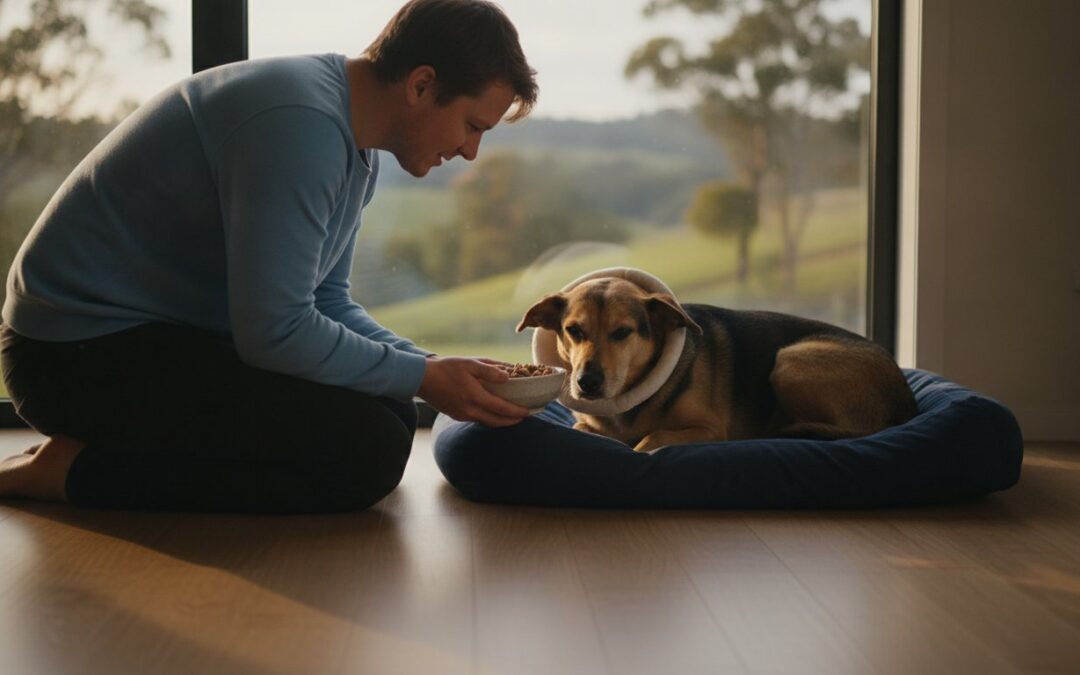
Imagine returning home to Warragul or Drouin after your dog’s operation, only to find your best mate curled up and refusing even their favourite treats. It is a heart-wrenching moment that leaves many owners feeling helpless and worried. When your dog won’t eat after surgery what to do becomes the most urgent question on your mind, particularly as you watch them stay lethargic and uninterested in their dinner bowl. We understand that this silence in the kitchen can be frightening, especially when you are trying to filter through conflicting advice online while monitoring your pet’s recovery.
We know how much you care for your companion, and it’s completely natural to feel anxious when their healing journey doesn’t start with a healthy appetite. In this guide, you will discover exactly why your dog has lost their interest in food and learn gentle, practical ways to encourage them to eat. We will walk you through a clear timeline for when their appetite should return, offer safe food suggestions for sensitive stomachs, and provide the peace of mind you need to know they are recovering safely. Whether they have had a major orthopaedic procedure or a modern keyhole surgery, which typically results in less post-operative nausea, we are here to help you navigate these first few days with confidence and care.
Key Takeaways
- Understand that lingering effects from anaesthesia and pain relief often make dogs uninterested in food for the first 24 hours after their procedure.
- Learn the common reasons for post-op nausea and discover dog won’t eat after surgery what to do to help your pet feel comfortable and encouraged.
- Find out why keeping your dog hydrated is more important than immediate eating and how to monitor their water intake during recovery.
- Explore how advanced techniques like keyhole surgery can lead to less internal trauma and a much faster return to normal eating habits for your mate.
- Identify the specific red flags that mean it is time to contact your vet, providing peace of mind for families across Warragul and Drouin.
Why Your Dog Might Refuse Food After Surgery
Seeing your companion uninterested in their dinner bowl can be incredibly stressful for any pet owner. While Veterinary surgery has become highly advanced, the physical and emotional toll on your pet remains significant. If your dog won’t eat after surgery what to do is likely the most pressing question on your mind, but understanding the “why” is the first step toward a calm recovery. It’s often a combination of biological responses to medication and the psychological impact of a big day at the clinic. Most of the time, this lack of appetite is a temporary hurdle rather than a permanent problem.
The Role of Anesthesia and Nausea
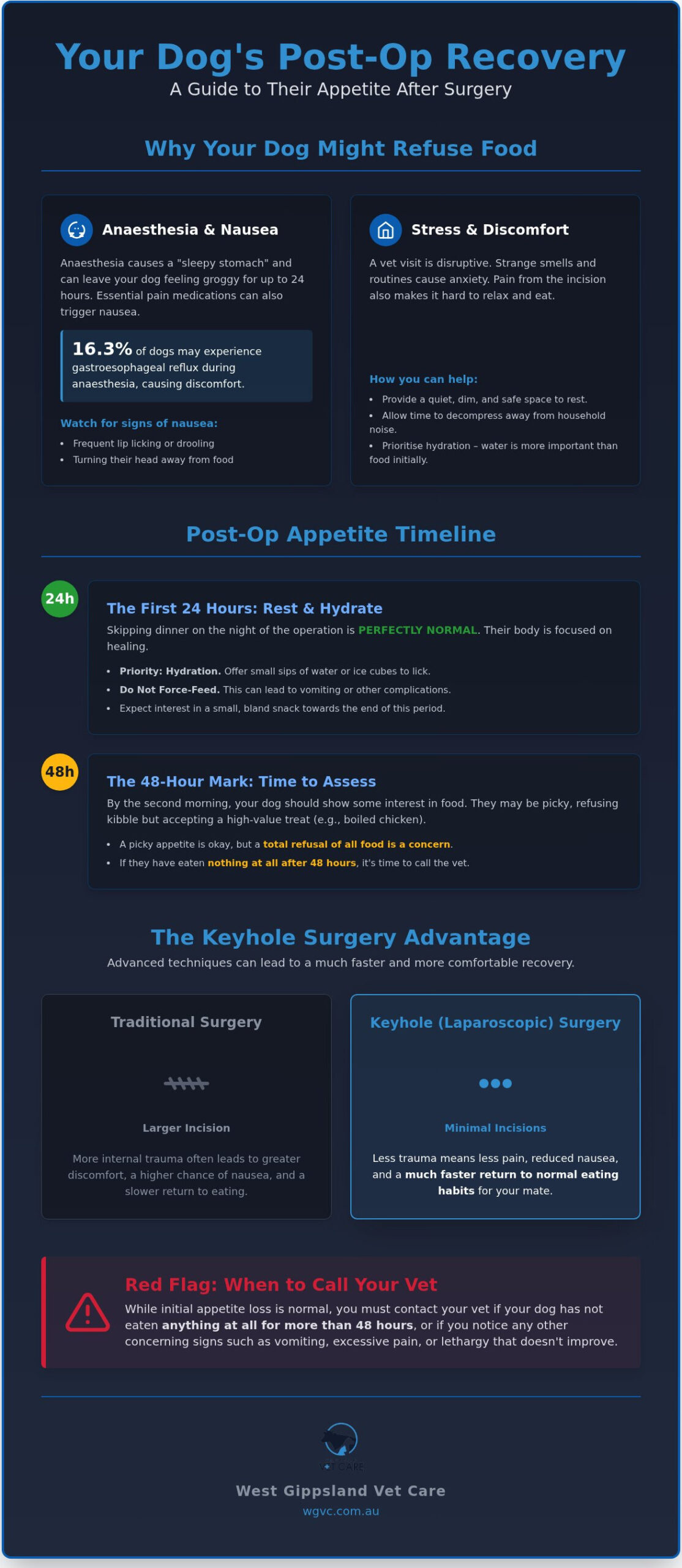
Anaesthesia doesn’t just put the brain to sleep; it puts the entire digestive system into a temporary slumber. This “sleepy stomach” effect, or reduced gut motility, means food simply doesn’t move through the tract as it usually would. Your mate might feel “woozy” or disoriented for up to 24 hours as these drugs leave their system. Specific pain medications, while essential for comfort, can also trigger nausea. Watch for subtle signs like frequent lip licking, excessive drooling, or a deliberate turn of the head when you offer a treat. Research indicates that gastroesophageal reflux occurs in roughly 16.3% of dogs during anaesthesia, which can leave their throat feeling scratchy or their stomach feeling acidic long after they wake up. Patients who undergo keyhole surgery often experience less of this “surgical quiet,” leading to a faster return to their normal bowl compared to traditional methods.
Emotional Stress and Environment
Dogs are creatures of habit, and a trip to the vet disrupts every familiar rhythm. They’ve been exposed to “hospital smells” like antiseptics and the scents of other animals, which can trigger a lingering sense of anxiety. When they return home to Warragul or Drouin, they might need time to decompress in a fear-free space before their appetite returns. Physical discomfort at the incision site also plays a part. It’s hard to focus on eating when you can’t find a comfortable way to sit or lie down. You might notice they are more interested in water than food initially. This is actually quite common, as hydration helps flush out the medications. Providing a quiet, dim corner away from the household’s hustle and bustle allows them to feel safe enough to eventually consider a meal. A calm environment is just as important as the medical care they received at our clinic.
How Long Is Normal and When to Worry
It is perfectly common to feel a sense of panic when your mate skips their first meal after returning home. However, recovery is a marathon, not a sprint. Knowing the difference between a sleepy stomach and a medical complication is vital for your peace of mind and your dog’s safety. While every animal is an individual, there are general milestones we look for during the post-operative period in West Gippsland.
The First 24 Hours: What to Expect
Most dogs are simply too groggy on the evening of their procedure to show interest in their usual kibble. If your dog won’t eat after surgery what to do first is simply wait, observe, and provide a quiet space. Skipping dinner on the night of the operation is standard. Their body is focusing all its energy on processing the anaesthesia and starting the cellular repair process. They might sleep deeply for several hours, only waking to adjust their position or take a lap of water.
While food can wait, hydration is a priority. Offer small sips of water or even ice cubes to lick if they seem interested. Do not force-feed your pet during this window, as forcing food into a nauseous stomach can lead to vomiting or even aspiration. A healthy recovery window for appetite generally sees a dog showing interest in a small, bland snack within 24 hours of returning home to Warragul or Drouin.
There is also a clinical difference between being “picky” and experiencing Anorexia in Dogs. A picky dog might refuse their dry biscuits but wag their tail for a bit of boiled chicken or a lick of wet food. A total refusal of all food, including high-value treats, is more concerning once that initial 24-hour mark has passed. If they are still refusing every morsel by the second morning, it’s time to take a closer look.
When to Call Your West Gippsland Vet
While we expect some quietness, certain “red flags” mean you should reach out to us at the clinic. If your dog has not eaten anything at all after 48 hours, it is time for a professional check-in to ensure there are no underlying complications. Beyond the 48-hour mark for food refusal, you should call us immediately if you notice:
- Pale or “tacky” gums, which should normally be pink and moist.
- A fever, often indicated by a dry nose and ears that feel hot to the touch.
- Extreme lethargy where they won’t even lift their head or respond to your voice.
- Persistent vomiting or diarrhoea that prevents them from keeping water down.
For our existing clients, remember that we provide an emergency vet Warragul service available 24 hours a day for urgent concerns. We would much rather reassure you that your dog’s recovery is on track than have you sit at home in distress. If you have any doubts about their progress, you can always contact our friendly team to discuss your concerns.
Simple Ways to Encourage Your Best Mate to Eat
Once you have established that your pet is safe but simply lacks an appetite, you can take a more active role in their recovery. If your dog won’t eat after surgery what to do usually starts in the heart of the home: the kitchen. Small, gentle adjustments to how you present their meals can make a world of difference to a nauseous or tired dog. It is about making the food as enticing and easy to digest as possible while providing the emotional support they crave during this vulnerable time. Patience is your most valuable tool here; even a few small bites are a victory in the first day or two.
A common technique is warming up wet food in the microwave for a few seconds. This releases enticing aromas that can jump-start a suppressed appetite. You might also try hand-feeding small morsels. This isn’t just about the food; it’s about the comfort of your touch and the reassurance that they are doing a good job. If your dog has had a procedure that makes bending down uncomfortable, try elevating their food bowl to chest height to reduce strain on their neck or abdominal muscles. This simple change can make the physical act of eating much less daunting for a sore pet.
Preparing a Gentle Recovery Meal
The “Bland Diet” is a staple of veterinary recovery for a reason. Start with plain chicken breast, boiled until thoroughly cooked with no skin, no bones, and absolutely no seasonings, onions, or oils. Pair this with well-cooked white rice. While brown rice is often healthier for us, white rice is much easier for a sensitive post-op stomach to process because it is lower in fibre. You can also use a small amount of low-sodium chicken broth as a topper. This adds extra flavour and helps with hydration, which is a key part of What to Do if Your Dog Won’t Eat. Ensure the meal is served at room temperature or slightly warm to avoid shocking their system.
Creating the Right Atmosphere
Your dog’s environment is just as important as the food on their plate. Recovery requires a calm, predictable space where they don’t feel the need to “perform” or defend their bowl. If you have other pets in your West Gippsland home, it’s best to feed your recovering dog in a separate room. This prevents any mealtime competition and allows them to eat at their own pace without pressure. Reduce the general noise and hustle of the household during these times. Turn down the telly and keep the kids in another area for a few minutes. Your calm energy and gentle praise act as a powerful motivator, helping them feel secure enough to take those first few vital bites.
The Keyhole Advantage: Why Some Dogs Bounce Back Faster
The method used for your pet’s procedure can significantly influence how quickly they feel like themselves again. At West Gippsland Vet Care, we have seen first-hand how advanced techniques change the recovery experience. While you might be searching for dog won’t eat after surgery what to do, it’s worth considering that the type of procedure your mate had plays a massive role in their immediate response. Laparoscopic surgery, often called keyhole surgery, is a minimally invasive approach that uses tiny cameras and specialised instruments to perform operations through very small incisions.
This technique reduces internal trauma significantly. Because the incisions are so small, often only five to ten millimetres, there is far less disruption to the abdominal wall. For your dog, this translates to less post-operative pain and a much lower chance of feeling that deep, internal ache that often discourages them from visiting their food bowl. Our commitment to advanced care means we prioritise these gentle methods for our West Gippsland patients whenever possible.
Traditional vs. Keyhole Recovery
The contrast between a traditional open procedure and a laparoscopic spay in Warragul is often remarkable. In a traditional spay, the surgeon requires a larger opening to manually handle the internal organs. This physical handling is one of the primary triggers for post-operative nausea and gut stasis. In keyhole surgery, the surgeon uses a camera to see inside with incredible clarity, meaning there is minimal contact with surrounding tissues. Less internal “fussing” leads to less nausea. Many of our keyhole patients are alert and wagging their tails shortly after waking up. It is not uncommon for these dogs to show interest in their dinner on the very same evening, bypassing the typical 24-hour “woozy” period entirely.
Is Keyhole Surgery Right for Your Dog?
We commonly use keyhole techniques for desexing (spays) and gastropexy, which is a preventative surgery for bloat. If you are planning a future procedure, we encourage you to discuss these surgical options with our team. Choosing a minimally invasive path is often the best thing you can do to ensure a smooth transition back to normal life. Ultimately, reduced pain and inflammation lead directly to a faster return to the food bowl. When your mate feels comfortable, their natural appetite returns much sooner, making the recovery process easier for the whole family.
Post-Op Care in West Gippsland: When to Call Your Vet
Living in the beautiful West Gippsland region brings plenty of joy, but our local climate also requires some specific considerations during your dog’s recovery. When you are wondering dog won’t eat after surgery what to do, local factors might be playing a bigger role than you think. Whether you are in Warragul, Drouin, or a surrounding township, the weather and environment can significantly impact your mate’s desire to visit their food bowl. Recovery is not just about the surgery itself; it is about the days that follow in their home environment.
Environmental Factors in West Gippsland
During our warmer months, the summer heat in Warragul can quickly lead to dehydration, which is a major appetite suppressant. A dog that is feeling the heat will often focus on panting to cool down rather than eating. Conversely, during Gippsland’s crisp winter chills, a recovering pet might use all their energy just to stay warm. This is especially true since anaesthesia can temporarily disrupt their ability to regulate body temperature. Ensuring they have a cosy, draught-free spot with plenty of blankets is essential for a smooth return to normal eating habits.
We also recommend keeping an eye out for local irritants like grass seeds near the recovery area. If your dog is resting in an outdoor space or a garden bed, a stray seed could cause discomfort or a secondary infection, adding unnecessary stress to their healing process. Always stick closely to the specific discharge instructions provided by our team. These instructions are the “bible” for your pet’s recovery, tailored to their exact procedure and needs.
Your Support System at WGVC
For our existing clients, we provide 24-hour emergency support for those truly worrying moments. If your dog’s condition changes suddenly or you notice any of the red flags discussed earlier, our team is ready to help. Our furry companions are remarkably resilient, and with a little extra care and a quiet environment, your best mate will be back to their happy, hungry self before you know it. We are here to support you every step of the way on this healing journey.
Watching your pet recover is a journey that requires patience and a gentle touch. Most of the time, a quiet stomach is simply a sign that the body is busy healing from the effects of anaesthesia. By creating a calm environment and offering a gentle, bland diet, you provide the best possible support for their return to health. If your dog won’t eat after surgery what to do often comes down to these simple home comforts and knowing when to seek professional advice from a trusted source.
Our independent, local Gippsland expertise is always here to guide you through these moments. We take great pride in offering advanced keyhole surgery options that help pets bounce back with less nausea and a faster return to their normal bowl. For our existing clients, we also provide 24-hour emergency care for that extra layer of security when you need it most. Feel free to Contact West Gippsland Vet Care for post-op support or to discuss our advanced surgical options. We are dedicated to ensuring every pet in our community enjoys a safe and comfortable recovery. Your best mate is in good hands.
Frequently Asked Questions
Is it normal for a dog not to eat for 24 hours after surgery?
Yes, it is entirely normal for your mate to skip their meals for the first 24 hours after a procedure. Anaesthesia slows down the entire digestive system, often leaving them feeling too woozy to think about food. Most dogs will regain their appetite by the next morning once the medications begin to clear. Focus on keeping them comfortable in a draught-free area while their body processes the drugs and recovers from the initial stress.
How can I tell if my dog is in pain or just sleepy from anesthesia?
Differentiating between sleepiness and pain requires careful observation. A sleepy dog will rest quietly and breathe steadily without much fuss. Conversely, a dog in pain may appear restless, whine, or exhibit rapid, shallow breathing even while lying down. You might also notice trembling or a reluctance to move at all. If you are concerned that the prescribed pain relief isn’t quite hitting the mark, please call our clinic for a chat about their dosage.
Can I give my dog their usual treats to get them to eat?
Hydration is actually far more critical than food in the first 24 hours of recovery. Drinking water helps your dog’s body flush out the lingering effects of anaesthesia and keeps their organs functioning well. If they are drinking but refusing biscuits, don’t panic. You can encourage them by adding a splash of low-sodium chicken broth to their water bowl, but as long as they are taking fluids, their immediate needs are being met.
Should I force-feed my dog if they haven’t eaten in 2 days?
You should never force-feed your dog after surgery. Forcing food into a dog that feels nauseous can lead to accidental aspiration, where food enters the lungs, or create a long-term food aversion where they associate eating with discomfort. If your dog won’t eat after surgery what to do after the 48-hour mark is contact your vet. We may need to provide an appetite stimulant or check for underlying issues that are hindering their recovery.
Will my dog’s appetite change permanently after being desexed?
A permanent change in appetite is unlikely, though their metabolic needs may shift slightly after desexing. The immediate loss of interest in food you are seeing now is strictly a temporary side effect of the surgical process and medications. Once the initial healing phase passes, most owners find their dogs return to their usual enthusiastic selves at mealtimes. We can discuss long-term nutritional plans during your follow-up health check to keep them at an ideal weight.
Are there any human foods I should avoid giving my recovering dog?
It is vital to avoid any human foods containing onions, garlic, or excessive fats, as these can be toxic or trigger pancreatitis. Steer clear of seasoned meats or anything with salt and pepper. While you might want to spoil them, stick to plain, boiled chicken and white rice. These bland diet staples are easy on the gut and provide the necessary energy for wound healing without the risk of causing a secondary digestive upset.
What should I do if my dog vomits after their first post-op meal?
If your dog vomits after their first meal, remove the food bowl and let their stomach settle for a few hours. This is often just a sign that their digestive system isn’t quite ready for work yet. When you try again, offer a much smaller portion, perhaps just a tablespoon of bland food. However, if the vomiting is persistent or accompanied by extreme lethargy, please contact our Warragul or Drouin team immediately for professional advice.