Watching your dog struggle to walk after a sudden injury is heartbreaking, especially when you’re faced with the daunting news of a ligament rupture. If you’ve been told your mate needs surgery, seeking a second opinion on a dog cruciate tear in Drouin is a natural and proactive step for any dedicated pet owner. It isn’t about questioning your current vet’s care; it’s about making sure you have total peace of mind before committing to an orthopaedic procedure. We understand the weight of these decisions, from the stress of invasive surgery to the confusion of choosing between TPLO and lateral suture techniques. You want to ensure your dog stays active and free from the pain of arthritis as they age.
You want what’s best for your dog’s long-term mobility, and we agree that feeling confident in your surgical team is essential. This article will help you discover why a second opinion is vital for your dog’s cruciate injury and how to find the best surgical or management path right here in West Gippsland. We’ll provide clarity on the severity of the tear, explain your treatment options in plain English, and outline a clear recovery roadmap so your dog can get back to enjoying life in our beautiful local community. By exploring all available paths, you can move forward with a plan that prioritises your dog’s comfort and your own peace of mind.
Key Takeaways
- Understand that seeking a second opinion on a dog cruciate tear in Drouin is a positive step to ensure you’re choosing the best possible recovery path for your mate.
- Learn why the severity of a cruciate injury can vary and why different vets might suggest different approaches, from immediate surgery to conservative management.
- Get a clear comparison of surgical options like TPLO and lateral suture to see which one best suits your dog’s size, age, and activity level.
- Discover the simple steps to organise your consultation, including how to collect your pet’s medical history and X-rays from your current clinic.
- Explore the benefits of choosing a local Gippsland team that offers advanced diagnostics and Fear Free care to keep your dog calm and comfortable.
Why a Second Opinion Matters for Cruciate Ligament Injuries
Discovering your dog has a cruciate injury often feels like a whirlwind of clinical terms and daunting decisions. You want your mate back on their feet, but it’s completely normal to feel a bit overwhelmed. Seeking a second opinion on dog cruciate tear Drouin is a vital step in ensuring you have the full picture. It isn’t a sign that you doubt your current vet; rather, it’s a way to validate the diagnosis and explore every possible avenue for your dog’s recovery.
Cruciate injuries are rarely identical. Some dogs suffer a partial tear where the ligament is frayed but still functional, while others experience a complete rupture that leaves the knee entirely unstable. The severity of the tear dictates the treatment path. A second opinion provides a chance for fresh eyes to review diagnostic imaging, such as X-rays, which can sometimes reveal subtle changes in the joint or early signs of arthritis that influence the surgical approach. Different veterinarians also bring varied specialisations and equipment to the table. One clinic might prefer a traditional lateral suture, while another has the advanced orthopaedic setup required for a TPLO (Tibial Plateau Leveling Osteotomy).
When to Consider a Second Opinion in Drouin
There are specific moments when a second look becomes particularly helpful. If your dog was diagnosed based on a physical exam alone without the support of digital imaging, a second opinion can provide that necessary visual confirmation. You might also feel uneasy if the proposed surgical technique doesn’t seem to match your dog’s active lifestyle or size. Many families in our community assume they must travel to Melbourne for specialist-level orthopaedic care. However, high-end diagnostics and advanced surgery are available right here in West Gippsland, allowing you to stay close to home while your pet receives expert attention.
The Value of an Independent Perspective
The type of practice you visit can change the way care is delivered. Many veterinary clinics today are corporate-owned, which can sometimes lead to more standardised, rigid protocols. In contrast, an independent Gippsland practice like ours is owned by local partners who live and work in the community. This independence allows for a more personalised, collaborative approach. We view ourselves as your partners in your dog’s health, focusing on long-term care plans that consider your dog’s unique needs and your family’s circumstances. Feeling comfortable and heard by your surgical team is just as important as the procedure itself.
Understanding the Diagnosis: Why Vets May Offer Different Advice
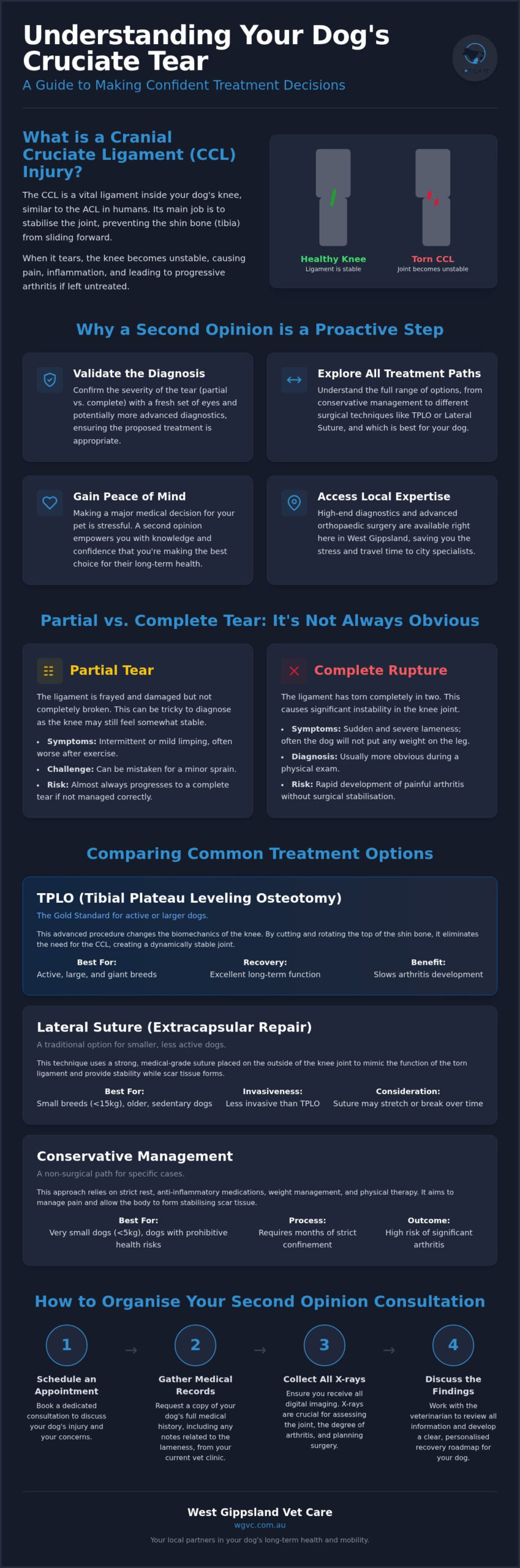
The Cranial Cruciate Ligament (CCL) is a tough band of tissue that acts as the primary stabiliser for your dog’s knee. It’s essentially the canine version of a human’s ACL. Its main job is to prevent the shin bone from sliding forward relative to the thigh bone. When this ligament tears, the joint loses its stability, causing the bones to rub together painfully. Seeking a second opinion on dog cruciate tear Drouin helps you understand why different vets might give conflicting advice regarding this injury.
You might find that one vet suggests a conservative “wait and see” approach while another recommends immediate surgery. This variation often comes down to the dog’s specific circumstances. Factors like breed, body weight, and activity level play a massive role in the decision-making process. For instance, a small, sedentary dog might manage with rest and medication, but a heavy or highly active dog usually needs a surgical fix to prevent debilitating arthritis. The presence of a meniscal tear, which is a damage to the shock-absorbing cartilage in the knee, also complicates the diagnosis and often makes surgery more urgent.
Partial vs. Complete Cruciate Tears
Partial tears are notoriously difficult to diagnose because the knee might still feel relatively stable during a standard physical exam. Your dog might limp for a few days, seem to recover, and then flare up again after a walk. This “grey area” of lameness is a common reason for seeking a second opinion on dog cruciate tear Drouin. Without proper management, a partial tear almost always progresses to a complete rupture. A fresh perspective can help identify these subtle signs early, ensuring you don’t wait until the joint has suffered irreversible damage.
Advanced Diagnostics in West Gippsland
Confirming a diagnosis requires more than just a quick touch. We use digital X-rays and “stress views” to get a clear picture of the joint’s health. Stress views involve gently positioning the leg under sedation to see if the shin bone slides forward, which is a definitive sign of a tear. Our in-house laboratory also allows us to rule out other issues, like joint infections or immune-mediated conditions, that can mimic a cruciate injury. If you want to dive deeper into how we assess these injuries, you can learn more about our work as an orthopaedic vet Gippsland. Getting the diagnosis right the first time is the only way to build a successful recovery plan. If you’re feeling uncertain about your dog’s current diagnosis, you’re always welcome to speak with our local team for a collaborative review.
Comparing Treatment Options: TPLO vs. Conservative Management
Once you have a confirmed diagnosis, the next step is weighing up the recovery paths. Every dog in West Gippsland has a different lifestyle, from farm dogs who spend their days running across paddocks to older companions who prefer a snooze on the veranda. This is where a second opinion on dog cruciate tear Drouin becomes invaluable. It allows you to discuss whether a surgical fix or a managed recovery better suits your dog’s specific needs and your family’s situation.
Surgical Techniques Explained
TPLO, or Tibial Plateau Leveling Osteotomy, is widely considered the gold standard for cruciate repairs. Rather than trying to replace the torn ligament, the procedure involves a biomechanical change to the knee joint. By rotating the top of the shin bone, the surgeon levels the plateau, which stops the bones from sliding painfully. This technique is often preferred for active dogs in Drouin because it provides superior long-term stability and a faster return to normal function. Studies show that roughly 85% to 95% of dogs return to near-normal function after TPLO and a proper recovery period.
For smaller or older dogs with lower activity levels, a lateral suture (or De Angelis) technique might be suggested. This involves placing a strong synthetic suture outside the joint to provide temporary stabilisation while scar tissue forms. While it’s a less invasive option than TPLO, the success rate is typically lower, ranging between 65% and 80%. A second opinion can help you decide if the extra stability of TPLO is worth the investment for your mate’s future mobility and comfort.
Is Non-Surgical Management an Option?
Conservative management, which focuses on strict rest, anti-inflammatories, and physical therapy, is sometimes an option for very small dogs under 15kg. However, for larger breeds, this approach rarely restores joint stability. Without surgery, the constant rubbing within the joint leads to painful arthritis and a higher risk of the other knee failing. In fact, about 40% to 60% of dogs that rupture one ligament will go on to rupture the other within two years. Seeking a second opinion on dog cruciate tear Drouin is crucial before dismissing surgery entirely, as it helps you understand the long-term risks of arthritis for your dog’s specific breed and size.
If you choose a non-surgical path, weight loss and high-quality joint supplements are non-negotiable. Even after surgery, post-operative physiotherapy and long-term arthritis care are essential parts of the recovery roadmap. Talking through these options with a local team ensures you aren’t just treating the injury today, but protecting your dog’s quality of life for years to come.
How to Organise Your Second Opinion Consultation
Organising a second opinion on dog cruciate tear Drouin is a straightforward process that starts with open communication. You don’t need to feel awkward about requesting your pet’s records from your current clinic. It is a standard part of modern veterinary care and ensures your dog receives the most informed assessment possible. Most clinics are happy to facilitate this transfer to ensure the best outcome for your mate.
Step 1: Collect the medical history. Contact your current vet and ask for a full copy of your dog’s medical records and any X-ray files. These are typically shared via an email link or saved to a USB. Having these ready allows the new surgical team to see exactly what has been diagnosed so far, which often prevents the need for repeat testing.
Step 2: Book a dedicated orthopaedic consultation. When you contact our team, please mention that you are seeking a second opinion on dog cruciate tear Drouin. This allows us to book a longer, dedicated appointment slot. We want to ensure there is plenty of time to review previous imaging, perform a thorough physical exam, and sit down with you to discuss every available option.
Step 3: Note down your dog’s lifestyle. Before the appointment, think about your dog’s daily routine. Are they a working dog on a Gippsland property, or do they spend most of their time snoozing on the couch? This context helps us tailor a recovery plan that fits their specific physical demands and your home environment.
Step 4: Prioritise emotional well-being. We utilise Fear Free techniques to keep your dog calm during the examination. If your dog is particularly anxious about vet visits, let us know when booking. We can prepare a quiet space and use gentle handling methods to make the experience as stress-free as possible for both you and your pet.
What to Bring to Your Appointment
To make the most of your consultation, please have the following ready:
- High-resolution digital X-ray files from your previous vet.
- A list of all current medications, including dosages and frequency.
- Short videos on your phone showing your dog’s gait or “lameness” at home, as dogs often hide their limp when they are excited or nervous at the clinic.
Asking the Right Questions
This is your opportunity to gain total clarity. We encourage you to ask plenty of questions, such as:
- “Based on my dog’s breed and age, what is the likelihood of the other cruciate ligament tearing?”
- “What does the specific post-operative rehab look like for my home setup?”
- “How do you manage pain and anxiety during the hospital stay to ensure a smooth recovery?”
If you’re ready to gain clarity on the best path forward for your dog’s mobility, you can book a second opinion consultation with our local Drouin team today.
Why Drouin Families Trust West Gippsland Vet Care for Orthopaedic Care
Families in Drouin shouldn’t feel they have to travel all the way to Melbourne for advanced orthopaedic care. We’ve been part of the West Gippsland community since 1989, and we’ve built our practice around the idea that high-level surgery should come with a personal, local touch. When you seek a second opinion on dog cruciate tear Drouin at our clinic, you aren’t just getting a medical assessment. You’re gaining a partner who understands the local environment and the unique bond you share with your pet.
Our Fear Free certification is at the heart of everything we do. We know that a dog with a painful knee is already anxious and protective. By using calming techniques, pheromones, and a gentle handling approach, we ensure that the diagnostic process and the hospital stay are as peaceful as possible. For our surgical clients, we also provide the security of a 24-hour emergency service. If you have a concern at 2 am during your dog’s recovery, you’ll be speaking with a team that already knows your mate’s history and the specifics of their procedure. This peace of mind is something we believe every pet owner deserves.
Advanced Surgery with a Personal Touch
One of the biggest advantages of choosing a local independent practice is the continuity of care. You won’t be passed between different departments or see a rotating door of staff. The vet who provides your second opinion on dog cruciate tear Drouin will typically be the same person performing the surgery and seeing you for every follow-up visit. This consistency allows us to build a relationship of trust and track your dog’s progress with precision. We also understand the Gippsland lifestyle. Whether your dog needs to get back to navigating steep paddocks or simply walking the local trails, our recovery plans are designed with our specific terrain and your dog’s daily activities in mind.
Comprehensive Post-Op Support
Recovery doesn’t end when your dog leaves the hospital. We provide detailed discharge instructions and home care kits to make the first few weeks at home as manageable as possible. Our commitment to your dog’s mobility continues long after the surgical site has healed. We offer ongoing pain management and arthritis care, alongside senior pet health checks, to ensure the joint remains healthy as your dog ages. We’re here to support you at every milestone, ensuring your dog remains a happy, active member of the family for years to come.
Organise a second opinion consultation with our orthopaedic team today.
Protecting Your Mate’s Future Mobility
Choosing the right path for your dog’s recovery is one of the most important decisions you’ll make for their long-term health. By seeking a second opinion on dog cruciate tear Drouin, you’re ensuring that your mate receives a tailored plan backed by advanced diagnostics and a caring, local perspective. Whether you decide on a biomechanical fix like TPLO or a managed conservative approach, having total clarity on the diagnosis is the first step toward a successful outcome.
As a local independent Gippsland practice, we’re dedicated to providing high-level orthopaedic care without the need for a city commute. Our Fear Free certified professionals use advanced in-house diagnostic imaging to give you a clear, honest assessment of your dog’s joint health. We view our work as a personal commitment to you and your pet, focusing on a recovery roadmap that gets your dog back to enjoying life in our beautiful community. If you’re ready to explore all the available options for your dog’s injury, we invite you to Book an Orthopaedic Consultation at West Gippsland Vet Care. We look forward to helping your mate get back on all four paws with confidence.
Frequently Asked Questions
Do I need a referral to get a second opinion on a dog cruciate tear in Drouin?
You don’t need a formal referral from your current vet to book a second opinion on a dog cruciate tear in Drouin. Any pet owner is welcome to contact us directly to arrange a dedicated orthopaedic consultation. We’ll simply ask for a copy of your dog’s previous medical records and any existing X-rays so our team can review the history before your appointment.
Will my original vet be offended if I seek a second opinion?
Most veterinarians won’t be offended because they understand that your primary goal is the well-being of your pet. Seeking a second opinion is a standard and respected practice in the veterinary profession, especially for significant orthopaedic concerns. It’s about ensuring you have total peace of mind and a clear understanding of all the recovery paths available for your mate.
Can a dog cruciate tear heal on its own without surgery?
A cruciate ligament can’t heal on its own because it lacks the necessary blood supply to regrow or repair the torn fibres. While rest and anti-inflammatories might temporarily reduce a dog’s limp, the joint remains unstable. For dogs over 15kg, this instability almost always leads to chronic pain and severe arthritis if the joint isn’t surgically stabilised.
How long is the recovery period after cruciate surgery?
The total recovery period generally takes between 8 and 12 weeks, depending on your dog’s age and the surgical technique used. The first fortnight requires strict rest and very short, on-lead toilet breaks to allow the initial healing to begin. After that, we provide a tailored rehabilitation roadmap that gradually increases activity to safely rebuild muscle strength and joint function.
What is the difference between a partial and a full cruciate tear?
A partial tear occurs when the ligament is frayed but still partially intact, whereas a full tear is a complete rupture that leaves the knee unstable. Partial tears are often trickier to diagnose because the lameness can come and go. Seeking a second opinion on a dog cruciate tear in Drouin can provide clarity on these subtle injuries before they progress to a complete snap.
Is TPLO surgery available at West Gippsland Vet Care?
Yes, TPLO surgery is a core part of our advanced orthopaedic offerings at West Gippsland Vet Care. We have the specialised surgical equipment and expertise required to perform this gold-standard procedure right here in our local clinic. This means Drouin families can access high-level surgical care for their dogs without the stress of travelling to a Melbourne specialist centre.
What happens if I leave a cruciate tear untreated?
Leaving a cruciate tear untreated leads to rapid bone-on-bone friction, which causes permanent joint damage and painful osteoarthritis. The instability often results in a secondary tear of the meniscus, the shock-absorbing cartilage in the knee. Furthermore, the extra strain on the “good” leg is so significant that roughly 40% to 60% of dogs will rupture the other ligament within two years.
Does pet insurance cover second opinions for orthopaedic surgery?
Most comprehensive pet insurance policies do cover second opinions, though it’s always wise to check your specific policy limits first. Some providers have different claim categories for specialist consultations or specific orthopaedic reviews. Our team can assist by providing the detailed clinical notes and diagnostic evidence your insurer needs to process your claim as quickly and smoothly as possible.