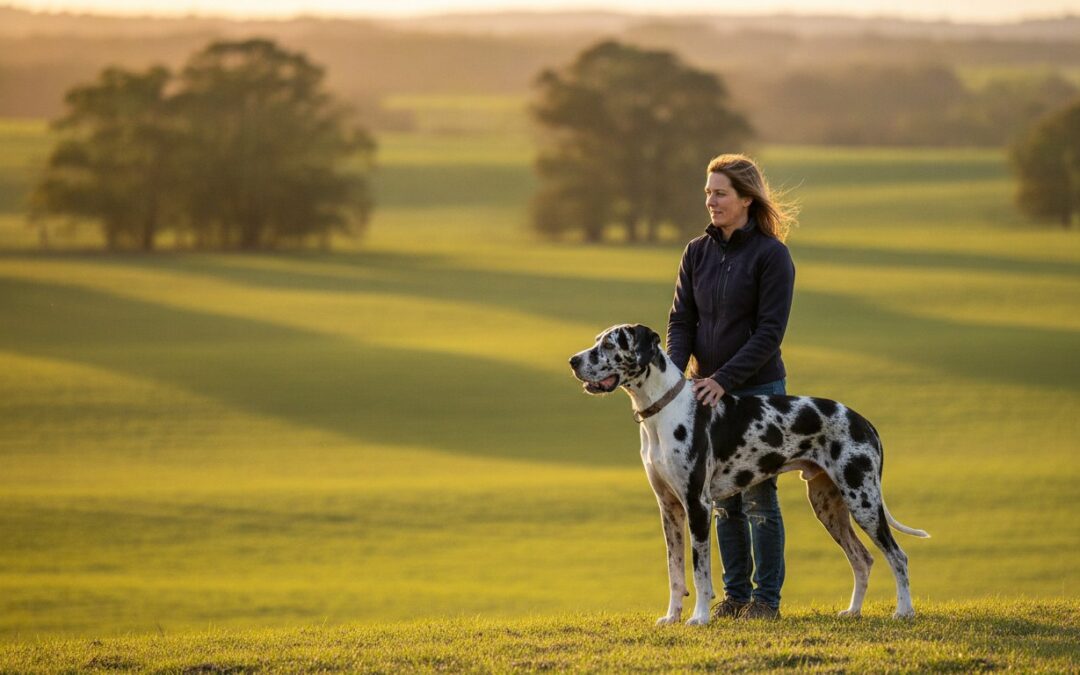
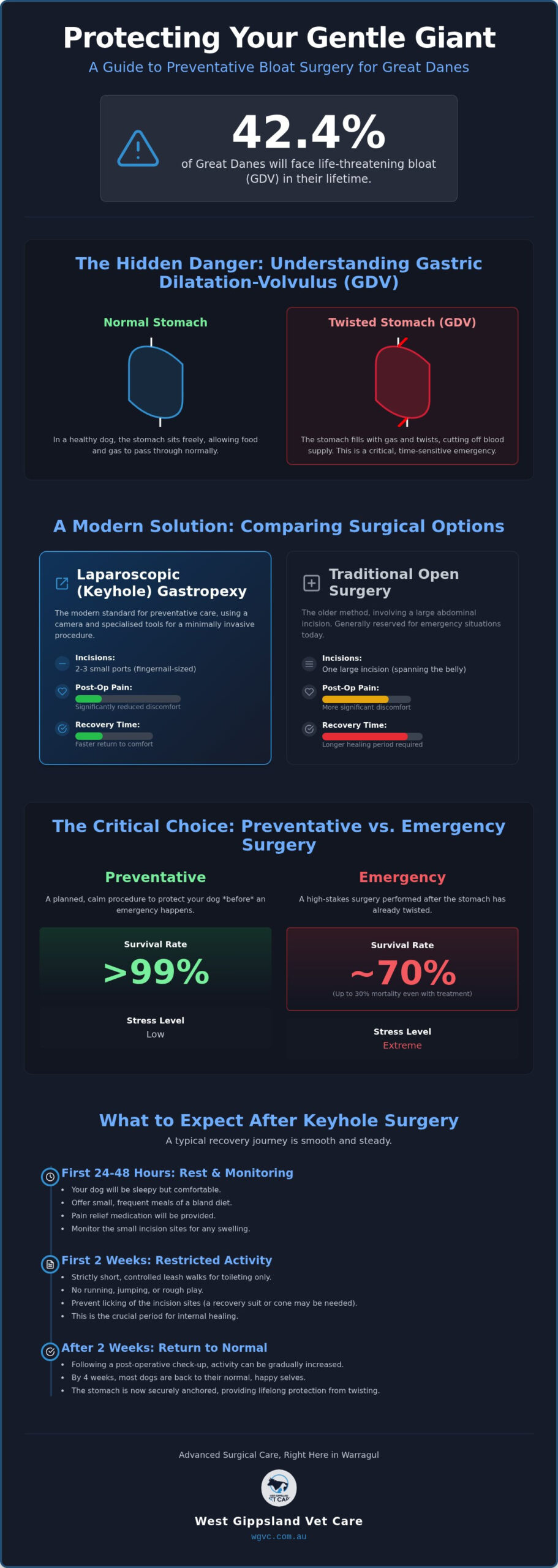
Did you know that 42.4% of Great Danes will face the life-threatening terror of a twisted stomach during their lifetime? It is a staggering figure that many of our local families in Warragul and Drouin find deeply unsettling. We understand the profound bond you share with your gentle giant, and we know that the fear of sudden, fatal bloat shouldn’t overshadow the joy of their company. You want to protect your best mate, yet the thought of an invasive, traditional surgery can feel just as overwhelming as the risk itself.
We agree that your dog deserves the most advanced care available without the stress of a long, painful recovery or a frantic dash to a Melbourne emergency centre. This guide explains how our team uses gentle keyhole technology to provide a life-saving insurance policy for your pet. We’ll walk you through the entire process and explain exactly what to expect after dog gastropexy surgery so you can feel prepared and confident. From managing comfort at home to understanding the fast healing times of laparoscopic care, we’re here to support you and your companion through a smooth and steady recovery journey.
Key Takeaways
- Learn why the unique anatomy of Great Danes makes them susceptible to life-threatening bloat and how a preventative procedure offers vital protection.
- Discover the benefits of laparoscopic (keyhole) surgery, which provides a faster, less painful recovery compared to traditional open abdominal procedures.
- Understand exactly what to expect after dog gastropexy surgery, from managing mild discomfort to the specific activity restrictions needed for a safe recovery.
- See why timing is everything, including how we often combine this life-saving surgery with routine desexing to minimise anaesthesia for your pet.
- Find out how to access specialist-level equipment and expert care right here in Warragul, saving you a stressful trip to a Melbourne emergency hospital.
Understanding the Bloat Risk: Why Great Danes in West Gippsland Need Protection
Living in the rolling hills of West Gippsland is a dream for active Great Danes, but it comes with a hidden shadow. Gastric Dilatation-Volvulus, or GDV, is a terrifying condition where the stomach fills with gas and then twists on itself. For a giant breed, this isn’t just a simple stomach ache; it’s a critical race against time. When the stomach rotates, it traps gas and blocks blood flow, leading to rapid tissue death and cardiovascular shock.
The Anatomy of a Gentle Giant
Great Danes are majestic, but their deep, narrow chests create a lot of internal space. This deep-chested build allows the stomach to swing like a pendulum. If it rotates even 180 degrees, the entrance and exit are sealed shut. This anatomical quirk makes Great Danes the number one breed at risk for torsion. Canine Gastropexy Explained provides a technical look at how we surgically anchor the stomach to prevent this dangerous movement. Without this protection, the pressure builds so quickly that it can compress the large veins returning blood to the heart, causing the body to go into shock.
Recognising the Signs of a Bloat Emergency
You know your dog better than anyone. If your mate is suddenly pacing, looking at their flank, or trying to vomit without anything coming up, your heart likely skips a beat. This unproductive retching is the most common sign of a true emergency. In rural towns like Neerim South or Yarragon, the distance to a clinic is a major factor in survival. Untreated bloat has an incredibly high mortality rate, and even with emergency treatment, about 30% of dogs may not survive the ordeal.
We see the anxiety in owners who follow strict daily rules, like feeding multiple small meals or preventing any exercise for two hours after eating. It’s a heavy emotional load to carry. Understanding what to expect after dog gastropexy surgery helps many families realise that a proactive, scheduled procedure is far safer and less stressful than a midnight emergency. By choosing a preventative path, you ensure your dog stays safe and you reclaim your peace of mind while enjoying the West Gippsland lifestyle.
The Science of Safety: How Laparoscopic (Keyhole) Gastropexy Saves Lives
The fundamental goal of a preventative gastropexy is to create a permanent internal safety net. By surgically anchoring the outer layer of the stomach to the right abdominal wall, we ensure that the stomach cannot physically rotate, even if it becomes filled with gas. This simple mechanical fix is the most effective way to prevent the deadly torsion mentioned by Cornell University on GDV Risks. While the stomach can still “bloat” or fill with air, the life-threatening “twist” is taken off the table. Traditional surgery often involves a large incision that spans most of the belly, but our modern approach uses high-definition cameras to achieve the same result with minimal disruption.
The Keyhole Advantage for Warragul Pet Owners
For our local families, the move toward laparoscopic techniques has transformed the surgical experience. Instead of a long, painful abdominal opening that requires significant healing time, we use two or three tiny incisions, often no larger than a fingernail. These small ports reduce the risk of wound complications, which is a common worry for owners of spirited, giant-breed dogs. Laparoscopy is the gold standard for preventative gastropexy in 2026. Because we aren’t cutting through large sections of muscle and tissue, the inflammatory response is much lower. This leads to a significant reduction in post-operative pain, making the initial healing phase much easier for your best mate to handle. When owners ask what to expect after dog gastropexy surgery, we often highlight that the lack of a large incision is the biggest factor in their comfort.
Advanced Surgical Tech at West Gippsland Vet Care
Providing this level of care requires specialised equipment and a high degree of surgical skill. Our Warragul clinic is equipped with a medical-grade laparoscope that projects a magnified, crystal-clear image of the abdomen onto a screen. This allows our team to work with incredible precision, ensuring the stomach is anchored securely while carefully avoiding vital blood vessels. This level of visibility simply isn’t possible with traditional “open” surgery. Because the procedure is less invasive, it typically results in a shorter time under anaesthesia and a faster “wake-up” period. Most dogs are bright enough to head home to Drouin or Warragul the same afternoon. Knowing what to expect after dog gastropexy surgery performed via keyhole technology helps many owners feel at ease about the recovery. If you’d like to discuss if this is right for your dog, you can explore our minimally invasive surgery options to see how we prioritise your pet’s comfort.
Preventative vs. Emergency Gastropexy: Comparing Outcomes and Costs
Choosing between a planned procedure and waiting to see if an emergency occurs is often the most significant health decision a Great Dane owner will make. A preventative gastropexy is performed when your dog is healthy and stable, resulting in a success rate that approaches 100%. In contrast, an emergency surgery for GDV occurs when the dog is already in a state of physiological collapse. Statistics from across the veterinary industry suggest that even with the best medical intervention, about 30% of dogs don’t survive an emergency torsion event. The VCA Animal Hospitals Gastropexy Guide details how these two scenarios differ in surgical approach and prognosis.
The difference in what to expect after dog gastropexy surgery is stark when comparing these two paths. A healthy dog undergoing a planned keyhole procedure typically wakes up quickly and is back to their normal self within a few days. However, a dog recovering from emergency torsion has a much harder road ahead. Their body has endured massive inflammation, reduced blood flow, and toxic buildup. Recovery in these cases often involves several days of intensive hospitalisation to manage pain and monitor for life-threatening complications.
The Hidden Costs of a Bloat Emergency
Emergency surgery is rarely just about the stomach. When a torsion occurs, the spleen often becomes entangled and may need to be removed. In some cases, parts of the stomach wall may have died due to a lack of blood, requiring complex resection. These complications don’t just increase the surgical risk; they also lead to unpredictable financial costs. A midnight emergency trip from Warragul to a specialist centre in Melbourne can be incredibly expensive and emotionally draining for the whole family. Beyond the immediate surgery, dogs that survive torsion often face long-term issues like cardiac arrhythmias, which require ongoing medication and monitoring.
Planned Prevention: The “Insurance Policy” for Your Mate
Scheduling a preventative procedure allows you to stay in control. You can choose a day that fits your family’s schedule and ensures your dog is treated by the local team they already know and trust. Performing surgery in a controlled environment means we can use tailored anaesthetic protocols for a stable patient, which is much safer than operating on a dog in shock. It’s truly a life-saving insurance policy for your mate. When you plan ahead, what to expect after dog gastropexy surgery is a predictable, manageable healing process rather than a traumatic recovery from a near-death experience. It’s the most compassionate way to ensure your giant breed is protected for life.
Recovery and Aftercare: What to Expect After Dog Gastropexy Surgery
Timing the procedure is a balance of growth and safety. We often suggest combining a preventative gastropexy with desexing, usually when your Great Dane is between 6 and 12 months of age. This approach is gentler on your dog and your schedule, as it requires only one round of anaesthesia and a single recovery period. On the day of surgery at our Warragul clinic, you’ll drop your mate off in the morning. Our team focuses on a calm, fear-free experience from the moment they walk through the door. Once the keyhole procedure is complete and they’ve had a quiet rest in our hospital ward, they are usually ready to head home the same afternoon.
Setting up a “recovery zone” before you arrive home is one of the most helpful things you can do. Because Great Danes are so large, even slight grogginess can make them a bit wobbly. Choose a small, quiet room with non-slip flooring or rugs. This prevents them from sliding or trying to jump onto furniture while they are still finding their feet. Keeping the environment low-stress helps your dog settle into their healing journey without any unnecessary excitement.
Immediate Post-Op: The First 48 Hours
When you first get home, your dog might be a little quiet or sleepy. We’ll provide clear instructions on managing pain relief to keep them comfortable and relaxed. One of the most important parts of what to expect after dog gastropexy surgery is the feeding schedule. We recommend offering small, frequent meals rather than one large bowl. This keeps the stomach stable while the internal anchor point begins to strengthen. Because we use keyhole techniques, you’ll only need to keep an eye on two or three tiny incisions for any unusual redness or swelling. These small sites heal much faster than a traditional surgical wound.
The Two-Week Recovery Timeline
The first fortnight is all about taking things slow. Even though your dog might feel like their old self after just a few days, the internal healing takes a little longer to become robust. You’ll need to prevent any rough play, jumping, or “zoomies” in the backyard during this time. Short, controlled lead walks are perfect for stretching their legs without putting stress on the surgical site. By the time you return for your post-op check, most dogs are ready to gradually return to their normal diet and exercise routine. Reaching this milestone brings an incredible sense of relief, knowing the “ticking time bomb” of torsion is finally gone. If you’re ready to secure your dog’s future, you can contact our Warragul clinic today to discuss a tailored plan for your gentle giant.
Expert Surgery in Warragul: West Gippsland Vet Care
There is a profound sense of relief that settles in once your Great Dane is finally protected. Many of our local families describe it as a physical weight lifting off their shoulders. You no longer have to watch the clock with worry after every meal or feel that pang of anxiety when your mate gets the “zoomies” in the backyard. Choosing a preventative path means you’ve replaced a “ticking time bomb” with a lifetime of security. At West Gippsland Vet Care, we specialise in the unique requirements of giant breeds, ensuring that every step of the process is handled with the precision and kindness your dog deserves.
We believe that high-end surgical care shouldn’t require a stressful, multi-hour trek to a Melbourne specialist centre. Our Warragul clinic is equipped with the same advanced laparoscopic technology you’d find in a major city hospital, but with the warmth of a local team who knows your dog’s name. We use a dedicated Fear-Free approach; this means we prioritise your dog’s emotional well-being just as much as their physical health. From gentle handling techniques to a quiet hospital environment, we ensure your giant breed feels safe and loved during their stay. For our existing clients, we also provide 24-hour emergency support, so you’re never alone if you have questions about what to expect after dog gastropexy surgery.
A Compassionate, Local Team
Our team includes an orthopaedic vet gippsland families have trusted for decades. We’ve been an independent, locally-owned part of the West Gippsland community for over 30 years, and that history is something we value deeply. We don’t just see patients. We see beloved members of your family. Every surgical plan is a collaborative effort between our vets and you. We take the time to listen to your concerns and explain the nuances of giant breed care, ensuring you feel completely supported before, during, and after the procedure.
Ready to Protect Your Dog?
If you’re ready to take this proactive step, the first move is a simple consultation. During this visit to our Warragul or Drouin clinics, we’ll assess your dog’s specific anatomy and discuss the ideal timing for their surgery. We’ll walk you through the day-of-surgery logistics and give you a personalised guide on what to expect after dog gastropexy surgery based on your home environment. It’s about giving your mate the best possible protection with the least amount of stress. Book a consultation with our surgical team today to start the journey toward total peace of mind.
Securing Your Great Dane’s Future with Local Expertise
Choosing a preventative gastropexy is one of the kindest decisions you can make for your gentle giant. By taking this proactive step, you’re not just preventing a medical emergency; you’re ensuring that your dog can enjoy their active lifestyle in West Gippsland without the constant shadow of bloat risk. We’ve seen firsthand how our specialised laparoscopic equipment in Warragul transforms the surgical experience, offering a much gentler path than traditional open procedures. When you understand what to expect after dog gastropexy surgery performed via keyhole, the decision becomes much easier. You’ll find that the recovery is remarkably smooth, allowing your mate to return to their happy, goofy self in no time.
Our team is dedicated to providing a Fear-Free environment where your dog feels safe and nurtured throughout their stay. With the peace of mind that comes from our 24/7 emergency support for existing clients, you’re never alone in your pet’s health journey. We invite you to protect your gentle giant-book a gastropexy consultation at West Gippsland Vet Care today. Let’s work together to give your best mate the long, healthy, and happy life they deserve right here in our local community.
Frequently Asked Questions
Is preventative gastropexy worth the cost for a Great Dane?
A preventative procedure is a wise investment compared to the high cost of emergency surgery. While a planned gastropexy is much more affordable, emergency treatment for GDV can easily exceed A$5,000 to A$10,000 at a specialist centre. Beyond the financial aspect, the survival rate for a healthy dog having a planned procedure is nearly 100%. It provides priceless peace of mind for your family.
Can my dog still get bloat after a gastropexy surgery?
Yes, a dog can still experience “bloat,” which is the stomach filling with gas. However, the surgery prevents the life-threatening “volvulus” or twisting. While your dog may still need veterinary attention for gas buildup, the gastropexy ensures the stomach remains anchored. This prevents the torsion that cuts off blood supply to vital organs, which is the most dangerous part of the condition.
What is the best age to get a gastropexy for a Great Dane?
We usually recommend scheduling the procedure when your dog is between 6 and 12 months old. This timing often aligns perfectly with desexing, allowing us to perform both surgeries under a single anaesthetic. For Great Danes, waiting until they have reached this level of physical maturity helps ensure the stomach is anchored in its permanent adult position, providing lifelong protection for your mate.
How long is the recovery time after keyhole gastropexy?
Most dogs feel significantly better within 48 hours of a laparoscopic procedure. When considering what to expect after dog gastropexy surgery, the main goal is restricted activity for about two weeks. While the tiny keyhole incisions heal quickly on the outside, the internal anchor point needs this time to become fully secure. Most owners find their dogs are ready for normal walks after their 14-day post-op check.
Does pet insurance cover preventative gastropexy in Australia?
Most Australian pet insurance providers view preventative gastropexy as an elective procedure, meaning it is often not covered under standard accident and illness policies. However, some “routine care” add-ons may provide a small contribution toward the cost. It’s always best to check your specific Product Disclosure Statement. Interestingly, insurance almost always covers the much higher costs of emergency surgery if the preventative step isn’t taken.
Will gastropexy change my dog’s personality or appetite?
The surgery does not change a dog’s personality or long-term appetite. You might notice some mild grogginess or a reduced interest in food for the first 24 hours as the anaesthesia wears off. Once they have recovered, your gentle giant will be the same happy dog they were before. Many owners actually feel more relaxed during meal times, which can lead to a calmer environment for the whole household.
What happens if I don’t get the surgery and my dog bloats?
If a dog develops GDV without a gastropexy, it is a critical, life-threatening emergency. The stomach twists, trapping gas and cutting off blood flow to the heart and other organs. Without immediate surgical intervention, the condition is fatal. Even with rapid treatment, the mortality rate for Great Danes is roughly 30%. In rural areas, the time taken to reach an emergency vet can be a deciding factor in survival.
Is the surgery more dangerous for giant breeds than smaller dogs?
Giant breeds like Great Danes do have unique surgical and anaesthetic requirements. Their large size affects how they metabolise medication and how their heart and lungs function under anaesthesia. This is why we use specialised equipment and a tailored approach in our Warragul clinic. While any surgery has risks, performing a planned procedure on a healthy dog is far safer than an emergency operation on a dog in shock.