What if the biggest challenge after your dog’s desexing wasn’t managing their post-operative pain, but trying to keep them from doing zoomies the very next day? As a devoted pet owner here in Gippsland, you naturally want the gentlest care for your best mate, yet the thought of a long, uncomfortable recovery can be incredibly daunting. You might be wondering, is my dog a good candidate for keyhole spay, or is the traditional method still the right path for your family?
We understand that your dog is a cherished member of the household, and choosing the right surgical approach is a significant decision. We want you to feel confident and informed about every step of their care. In this guide, you will discover if your dog is the right fit for a minimally invasive keyhole spay and how this modern technique can lead to a faster, less painful recovery. We will explore the specific criteria our team looks for and explain why this advanced procedure is now the gold standard for active dogs across West Gippsland.
Key Takeaways
- Understand how modern laparoscopic surgery uses tiny incisions to offer a much gentler, minimally invasive experience for your dog.
- Discover how factors like weight, age, and breed help determine if your dog is a good candidate for keyhole spay.
- Compare the recovery timelines to see how this advanced technique can get your pet back to their usual activities in just a few days.
- Learn how our local Fear-Free certification ensures a calm, nurturing environment that minimises anxiety for every Gippsland pet.
- Find out how to take the next step with a personalised consultation to ensure the ‘gold standard’ of care for your best mate.
What is a Keyhole Spay (Laparoscopic Desexing)?
Choosing to desex your dog is a major milestone in their life, and it’s natural to want the gentlest option available. A keyhole spay, or laparoscopic desexing, is a modern, minimally invasive alternative to the traditional surgery many of us are familiar with. Instead of making a large opening in the abdomen, our team uses specialised cameras and tiny ports to perform the procedure with incredible care. This approach focuses on an ovariectomy, which involves removing only the ovaries. This is currently the international standard for keyhole care because it’s far less traumatic for the body while still providing all the long-term health benefits of desexing. For families in Gippsland, this technique is quickly becoming the preferred choice for those asking, is my dog a good candidate for keyhole spay?
By removing only the ovaries and leaving the uterus intact, we can complete the surgery more efficiently. Research shows that this doesn’t increase the risk of future health issues like uterine infections, but it does make the process significantly kinder to your dog’s system. It’s about providing the most modern, compassionate care possible without requiring your best mate to undergo a more stressful operation.
The Keyhole Technique vs. Traditional Surgery
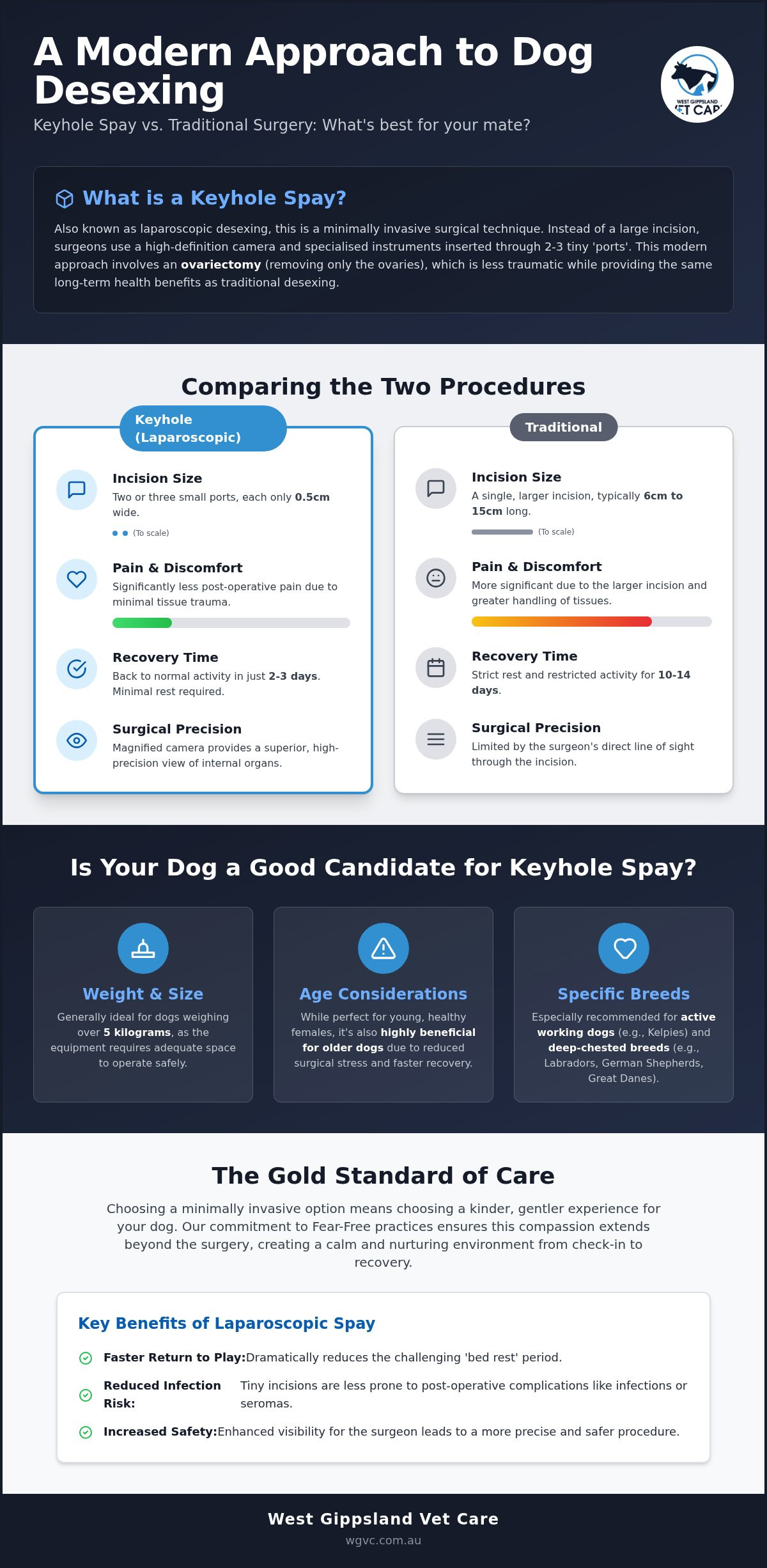
The difference between these two methods is quite remarkable when you look at the physical impact on your pet. Traditional surgery often requires an incision between 6 and 15 centimetres, depending on the size and breed of your dog. In contrast, Laparoscopic ‘keyhole’ surgery only requires two or three tiny ports, each about 0.5 centimetres wide. Because we use a magnified camera, we have a much clearer view of the internal organs than the naked eye allows. This means there is far less handling of the internal tissues, which significantly reduces inflammation and increases surgical precision. It’s a more delicate way to treat your dog’s body, ensuring a higher level of safety and a much smaller scar.
Why ‘Minimally Invasive’ Matters for Your Mate
When we talk about ‘minimally invasive’ care, we are really talking about your dog’s comfort and your peace of mind. Because there is less tissue trauma, your dog feels much better the moment they wake up from anaesthesia. There is also a much lower risk of post-operative infections or ‘seromas’, which are those uncomfortable fluid build-ups that can sometimes occur at larger incision sites. Laparoscopy is the precise tool that effectively turns a major abdominal surgery into a gentle day procedure. This allows your pet to spend less time in the clinic and more time resting comfortably on their own bed at home. If you’ve been wondering, is my dog a good candidate for keyhole spay, the benefits of reduced pain and a quicker return to play are often the most compelling reasons to choose this path.
Is My Dog a Good Candidate for Keyhole Spay?
If you’re wondering, is my dog a good candidate for keyhole spay, the answer for most Gippsland families is a resounding yes. While we can perform this surgery on many pets, the equipment we use requires a certain amount of space to move safely within the abdomen. Generally, dogs weighing over 5kg are excellent candidates for this approach. While it is the ideal choice for young, healthy females, it’s also incredibly beneficial for older dogs. For a senior pet, the reduced physiological stress of a shorter, less invasive procedure can make a world of difference in how quickly they bounce back to their happy selves.
Working dogs like Kelpies or Border Collies are particularly good fits for this technique. They don’t handle ‘bed rest’ well. These high-energy mates are often ready to run long before a traditional 10 centimetre incision has properly healed. This approach is often celebrated for providing reduced pain and faster recovery, which is a massive relief for any pet parent trying to keep a bouncy sheepdog quiet. By choosing a keyhole approach, you’re helping them get back to their active lifestyle much sooner than a traditional surgery would allow.
Ideal Breeds for Laparoscopic Procedures
Large and deep-chested breeds see some of the most significant benefits from keyhole technology. In traditional surgery, reaching the ovaries in a deep abdominal cavity can be physically challenging, often requiring more stretching of the internal ligaments. Labradors, Golden Retrievers, and German Shepherds are all prime candidates. The magnified view from the laparoscope allows our surgeons to see exactly what they are doing with pin-point precision, regardless of the dog’s size. For very large breeds like Great Danes or Weimaraners, this increased visibility makes the entire process safer and much more efficient.
The ‘Two-for-One’ Advantage: Combined Gastropexy
One of the most valuable opportunities for deep-chested dogs is the ability to perform a ‘two-for-one’ procedure. Many of these breeds are at high risk for Gastric Dilation-Volvulus (GDV), commonly known as ‘bloat’. This is a life-threatening emergency where the stomach twists. During a keyhole spay, we can use the same tiny incisions to perform a preventative gastropexy surgery for dogs. This involves permanently securing the stomach to the abdominal wall to prevent it from twisting in the future. It’s a proactive way to protect your dog’s life while they are already under anaesthesia for their desexing.
We invite you to reach out to our team to discuss your dog’s specific needs and see if this modern approach is the right fit for your best mate’s next stage of life.
Keyhole vs. Traditional Spey: Comparing the Benefits
When you’re weighing up the best option for your pet, the differences between a traditional ‘open’ spay and a keyhole procedure are quite profound. While you might still be asking, is my dog a good candidate for keyhole spay, seeing the physical benefits often makes the choice much clearer for Gippsland owners. Veterinary studies have shown that dogs undergoing laparoscopic desexing experience up to 65% less post-operative pain compared to traditional methods. This isn’t just a clinical statistic; it’s something you’ll see in the way your dog wags their tail and moves comfortably just hours after waking up.
The visual difference is just as striking. Instead of a long surgical incision that requires a dozen or more stitches, your dog will have two or three tiny, freckle-sized spots. Managing these small points is far easier than worrying about a long wound line. It also means you spend significantly less time ‘policing’ your dog to prevent them from jumping on the couch or running in the backyard. The recovery timeline is drastically shortened, with most dogs returning to full activity in just 2-3 days, compared to the 10-14 days of strict rest required for a traditional spay.
The Reality of Post-Op Recovery
One of the biggest reliefs for pet parents is that the dreaded ‘cone of shame’ is often unnecessary after a keyhole procedure. Because the incisions are so small and cause so little irritation, many dogs simply leave them alone. You’ll also find a reduced need for heavy sedation or long-term pain medication at home. For Gippsland farmers and active families, the shorter ‘lead-only’ walk period is invaluable. It means your mate can get back to their normal routine and paddock life much sooner, without the high risk of wound complications that comes with a larger incision.
Understanding the Investment
It is true that a keyhole spay involves a higher upfront cost than a traditional procedure. This reflects the specialised equipment, advanced surgical training, and the extra staff required to monitor the laparoscopic cameras. However, the long-term value is found in the peace of mind and the reduced risk of post-operative complications or follow-up visits. While the initial cost is higher, the recovery dividends are paid immediately in your dog’s comfort and their quick return to being their happy, active selves. It’s an investment in the gold standard of care for your best mate’s long-term health.
The WGVC Approach: Fear-Free Surgery in West Gippsland
We believe that every visit to the vet should be as stress-free as possible, especially when it involves a surgical procedure. As a Fear-Free certified clinic, our approach is designed to protect your dog’s emotional well-being just as much as their physical health. From the moment you walk through our doors in Warragul or Drouin, we use calming pheromones, gentle handling techniques, and a quiet environment to keep your mate relaxed. When you are considering, is my dog a good candidate for keyhole spay, it’s heartening to know that the procedure itself is only one part of a much larger, nurturing care plan.
Our dedicated nursing team provides state-of-the-art monitoring throughout the entire anaesthetic process. We don’t just rely on machines; we have a pair of trained eyes on your pet at every second. Staying local for this level of advanced care is a significant advantage for Gippsland families. Avoiding a long, stressful car trip to a Melbourne specialist centre means your dog stays calmer and can begin their recovery in the comfort of their own backyard much sooner. We take great pride in being a reliable community fixture that offers world-class surgical precision right here in our own neighbourhood.
Preparation and Your Dog’s Big Day
A successful surgery starts the night before. We usually recommend a light meal in the evening followed by fasting from midnight, though we will provide you with a specific plan tailored to your dog’s age and size. A gentle morning walk can help settle any nervous energy before you arrive. The admission process at our clinics is designed to be a soft start to the day. We take the time to sit with you and your pet, ensuring everyone feels safe and informed. Because keyhole surgery is so minimally invasive, our rapid recovery protocols often mean your dog is back on their paws and ready to head home with you the very same afternoon.
Aftercare and Support for Gippsland Owners
We want you to feel completely supported once you get home. You will receive clear, written instructions covering the first 48 hours, including feeding tips and how to monitor those tiny incision sites. For a deeper dive into the healing process, you can explore our dog surgery recovery tips. One of the most reassuring parts of our service is that we offer 24-hour emergency support for our existing surgical clients. If you have a question at 10 pm on a Tuesday, we are here to listen and help. This personal commitment ensures that you are never alone during your best mate’s recovery journey.
If you’re ready to choose the gold standard of care for your pet, we invite you to contact our Warragul or Drouin clinics to discuss how we can help.
Next Steps: Booking a Consultation at West Gippsland Vet Care
Choosing the right care for your pet is a journey we are honoured to share with you. Now that you’ve explored how laparoscopic surgery works and the many benefits it offers, the next step is a simple, supportive conversation. Every dog is unique, and while general guidelines are helpful, a pre-surgical consultation is the essential foundation of our care. This visit allows our vets to perform a thorough physical assessment and review your best mate’s health history in detail. It is the most reliable way for us to confirm, is my dog a good candidate for keyhole spay, ensuring we tailor the surgical plan to their exact needs.
During this consultation, we take the time to discuss any breed-related concerns you might have. Whether you are worried about anaesthesia or you are curious about combining the procedure with a preventative gastropexy, we are here to listen and provide clear, honest answers. We want you to feel a sense of safety and trust, knowing exactly who will be looking after your pet. We know that every pet parent wants to be certain about their choice, and our goal is to help you decide if your dog is a good candidate for keyhole spay based on their unique anatomy and lifestyle. We understand that Gippsland families lead busy lives, so we will work closely with you to organise the procedure around your schedule, making the process as smooth as possible for both you and your dog.
Our Service Area and Locations
We are proud to be a reliable local fixture with conveniently located clinics in both Warragul and Drouin. Our reach extends far beyond our clinic doors, as we regularly serve the wider community from Bunyip and Longwarry to Trafalgar and Neerim South. We have a deep respect for our rural and farming clients; we understand the vital role that working dogs and family pets play in country life. Providing advanced, city-level surgical care right here in the heart of Gippsland means you don’t have to travel far to access the best for your animals. Staying local means less travel stress for your pet and easier access to our team for any follow-up care they might need.
Ready to Choose the Gold Standard?
Before you make your decision, consider if you are looking for the least painful recovery, the smallest surgical impact, and the fastest return to normal play. If the answer is yes, keyhole surgery is likely the right path for your family. We invite you to give us a call for a friendly, no-pressure chat about how we can support your pet’s health. Taking this proactive step today ensures your dog receives the gentle, modern care they deserve from a team that views them as part of the family.
Book a surgical consultation for your dog today and let’s discuss how we can give your best mate the very best start to their adult life.
Gentle Care for Your Gippsland Companion
Choosing desexing is one of the most important health decisions you will make for your dog. By opting for a keyhole spay, you are choosing a path that prioritises their comfort through significantly reduced pain and a much faster return to play. Whether you have a high-energy Kelpie ready to get back to the paddock or a beloved family Labrador, this modern technique offers the gold standard of care without the long, difficult recovery times of traditional surgery.
As a local Fear-Free Certified Clinic, our team at West Gippsland Vet Care uses advanced laparoscopic equipment on-site in Warragul and Drouin. We are proud to be your local Gippsland surgical experts, providing a nurturing environment where your pet’s emotional and physical well-being come first. If you are still wondering, is my dog a good candidate for keyhole spay, the best way to find out is through a personal chat with our caring team.
We are here to support you and your best mate every step of the way. Book your dog’s keyhole spay consultation at West Gippsland Vet Care today to ensure they receive the kindest care possible. We look forward to helping your pup get back to their happy, active self in record time.
Common Questions About Keyhole Desexing
Is keyhole spay safer than traditional desexing for my dog?
Laparoscopic surgery is considered highly safe because it provides our surgeons with a magnified, high-definition view of the internal organs. This increased visibility allows for much greater precision and significantly less handling of internal tissues compared to traditional methods. Because the incisions are so small, there is also a lower risk of post-operative bleeding and wound infections, giving you extra peace of mind during your mate’s recovery.
What is the average cost difference for a keyhole spay in Victoria?
Laparoscopic procedures generally involve a higher investment than traditional surgery due to the specialised equipment and advanced surgical training required. While we don’t list specific fees here, the cost reflects the use of sophisticated cameras and precision instruments that aren’t used in standard desexing. Many Gippsland owners find the ‘recovery dividends’ of a faster, less painful bounce-back make this modern approach well worth the initial investment.
How long is the recovery period after a laparoscopic spay?
Most dogs are back to their happy, active selves within 2 to 3 days after a keyhole procedure. In contrast, a traditional open surgery usually requires 10 to 14 days of strict rest and lead-only walks. This significantly shorter recovery time is a major benefit for high-energy breeds or families who find it difficult to keep their best mate quiet for a fortnight.
Does my dog still need to wear a cone after keyhole surgery?
Many dogs do not need to wear a ‘cone of shame’ after keyhole surgery because the incisions are so tiny and cause very little irritation. Since there is far less tissue trauma than an open spay, pets are much less likely to lick or chew at the surgical site. While we assess every dog individually, most of our laparoscopic patients enjoy a much more comfortable recovery without the need for a bulky collar.
Can any vet perform a keyhole spay, or do I need a specialist?
Not every veterinary clinic has the specialised equipment or the specific surgical training required for laparoscopic desexing. Our team has invested in this advanced technology to provide city-level care right here in Gippsland. You don’t need a specialist referral to access this service; you can book directly with our skilled team at either our Warragul or Drouin clinics.
What happens if the vet can’t complete the surgery through the keyhole?
In the very rare event that a laparoscopic procedure cannot be completed safely, our surgeons are fully prepared to transition to a traditional open surgery immediately. Your dog’s safety is always our absolute priority. We would discuss this possibility with you during your initial consultation so you feel completely informed and comfortable with the process before the day of the procedure.
Is my dog too small or too old for a laparoscopic procedure?
Most dogs weighing over 5kg are excellent candidates, though very small breeds may sometimes lack the internal space required for the camera equipment. Age is rarely a barrier for this technique. In fact, the reduced physical stress of a minimally invasive approach makes it a fantastic option for senior dogs. A physical assessment at our clinic is the best way to determine if your dog is a good candidate for keyhole spay.
Will my pet insurance cover the extra cost of keyhole surgery?
Many Australian pet insurance policies do cover laparoscopic procedures, but it is essential to check your specific plan’s details first. Because it is a recognised and highly effective surgical method for desexing, most providers treat it similarly to traditional surgery. We recommend giving your insurer a quick call to confirm your level of cover and any potential rebates before you book the surgery.