
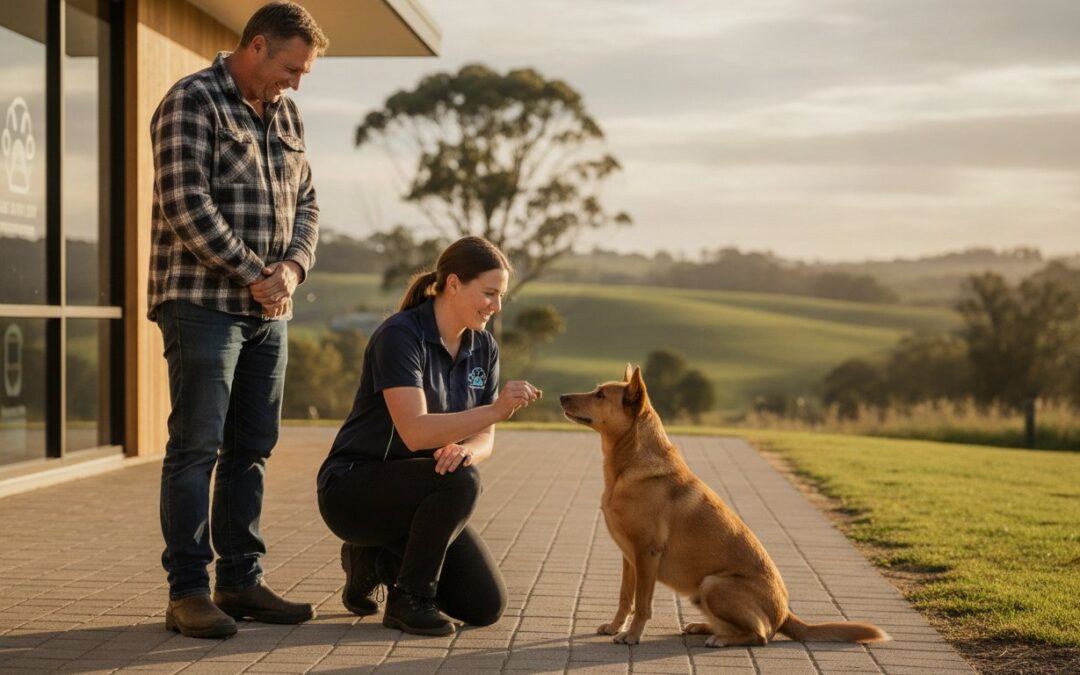
What if your dog actually looked forward to seeing the vet as much as they love a run through the Gippsland greenery? For many pet owners in our region, the mere sight of a travel crate or the turn into a clinic driveway triggers a chorus of whines and a visible sense of dread. You don’t have to feel like the difficult owner in a busy waiting room while your best mate trembles at your feet. At our happy visits vet clinic Gippsland, we believe that medical care should never come at the cost of your pet’s emotional well-being.
We know how heartbreaking it is to see your animal in genuine distress, especially when you’re just trying to keep them healthy. It is a struggle that many of our neighbours in Warragul and Drouin face every day. This guide will show you how to use practical, Fear-Free techniques to turn those anxious car rides into a calm, positive experience for everyone involved. We will explore the secrets to stress-free travel on Gippsland roads, explain how Fear-Free care works in practice, and share strategies to ensure your dog walks through our doors with a wagging tail.
Key Takeaways
- Understand why clinical smells and sounds trigger the “White Coat Effect” and how to manage your pet’s sensory overload before it begins.
- Discover how to use happy visits vet clinic Gippsland to build positive associations through pats and treats without the pressure of a medical procedure.
- Learn how to transform your car into a “mobile safe zone” to keep your mate calm while navigating the winding roads of West Gippsland.
- Master simple “mock exam” techniques at home to desensitise your dog to being handled, making clinical checks a much smoother experience.
- Find out how to partner with your vet team to customise appointment times and strategies that prioritise your pet’s emotional well-being.
Understanding the ‘White Coat Effect’: Why Pets Dread the Vet
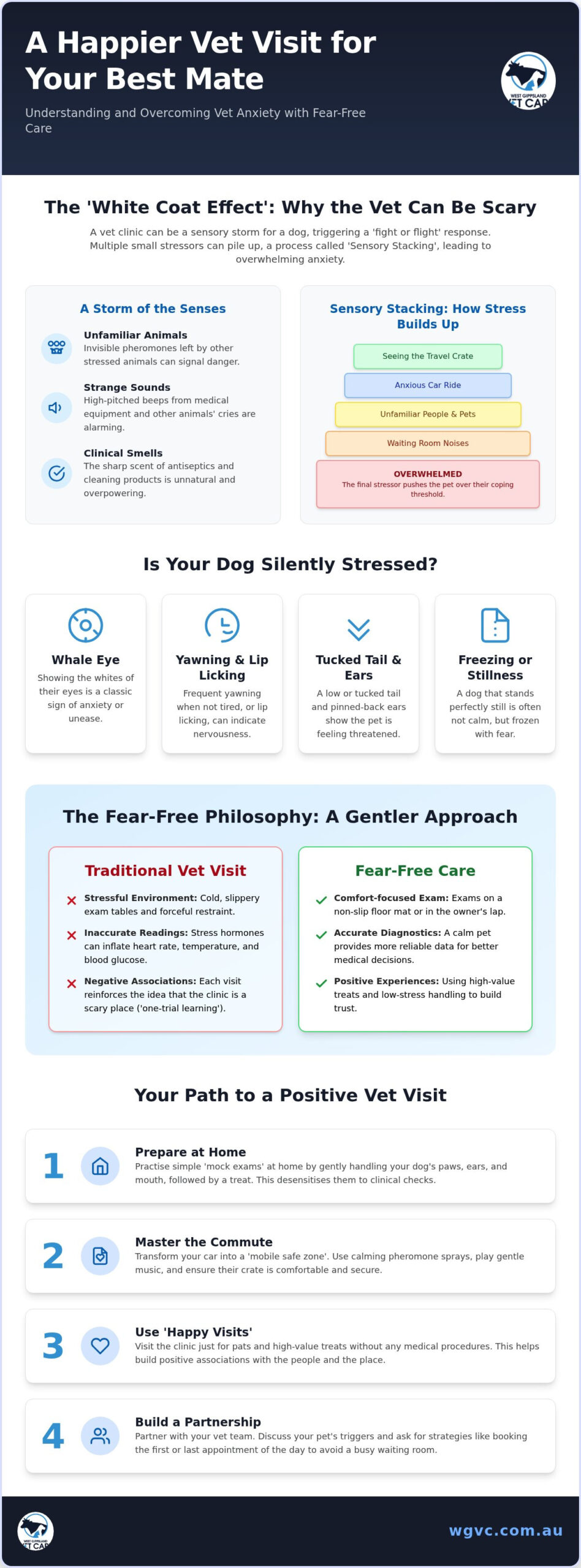
The ‘White Coat Effect’ isn’t just a human phenomenon; it is a deeply ingrained emotional response in our animals too. Modern studies on animal emotions confirm that dogs experience complex feelings like fear and anxiety, often triggered by environments they associate with discomfort. For a dog, the clinic isn’t just a building. It is a sensory storm of sharp clinical smells, high-pitched sounds from medical equipment, and the invisible pheromones of other stressed animals. When these elements combine, they can trigger a powerful ‘flight or fight’ response that makes even the gentlest dog feel cornered.
Sometimes it only takes one scary event for a dog to decide the vet is a dangerous place. This is known as ‘one-trial learning.’ If a previous experience involved a painful procedure or being physically restrained, that memory sticks. This often leads to an ‘anticipation loop’ where your dog starts to worry before you’ve even left the driveway. They might see you grab the specific ‘vet towel’ or notice your own subtle tension as you prepare for the trip. At our happy visits vet clinic Gippsland, we work to break this cycle by replacing these stressful memories with positive, calm associations.
Identifying Your Dog’s Subtle Stress Signals
Many owners only realise their dog is stressed when they start growling or barking, but the signs usually start much earlier. You might notice ‘whale eye,’ where the whites of their eyes are visible, or frequent lip licking and yawning when they aren’t actually tired. Even a dog that stands perfectly still might not be calm; they could be in a ‘freeze’ state, which is a common response to feeling overwhelmed. Recognising these signals as a plea for help rather than ‘naughty’ behaviour is the first step toward a more compassionate and successful visit.
Sensory Stacking in a Gippsland Context
In our local area, stress often starts well before you reach the clinic doors. Sensory stacking happens when small stressors pile up until the animal can no longer cope. It might begin with the smell of the ‘vet ute’ if you live on a farm, or the scent of previous animal passengers in your own car. By the time you reach the waiting room, the sound of other barking dogs can push their arousal levels over the limit. This is why we focus on Fear-Free techniques, such as using calming pheromones and managing waiting room flow, to lower the ‘sensory volume’ for your mate.
What is Fear-Free Veterinary Care? A Gentler Approach
Fear-Free veterinary care represents a profound shift in how we approach the health of our animals. For decades, the standard clinical approach often involved firm restraint to get a procedure done quickly. Today, we understand that the emotional state of the patient is just as critical as their physical condition. This movement is built on the Fear Free certification program, which trains professionals to recognise and mitigate fear, anxiety, and stress in pets. Fear-Free care is a commitment to prioritising a pet’s emotional safety alongside their physical health.
This approach is far more than just “being nice.” It is a clinical necessity. When a dog is terrified, their body releases a flood of stress hormones that can artificially inflate heart rates, body temperatures, and even blood glucose levels. By creating an environment where animals feel safe, we obtain much more accurate diagnostic data. This leads to better medical decisions and more effective treatments. Our goal is to foster happy visits vet clinic Gippsland families can rely on, ensuring that every interaction builds trust rather than eroding it.
The Fear-Free Exam Room Experience
Inside a Fear-Free clinic, the traditional high, slippery exam table is often ignored in favour of where the dog feels most comfortable. This might mean conducting an exam on a soft mat on the floor or even while your mate is curled up in your lap. We use “high-value” rewards, like roast chicken or peanut butter, not just as treats but as essential tools to distract and reward cooperation. Our team is trained in low-stress handling, using gentle techniques that work with the animal’s natural movements rather than fighting against them during routine tasks like vaccinations.
Pain Management as Stress Relief
Physical pain and emotional fear are closely linked; a pet in pain is far more likely to feel defensive and anxious. Addressing discomfort is a core pillar of the Fear-Free philosophy. For example, providing specialised orthopaedic vet Gippsland surgical care ensures that pets with joint issues receive advanced pain management that minimises post-operative stress. For some highly anxious pets, we may also suggest pre-visit pharmaceuticals (PVPs). These are compassionate choices that take the edge off their worry before they even arrive, making the entire experience manageable. If you are concerned about your pet’s anxiety levels, feel free to chat with our friendly team about how we can tailor their next visit to be as peaceful as possible.
Mastering the Gippsland Commute: Stress-Free Travel
The journey to the vet often sets the tone for the entire appointment. In West Gippsland, our winding country roads and rolling hills are beautiful, but they can be a real challenge for a pet’s stomach. If every trip in the car ends with nausea or a scary clinical experience, your dog will quickly learn to dread the engine starting. To foster happy visits vet clinic Gippsland owners should first focus on making the vehicle a ‘mobile safe zone.’ This means the car becomes a place of comfort and security, rather than just a shuttle to a place they fear.
Safety plays a huge role in emotional stability. A dog that is sliding around in the back of a wagon or balancing precariously on a seat will feel physically vulnerable. Using a well-secured crate or a crash-tested harness provides a sense of physical boundaries that can help lower anxiety. For our local farming community, managing the transition for working dogs in utes is just as important. Ensuring they have a non-slip surface and protection from the wind can prevent them from arriving at the clinic in a state of high alert. If you aren’t sure which restraint is best for your vehicle, our team is always happy to provide a few local recommendations.
Overcoming Motion Sickness
It is important to distinguish between ‘anxiety drooling’ and true motion sickness. If your dog starts salivating the moment they see the car, it’s likely a fear response. If they only start once you’re halfway through the bends near Drouin or Warragul, it’s probably nausea. You can help settle their stomach with natural remedies or specific medications prescribed by your vet. A great way to build confidence is ‘destination desensitisation.’ Try taking your dog for a drive that passes the clinic on the way to a favourite park or the local rail trail. This breaks the association that the car always leads to an exam.
The Arrival Strategy
How you arrive is just as vital as the drive itself. We recommend a ‘parking lot pause.’ Instead of rushing straight inside, give your dog five minutes to sniff the grass and settle their heart rate. Many pets find busy waiting rooms overwhelming, so we often suggest waiting in the car until we are ready for you. This aligns with the principles of the Fear Free program, which emphasises reducing environmental triggers. This simple pause prevents a tug-of-war at the door and ensures your mate enters the clinic feeling as calm as possible. If you’d like to plan a low-stress arrival for your next visit, get in touch with us so we can coordinate the best time for your pet.
How to Prepare Your Mate at Home: 5 Essential Steps
A stress-free veterinary experience doesn’t begin at our clinic doors; it starts in your own living room. By taking the time to prepare your dog in a familiar environment, you can significantly lower their baseline anxiety before you even reach for the car keys. Our goal is to foster happy visits vet clinic Gippsland families can enjoy, and that journey begins with these five essential home-based strategies.
- Practice ‘mock exams’: Spend a few minutes each day gently handling your dog’s paws, looking inside their ears, and lifting their tail. Reward them with high-value treats so they associate being touched in sensitive areas with a positive outcome.
- Introduce clinical items into play: You can use household objects to simulate a vet’s tools. A kitchen scale can represent the clinic scales, and a metal spoon can mimic the cool sensation of a stethoscope.
- Utilise calming pheromones: Spritzing a calming pheromone spray onto your dog’s bedding or a bandana 30 minutes before you leave can provide a subtle sense of security during the transition from home to the car.
- Refine your departure ritual: Dogs are masters of reading our routines. Try to keep your departure calm and low-key. Avoid high-pitched “goodbyes” or frantic searching for your wallet, as this alerts your mate that something unusual is happening.
- Schedule ‘Happy Visits’: This involves stopping by our clinic just for a pat and a treat. There is no appointment and no exam; it is simply a chance for your dog to sniff around and receive a fuss from our team before heading back home.
Desensitisation Exercises for Handling
One of the most effective tools we recommend is the ‘Gotcha’ game. This involves saying a specific word like “ears” or “paws,” gently touching that area, and immediately following up with a treat. Over time, your dog learns to anticipate the touch with excitement. Teaching a ‘chin rest,’ where your dog rests their head in your palm, is another fantastic way to encourage cooperative care. It gives them a sense of control and makes clinical checks much smoother for everyone involved.
The Role of Puppy Preschool
For those with a new addition to the family, early socialisation is the ultimate preventative for vet-phobia. Our puppy preschool provides a controlled, safe setting where your pup can build positive associations with the clinic environment during their critical development window. You will also learn to read your own dog’s body language, which is vital for intervening before they become overwhelmed. If you’d like to start your pup on the right track, you can book a behaviour consultation or enquire about our upcoming classes to ensure a lifetime of calm clinical visits.
Building a Partnership with Your West Gippsland Vet
Transforming your pet’s experience at the clinic is a collaborative effort. We view ourselves as an extension of your support system, working alongside you to ensure your best mate feels secure. Open communication is the foundation of this partnership. You are the expert on your dog’s personality, so telling your vet exactly what triggers their fear allows us to adjust our approach before the exam even begins. Whether they are sensitive about their paws or wary of tall men, sharing these details helps us create a tailored plan that respects their boundaries.
Being your dog’s advocate is the most important role you play during a visit. If you feel your pet is reaching their limit, don’t be afraid to speak up; we can always pause or try a different technique. We often suggest customising the visit to suit your dog’s specific needs. For reactive dogs, booking the ‘first of the day’ slot can be a game changer. This allows you to enter a quiet, empty waiting room before the hustle and bustle begins. Our goal is to facilitate the kind of happy visits vet clinic Gippsland owners can rely on to build a genuine bond of trust over time.
When to Seek a Behaviour Consultation
Sometimes, fear goes beyond simple nerves and crosses into a clinical anxiety disorder. If your dog is showing signs of extreme distress that don’t improve with basic desensitisation, it might be time to look into our behaviour consultations. Our team provides professional support to create a comprehensive plan for your pet. This often involves a combination of specialised training, environmental changes, and occasionally medication to help lower their baseline anxiety. Addressing these issues early prevents them from escalating and ensures your pet’s emotional health is prioritised.
A Brighter Future for Your Best Mate
The ultimate reward for this hard work is the emotional relief you feel when a vet trip becomes a non-event. There is a special kind of peace that comes from knowing your dog can walk into the clinic without trembling. Fear-Free care doesn’t just make our jobs easier; it profoundly strengthens the bond between you and your dog. They learn that you will protect them and that the vet’s office is a place of kindness and rewards rather than a source of trauma. If you’re ready to start this journey, Book a Happy Visit or chat with our team today to see how we can support you and your best mate.
Creating a Lifetime of Calm for Your Best Mate
Vet visits don’t have to be a source of dread for you or your animal. By understanding the sensory triggers that cause anxiety and implementing simple handling exercises at home, you can completely change how your dog feels about medical care. From managing the winding commute through West Gippsland to choosing a clinical team that prioritises emotional safety, every small step you take builds a foundation of trust. This collaborative approach ensures that your pet remains relaxed from the driveway to the exam room.
As an independent, locally-owned practice, we are dedicated to a Fear-Free certified approach that puts your pet’s well-being first. We also provide 24-hour emergency support for our existing clients, ensuring you always have a trusted partner by your side. Our goal is to facilitate the kind of happy visits vet clinic Gippsland families deserve, where wagging tails are the standard. Experience the Fear-Free difference at West Gippsland Vet Care and book your next check-up today.
You have the power to turn a stressful chore into a positive experience. By working together, we can ensure your best mate feels safe, heard, and loved during every clinical visit.
Frequently Asked Questions
How can I calm my dog down before a vet visit?
You can lower your dog’s baseline stress by creating a calm environment at home well before you leave. Utilising calming pheromone sprays on their bedding or a bandana about 30 minutes prior can provide a subtle sense of security. Try to keep your own energy steady and avoid rushing, as your mate will quickly pick up on any tension you are feeling.
Should I give my dog a sedative before going to the vet?
Pre-visit pharmaceuticals (PVPs) can be a compassionate choice for pets that experience high levels of anxiety. These medications are not designed to “knock them out” but rather to take the edge off their worry so they can remain calm enough to have a positive experience. It is essential to consult with our team first to find a tailored option that suits your pet’s specific health needs.
Why does my dog shake as soon as we pull into the vet car park?
This shaking is a physical sign of the “anticipation loop” where your dog recognises the specific sights and smells of the clinic. They have associated this location with previous moments of fear or discomfort. By using the arrival strategies we have discussed, such as the “parking lot pause,” you can help them settle their heart rate before entering the building.
Can I stay with my dog during their exam or treatment?
We generally encourage owners to stay with their pets during consultations to provide a familiar sense of security. Being present allows you to act as your dog’s advocate and helps us maintain a Fear-Free partnership. If a specific procedure requires your pet to move to our treatment area, we will always discuss the process with you clearly beforehand.
What should I bring to the vet to make my dog more comfortable?
Bringing a handful of “high-value” treats like roast chicken or small pieces of cheese is a fantastic way to reward cooperation. You might also consider bringing a familiar mat or a blanket from home that carries a safe, recognisable scent. These items help to transform a clinical room into a more comfortable, personal space for your dog.
What if my dog is aggressive or tries to bite at the vet?
It is important to remember that aggression at the clinic is almost always a plea for help rooted in extreme fear. If your dog is prone to snapping when they feel cornered, please let us know when you book. We can arrange a quiet time for your visit and discuss gentle muzzle training as a way to keep everyone safe and lower the overall stress levels.
How do ‘happy visits’ actually work and do they cost anything?
At our happy visits vet clinic Gippsland, these sessions involve bringing your dog into the clinic just for a pat and some treats without any medical exam. They are designed to replace scary memories with positive ones and are a vital part of our Fear-Free commitment. These visits are typically focused on building a bond, so please chat with our reception team to find a quiet time to drop by.
My dog is terrified of the car; how do I even get them to the clinic?
Start by making the car a “mobile safe zone” while it is still parked in your driveway. You can offer treats or play a short game near the vehicle to build a positive association. Gradually progress to short trips that end at a favourite park or a fun destination rather than the clinic, which helps break the link between the car and a vet visit.