You’ve just arrived home with your furry best mate, and as you watch them gingerly settle into their bed, the weight of the coming weeks starts to sink in. It’s completely normal to feel a bit overwhelmed or even frightened when you’re learning how to care for a dog after abdominal surgery. Whether they’ve had a life-saving foreign body removal or a preventative gastropexy, seeing your usually bouncy companion so quiet and vulnerable is tough on any pet parent. You might be worried about the incision opening up during a toilet break or feel anxious about managing their pain, but you aren’t alone in this journey.
We want to help you master the essentials of post-operative care so your dog heals comfortably and safely. By following a few practical steps, you can turn this recovery period into a time of quiet bonding rather than constant stress. This guide will show you how to manage their comfort effectively, keep a high-energy dog calm while they’re confined, and help you distinguish between normal healing and a situation that requires a call to our emergency team. We’ll also look at how modern techniques like keyhole surgery can help speed up the process, ensuring a complication-free recovery that gets those tails wagging again as soon as possible.
Key Takeaways
- Create a peaceful “recovery suite” in a quiet corner of your home to help your dog navigate the initial grogginess and confusion following their operation.
- Master the art of incision monitoring and learn why keeping the Elizabethan collar on for the full 10 to 14 days is vital for protecting the surgical site.
- Discover gentle ways to keep your dog calm and quiet during the critical two to three week restriction period, even when they start getting their spark back.
- Learn the best practices for how to care for a dog after abdominal surgery through tailored nutrition and a steady transition back to their regular diet.
- Familiarise yourself with the post-operative check-up timeline and learn how to identify the subtle signs that your dog might need urgent veterinary attention.
The First 48 Hours: Managing the Post-Operative “Fog”
When you first bring your dog home, they might not seem like their usual happy selves. This initial period is often called the “post-operative fog,” a time when the lingering effects of general anaesthesia and strong pain relief can make your pet feel quite disoriented. You might notice them staring into space, swaying slightly, or even whining. While it’s heart-wrenching to hear, this vocalising is often “dysphoria,” a type of confusion caused by the drugs leaving their system, rather than direct pain. Understanding this helps you stay calm while you’re learning how to care for a dog after abdominal surgery.
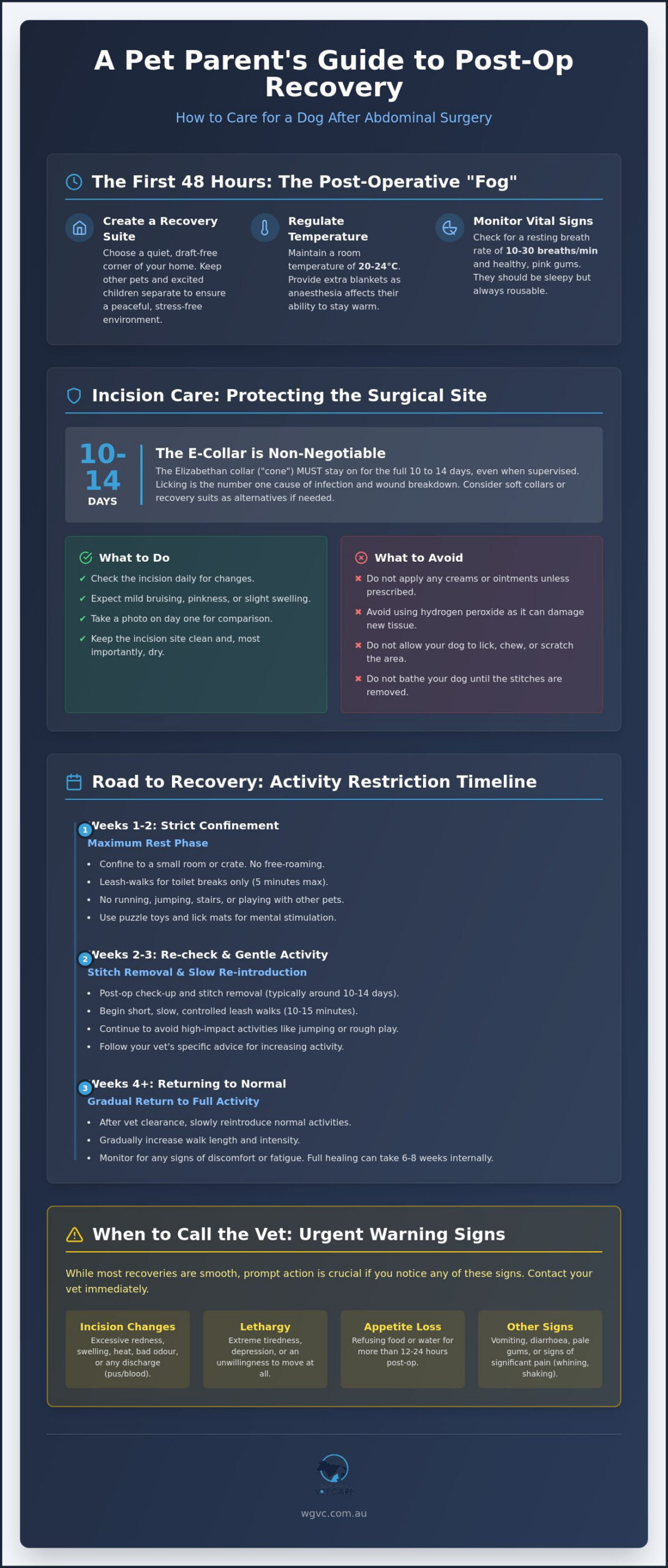
Temperature regulation is a critical but often overlooked part of these first two days. Anaesthesia interferes with a dog’s ability to maintain their own body heat, so they can become chilled very easily. Prepare a “recovery suite” in a quiet, draft-free corner of your home, away from the hustle and bustle of the kitchen or lounge. Keep the room at a comfortable temperature, ideally between 20 and 24 degrees Celsius. Use extra blankets to keep them snug, but ensure they can move away from a heat source if they start to feel too warm.
If your dog had a laparoscopic (keyhole) procedure, you might find they perk up much faster than those who had traditional open surgery. Because keyhole techniques involve smaller incisions and less internal tissue handling, there is usually less inflammation. However, even if they seem bright and bubbly by the second morning, the internal healing is only just beginning. While Canine physical therapy and gentle exercises are wonderful tools later in the journey, these first 48 hours must be dedicated to absolute stillness and rest.
Safe Transport and Arrival in West Gippsland
The trip home from our clinic requires a bit of teamwork. When moving your dog, avoid putting any pressure on their belly. The best way to lift them is to place one arm around the front of their chest and the other under their rump, keeping their body level. Once you arrive home, keep other household pets and excited children in a separate area. Even the most well-meaning “kisses” from a sibling dog can cause unnecessary stress or accidental injury to the fresh incision site.
Monitoring Vital Signs and Alertness
Keeping a close eye on your dog’s vitals provides great peace of mind. A relaxed dog should have a resting respiratory rate of between 10 and 30 breaths per minute; you can count this by watching the rise and fall of their chest while they sleep. Check their gum colour occasionally; they should be a healthy, bubblegum pink. If you press your finger against the gum, the colour should return within two seconds. While your dog will be very sleepy, they should always be “rousable.” If you cannot wake them up with a gentle nudge or by calling their name, please contact us immediately.
Incision Care: Monitoring the Healing Process
Checking your dog’s wound daily is a vital part of learning how to care for a dog after abdominal surgery. In the first few days, a healthy incision should look clean with the edges touching. You might see some mild bruising or a slight pinkish colour around the site, which is quite common as the skin begins its natural repair process. Some minor swelling is also expected, but the area should not feel excessively hot to the touch or look like it is bulging significantly. We recommend taking a clear photo of the wound on the first day home so you have a baseline for comparison.
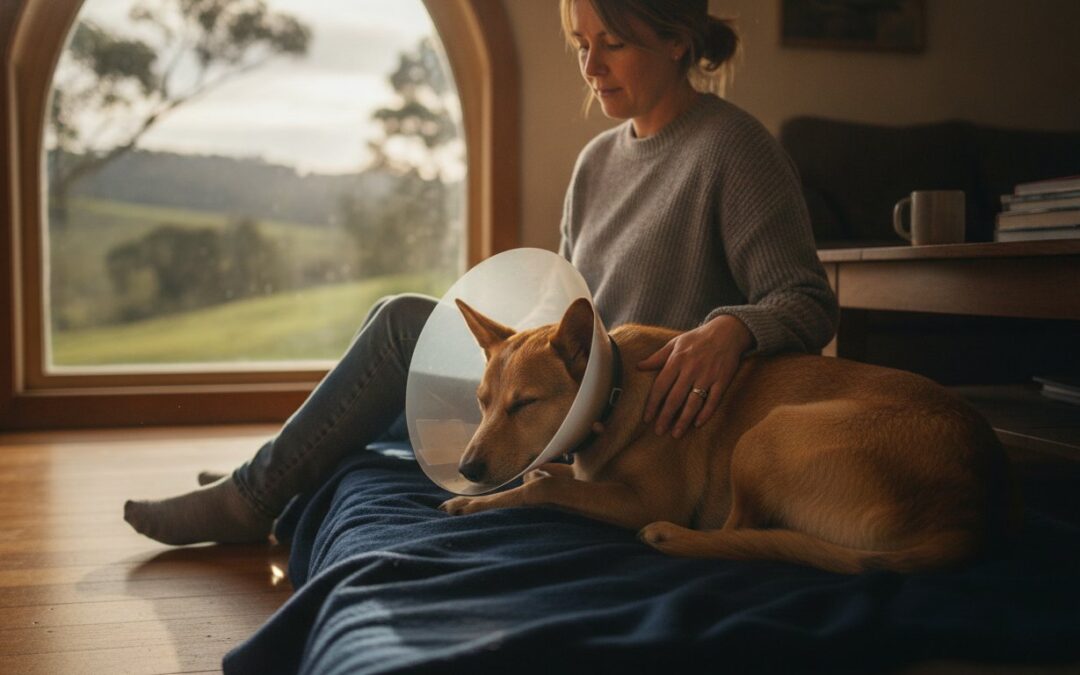
The Elizabethan collar, often affectionately called the “cone of shame,” is your dog’s best friend during this time. It must stay on for the full 10 to 14 days, even when you are watching them. It only takes a second for a dog to lick or nibble at their stitches. A dog’s mouth is full of bacteria, and the abrasive texture of their tongue can quickly cause “dehiscence,” where the wound edges pull apart. If you find the traditional plastic cone too cumbersome, ask us about soft collars or recovery onesies that might suit your pet’s shape better.
When it comes to cleaning the site, less is almost always more. Avoid applying any creams, ointments, or hydrogen peroxide unless we have specifically prescribed them. These substances can actually trap bacteria or irritate the delicate new tissue. If the area becomes dusty or dirty, a gentle dab with a clean, damp cloth is usually all that is required. Keeping the area dry is the priority.
Signs of Complications: When to Call the Vet
While most dogs heal without a hitch, you should stay alert for signs of trouble. Contact us if you notice a sudden increase in redness, significant swelling (oedema), or if the wound begins to smell. Keep an eye on discharge; a tiny amount of clear or slightly blood-tinged fluid (serosanguinous) is normal, but thick, yellow, or green pus (purulent) is a sign of infection. If you see a gap in the stitches or staples, don’t wait. At West Gippsland Vet Care, we provide a 24-hour emergency service to our existing clients, giving you a direct line to help if something doesn’t look right after hours.
Keyhole vs. Traditional Incisions
If your dog underwent keyhole spays and gastropexies, their recovery look will be slightly different. Instead of one long midline incision, they will have two or three small “port” sites, usually only a centimetre or two long. These smaller wounds have a significantly lower risk of herniation and generally heal much faster. However, because these incisions are small, it can be easier to miss subtle changes, so ensure you check each individual site with the same level of care you would give a traditional surgical wound.
Restricting Activity Without Losing Your Mind
One of the most challenging parts of learning how to care for a dog after abdominal surgery is convincing your mate that they aren’t ready for a run yet. By the end of the first week, many dogs start to feel significantly better and will try to resume their normal antics. However, while the skin incision might look healed on the surface, the internal layers of the abdominal wall take much longer to regain their strength. A sudden leap or a quick “zoomie” can put immense pressure on the internal sutures, potentially leading to a hernia or a breakdown of the surgical site.
We recommend a strict 2-3 week rule for activity restriction. This means your dog should be kept on a lead for every single toilet break, even if you have a fully fenced backyard. A wandering cat or a passing bird can trigger a dash that your dog’s body simply isn’t ready for. During this time, you must prevent them from using stairs, jumping onto the couch, or hopping into the back of the ute. These vertical movements are particularly taxing on the abdominal muscles.
Confinement Strategies for the Australian Home
Creating a safe space is essential for a smooth recovery. Many families find that a laundry room or a designated “pet pen” works best, as these areas are often easy to keep cool during a Gippsland summer. If your home has polished floorboards or tiles, these can be quite treacherous for a dog with slightly weakened core strength. Lay down some non-slip rugs or runners to provide extra grip and prevent “Bambi legs” that could strain the surgical site. To keep your dog calm while the rest of the house is busy, try to place their recovery area in a spot where they can still see the family without being in the middle of the foot traffic. It is also a good time to ensure your home is a quiet sanctuary, where you can discover Brimbank Garage Doors & Repairs to fix any noisy garage doors that might disturb your dog’s rest.
Mental Enrichment: Brain Games for Bored Dogs
Just because your dog can’t run doesn’t mean they can’t work. Mental exhaustion is just as effective as a walk for keeping a dog settled. You can tire them out with low-impact scent work, such as hiding a few high-value treats around their immediate bedding area for them to find. Consider the following tools to help reduce post-op anxiety:
- Lickimats: Spreading some peanut butter or plain yoghurt on a mat provides a soothing, repetitive activity that keeps them occupied for ages.
- Stuffed Kongs: A frozen Kong filled with their regular wet food is a great way to make mealtime last longer.
- Gentle Grooming: If your dog enjoys it, a quiet session with a soft brush is a lovely way to bond and provide tactile stimulation without any physical exertion.
Focusing on these quiet interactions ensures your dog remains happy and connected to you while their body does the hard work of healing.
Nutrition, Hydration, and Medication Protocols
Supporting your mate’s recovery from the inside out is just as important as watching their stitches. Properly managing nutrition and medication is a cornerstone of how to care for a dog after abdominal surgery. Most dogs can be offered a small, light meal the evening they return home, provided they are fully awake and not feeling nauseous. We usually recommend a bland diet, such as boiled chicken breast and white rice, which is gentle on the digestive system. Offer about a quarter of their usual meal portion to start with, gradually increasing the amount over the next few days before transitioning back to their regular biscuits.
Hydration is equally vital, but you must manage it carefully. Some dogs are quite thirsty after anaesthesia and may try to gulp down a whole bowl of water at once. This can lead to vomiting, which puts unnecessary strain on the abdominal wall. Instead, offer small amounts of water frequently. If your dog seems prone to gulping, you can even offer ice cubes for them to lick, which provides hydration at a much slower pace.
When it comes to medication, the golden rule is to finish the entire course. Even if your dog seems to be bouncing back and showing no signs of discomfort, those antibiotics and anti-inflammatories are doing essential work behind the scenes. Stopping medication early can lead to a relapse in pain or the development of a secondary infection. If you are struggling to get your dog to take their tablets, try hiding them in a small piece of cheese or a bit of wet food, but be careful not to poke around their sore belly while doing so.
Managing Pain Relief and Inflammation
Dogs are experts at hiding their discomfort, so you need to look for subtle cues. Signs of pain can include quiet panting, trembling, or a “praying” posture where they tuck their front legs down while keeping their rump in the air to stretch out their abdomen. If you notice these behaviours, it is a sign that their current pain management may need adjusting. Never, under any circumstances, give your dog human medications like Panadol or Ibuprofen; these are highly toxic to pets and can cause life-threatening complications. If you feel your pet is struggling, it is best to book a post-operative consultation so we can safely adjust their protocol.
Appetite and Digestion Issues
It is common for a dog to have a reduced appetite for the first 24 hours, but if they refuse food for longer than that, please give us a call. You should also keep a close eye on their bowel movements. Post-operative constipation is quite common due to the combination of pain relief, reduced activity, and the surgery itself. However, if you notice extreme straining, or if there is any blood in their stool, this requires immediate attention. Monitoring these daily habits ensures that any internal issues are caught well before they become serious problems.
The Road to Recovery: Follow-ups and Returning to Normal
The final leg of the journey is often the most rewarding. As you master how to care for a dog after abdominal surgery, the focus shifts from monitoring every breath to celebrating small milestones. We generally like to see our patients for check-ups at the 2, 7, and 14-day marks. These visits allow us to ensure the deep tissue layers are knitting together perfectly and that your mate is comfortable. By day 14, we can usually remove any external sutures or staples. This is often a huge relief for both you and your dog, as it usually means the “cone of shame” can finally be retired.
This period is also a good time to reflect on the long-term benefits of the procedure. For example, if your dog underwent a preventative gastropexy, you have taken a massive step in protecting them from Gastric Dilatation-Volvulus (GDV), commonly known as bloat. Considering that the survival rate for a dog that undergoes prompt GDV surgery is between 80% and 90%, having this preventative measure in place offers incredible peace of mind. You have effectively reduced a major health risk for the years ahead.
Gradual Return to Exercise
Once the sutures are out, it is tempting to head straight to the dog park, but a slow approach is still best. During weeks 3 and 4, start with short, controlled walks on a lead. Think of a stroll to the letterbox and back, gradually increasing the duration by five minutes every few days. You should wait until at least the end of week 4 before allowing any off-leash play, vigorous wrestling, or swimming. During this time, keep an eye out for “late-stage” complications like a seroma, which is a soft, fluid-filled lump that can sometimes form near the incision. While these are usually harmless, we always prefer to check any new lumps just to be safe.
A Lifetime of Health in West Gippsland
Your dedication during these few weeks has a profound impact on your dog’s future wellness. We view ourselves as your partners in this healing process, and we want every visit to our clinic to be a positive experience. Our Fear-Free veterinary care approach ensures that even after a major surgery, your dog can feel safe and relaxed when they walk through our doors for their final check-ups. You have done the hard yards of post-operative care; now it is time to get back to the bushwalks and beach trips that make life with a dog in Gippsland so special. Enjoy the time with your healthy mate.
Getting Your Best Mate Back on Their Feet
Watching your dog recover requires patience, but the rewards of a healthy, happy pet are worth every quiet moment. You now have the tools to handle the initial disorientation, monitor healing, and manage those tricky “zoomies” that often appear before a dog is fully ready. Successful healing is always a team effort. For those who may also be seeking community care for themselves or loved ones, NDIS SIL providers Melbourne offer specialised support to help manage daily living and independence. By strictly following medication schedules and keeping activity low for those first few weeks, you are providing the best possible environment for their body to mend properly.
If you ever feel uncertain about how to care for a dog after abdominal surgery, remember that you don’t have to navigate this alone. As an independent, locally-owned practice, we are deeply committed to the well-being of Gippsland’s pets. Whether you are interested in the faster recovery times offered by our specialised laparoscopic (keyhole) surgical options or you need the peace of mind that comes with our 24-hour emergency support for surgical patients, we are here for you. Contact the compassionate team at West Gippsland Vet Care today to discuss your dog’s surgical needs or post-op recovery. You’ve done a wonderful job supporting your mate through this; soon enough, you’ll both be back to enjoying your favourite local adventures together.
Common Questions About Post-Operative Care
How long does a dog take to recover from abdominal surgery?
Full recovery generally takes between two and four weeks for most dogs. While the skin incision usually heals enough for suture removal within 10 to 14 days, the internal abdominal wall takes much longer to regain its full strength. It is vital to maintain strict activity restrictions during this entire window to prevent complications like hernias or internal wound breakdown.
Can I leave my dog alone after abdominal surgery?
You should avoid leaving your dog alone for at least the first 24 to 48 hours after they return home. During this initial period, they are still processing the effects of anaesthesia and need close monitoring for any signs of distress or disorientation. Once they are stable and alert, they can be left for short periods, provided they are safely confined in their “recovery suite” and wearing their Elizabethan collar.
What should I do if my dog won’t stop licking the incision?
If your dog is persistent, ensure their Elizabethan collar is fitted correctly and hasn’t been loosened. You might also consider a medical pet shirt or “recovery onesie” for an extra layer of protection. Licking even for a few seconds can introduce bacteria and lead to a serious infection, so never leave them without a physical barrier until your vet confirms the wound is fully closed.
Why is my dog coughing after their surgery?
A mild cough is quite common and is usually caused by irritation from the endotracheal tube used during anaesthesia. This tube is essential for delivering oxygen and gas while they are asleep, but it can leave their throat feeling a bit scratchy for two or three days. If the cough is persistent, productive, or seems to be getting worse, please contact us for a check-up.
How do I know if my dog is in pain after surgery?
Signs of discomfort can be subtle, such as quiet panting, trembling, or a general reluctance to settle. You might also notice the “praying” posture, where they stretch their front legs out while keeping their back end up. Understanding how to care for a dog after abdominal surgery involves recognising these changes in behaviour and contacting your vet if their prescribed pain relief doesn’t seem to be helping.
Is it normal for my dog not to have a bowel movement for a few days?
It is very common for dogs not to have a bowel movement for two or three days after their procedure. This delay happens because they were fasted before surgery and may have eaten very little since returning home. Certain pain medications can also slow down the digestive tract. As long as they aren’t straining excessively or acting distressed, their rhythm should return naturally as their appetite improves.
When can my dog go back to sleeping in my bed or on the couch?
Your dog should wait at least 14 days before they are allowed back on the couch or bed. Jumping up or down puts significant stress on the abdominal muscles and the surgical site. Once the vet has removed the sutures and cleared them for increased activity, you can gradually allow them back onto their favourite furniture, perhaps using a set of pet steps to make the transition easier.
What are the signs of internal bleeding after dog surgery?
Signs of internal bleeding are a medical emergency and require immediate veterinary attention. Look for very pale or white gums, a rapid or shallow breathing rate, and extreme lethargy where the dog is difficult to rouse. In some cases, the abdomen may look slightly distended or feel firm to the touch. If you notice any of these signs, use our 24-hour emergency service immediately.