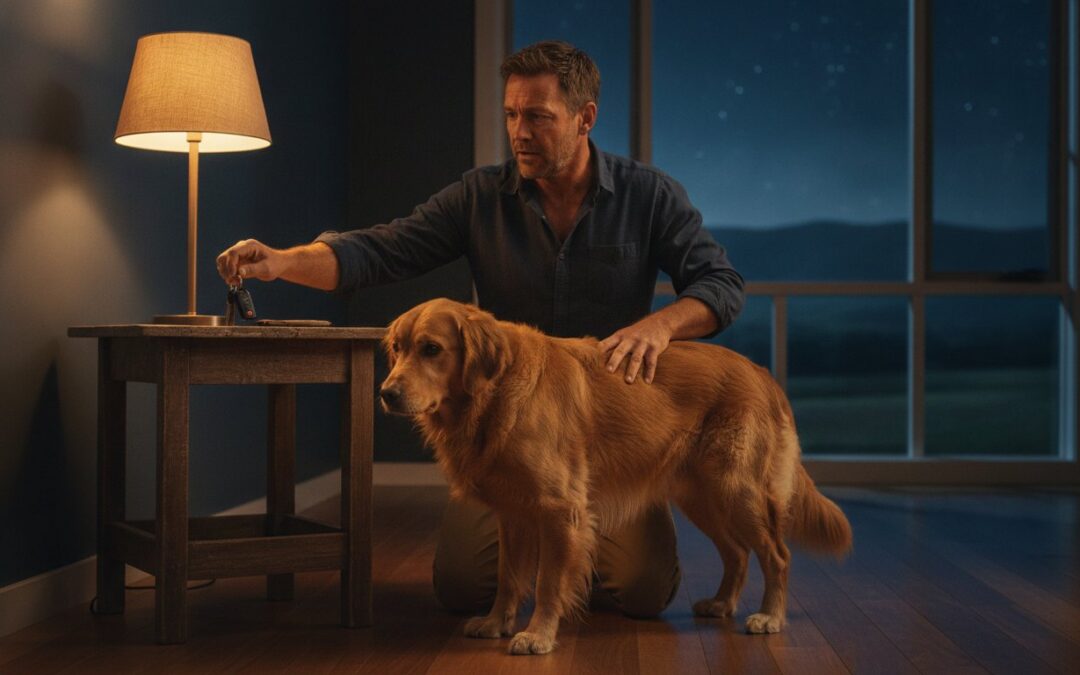
Imagine it is 11 PM on a quiet Tuesday night. Your loyal companion is pacing restlessly, looking at their belly, and trying to retch without producing anything. Your heart starts to race because you aren’t sure if it is just a bit of tummy upset or something far more serious. Knowing what to do if you suspect bloat in your dog is the most important skill you can have in these high-pressure moments. When every minute counts, having a clear plan helps you stay calm so you can provide the care your mate needs.
We understand how frightening it is to see your dog in distress, especially when you are unsure if a midnight vet visit is truly necessary. You want to protect your best mate, and we are here to support you through that worry. By following this life-saving checklist, you will learn how to recognise the critical signs of GDV and take the right steps to save your dog’s life. We will walk through immediate transport instructions and discuss how preventative measures, such as a gastropexy, can help ensure this never happens again.
Key Takeaways
- Understand why Gastric Dilatation-Volvulus (GDV) is a critical medical emergency that requires immediate action to protect your dog’s life.
- Learn how to recognise the most urgent warning signs, such as unproductive retching and a drum-like abdomen, before the condition progresses.
- Gain a clear, step-by-step guide on what to do if you suspect bloat in your dog to ensure they receive the fastest possible care.
- Discover what happens during the stabilisation and surgical process at the vet, helping you feel more prepared and informed during a crisis.
- Explore how a preventative keyhole gastropexy serves as a vital safeguard for high-risk breeds, offering long-term peace of mind for you and your mate.
What is Bloat in Dogs and Why is it an Emergency?
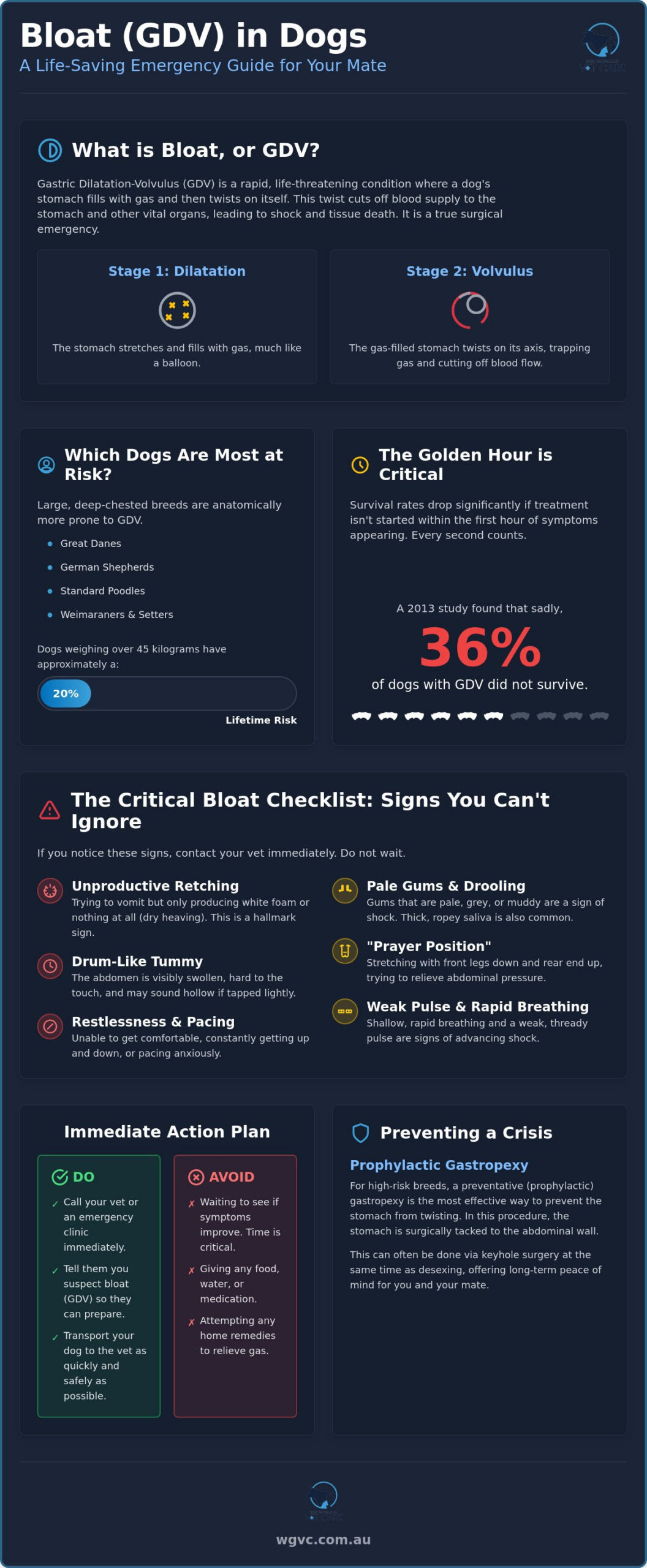
When your mate’s stomach starts to swell, it is more than just a bit of wind. The medical term for this condition is Gastric dilatation-volvulus (GDV), and it is one of the most frightening situations a pet owner can face. It occurs when the stomach fills with gas (dilatation) and then physically rotates on its axis (volvulus). This twist acts like a kink in a garden hose, trapping gas and cutting off the essential blood supply to the stomach and other vital organs. Without blood flow, the stomach tissue begins to die, and the dog enters a state of rapid, life-threatening shock.
In our Gippsland community, we frequently see this condition in larger, deep-chested breeds like Great Danes, German Shepherds, and Standard Poodles. If you are a local owner, knowing what to do if you suspect bloat in your dog can be the difference between a successful recovery and a heartbreaking loss. Veterinary professionals often talk about the ‘Golden Hour’. While every dog is different, survival rates drop significantly if treatment isn’t started within that first hour. A study from Tufts Cummings School of Veterinary Medicine found that 36% of dogs admitted with GDV did not survive, which underscores why every second counts.
The Difference Between Gas and GDV
It is easy to get confused between simple gas and the ‘twist’. In simple bloat, the stomach is distended with air but remains in its normal position. In GDV, the stomach rotates and often takes the spleen with it. The spleen is a blood-filtering organ that sits right next to the stomach; when the twist occurs, the spleen can become congested and damaged. The most important thing to remember is that you cannot tell the difference between gas and a twist just by looking at your dog. Only a veterinary X-ray can confirm if the stomach has rotated and if surgery is required.
Why Deep-Chested Dogs are at Higher Risk
Deep-chested dogs have a lot of room in their abdominal cavity, which allows the stomach more mobility to swing and eventually flip. Research indicates that dogs weighing over 45 kilograms have approximately a 20% lifetime risk of developing bloat. Genetics and family history play a massive role here. If a dog’s parent or sibling has suffered from bloat, their own risk increases. GDV is a true surgical emergency that requires immediate intervention. Beyond anatomy, factors like eating one large meal a day or vigorous exercise right after dinner can also contribute to the risk for these breeds.
The Critical Bloat Checklist: Signs You Can’t Ignore
If you are reading this because your dog is acting strangely, please take a moment to breathe and focus. Identifying the symptoms early is the most powerful tool you have to protect your mate. Knowing what to do if you suspect bloat in your dog starts with a quick physical assessment. While some signs are subtle, others are unmistakable indicators of a medical crisis. If you notice any of the following, please stop reading and contact a vet immediately.
- Unproductive retching: Your dog may look like they are trying to vomit but only produces a small amount of white foam or nothing at all. This “dry heaving” is a hallmark sign that the stomach entrance is blocked or twisted.
- The ‘Drum-Like’ Belly: Gently feel your dog’s abdomen. In a bloat emergency, the stomach becomes distended and feels quite hard to the touch. If you tap it lightly, it may even sound hollow, much like a drum, due to the trapped gas.
- Restlessness and pacing: Dogs with GDV often cannot settle down. They might pace the room, get up and down repeatedly, or seem unable to find a comfortable position. They may also “guard” their tummy by tensing up when you approach.
- Excessive drooling and pale gums: Thick, ropey saliva is common. Check their gums; they should be a healthy pink. If they appear pale, grey, or muddy, it is a sign that their body is entering cardiovascular shock.
Early Warning Signs (The First 30 Minutes)
In the very early stages, your dog might simply seem anxious. You might notice them looking back at their flank or tummy repeatedly, as if wondering where the discomfort is coming from. Heavy panting that doesn’t match the weather or their recent activity level is another red flag. Some dogs adopt the “prayer position,” where their front legs are stretched out flat on the ground while their rear end stays up in the air. This is a clear attempt to stretch the abdomen and relieve the mounting pressure inside.
Advanced Symptoms of Shock
As the condition progresses, the lack of blood flow causes the body to shut down. You may notice their pulse feels weak or thready, and their breathing becomes very rapid and shallow. If their ears or paws feel unusually cold, it suggests that circulation is failing. In the most severe cases, a dog will collapse or become unable to stand. This stage requires life-saving veterinary surgery for bloat to untwist the stomach and assess the damage to internal organs. If you are ever in doubt about these symptoms, our team at West Gippsland Vet Care is always here to listen and help you decide on the next best step for your companion.
Immediate Action Plan: What to Do (and What to Avoid)
When minutes matter, having a clear plan prevents panic from taking over. If you have recognised the signs of bloat in dogs, your priority is getting your mate to a veterinary professional as quickly as possible. This is not a situation where you can wait for a regular appointment or see how they look in the morning. Follow these steps to give your dog the best chance of a positive outcome.
- Step 1: Call your vet immediately. Phone the clinic while you are walking to the car. This allows the veterinary team to prepare the necessary equipment and fluids before you even arrive. If it is after hours, ensure you are calling an emergency service.
- Step 2: Remove all food and water. Do not allow your dog to drink or eat anything. Crucially, never try to induce vomiting at home. If the stomach is twisted, nothing can come up, and trying to force it can cause further damage or aspiration.
- Step 3: Keep your dog calm. High levels of stress can lead to faster breathing and more gas intake. Speak in a soothing voice and move purposefully but quietly.
- Step 4: Organise your transport. If possible, have a second person come along. One person can drive while the other monitors the dog’s breathing and keeps them steady in the back.
Knowing exactly what to do if you suspect bloat in your dog involves understanding that this is a race against time. Every moment spent trying home “cures” is a moment lost for professional intervention.
The Danger of Home Remedies
There are many myths about managing bloat at home that can be incredibly dangerous. Some believe that giving anti-gas medication or “walking it off” will help. In reality, exercise can actually encourage the stomach to rotate further if it hasn’t fully twisted yet. Never attempt to decompress the stomach yourself with a needle or tube. These procedures require sterile conditions and professional expertise; attempting them at home often leads to fatal infections or internal bleeding.
Safe Transport to the Clinic
When moving your dog, try to keep their body level. Avoid putting any pressure on the abdomen; instead, lift from under the chest and the rump. If you live in more rural parts of Gippsland, we know the backroads can be a bit bumpy. Drive carefully but efficiently, avoiding sudden jolts that might cause your dog to slide or tumble in the back. Keep the car cool to help with their breathing and keep the air flowing. For our existing clients, West Gippsland Vet Care provides 24-hour emergency support in Warragul, ensuring help is available whenever a crisis strikes.
What Happens at the Vet: Diagnosis and Surgery
Arriving at the clinic often brings a wave of relief, but for the veterinary team, the most intense work is just beginning. Once you have followed the steps on what to do if you suspect bloat in your dog and reached our doors, our first priority is stabilisation. We immediately start aggressive intravenous fluid therapy and provide strong pain relief to combat the life-threatening shock your mate is experiencing. This initial care is vital to support the heart and blood pressure before any further diagnostics take place.
Diagnosis follows as soon as the dog is stable enough for imaging. We use digital X-rays to look for a specific shape often called the ‘double bubble’ or ‘Popeye’ sign. This confirms the stomach has physically rotated on its axis. Before we can safely begin surgery, we often need to decompress the abdomen. This involves using a stomach tube or a fine needle to release the trapped gas, which takes the immediate pressure off the heart and lungs, allowing for safer anaesthesia.
The emergency surgery itself involves untwisting the stomach and carefully inspecting the internal organs. We look for any tissue that has died due to the lack of blood flow. In some cases, the spleen is so badly damaged by the twist that it must be removed to save the dog’s life. Our surgeons work with precision to ensure all remaining tissue is viable and healthy.
The Surgical Procedure (Gastropexy)
During the operation, we perform a procedure called a gastropexy. This involves physically tacking the stomach to the inside of the abdominal wall. It is a vital step because, without it, the recurrence rate for bloat can be as high as 80%. You can learn more about our advanced surgical care and how we manage these complex cases. Gastropexy is the only way to ensure the stomach cannot twist again.
Recovery and Post-Op Care
The first 48 hours after surgery are the most critical. We monitor the dog’s heart rhythm closely, as GDV can cause dangerous heart arrhythmias due to toxins released by damaged tissue. Once they are ready to go home, we will help you set up a special feeding schedule. This usually involves several very small, soft meals throughout the day to let the stomach heal without being stretched. If your dog is in a high-risk category or has recently recovered from an episode, please contact our team today to discuss how we can support their long-term health.
Preventing Bloat: The Role of Preventative Gastropexy
While knowing what to do if you suspect bloat in your dog is a life-saving skill for any owner, the best-case scenario is preventing the emergency altogether. Many owners rely on slow-feeder bowls or feeding multiple small meals to manage risk. While these are excellent habits, diet and management alone are often not enough to stop a deep-chested dog’s stomach from shifting. A preventative gastropexy is essentially an insurance policy for your mate’s health, providing a permanent physical solution to a biological vulnerability.
This procedure is most commonly performed on high-risk breeds such as Great Danes, Weimaraners, and German Shepherds. We often recommend performing a preventative “tack” at the same time as a desexing procedure. This approach is highly efficient as it requires only one session of anaesthesia and one recovery period. For older dogs or those already desexed, it can still be performed as a standalone preventative measure to give you peace of mind during those late-night sessions of pacing or restlessness.
Laparoscopic Gastropexy at West Gippsland Vet Care
At West Gippsland Vet Care, we are proud to offer laparoscopic, or keyhole, surgery for our patients. Unlike traditional open surgery which requires a large incision, keyhole surgery uses tiny cameras and specialised instruments. This method is significantly less painful for your dog and leads to a much faster recovery time, meaning they can get back to their favourite Gippsland walking tracks sooner. Research shows that a gastropexy procedure reduces the risk of life-threatening torsion by approximately 95%. Our specialists in keyhole spay and gastropexy are here to discuss whether this proactive step is right for your dog’s specific needs.
Lifestyle Changes to Reduce Risk
Even with a gastropexy, maintaining healthy habits is important for your dog’s overall digestive wellbeing. Avoid vigorous exercise or heavy play for at least one hour before and after meals. This allows the stomach to settle and reduces the chance of gas buildup. Focus on high-quality, easily digestible diets that don’t sit heavily in the gut. While you now know what to do if you suspect bloat in your dog, staying vigilant and recognising the early signs of discomfort will always be your best defence. By combining modern surgical techniques with sensible daily routines, you can ensure your best mate stays happy, healthy, and by your side for years to come.
Staying Prepared for Your Dog’s Wellbeing
Your dog is more than just a pet; they are a cherished member of the family. By learning the critical warning signs and knowing exactly what to do if you suspect bloat in your dog, you have already taken a vital step toward protecting them. Remember that time is the most important factor in a GDV crisis. Always choose immediate professional help over home remedies, and consider the long-term security that a preventative keyhole gastropexy can provide for high-risk breeds.
Our experienced team of Gippsland vets is dedicated to providing the highest quality care for our local community. We offer advanced keyhole surgical facilities in Warragul and provide 24-hour emergency care for our existing clients, ensuring help is never far away when you need it. If you are worried about your mate or want to discuss preventative options, please contact West Gippsland Vet Care immediately. We are here to support you and your companion through every stage of their life with kindness and expertise.
Frequently Asked Questions
Can a dog survive bloat without surgery?
No, if the stomach has physically twisted (volvulus), surgery is the only life-saving option available. While simple gas dilation might occasionally resolve on its own, there is no way to distinguish between gas and a deadly twist without a veterinary X-ray. If the twist is present, the lack of blood flow will cause tissue death and cardiovascular shock within a very short window of time.
How much time do I have if I suspect my dog has bloat?
You should act within minutes rather than hours. The “Golden Hour” is a critical window where veterinary intervention has the highest chance of success before organ damage becomes irreversible. Knowing what to do if you suspect bloat in your dog means calling the vet immediately as soon as you notice the first signs of unproductive retching or a distended belly.
Are there any home remedies for a bloated dog stomach?
There are no safe or effective home remedies for managing GDV. Giving medications like anti-gas tablets or attempting to “walk it off” wastes precious minutes and can actually encourage the stomach to rotate further. Your focus must be entirely on getting your mate to a clinic where professionals can decompress the stomach and stabilise their blood pressure.
Which dog breeds are most likely to get bloat in Gippsland?
Large, deep-chested breeds are the most frequent patients we see for this condition in the Gippsland region. This includes Great Danes, German Shepherds, Standard Poodles, and Weimaraners. If you own one of these breeds, it is worth discussing preventative options with our team before an emergency occurs, as their anatomical structure makes them naturally more vulnerable.
Is bloat the same thing as a stomach ache?
No, bloat is a mechanical and vascular emergency that is far more serious than a standard stomach ache. While a stomach ache might involve mild discomfort from something your dog ate, bloat involves the stomach filling with gas and potentially twisting. This twist cuts off blood flow to the heart and other organs, which does not happen with a typical upset tummy.
What is the success rate of bloat surgery if caught early?
The success rate for bloat surgery is quite high, often between 80% and 90%, if the dog is brought in before they enter advanced shock. The prognosis remains positive as long as the stomach tissue and spleen are still healthy. However, the survival rate drops significantly if treatment is delayed and internal organs begin to die from a lack of oxygen.
How much does preventative gastropexy cost in Australia?
The cost of a preventative gastropexy varies based on your dog’s size and whether the procedure is performed on its own or alongside desexing. Because this is a specialised surgical service, we recommend contacting our clinic for a tailored estimate for your mate. Investing in this preventative step is much more affordable than the intensive care required for an emergency GDV episode.
Can bloat happen more than once to the same dog?
Yes, bloat has a very high recurrence rate of up to 80% if a gastropexy is not performed during the initial emergency. If the stomach is not physically tacked to the abdominal wall, it remains free to twist again in the future. Performing a gastropexy during the first surgery reduces this recurrence risk to approximately 5%, providing essential long-term protection.