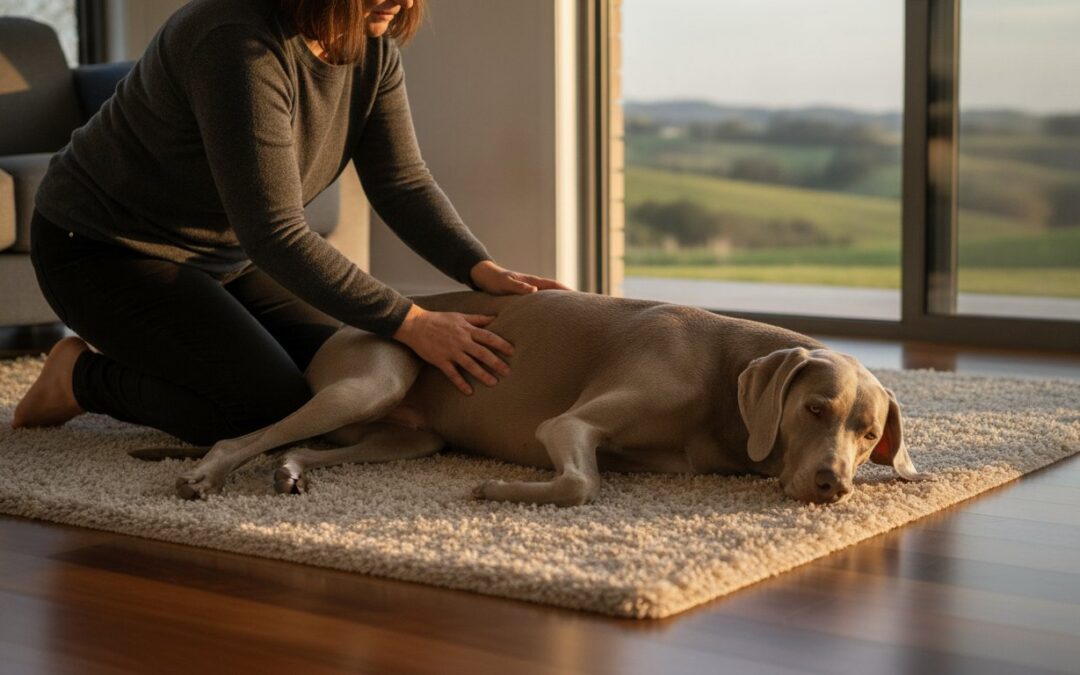
Imagine you’re relaxing on the couch after dinner when you notice your dog pacing restlessly, head down and tail tucked. He tries to retch but nothing comes up, and his belly looks slightly tighter than usual. It’s easy to assume he’s just eaten something a bit rich or has a touch of wind, but these subtle changes are often the critical signs of bloat in dogs every owner should know. Gastric Dilatation-Volvulus, or GDV, is a terrifying mechanical emergency where the stomach fills with gas and twists, cutting off vital blood flow in a matter of minutes.
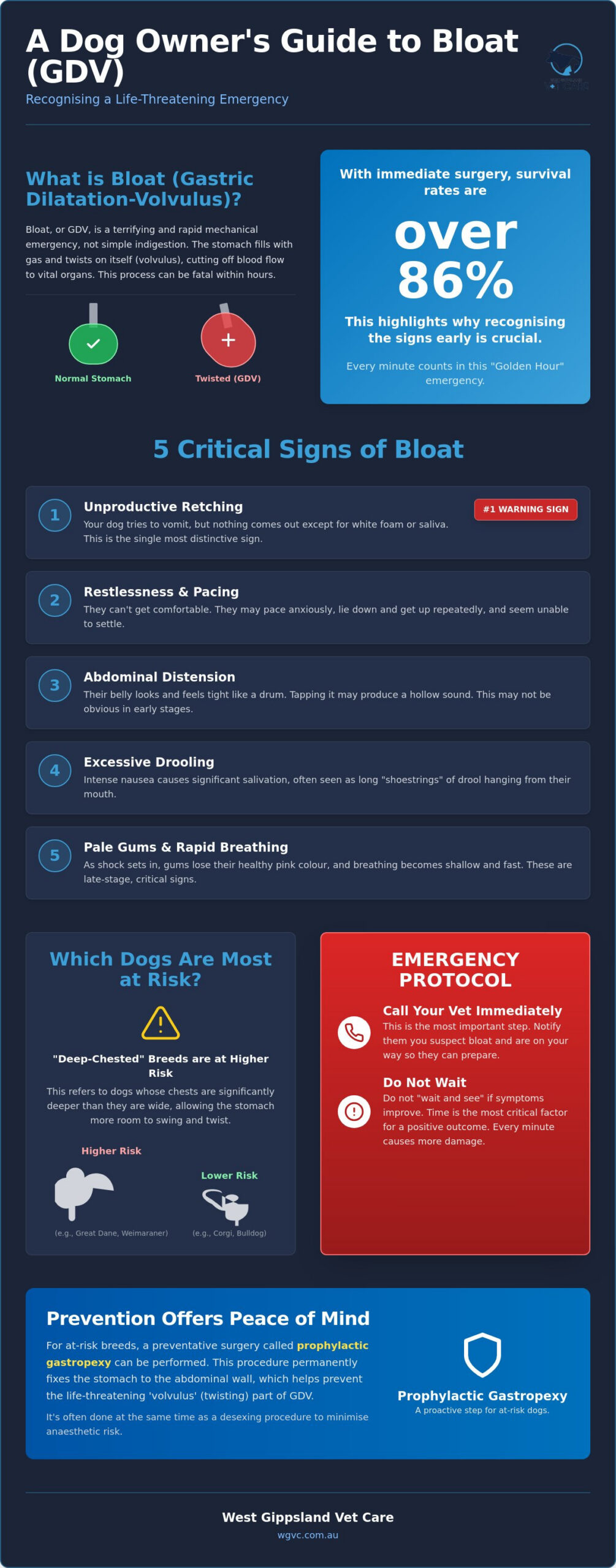
We understand how heart-wrenching it is to feel helpless when your best mate is in pain, especially when the line between a simple tummy ache and a life-threatening crisis feels so blurry. You want to protect them, and the good news is that prompt action makes a world of difference; recent data shows that over 86% of dogs survive GDV when they receive immediate surgical care. This guide will help you recognise those quiet early warnings so you can act with confidence. We’ll walk through a clear checklist of symptoms to watch for, explain why this condition happens, and share how modern preventative options can offer you true peace of mind.
Key Takeaways
- Understand why GDV is a critical mechanical emergency where the stomach twists and cuts off blood flow to vital organs.
- Master the signs of bloat in dogs every owner should know, focusing on subtle cues like unproductive retching and a dog’s inability to settle.
- Identify if your dog’s breed or “deep-chested” conformation puts them at a higher risk for this life-threatening condition.
- Learn the essential emergency protocol, including why notifying your vet immediately is the most important step you can take for your mate.
- Discover the long-term peace of mind offered by preventative gastropexy, a procedure that helps secure the stomach and prevent future twisting.
What is Bloat in Dogs and Why is it an Emergency?
Most dog owners have seen their pet sprawled out on the rug after a big dinner, contentedly sleeping off what we often call a food coma. While a full tummy usually leads to nothing more than a few loud snores, true clinical bloat is a vastly different and far more dangerous situation. It isn’t just a case of indigestion or temporary discomfort; it’s a rapidly progressing crisis that vets often describe as their greatest nightmare. Understanding the signs of bloat in dogs every owner should know begins with recognising that this is a mechanical failure of the body that cannot be fixed with home remedies or a bit of rest.
In the veterinary world, this condition is known as Gastric dilatation-volvulus (GDV). It occurs when the stomach fills with gas, food, or fluid (dilatation) and then physically twists upon itself (volvulus). This twisting acts like a kink in a garden hose, trapping the contents and gas inside. As the stomach continues to expand, it puts immense pressure on the diaphragm, making it hard for the dog to breathe, and compresses major veins, which stops blood from returning to the heart. This leads to a state of rapid shock and organ death, often within just a few hours.
Understanding GDV (Gastric Dilatation-Volvulus)
For many deep-chested dogs, the stomach sits somewhat like a pendulum within the abdomen. When it becomes heavy or distended, it can swing and flip, causing the life-threatening twist that defines GDV. As the gas builds up and has nowhere to go, the stomach wall begins to stretch and thin, which can eventually lead to the tissue dying or even rupturing. Put simply, GDV is a severe mechanical obstruction that requires immediate surgical intervention to untwist the stomach and relieve the pressure.
Why Minutes Matter in West Gippsland
In emergency medicine, we often talk about the “Golden Hour”. This is the critical window where medical intervention has the highest chance of saving a life. For a dog experiencing the signs of bloat in dogs every owner should know, time is quite literally the enemy. Every minute the stomach remains twisted, more blood supply is cut off and more tissue begins to die. This is why surgical success rates are much higher when the condition is caught early.
For our community in West Gippsland, distance is a factor we must consider. If you live in Drouin or Neerim South, the drive to an emergency centre takes time that your dog might not have. Recognising the symptoms the moment they start, rather than waiting to see if they pass, is the most vital step in ensuring your mate makes it through. A delay of even thirty minutes can be the difference between a straightforward recovery and a much more complex, high-risk situation.
5 Critical Signs of Bloat Every Owner Should Recognise
When your dog isn’t feeling their best, they can’t tell you exactly what’s wrong, but their body language speaks volumes. While some emergencies are obvious, the signs of bloat in dogs every owner should know can sometimes start quite quietly. It’s a common misconception that a dog’s belly will immediately look like a balloon. In reality, the most dangerous stage often begins with subtle behavioural shifts that happen before the physical swelling is even visible. Being able to spot these early changes is the key to getting your mate the help they need before the situation becomes critical.
There are five primary indicators that suggest your dog is experiencing GDV rather than a simple upset stomach. If you notice any combination of these, it’s time to act:
- Unproductive Retching: This is perhaps the most distinctive sign. Your dog will appear to be trying to vomit, but nothing comes up except perhaps a small amount of white foam or saliva.
- Restlessness and Pacing: A bloated dog cannot get comfortable. They may pace the floor, lie down and get up repeatedly, or seem unusually anxious and unable to settle.
- Abdominal Distension: Their belly may feel hard to the touch or tight like a drum. If you gently tap the side of their abdomen, it might produce a hollow, drum-like sound.
- Excessive Drooling: Intense nausea and the physical inability to swallow properly lead to significant salivation. You might notice long “shoestrings” of drool hanging from their mouth.
- Pale Gums and Rapid Breathing: As the body enters shock, the gums will lose their healthy pink colour and turn pale or greyish. Their breathing will become shallow and very fast as they struggle to get enough oxygen.
The ‘Unproductive Retch’: The #1 Warning Sign
The sound of a “dry heave” is something you won’t soon forget. It’s a deep, rhythmic contraction of the abdomen that looks like a normal vomit, but nothing is expelled. This happens because the twist in the stomach has effectively sealed it off at both ends. Unlike a standard upset tummy where a dog might bring up grass or dinner and then feel better, this retching will continue without relief. If you see this, it should trigger an immediate call for emergency care to assess the situation.
Subtle Behavioural Changes to Watch For
Many owners report seeing their dog adopt the “praying position,” where the front legs are stretched out flat on the floor while the hind end remains up. This is a clear attempt to stretch the abdomen and relieve the mounting internal pressure. You might also notice your dog repeatedly looking back at their flank or stomach with a worried expression. According to research from Cornell University on bloat, these behavioural cues often precede the more dramatic physical swelling, making them vital for early detection.
Which Dogs are Most at Risk? (Breeds and Factors)
While any dog can technically experience GDV, certain physical traits and lifestyle habits act as significant red flags. Understanding these risk factors allows you to be even more vigilant when monitoring for the signs of bloat in dogs every owner should know. It isn’t just about the breed on the pedigree papers; it’s often about the physical shape of the dog and how they interact with their environment every day.
Conformation is the leading predictor of risk. Dogs with a “deep and narrow” chest have a much higher statistical likelihood of their stomach twisting. This anatomical shape creates more room in the abdomen for the stomach to move, swing, and eventually flip. Beyond physical build, age plays a role; as dogs get older, the ligaments that hold the stomach in place can weaken, making them more vulnerable. Genetics also weigh heavily, as dogs with a first-degree relative who has bloated are at a significantly higher risk themselves.
High-Risk Breeds in the Gippsland Region
In our local West Gippsland community, we see many of the breeds most susceptible to this condition. Great Danes and Weimaraners often top the list globally, but locally, we frequently care for German Shepherds, Boxers, Standard Poodles, and various Setters. It’s a mistake to think that only purebreds are at risk, though. Many of our local “bitsas” or large mixed breeds, particularly those with a deep-chested working dog heritage, can be just as vulnerable. If your mate has a chest that sits much lower than their waistline, they fit the high-risk profile regardless of their exact breed mix.
Lifestyle Habits That Increase Risk
How a dog eats and moves can be just as important as their genetics. “Wolfing” food down at lightning speed often leads to aerophagia, which is the technical term for gulping air. This excess air contributes directly to the initial dilatation or swelling of the stomach. There is also ongoing discussion regarding feeding equipment. While it was once thought that raised feeders helped, this AKC guide to bloat in dogs suggests that elevated bowls may actually increase the risk for some large breeds. Other habits that may contribute include:
- Feeding only one large meal per day instead of several smaller portions.
- Vigorous exercise, running, or rough play immediately before or after a meal.
- A diet consisting purely of dry kibble that is high in oils or fats.
- High levels of stress or anxiety, which can alter gut motility and increase air swallowing.
By identifying these factors early, you can make small but meaningful changes to your dog’s daily routine. Whether it’s using a slow-feeder bowl to prevent gulping or ensuring a rest period after dinner, these simple adjustments are powerful tools for prevention. Being aware of your dog’s specific risk profile ensures that if you ever do see the signs of bloat in dogs every owner should know, you won’t hesitate to seek help.
What to Do if You Suspect Bloat: The Emergency Protocol
In the heat of the moment, it’s natural to feel a wave of panic. However, if you’ve spotted the signs of bloat in dogs every owner should know, your most powerful tool is decisive action. Bloat is a mechanical emergency that never resolves on its own at home. Every second you spend observing or “waiting to see” is a second where blood flow is restricted and vital organs are at risk. Survival rates for GDV are remarkably high, between 85% and 90%, but this success depends entirely on how quickly the dog reaches the surgery theatre.
If you suspect your dog is bloating, follow this immediate protocol:
- Step 1: Do not wait. Even if it’s the middle of the night, this is a life-or-death situation. Every minute counts.
- Step 2: Call the clinic immediately. Don’t just start driving. A phone call allows the veterinary team to clear a table, prepare oxygen, and have the theatre ready for your arrival.
- Step 3: Remove all food and water. Adding anything to the stomach, even water, can increase the pressure and speed up the twisting process.
- Step 4: Safe transport. Moving a large, distressed dog is difficult. If your mate is too weak to walk, use a heavy blanket as a makeshift stretcher with another person to help lift them into the car.
The Phone Call: What the Vet Needs to Know
When you call, try to stay as calm as possible so the team can get the facts they need. Start by saying clearly: “I suspect my dog has GDV or bloat.” Tell them exactly when you first noticed the signs of bloat in dogs every owner should know, specifically if you’ve seen unproductive retching. Give them your estimated time of arrival. This ensures that when you pull into the driveway, the staff are standing by to take your dog straight through for assessment.
Why ‘Wait and See’ is Fatal
The speed at which tissue death occurs once the stomach twists is staggering. Some owners are tempted to try home remedies, such as giving bicarbonate of soda or attempting to “de-gas” the dog themselves. These actions are incredibly dangerous and often waste the precious minutes your dog needs for professional care. There is no home cure for a twisted stomach. If you are in our local area, our Emergency Vet Warragul service is specifically designed to handle these high-pressure situations. For existing clients, having that 24-hour contact ready can be the difference between a tragic loss and a successful recovery. If you need immediate assistance, please contact our Emergency Care team right away.
Preventing Bloat: Gastropexy and Best Practices
While knowing the signs of bloat in dogs every owner should know is vital for an emergency, the ultimate goal for any pet parent is to prevent a crisis from ever occurring. It’s a heavy weight to carry, worrying about a condition that can escalate so quickly. Fortunately, modern veterinary medicine offers a proactive way to protect your mate. A procedure called a gastropexy acts like an internal seatbelt for the stomach. By physically tacking the stomach wall to the body wall, we can prevent the fatal twisting that defines GDV. It’s important to understand that while a dog can still experience gas buildup (dilatation) after this surgery, the life-threatening “twist” (volvulus) is almost entirely off the table.
Choosing prevention is not only safer for your dog, but it’s also far less stressful for your family. Emergency surgery for a twisted stomach is a complex, high-risk procedure that often requires intensive care and a long recovery period. In contrast, a preventative gastropexy is a planned, controlled event performed when your dog is healthy and stable. For many owners, this provides a level of peace of mind that is truly priceless, especially if you have a high-risk breed at home.
The Gold Standard: Laparoscopic (Keyhole) Gastropexy
At West Gippsland Vet Care, we specialise in laparoscopic or “keyhole” gastropexy. This advanced technique uses a small camera and specialised instruments, meaning we only need tiny incisions rather than a large abdominal opening. The benefits for your dog are significant; they experience much less pain, have a lower risk of infection, and can usually return to their normal bubbly selves much faster. We often recommend performing this procedure at the same time as desexing. Combining these two surgeries means your dog only needs one session of anaesthesia and one recovery period. For owners looking for advanced surgical care, this minimally invasive approach is the gold standard for long-term safety.
Daily Habits for a Bloat-Safe Home
Beyond surgical options, your daily routine plays a massive role in keeping your dog safe. Simple changes to how you manage meal times can significantly reduce the risk of gas buildup and air gulping. We suggest focusing on these practical habits:
- Use slow-feed bowls: These are great for dogs that tend to “inhale” their dinner, as they force the dog to take smaller bites and swallow less air.
- Rest periods: Ensure your dog has a “no-run” zone for at least one to two hours before and after a meal. This prevents the stomach from swinging like a pendulum while it’s full.
- Multiple small meals: Instead of one large dinner, split their daily food into two or three smaller portions to keep the stomach from becoming overly distended.
- Monitor water: Be careful with dogs that drink huge amounts of water immediately after heavy exercise, as this can also contribute to stomach dilatation.
By combining these daily habits with a preventative gastropexy, you are doing everything possible to shield your dog. Even when you are familiar with the signs of bloat in dogs every owner should know, having these preventative layers in place allows you to enjoy your time together without that underlying sense of worry.
Protecting Your Mate with Confidence and Care
Recognising the signs of bloat in dogs every owner should know is a vital skill that empowers you to act decisively when it matters most. We’ve explored how GDV quickly becomes a mechanical crisis and why your prompt response is the key to a successful recovery. By staying vigilant for restlessness or unproductive retching, you’re providing the first line of defence for your dog’s life.
We’re here to support you with professional expertise and a nurturing touch. Our team specialises in laparoscopic gastropexy, offering a minimally invasive way to secure your dog’s future health. Combined with our 24/7 emergency support for existing local clients and our fear-free surgical approach, we strive to make every step of your pet’s care as calm and reassuring as possible. If you’re ready to move from worry to peace of mind, we invite you to book a consultation to discuss preventative gastropexy for your dog. Your mate’s safety is our priority, and we’re honoured to be part of your support system.
Common Questions About Dog Bloat
Can a dog survive bloat without surgery?
No, a dog cannot survive true GDV without emergency surgery. Because the stomach is physically twisted, it creates a mechanical blockage that only a vet can resolve through a surgical procedure. Without this intervention, the total lack of blood flow to the stomach wall and other vital organs leads to fatal shock within a very short window of time.
How much does dog bloat surgery cost in Australia?
The cost for emergency bloat surgery in Australia varies significantly based on the severity of the twist and the level of intensive care required. Since this is a complex emergency involving anaesthesia, specialised surgery, and often several days of hospitalisation, it is a substantial financial commitment. We always recommend discussing the specific needs of your pet with your vet to understand the potential investment for their recovery.
Is bloat the same as a bloated stomach from overeating?
Bloat is much more serious than a simple “food coma” or a full belly from a large meal. While overeating causes temporary discomfort, the signs of bloat in dogs every owner should know involve the stomach physically rotating and trapping gas inside. This rotation is what makes it a life-threatening emergency rather than just a case of indigestion or a temporary belly ache.
Can I give my dog Gas-X or Mylanta if I suspect bloat?
You should never give your dog over-the-counter medications like Gas-X or Mylanta if you suspect they have bloat. Giving anything by mouth can actually worsen the situation by adding more volume to an already distended stomach. Most importantly, trying home remedies wastes precious time that your dog needs to be under the care of a veterinary professional in a clinical setting.
Does a gastropexy stop a dog from bloating entirely?
A gastropexy does not stop the stomach from filling with gas, but it does prevent it from twisting. While your dog might still experience some abdominal swelling or discomfort if they gulp air, the surgery keeps the stomach tacked firmly in place. This “internal seatbelt” effectively removes the most fatal element of the condition, which is the torsion that cuts off blood supply.
How long is the recovery after emergency bloat surgery?
Recovery typically involves a few days of intensive care in the hospital followed by about two weeks of strict rest at home. During this time, your mate will need to stay quiet and avoid any running, jumping, or rough play while their surgical site heals. We’ll work closely with you during this period to manage their pain and ensure they’re back on their paws as safely as possible.
Are certain dog food brands linked to higher bloat risk?
There isn’t a single brand directly linked to bloat, but diets high in fats or oils in the first four ingredients have been noted as a potential risk factor. Rather than worrying about a specific brand label, focus on healthy feeding habits like using slow-feeders and splitting daily food into smaller portions. This helps reduce the amount of air your dog gulps down during their meal.
What is the survival rate for dogs treated for GDV?
When treated promptly with surgery, the survival rate for dogs with GDV is between 85% and 90%. A 2025 study of 130 cases found a survival rate of 86.4% for dogs that underwent surgical intervention. These figures show just how much of a difference your quick action and awareness of the signs of bloat in dogs every owner should know can make for your mate’s outcome.