What if your dog could be back to their favourite park or chasing a ball in just three days after surgery, rather than the usual two-week “quiet time”? For many pet owners in West Gippsland, the biggest worry about desexing isn’t just the procedure itself, but the stress of keeping an energetic pup calm while their body heals. You might be wondering, is laparoscopic spay safer for dogs, and is it truly the right choice for your family? We understand that your dog is a cherished companion, and you want to ensure their surgical experience is as gentle and secure as possible.
We agree that the traditional recovery period can be a real challenge for both you and your pet. This guide is designed to help you discover the clinical benefits and safety profile of keyhole surgery. You’ll learn how this advanced technique can offer up to 65% less pain and a much lower risk of complications like internal bleeding or wound breakdown. We’ll also preview the faster recovery timeline that allows your dog to return to their normal, happy life much sooner than you might expect, giving you peace of mind throughout the entire process.
Key Takeaways
- Understand the technical shift from traditional abdominal incisions to modern keyhole techniques that focus on removing only the ovaries with minimal disruption.
- Explore the clinical facts behind the question, is laparoscopic spay safer for dogs, by looking at how advanced technology reduces the risk of internal bleeding.
- Compare recovery timelines to see how your pet can return to their favourite activities in just a few days rather than the traditional two weeks.
- Identify which dogs, especially large or deep-chested breeds, stand to gain the most from this minimally invasive surgical standard.
- Learn how a “Fear Free” approach to surgery helps lower your dog’s stress levels and supports a smoother, more comfortable healing journey.
Understanding Laparoscopic vs. Traditional Spaying
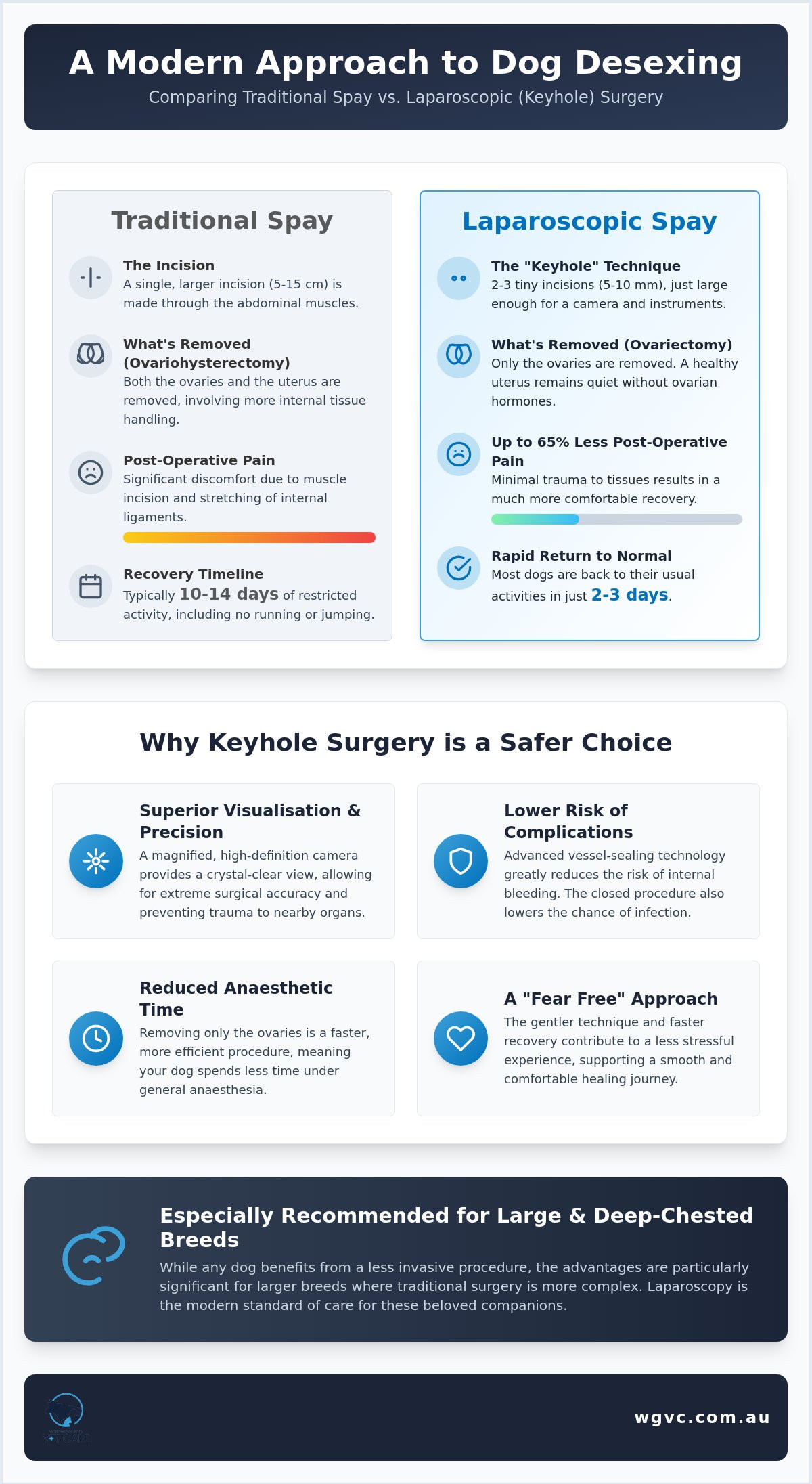
When you prepare your dog for desexing, you’re making a responsible choice for their long-term health. While the end result is the same, the path we take to get there has evolved significantly with modern technology. Traditional spaying, technically called an ovariohysterectomy, involves a single large incision through the abdominal muscles to remove both the uterus and the ovaries. In contrast, a laparoscopic spay is a minimally invasive surgical technique that uses high-definition visualisation to perform the procedure through tiny “keyhole” ports. While both methods achieve permanent desexing, the internal journey for your pet is remarkably different, leading many families to ask, is laparoscopic spay safer for dogs? To understand the answer, we need to look at what happens under the surface during these two different procedures.
The “Keyhole” Technique Explained
During a laparoscopic procedure, our surgeons use a specialised camera called a laparoscope. This tool provides a magnified, crystal-clear view of the internal organs on a high-definition monitor, allowing for incredible precision. Rather than making a large opening to see inside, we use two or three tiny incisions, usually only five to ten millimetres long. Because the camera does the “looking” for us, there is significantly less handling of the internal tissues. We use advanced vessel-sealing devices to close blood vessels instantly using controlled heat, which replaces the need for traditional silk or synthetic sutures inside the abdomen. This approach is much gentler on the body, as it avoids the forceful stretching of the suspensory ligament that often causes the most discomfort in traditional surgeries.
Ovariectomy vs. Ovariohysterectomy
One of the biggest differences you might notice is that laparoscopic surgery focuses on what an ovariectomy is, which means removing only the ovaries. In a traditional spay, the uterus is also removed, but modern veterinary science shows that if the ovaries are gone, a healthy uterus rarely causes future problems. By leaving the uterus intact, we can complete the surgery much faster. This reduces the total time your dog spends under anaesthetic, which is a vital factor when considering if a laparoscopic spay is safer for dogs in the long run. There is a common myth that leaving the uterus increases the risk of infections like pyometra, but research indicates that without the hormones produced by the ovaries, the uterus remains quiet and healthy. This streamlined approach prioritises your dog’s safety and comfort, ensuring they spend less time on the operating table and more time recovering in the comfort of your arms.
Why Laparoscopic Spay is Often Considered Safer
Choosing surgery for your furry family member is always a significant decision that comes with a mix of love and worry. When you ask, is laparoscopic spay safer for dogs, the answer lies in the incredible precision and control this modern method offers our surgical team. It isn’t just about the size of the scar on the outside; it’s about the reduced impact on your dog’s internal systems. By using advanced technology, we can minimise the physical stress on their body, which is a wonderful benefit for every patient, from energetic pups to our more sensitive senior dogs.
Safety also comes from what we don’t do during the procedure. In a traditional spay, the abdomen is open to the air for a longer period, which naturally carries a slightly higher risk of environmental contamination. With keyhole surgery, the internal organs remain protected within the body, significantly lowering the chance of post-operative infection. We also use advanced vessel-sealing technology rather than relying solely on traditional silk ties. This equipment cauterises and seals blood vessels instantly and securely, which means the risk of post-operative internal bleeding is greatly reduced. It’s these small, technical details that add up to a much safer experience for your companion.
Superior Visualisation and Precision
Traditional surgery often requires a surgeon to work through a larger opening, sometimes relying on tactile feel in deeper areas of the abdomen. Laparoscopy changes this dynamic entirely by using 4K high-definition monitors. This setup provides our surgeons with a magnified, brightly lit view of every blood vessel and organ. If your dog has a slight anatomical variation, we can identify and manage it immediately with total confidence. This level of precision ensures that only the necessary tissues are touched, which prevents accidental trauma to surrounding organs. We even take the opportunity to perform a brief, non-invasive check of other abdominal organs while we are there, giving you a more complete picture of your dog’s health.
Decreased Post-Operative Pain
The primary source of pain in a standard spay isn’t actually the skin incision. It’s the stretching and pulling of the ovarian ligament required to bring the ovaries into view. Because keyhole surgery uses slim instruments that reach the ovaries exactly where they naturally sit, we avoid that painful pulling altogether. Research has shown that dogs undergoing this procedure experience up to 65% less pain compared to the traditional method. This massive reduction in discomfort means your dog won’t need as much heavy sedation or high doses of painkillers after they wake up. If you’re weighing up the best options for your pet’s upcoming visit, feel free to chat with us about our desexing procedures to see how we can make the day as comfortable as possible for your girl.
Recovery and Post-Op: The Real-World Difference
If you live in West Gippsland, your dog likely enjoys a lifestyle filled with room to roam. Whether they are a working dog on a property near Neerim or a family pet frequenting the trails in Drouin, staying active is part of their identity. This makes the traditional two-week confinement period after desexing a significant challenge. When families ask us, is laparoscopic spay safer for dogs, we often point to the recovery phase. A shorter recovery isn’t just a convenience; it’s a safety feature. It reduces the risk of your dog accidentally hurting themselves or tearing stitches because they’ve reached their limit with being cooped up in a laundry or crate.
The difference in the days following surgery is often quite striking. Traditional recovery requires 10 to 14 days of strict rest to ensure the large abdominal incision heals without stretching or opening. In contrast, most laparoscopic patients are back to their normal, happy selves within just two or three days. Because the internal trauma is minimised, they simply don’t feel the same level of post-operative “drag.” This rapid return to health means less stress for your pet and a much easier time for you as a dedicated owner.
Getting Back to the Gippsland Lifestyle
Keyhole surgery is an ideal choice for the high-energy breeds so common in Warragul and Drouin. For a Kelpie, Collie, or Vizsla, two weeks of restricted movement can feel like a lifetime. With a laparoscopic spay, the “too much too soon” energy levels are much easier to manage because the healing timeline is so compressed. Instead of a three-to-five inch wound, you will see two or three tiny dots, each barely wider than a pencil. While we still recommend lead-only walks for the first few days, the risk of a wound breakdown from a sudden jump or a dash across the backyard is significantly lower than with a traditional large incision.
Wound Care and Monitoring
Checking on your dog’s progress after surgery shouldn’t be a source of anxiety. Monitoring these tiny keyhole ports is very straightforward. A healthy wound should look clean and dry, with very little swelling around the edges. One of the reasons is laparoscopic spay safer for dogs is the drastic reduction in “seroma” formation. These are fluid-filled lumps that can sometimes develop under larger surgical sites when a dog moves too much. Because our incisions are so small and the internal handling is minimal, these complications are quite rare. Most of our patients don’t even require the “cone of shame” or a buster collar, as the small sites are far less irritating and don’t trigger the same urge to lick or chew at the stitches.
Is Keyhole Surgery Right for Your Dog?
Deciding on the right surgical path often comes down to your dog’s specific needs and your own peace of mind. While the benefits of a gentler procedure apply to every pet, certain dogs stand to gain even more from this advanced approach. When we consider the question, is laparoscopic spay safer for dogs, we look at the individual’s size, breed, and temperament. For families with high-energy dogs or those who have pets with a more anxious nature, the reduced recovery time is often the deciding factor that makes the entire experience much more manageable.
We also believe that the human element is just as vital as the technology itself. A safe laparoscopic outcome depends on a surgical team that is deeply experienced with the specialised equipment and the nuances of minimally invasive techniques. Our commitment to bringing these high standards to our local community means your dog is in hands that are both highly skilled and deeply compassionate. We treat every patient as if they were our own, ensuring that the precision of the technology is matched by the warmth of our care.
Large Breeds and the Gastropexy Option
For owners of large and deep-chested breeds like Labradors, German Shepherds, or Great Danes, keyhole surgery offers a unique life-saving opportunity. These breeds are at a higher risk for a dangerous condition known as “bloat” or GDV. While your dog is already undergoing their spay, we can perform a preventative gastropexy through the very same tiny incisions. This procedure involves securing the stomach to the abdominal wall to prevent it from twisting. Performing both major preventative steps at once is incredibly efficient, as it requires only one anaesthetic and one recovery period for your girl.
The Cost Factor
It is natural to consider the financial side of your pet’s healthcare. Laparoscopic surgery does come with a higher price point than the traditional method, primarily because it requires significant investment in specialised high-definition cameras, monitors, and advanced sealing tools. Many pet owners reframe this cost as an investment in safety and “peace of mind.” When you factor in the reduced need for post-operative medications and the lower risk of complications that could require follow-up visits, the value becomes even clearer. For our “Fear Free” patients, the shorter recovery time is priceless, as it minimises the stress of long-term confinement. If you would like to learn more about how this fits your dog’s specific needs, we invite you to explore our advanced surgical care options or speak with one of our friendly team members.
The West Gippsland Vet Care Approach
At West Gippsland Vet Care, we believe that every dog in our community deserves access to the highest standard of medical care. Bringing advanced surgical techniques like keyhole spaying to Warragul and Drouin is about more than just having the latest equipment; it’s about our deep commitment to your pet’s comfort and your own peace of mind. When you’re trying to decide is laparoscopic spay safer for dogs, you are looking for a partner who understands the profound bond you share with your companion. Our team integrates a “Fear Free” philosophy into every procedure we perform. By choosing a minimally invasive path, we significantly reduce the physical discomfort and emotional stress your dog might feel, ensuring their visit is as calm and gentle as possible.
Our surgical team is driven by a genuine passion for advanced soft tissue and orthopaedic surgery. This expertise allows us to handle complex cases with a level of precision that mirrors human medical standards. Because we know that recovery doesn’t just happen during clinic hours, we provide 24-hour emergency support for our existing surgical patients. Knowing that a familiar, caring face is only a phone call away if you have a concern at midnight provides the total security you deserve during your dog’s healing journey.
A Personal Touch in Advanced Care
We treat every patient like our own “best mate.” This personal connection starts long before the day of the procedure. We begin with a thorough pre-surgical consultation to understand your dog’s unique history and personality. This allows us to tailor the anaesthetic and pain management plan specifically for them, ensuring the safest possible experience. We value open communication above all else. Whether you’re worried about the surgical process or the specific needs of your dog’s recovery at home, we are always here to answer your questions and listen to your concerns.
Booking Your Consultation in Warragul
Organising a surgical assessment for your dog is a simple, stress-free process. During your initial visit, we’ll walk you through exactly what to expect on the day of surgery at our clinic. From the moment you drop your girl off in the morning to the detailed discharge chat when you pick her up, we ensure you feel supported and informed. If you’re ready to explore the benefits of keyhole surgery for your pet, you can organise a consultation with our surgical team today. We look forward to being a part of your dog’s journey to a fast, comfortable, and safe recovery.
Choosing the Best Path for Your Best Mate
Your dog’s health and happiness are at the heart of everything you do. By exploring advanced surgical options, you’re already taking a wonderful step toward ensuring their long-term well-being. We’ve looked at how keyhole surgery offers a gentler experience, from the precision of high-definition visualisation to the significantly faster return to the Gippsland lifestyle they love. When you’re weighing up whether is laparoscopic spay safer for dogs, it’s clear that the reduction in pain and the lower risk of complications provide a modern standard of care that prioritises your pet’s comfort above all else.
Our team has been serving the West Gippsland community for decades, and we take great pride in being specialists in keyhole spay and gastropexy. We combine this technical expertise with fear-free certified veterinary care to ensure every visit is a positive experience for your companion. If you’re ready to discuss the best surgical approach for your dog’s needs, we invite you to Book a Laparoscopic Spay Consultation at West Gippsland Vet Care. We’re here to support you and your dog every step of the way, ensuring they get back to their happy, active selves as quickly as possible.
Frequently Asked Questions
Is laparoscopic spaying actually safer than the traditional method?
Yes, laparoscopic surgery is often considered safer because it provides a magnified view of the abdomen and uses precise vessel sealing. This technology virtually eliminates the risk of internal sutures slipping, which is a rare but serious concern in traditional surgery. By keeping the procedure minimally invasive, we also reduce the time the internal organs are exposed to air, which naturally lowers the risk of post-operative infection for your companion.
Why does a keyhole spay cost more than a normal desexing?
The higher cost reflects the investment in high-definition surgical towers, specialised cameras, and advanced vessel-sealing tools that aren’t used in traditional desexing. These sophisticated instruments allow for greater precision and a much gentler experience for your pet. When considering if is laparoscopic spay safer for dogs, many owners find the investment worthwhile for the significant reduction in pain and the vastly shorter recovery time.
Can any dog have a laparoscopic spay, or are there size limits?
While most dogs are excellent candidates, the procedure is most commonly recommended for dogs weighing over 10 to 15 kilograms. In very small dogs, the space within the abdomen can be limited, making it more difficult to navigate the laparoscopic camera safely. We assess every dog individually during a pre-surgical consultation to determine which method will provide the most comfortable and secure outcome for their specific body type.
Will my dog still need to wear a cone after keyhole surgery?
Most dogs don’t need a “cone of shame” after keyhole surgery because the incisions are so small and cause minimal irritation. Traditional large incisions often feel itchy or tight as they heal, which encourages dogs to lick or chew. Because our keyhole ports are barely wider than a pencil, most pets simply ignore them, allowing them to skip the stress of wearing a bulky plastic collar during their recovery.
Is the uterus left behind during a laparoscopic spay, and is that safe?
Yes, leaving the healthy uterus behind is a modern veterinary standard that is entirely safe for your dog. Disease in the uterus, such as pyometra or cancer, is almost always driven by the hormones produced by the ovaries. Once the ovaries are removed during a keyhole spay, the uterus becomes an inactive tissue that poses no threat to your pet’s future health, while allowing for a much faster and less invasive surgery.
How long is the recovery period for a keyhole spay?
The recovery period for a keyhole spay is remarkably short, with most dogs returning to their normal energy levels within two to three days. While we still suggest keeping them on a lead for walks for the first five days, you won’t need to endure the two weeks of strict confinement required for traditional surgery. This makes it much easier to manage active Gippsland dogs who would otherwise struggle with being kept quiet.
Can I get my dog’s stomach tacked (gastropexy) at the same time as a keyhole spay?
Absolutely, and combining these procedures is a very popular choice for owners of large or deep-chested breeds. We can perform a preventative gastropexy through the same laparoscopic ports used for the spay, which secures the stomach and prevents life-threatening twisting. This allows us to provide two major health protections under a single anaesthetic, making it a very efficient and safe option for your dog’s long-term wellness.
What are the specific risks associated with laparoscopic surgery in dogs?
The risks are very low, but they include standard anaesthetic risks and the rare possibility that a surgeon may need to “convert” to a traditional open surgery. This conversion only happens if the surgeon encounters unexpected anatomical issues or needs better access to ensure your dog’s safety. While this is uncommon, our team is highly trained in both methods, ensuring that your pet’s well-being is always the absolute priority regardless of the technique used.