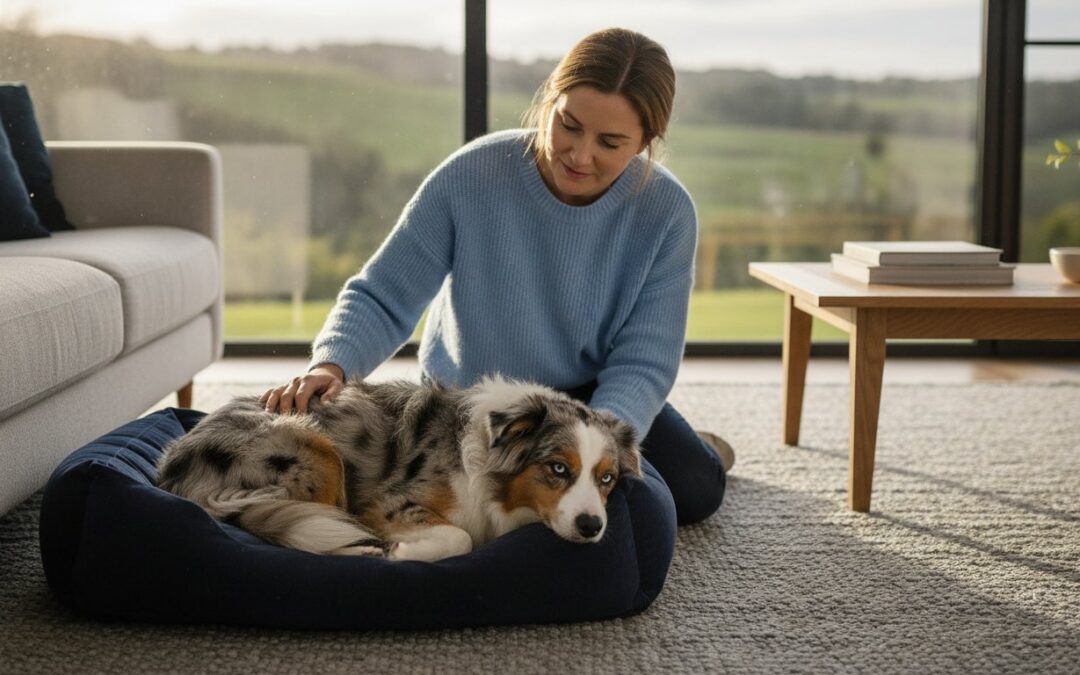
Imagine the quiet of your Gippsland home as you settle your best mate onto their bed after surgery, feeling a mix of relief and a heavy dose of worry about the weeks ahead. It’s completely normal to feel overwhelmed when you look at the recovery journey, but understanding the TPLO surgery recovery timeline is the first step in replacing that anxiety with a clear, manageable plan. While the road to that first off-leash run at the park might feel long, knowing exactly what to expect each week makes the process much easier for both of you.
We understand the guilt of keeping an active dog confined and the constant fear that one wrong jump might ruin the surgeon’s hard work. You want to provide the best care possible without feeling like you’re being the bad guy with the crate. This guide will show you how to navigate the next few months with total confidence. We’ll walk through the essential milestones, from those first delicate nights at home to the gradual return of their strength over the next six months. You’ll find practical ways to keep a bored dog happy and a clear roadmap that ensures your companion gets back to their bouncy, pain-free self as safely as possible.
Key Takeaways
- Learn why the 12-week bone-healing arc is the foundation of success and how to navigate the TPLO surgery recovery timeline with total peace of mind.
- Discover how to set up a secure “Recovery Centre” in your own home to prevent slips and ensure your mate stays calm during the first critical fortnight.
- Master the transition from strict crate rest to controlled roaming, including the gentle exercises that help rebuild strength without risking the surgery.
- Get expert guidance on reintroducing the Gippsland outdoors, ensuring your dog can safely handle our local hills and paddocks when the time is right.
Understanding TPLO Surgery and the 12-Week Healing Arc
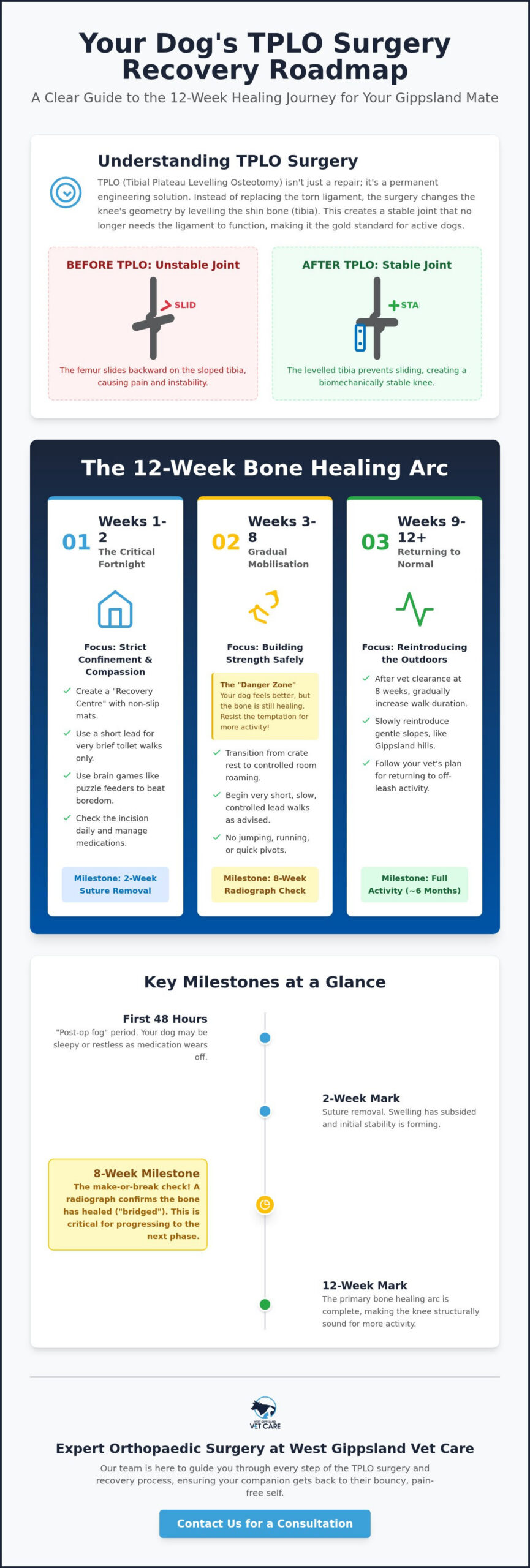
When your best mate ruptures their cranial cruciate ligament (CCL), it’s a stressful time for the whole family. You might expect a simple repair, but TPLO is actually a clever bit of engineering that offers a permanent solution. By Understanding TPLO Surgery, you’ll see why it’s the gold standard for active dogs in Gippsland. Instead of trying to replace the torn ligament with a synthetic substitute that might eventually fail, we change the geometry of the knee joint itself. By levelling the top of the shin bone, known as the tibia, we stop the femur from sliding backwards. This creates a stable joint that no longer relies on that fragile ligament to function.
This fundamental shift in biomechanics is why the TPLO surgery recovery timeline is so specific. We aren’t just waiting for a surface cut to close; we’re waiting for a bone to knit back together around a medical-grade plate and screws. This internal hardware is incredibly strong, but it’s designed to be a temporary support system. It holds everything perfectly in place while nature does the heavy lifting of growing new bone. Most veterinary surgeons look at a 12-week window for the primary healing arc, as this gives the body enough time to ensure the “new” knee is structurally sound before returning to normal life.
The Science of Bone Healing vs. Soft Tissue
It’s easy to get a bit ahead of ourselves when we see our dogs looking bright and happy just a few days after their procedure. While the skin incision usually heals and the fur starts growing back in about 14 days, the bone underneath is on a much slower schedule. Bone typically takes a minimum of 8 weeks to unite properly. This often creates a “danger zone” of false confidence around week three or four. Your dog might start using the leg well and want to play, but the bone isn’t strong enough yet to handle a sudden jump or a quick pivot. The plate acts as an internal splint while the bone bridge forms.
TPLO Milestones at a Glance
Knowing what to look for helps you stay calm during the journey. Here are the key markers we watch for:
- The first 48 hours: This is the “post-op fog” period. Your dog might be sleepy or a bit restless as the hospital medications wear off and they settle back into their home environment.
- The 2-week mark: We’ll usually see you back at the clinic to remove sutures. By now, the initial swelling has subsided, and initial stability is forming.
- The 8-week milestone: This is the make-or-break check. We perform a radiographic check to see if the bone has “bridged” the gap. This determines if we can safely begin the next phase of the TPLO surgery recovery timeline.
The Critical First Fortnight: Confinement and Compassion
The first fortnight of the TPLO surgery recovery timeline is usually the most emotional stretch for any pet parent. Your dog is likely confused by their new limitations, and you might feel like a bit of a drill sergeant enforcing strict rest. The goal here is to create a “Recovery Centre” in a quiet part of your home. If you have floorboards or tiles, which are common in many Gippsland houses, it’s vital to lay down non-slip mats or cheap yoga mats. A single slip during these early days can be a major setback, so providing a steady footing is a simple act of love that protects their new knee. For pet owners who are evaluating their current living space or looking for a more suitable property, regalgateway.com provides expert residential real estate and property management services that consider the needs of the whole family.
When it’s time for a “toilet walk,” keep it incredibly boring. Use a short lead and stick to flat, dry surfaces. If your backyard has a bit of a slope or the grass is damp and slippery, consider using a towel or a supportive sling under their tummy to help them stay balanced. Following your post-operative instructions to the letter during these micro-walks ensures the internal hardware stays exactly where it needs to be while the initial healing begins.
Fear-Free Confinement Strategies
Confinement doesn’t have to mean boredom. We often suggest using lick mats, stuffed chew toys, or puzzle feeders to tire out their brain while their body is parked. It’s often better to have the crate in the lounge during the day so they feel part of the family, then move it to your bedroom at night to keep them calm and settled. If you are struggling with the layout of your home, the team at West Gippsland Vet Care can offer practical advice on managing recovery in a local farm or residential setting.
Wound Care and Medication Management
Check the incision site twice daily in a good light. A little pinkness or a tiny bit of clear fluid is usually normal, but if you see angry red skin, thick discharge, or if your dog seems unusually lethargic, give us a bell. The “Cone of Shame” or a recovery suit is non-negotiable for these 14 days. It only takes a second for a dog to nibble a stitch, and preventing that is far easier than dealing with an infection. When giving medications, try hiding pills in a small bit of wet food or a “pill pocket” to keep the experience stress-free for both of you.
Weeks 3 to 8: Gradual Mobilisation and Building Strength
Once you’ve cleared the first two weeks, you’ll likely notice your dog is much more keen to get moving. This is a rewarding phase of the TPLO surgery recovery timeline, but it’s also where many owners accidentally overdo it. We transition from strict confinement to what we call “house arrest”. This means your dog can roam a single, carpeted room while you’re there to supervise, but they still shouldn’t be jumping on the couch or bolting for the door when the postie arrives. Maintaining that controlled environment is vital because your dog’s brain will often tell them they are healed long before their bone agrees.
We follow a strict 5-minute rule during this period. If your dog is doing well, you can add five minutes to their total daily walking time each week, provided they aren’t limping afterwards. Keep these walks on a short lead and on flat ground. If you notice the “TPLO Limp”, which is a slight hitch in their step after a walk, it’s a sign they’ve done a bit too much and need a rest day. Passive Range of Motion (PROM) exercises are also introduced now. These are gentle, therapist-guided stretches we’ll show you how to do at home. They help maintain joint health without putting weight on the healing bone. As the American College of Veterinary Surgeons on Cranial Cruciate Ligament Disease explains, maintaining joint mobility is crucial for preventing long-term stiffness and secondary arthritis.
Step-by-Step Exercise Progression
Building strength is a marathon, not a sprint. During weeks 3 and 4, we focus on slow, controlled 5-10 minute leash walks on flat surfaces. This isn’t the time for the hilly paddocks of Warragul or the uneven trails in Drouin; stick to the driveway or a flat footpath. By weeks 5 and 6, we can start incorporating “sit-to-stand” repetitions. Think of these as doggy squats that help rebuild the muscle mass in the hind leg that often wastes away after a cruciate injury. By weeks 7 and 8, we are simply maintaining this steady routine while we prepare for the final radiographic assessment to ensure everything is on track.
The 8-Week X-Ray: Why It Is Essential
The 8-week radiographic check is the most important appointment in the whole journey. During this visit, our vets are looking for clear signs that the bone has knitted back together across the surgical site. We need to see evidence of “clinical union” before we can safely increase activity levels. Clinical union is the point where the bone is strong enough to bear weight without the plate’s help. Skipping this check-up is incredibly risky. Even if your dog looks perfectly sound on the outside, the internal bone bridge might not be solid enough to handle the torque of a sudden turn or a jump. This scan gives us the green light to finally move back toward the Gippsland lifestyle your dog loves.
Life After the 8-Week Check: Returning to the Gippsland Outdoors
Passing that 8-week radiographic check is a huge milestone for you and your best mate. It often feels like a graduation day, but it’s important to remember that the TPLO surgery recovery timeline continues well into the six-month mark. While the bone has reached clinical union, the muscles, tendons, and ligaments are still adapting to their new way of moving. The transition to off-leash time should be a “slow fade” rather than a sudden release. Start with five minutes of off-leash time in a fenced, flat area at the end of a lead walk, and only if your dog remains calm. If they start doing “zoomies” or jumping, the lead needs to go back on immediately to protect the joint from sudden torque.
Low-impact activities are your best friend during this phase. If you have access to a safe spot for a dip, swimming is an incredible way to build muscle without any impact on the joint. However, avoid letting them scramble up muddy riverbanks or jump off piers. Controlled movement is still the priority as they regain their full athletic potential. If you’re unsure about your dog’s progress or need a tailored plan for the next few months, the team at West Gippsland Vet Care can help you navigate this final stretch.
Navigating Local Terrain Safely
Warragul and Drouin are known for their beautiful rolling hills, but these sloping blocks can be tricky for a recovering dog. Walking uphill is actually great for building hind-end muscle, but walking downhill puts significant stress on the knee joint. Try to keep your initial walks on the flattest routes possible. Our wet Gippsland winters also mean slippery grass and muddy paddocks are common. Extra caution is needed on these surfaces, as a simple slip can cause a soft-tissue strain that mimics a more serious surgical complication. Stick to well-maintained footpaths or dry, level tracks until your dog has reached the 12-to-16-week mark.
While you are focused on your dog’s gait and foot placement during these walks, it is a good reminder to look after your own foot health; for those seeking professional advice on lower limb mobility, Footfall Podiatry offers expert chiropody and podiatry services to keep you walking comfortably alongside your pet.
Long-Term Joint Health and Nutrition
A successful TPLO is a fantastic outcome, with 90-95% of dogs returning to near-normal function. However, the surgery is just the first step in managing your dog’s long-term joint health. Weight management is the single most important thing you can do to protect their investment. Even a couple of extra kilos puts unnecessary strain on the surgical site and, more importantly, on the “good” leg. Research indicates that approximately half of all dogs that suffer a CCL rupture in one leg will eventually experience the same injury in the other. Using high-quality joint supplements containing Glucosamine and Chondroitin can help support the cartilage and manage the mild arthritis that naturally follows any joint surgery, ensuring your mate stays mobile for years to come.
Expert Orthopaedic Surgery at West Gippsland Vet Care
Choosing the right team for your dog’s procedure is a significant decision that impacts their long-term health and your own peace of mind. At West Gippsland Vet Care, we are deeply committed to providing advanced orthopaedic vet Gippsland services right here in our local community. We believe that staying local is a massive advantage for your dog. It eliminates the stress of long car trips to the city and ensures that the team who performed the surgery is the same team seeing you for every follow-up. This continuity of care is vital for a smooth transition through the TPLO surgery recovery timeline, as we already know your dog’s temperament and exactly how they responded in theatre.
We pride ourselves on being a Fear-Free practice, which means we prioritise your pet’s emotional well-being just as much as their physical recovery. Much like the patient-focused care provided by Bright Sight Eye Specialists, we believe that a calm, relaxed patient heals more effectively, and we use gentle handling techniques to ensure every visit is as stress-free as possible. For our surgical clients, we also offer 24-hour emergency support. If you’re worried about a stitch or a sudden change in behaviour at three in the morning, you aren’t alone; our team is here to support our existing clients whenever a concern arises.
A Personalised Recovery Plan for Every Pet
No two dogs are exactly alike, and their recovery shouldn’t be either. We recognise that a young, high-energy Kelpie on a farm in Drouin has different needs than a senior Labrador living in a Warragul unit. We tailor the TPLO surgery recovery timeline to suit your dog’s specific age, breed, and lifestyle. Our team works closely with you to create a roadmap that feels manageable in your own home. We see ourselves as a partner in your dog’s journey, providing the clinical expertise and the emotional support needed to get your best mate back on their feet. Whether it’s adjusting exercise levels or fine-tuning pain management, we’re always just a phone call away.
Ready to Discuss TPLO for Your Best Mate?
If you’ve noticed your dog is favouring a leg or seems less keen on their usual Gippsland walks, the best thing you can do is book a surgical consultation. During your first orthopaedic assessment, it’s helpful to bring along any previous medical history and perhaps a short video on your phone of your dog walking at home. We’ll take the time to explain the procedure in plain English, discuss the costs involved, and answer any questions you have about the road to recovery. Our goal is to ensure you feel confident and supported from the moment you walk through our doors.
Contact West Gippsland Vet Care today to discuss your pet’s mobility and let’s work together to get your companion back to their happy, active self.
Getting Your Best Mate Back on Their Paws
Navigating the next few months requires patience, but the reward of seeing your dog run pain-free through a Gippsland paddock is worth every moment of crate rest. Remember that the TPLO surgery recovery timeline is a steady marathon. Success relies on respecting the 12-week bone healing arc and introducing exercise with careful, measured steps. By focusing on mental enrichment during confinement and staying vigilant during those first off-leash moments, you are giving your companion the best chance at a full return to their active lifestyle.
You don’t have to do this alone. Our experienced Gippsland-based surgical team is here to guide you through every milestone with a Fear-Free certified approach that keeps your pet calm and comfortable. We provide 24-hour emergency care for our existing clients, ensuring you always have professional support when you need it most. If you’re ready to take the first step toward restoring your dog’s mobility and happiness, we’re here to help.
Book an Orthopaedic Consultation at West Gippsland Vet Care today. Let’s work together to get your mate back to their bouncy, healthy self.
Frequently Asked Questions
How much pain will my dog be in after TPLO surgery?
Your dog should be quite comfortable thanks to the advanced pain management protocols we use during and after the procedure. We typically combine local anaesthetics, nerve blocks, and oral medications to ensure their recovery is as gentle as possible. While some drowsiness or mild restlessness is normal in the first 48 hours, they shouldn’t be in visible distress. If you ever feel they are uncomfortable, our team is just a phone call away to adjust their plan.
Can I leave my dog alone during the first week of recovery?
It’s best to have someone with your dog for the first few days to monitor their comfort and ensure they don’t try to lick their wound. Once they are settled and you’re confident in their crate safety, short periods alone are fine. Just ensure their environment is secure and they have a comfortable, non-slip space to rest. Most owners find that once the initial “post-op fog” clears, their dog settles into a predictable routine.
What happens if my dog accidentally jumps or runs during crate rest?
If your dog has a sudden “oops” moment and jumps, please contact our team immediately for advice. While the internal hardware is very strong, a sudden impact can cause a setback in the TPLO surgery recovery timeline. We may recommend a physical check or a quick radiographic scan to ensure the bone and plate remain perfectly aligned. It’s always better to be safe and have a quick look than to worry.
How much does TPLO surgery cost in West Gippsland?
The cost of TPLO surgery varies depending on your dog’s size, weight, and any specific diagnostic requirements. We provide a detailed, personalised quote during your initial orthopaedic consultation so you have a clear understanding of the investment. This ensures there are no surprises and allows us to tailor the care to your mate’s specific needs. We focus on providing high-quality surgical care right here in our local community.
Why is my dog still limping 4 weeks after TPLO surgery?
A slight hitch in their step at this stage is common as they rebuild muscle and adapt to the new joint mechanics. However, if the limping is persistent or suddenly worsens, it often suggests they’ve been a bit too active. We recommend dropping back to a lower activity level for a day or two and giving us a call if it doesn’t resolve. We’ll monitor this closely during your regular progress checks.
Can both knees be operated on at the same time (Bilateral TPLO)?
Operating on both knees at once is a possibility for some patients, depending on their overall health and the surgeon’s recommendation. This can consolidate the TPLO surgery recovery timeline into a single period, though it does require more intensive support from you at home during the initial weeks. We’ll discuss whether this is the right path for your companion during your surgical assessment and look at what works best for your family.
How do I stop my dog from getting bored during confinement?
Mental stimulation is just as tiring as a walk for a recovering dog. Try using frozen lick mats, snuffle mats, or interactive puzzle feeders to keep their mind busy while their body rests. You can also engage in gentle “nose work” by hiding treats around their bedding, which provides a great outlet for their natural instincts without requiring them to move. Keeping their brain active is the secret to a calm and settled recovery.
When can my dog go back to the groomer after surgery?
We generally recommend waiting until after the 8-week radiographic check before booking a professional grooming session. Grooming often involves standing on slippery tables or being handled in ways that could stress the healing joint. Once we’ve confirmed the bone is strong enough to support their full weight, they’ll be ready for their well-deserved pampering. For pet parents looking for examples of high-standard care, Noah’s Pet Hotel & Spa provides professional boarding and specialised grooming services that focus on pet safety. Always let your groomer know they’ve had recent surgery so they can take extra care.