
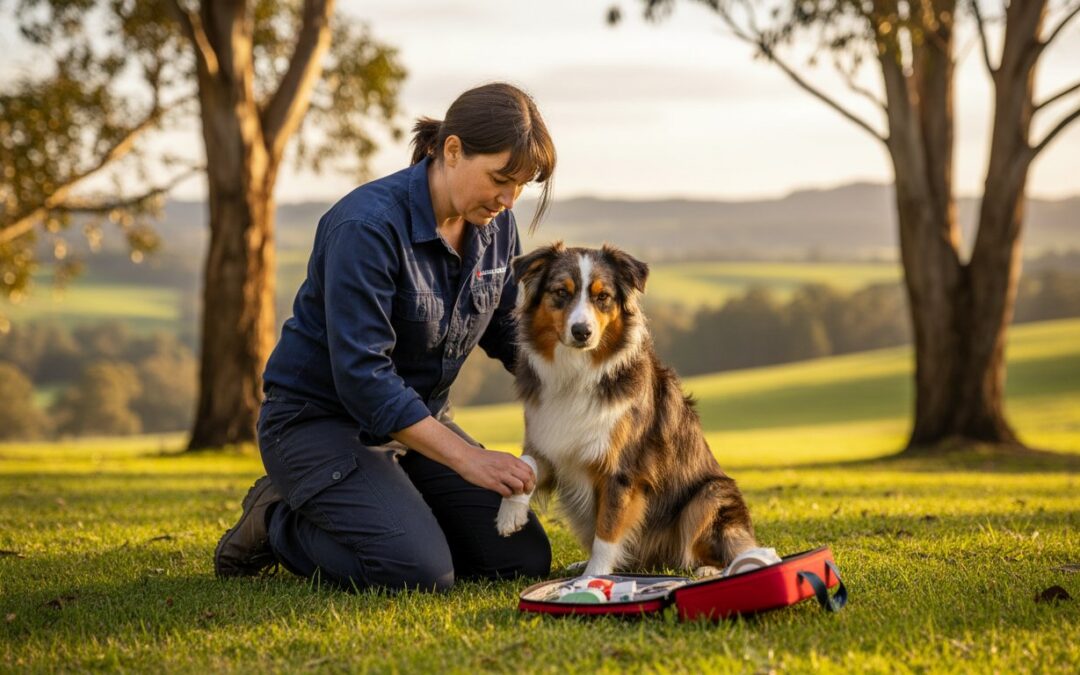
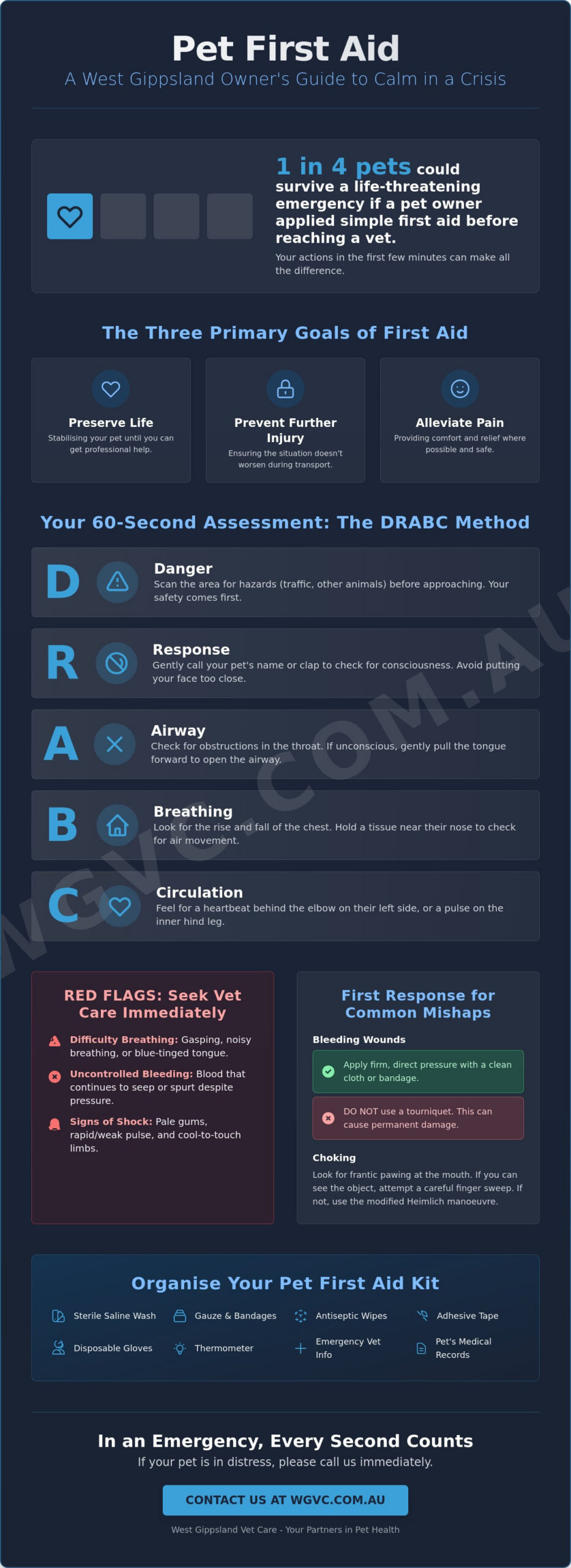
Did you know that one in four pets would survive a life-threatening emergency if just one simple pet first aid technique was applied before reaching a vet? It’s a powerful statistic that highlights how much of a difference you can make in those first few minutes of a crisis. As a pet parent here in West Gippsland, your heart probably skips a beat just thinking about your furry family member in distress. It’s completely natural to feel a wave of anxiety or fear that you might do the wrong thing when every second counts.
We understand that deep bond, and we want you to feel like the capable, calm protector your pet sees you as. This guide is designed to help you safely stabilise your companion during a crisis, giving you the confidence to act before you reach professional veterinary care. We’ll explore how to tell the difference between a minor home-care issue and a real emergency; ensuring you have the practical tools to keep your pet safe and comfortable when it matters most.
Key Takeaways
- Understand how immediate care acts as a vital bridge to preserve life and alleviate pain before you reach the clinic.
- Learn to recognise the subtle signs of shock, such as pale gums and a rapid heart rate, so you can respond with calm confidence.
- Navigate unique local hazards found across West Gippsland, from spring snake activity to the specific risks of summer heat.
- Discover how to organise a practical pet first aid kit for your home or car that addresses the specific needs of your four-legged family members.
- Master the “Red Flag” list to quickly identify critical emergencies, such as breathing difficulties, that require immediate professional veterinary care.
Understanding Pet First Aid: The Life-Saving Bridge
When a crisis hits, your first instinct is likely a rush of adrenaline and a desperate desire to help. We define pet first aid as the immediate, temporary care you provide to a sick or injured animal before you can reach a professional. It isn’t a substitute for veterinary expertise; rather, it is the vital bridge that keeps your companion stable during those critical minutes. This Introduction to Pet First Aid outlines our three primary goals: to preserve life, prevent further injury, and alleviate pain. In our West Gippsland community, where a trip to the clinic might involve a drive through winding roads or rural tracks, having a “plan of attack” ensures you act with purpose instead of panic.
The golden rule of any emergency is to always prioritise your own safety. It feels counter-intuitive when your heart is breaking for your furry family member, but becoming a second casualty helps no one. If you are injured, you cannot effectively transport your pet or communicate with our team. By staying calm and safe, you remain the protector your pet needs you to be.
The DRABC of Pet First Aid
Assessment is the first step in any emergency. You can use the DRABC method to check your pet’s vitals in under 60 seconds:
- Danger: Scan the area before you step in. Check for oncoming traffic, downed power lines, or other aggressive animals that might still be present.
- Response: Gently call your pet’s name or clap your hands to see if they are conscious. Avoid putting your face directly near theirs, as a disoriented animal may react instinctively.
- Airway: Ensure nothing is obstructing their throat. If they are unconscious, gently pull the tongue forward to open the airway.
- Breathing: Watch for the rise and fall of the chest. You can also hold a tissue near their nose to see if it moves with their breath.
- Circulation: Feel for a heartbeat on the left side of the chest, just behind the elbow, or check for a pulse on the inside of the upper hind leg.
Safety First: Handling a Stressed or Injured Pet
Pain is a powerful trigger that can override years of training and affection. Even the gentlest dog or cat might bite or scratch when they are in severe pain or shock. It is a natural self-defence mechanism, not a sign of aggression. To keep everyone safe, you may need to fashion an emergency muzzle using a soft lead, a scarf, or even a pair of stockings. Simply wrap it gently around the snout and tie it behind the ears, ensuring it doesn’t interfere with their breathing.
When it’s time to move, safe transport is essential to prevent further trauma. Small pets can be placed in a secure carrier or a sturdy box. For larger dogs, you can use a thick blanket as a makeshift stretcher. This allows you and another person to lift the pet evenly, keeping their spine and limbs as still as possible while you head toward professional emergency and trauma care.
Essential First Aid for Common Backyard Mishaps
Backyard adventures are a wonderful part of life for our local furry friends, but even the most familiar garden can occasionally lead to an unexpected tumble or scrape. When these moments happen, your most effective tool is your own composure. By remaining calm, you help keep your pet’s heart rate from spiking, which is vital if they are already stressed or in pain. An essential part of pet first aid is knowing when a situation has escalated beyond a simple patch-up. Always watch for the signs of shock: pale or white gums, a rapid but weak heart rate, and limbs that feel unusually cool to the touch. If you notice these symptoms, it’s time to stop any home treatment and begin the journey to our clinic in Warragul for emergency and trauma care immediately.
Managing Bleeding and Wounds
For any significant cut, applying direct pressure with a clean cloth is the universal first step in pet first aid. While it might be tempting, never use a tourniquet, as this can cause permanent tissue damage or even lead to limb loss. As you build your pet first aid kit, include sterile saline to clean minor grazes. This simple step helps prevent infections from Gippsland mud before you apply a light bandage for the trip to the vet. If your feline companion is the one who has come in from the garden with a wound, our dedicated guide to cat injury treatment for West Gippsland pet owners walks you through how to safely assess and clean the injury without causing further distress.
What to Do if Your Pet is Choking
A choking pet will often paw frantically at their mouth, which is a distinct sign compared to a simple cough or “reverse sneeze.” Only attempt a finger sweep if you can clearly see the object and reach it easily without being bitten. For the modified Heimlich manoeuvre, place your hands on the soft part of the belly just below the ribs and apply a firm, quick upward thrust to help dislodge the obstruction.
Responding to Seizures
During a seizure, your primary goal is creating a safe space. Move furniture away to prevent injury, but do not try to restrain your pet or put your hands near their mouth, as they may bite involuntarily. It is vital to time the seizure; knowing exactly how long it lasted provides your vet with crucial diagnostic information. Once the episode passes, keep them quiet and dim the lights while you prepare for transport to the clinic for a professional assessment.
Navigating West Gippsland’s Unique Pet Hazards
Living in West Gippsland means enjoying the stunning bushland of Drouin and the sprawling, productive farms of Neerim South. While this lifestyle is a dream for our pets, it introduces specific environmental risks that require a localised approach to pet first aid. Our region’s hazards are deeply seasonal. Spring brings a surge in snake activity as the weather warms, while the height of summer introduces the silent threat of heatstroke. Understanding these regional patterns is the first step in Recognising Pet Emergencies before they become tragedies. In our experience, “wait and see” is never a safe strategy when dealing with Gippsland’s unique wildlife or climate.
Snake Bites: Tiger and Brown Snake First Aid
Victoria is home to some of the world’s most venomous snakes, particularly the Eastern Brown and Tiger snake. These species are often found near long grass, waterways, or woodpiles on the outskirts of town. A common but terrifying sign of a bite is a sudden collapse followed by an “apparent recovery” where the pet seems fine for a short period. Don’t be fooled. This is a physiological lull before symptoms like vomiting, dilated pupils, or paralysis set in. If you suspect a bite on a limb, apply a Pressure Immobilisation Bandage (PIB) firmly, starting from the toes and moving up the leg. This slows the venom’s travel through the lymphatic system. Crucially, do not wash the bite site. We can often use the residue at the site to help identify the venom type. Never try to catch or kill the snake for identification; your safety is the priority.
Paralysis Ticks in the Gippsland Scrub
While more common in coastal areas, paralysis ticks are a persistent concern in the Gippsland scrub and bushy residential pockets. A daily “tick search” is your best defence. Run your hands firmly over your pet’s skin, feeling for small lumps, especially around the head, neck, and between the toes. If your pet starts walking as if they are “drunk,” has a noticeable change in their bark, or exhibits laboured breathing, they need help. If you find a tick, remove it immediately with a tick tool or tweezers. Every minute the tick remains, it continues to release toxins into your pet’s bloodstream, so immediate removal is a vital part of pet first aid.
Heatstroke and Overheating in the Summer
The humidity in West Gippsland can often be more dangerous than the temperature alone. High humidity prevents pets from cooling themselves effectively through panting. Before heading out for a walk in Warragul, use the “five second rule”: if you can’t hold the back of your hand on the pavement for five seconds, it’s too hot for paws. If your pet overheats, use tepid water and fans to cool them gradually. Avoid ice-cold water or ice baths. These can cause blood vessels to constrict or trigger shock, which actually makes it harder for their body to shed heat safely.
Organising Your Home Pet First Aid Kit
Preparing a dedicated kit for your furry family member is one of the most proactive steps you can take as a pet parent. While it’s tempting to rely on your own medical supplies, a standard human first aid kit often falls short for animals. Human adhesive bandages simply won’t stick to fur, and many ointments designed for us are actually toxic if licked by a curious dog or cat. By assembling a specific pet first aid kit, you ensure that every tool is safe, effective, and ready for use. We recommend keeping one kit in your laundry for household accidents and a second one in the car for those weekend trips to the Gippsland hills.
A great habit is to check your kit’s contents every time you visit us for Pet Vaccinations. Saline solutions can lose their sterility and bandages can lose their elasticity over time. Checking these dates annually ensures your supplies are reliable when a real crisis occurs. Don’t forget to write our contact number clearly on the lid of the box. In a high-stress situation, your mind might go blank; having that number right in front of you can save precious seconds.
The Essential Checklist
Your kit should focus on stabilisation and wound management. Include a generous supply of absorbent gauze pads, adhesive tape (the paper kind is often easier on fur), and crepe bandages. These are essential for managing the injuries we have already explored. You will also need:
- Saline solution: A large bottle or a clean spray bottle is perfect for flushing Gippsland mud from a wound or rinsing out an eye.
- Digital thermometer: A rectal reading is the only truly accurate way to check a pet’s temperature. Make sure you have some water-based lubricant as well.
- Blunt-nosed scissors: These allow you to cut bandages or matted fur near the skin without the risk of accidentally poking your pet.
Safety and Comfort Additions
Beyond medical supplies, your pet first aid kit needs items that help you manage a stressed animal. A spare lead is vital if your pet’s collar breaks or if you find a stray in need. A large, thick towel or blanket serves multiple purposes; it can provide warmth, act as a makeshift stretcher, or be used to gently wrap a cat to prevent scratches. Include a few pairs of disposable gloves and antiseptic wipes to keep yourself clean and safe. Finally, tuck in a small, powerful torch. Whether you’re checking a paw for a thorn or looking into a mouth during a night-time emergency, clear visibility is your best friend.
When to Call the Vet: Recognising the Critical Window
Deciding when to transition from home pet first aid to professional intervention is one of the most stressful choices a pet owner faces. While your immediate actions can stabilise a situation, certain “Red Flags” indicate that your pet has entered a critical window where every minute matters. If you notice any of the following, please bypass home care and head straight to our clinic:
- Difficulty breathing: This includes gasping, blue-tinged gums, or heavy abdominal movement.
- Non-stop bleeding: Any wound that continues to bleed through a bandage after five minutes of firm pressure.
- Inability to stand: Sudden weakness, dragging limbs, or a complete collapse.
- Known toxin ingestion: Whether it is chocolate, snail bait, or a suspected snake bite.
Before you start the car for the trip to our Warragul centre, we ask that you phone ahead. This simple step is vital. It allows our nursing team to prepare the triage area, set up oxygen, and ensure a veterinarian is ready the moment you walk through the door. We provide a 24 hours emergency service to existing clients, ensuring that our local community has a familiar, trusted support system during their most difficult moments.
The Triage Process
When you arrive at our centre in an emergency, your pet will be assessed immediately through our triage process. This ensures the most critical patients receive care first. Our facility is equipped with an in-house laboratory and advanced diagnostic imaging, allowing us to get rapid answers when your pet is ill. We prioritise pain management in the first hour of emergency trauma care, as keeping your pet comfortable is a key part of the healing process. Whether it is a soft tissue injury or something requiring orthopaedic surgery, our team works together to stabilise and treat your companion with the utmost kindness.
Ongoing Wellness and Prevention
While we are always here for emergencies, many crises can be prevented through proactive care. Routine senior pet health checks allow us to catch heart conditions or metabolic changes before they become a “middle of the night” emergency. Similarly, our puppy preschool programme does more than just teach basic manners. It builds a foundation of trust, teaching your pet to be handled safely during exams so that if they ever do need emergency care, they are less stressed by the clinical environment. We view ourselves as your partners in your pet’s long-term health journey.
Join our family today to ensure your pet has 24/7 emergency support. By establishing a relationship with us now, you ensure that if the worst happens, you have a team that knows your pet’s history and is ready to act.
Empowering Your Journey as a Pet Protector
Stepping into the role of a first responder for your furry family member is a profound act of love. By mastering the basics of pet first aid, you have built a vital bridge that can keep your companion stable while you head toward professional help. You now know how to navigate our unique West Gippsland hazards, from the seasonal dangers of tiger snakes to the silent threat of summer humidity. Most importantly, you have the tools to act with calm confidence instead of fear; ensuring that your pet feels safe and supported even in the middle of a health crisis.
As an independent, locally-owned practice, we are dedicated to being a reliable fixture in your community. We offer fear-free certified veterinary care to keep your pet at ease and provide 24-hour emergency care for our existing clients. Whether it is a midnight mishap or a routine check-up, we are here as an extension of your support system. Contact West Gippsland Vet Care for Emergency Support today to ensure you always have a trusted partner by your side. You have the skills to protect them, and we are ready to take the baton whenever you need us.
Common Questions About Pet First Aid
What should I do if my pet is poisoned?
If you suspect your pet has eaten something toxic, contact your vet or the Australian Animal Poisons Helpline immediately. Don’t try to induce vomiting at home unless a professional specifically instructs you to do so, as some substances can cause more damage coming back up. If possible, bring the packaging or a sample of what was consumed to the clinic to help our team identify the toxin and start treatment quickly.
Can I give my dog human painkillers like Panadol or Ibuprofen?
No, you must never give your pet human medications like Panadol or Ibuprofen. These drugs are highly toxic to dogs and cats, often leading to life-threatening liver or kidney failure even in very small doses. If your furry family member is in pain, we can provide safe, veterinarian-approved pain management and arthritis care tailored specifically to their needs.
How do I know if my dog is in shock?
Signs of shock include very pale or white gums, a rapid heart rate, and limbs that feel unusually cool to the touch. Your pet might also seem mentally “distant” or have very shallow breathing. Because shock is a progressive condition, it is a vital part of pet first aid to keep them warm and quiet while you head straight to the clinic for emergency care.
What is the best way to remove a tick from my cat?
The safest method is to use a dedicated tick-pulling tool or fine-tipped tweezers to grasp the tick as close to the skin as possible. Pull upwards with steady, even pressure without twisting or squeezing the tick’s body. Avoid old-fashioned remedies like using methylated spirits or matches, as these can cause the tick to inject more toxins into your cat’s bloodstream.
How can I tell if my dog has a broken bone?
You can usually identify a broken bone if your dog is completely non-weight bearing, if there is obvious swelling, or if the limb sits at an unnatural angle. You might also hear a faint grinding sound if the limb moves. In these cases, try to keep the pet as still as possible using a towel or crate to prevent further damage during transport.
What should I do if my pet is stung by a bee or wasp?
If your pet is stung, try to scrape the stinger away using a credit card rather than squeezing it with tweezers, which can release more venom. Apply a cold compress to the site to reduce swelling and monitor them closely for an allergic reaction. If you notice any swelling around the face or neck, they need immediate veterinary attention.
Is it safe to perform CPR on a dog or cat at home?
Performing CPR at home is only recommended as a last resort if your pet is unconscious and has completely stopped breathing. While it is a difficult technique to master without hands-on pet first aid training, it can sometimes buy enough time to reach professional help. Always prioritise getting the pet into a vehicle and heading toward the clinic while someone else performs the compressions.
How do I stop a dog’s nail from bleeding if it’s torn?
To stop a torn nail from bleeding, apply firm, direct pressure with a clean cloth for at least five minutes without peaking. If the bleeding continues, you can apply styptic powder or even a small amount of cornflour from the pantry to help the blood clot. Once the bleeding is under control, the nail usually needs a professional trim to prevent it from catching and tearing further.