
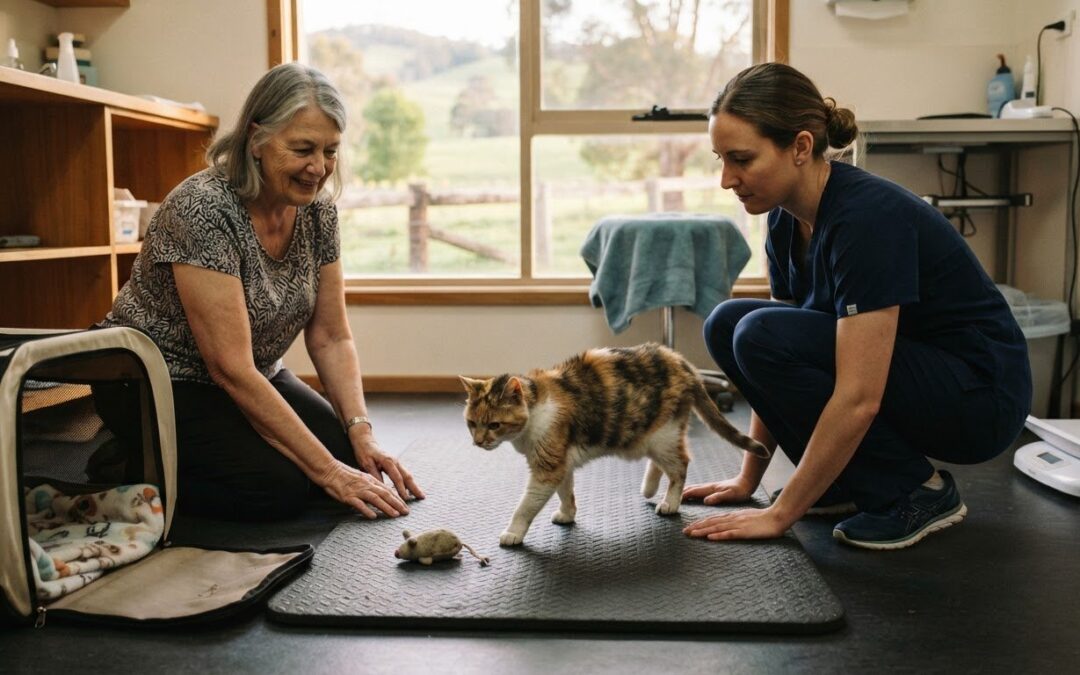
There isn’t one age or single sign that tells you when it is time to say goodbye to your cat. A useful guide is whether good days still outweigh bad ones, and whether pain, appetite, mobility, grooming and interest in favourite activities can be supported. If bad days consistently outnumber good ones and your cat’s condition isn’t expected to improve, it may be time to discuss euthanasia with a veterinarian.
It’s understandable to hope for more time while also worrying about your cat’s comfort. Palliative and hospice care may help manage symptoms and make daily life gentler, giving you space to consider what feels right for your cat and your family.
This guide explains how to track quality of life, what can affect euthanasia costs in Australia, and how to think through hospice care, aftercare and grief support. It also offers practical points to discuss with your veterinarian as you make this difficult decision.
Key Takeaways
- Keep a simple record of your cat’s good and bad days, including changes in comfort, appetite and favourite activities.
- Understand that euthanasia costs can vary with location, setting and whether the appointment is planned or an emergency.
- Talk through palliative and hospice care to learn how your cat’s symptoms and daily comfort may be supported.
- Consider aftercare and ways to remember your cat, and lean on supportive people as you grieve.
1. Tracking good and bad days with a quality-of-life scale
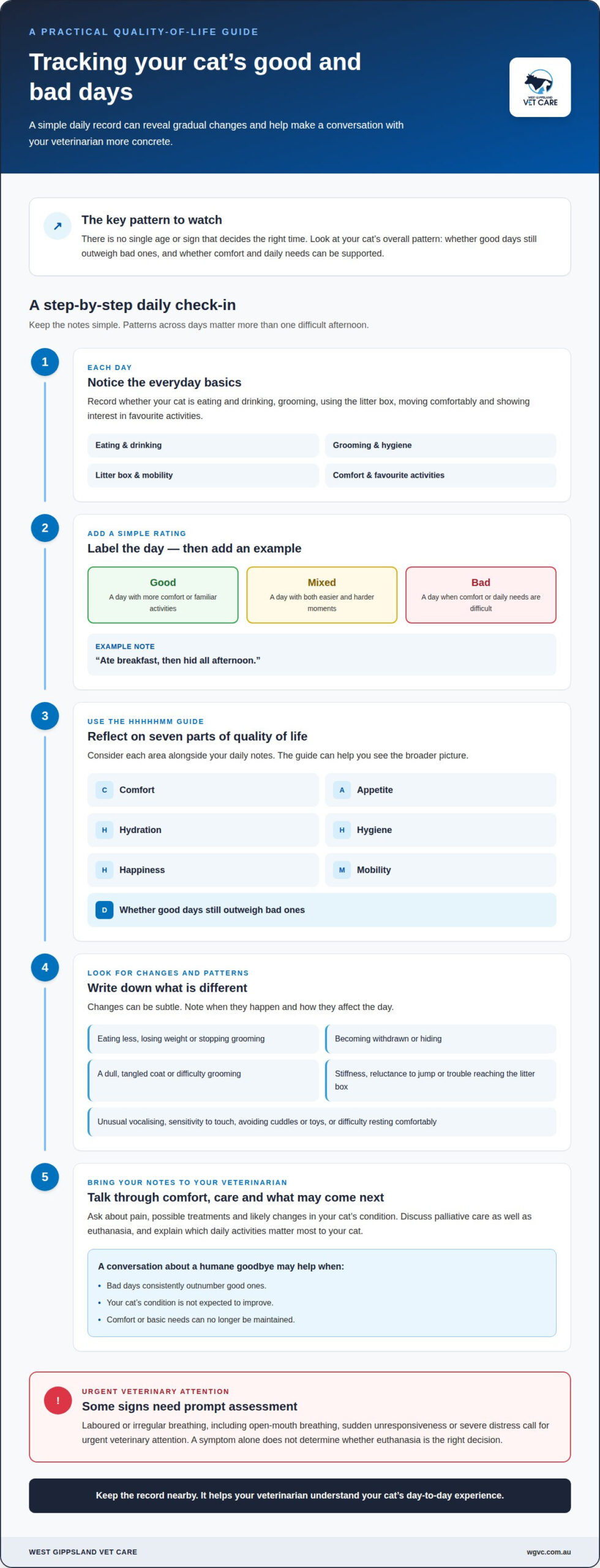
A daily record can make gradual changes easier to spot. Note whether your cat is eating and drinking, grooming, using the litter box, moving comfortably and showing interest in favourite activities. Add a simple good, mixed or bad rating and a brief example, such as “ate breakfast, then hid all afternoon”. These observations give you something concrete to discuss with your veterinarian.
The HHHHHMM scale is one tool for reflecting on your pet’s overall quality of life. Consider comfort, appetite, hydration, hygiene, happiness, mobility and whether good days still outweigh bad ones. Look for patterns across your notes, rather than focusing on one difficult afternoon. If your cat increasingly avoids cuddles or toys, struggles to reach the litter box, or can’t rest comfortably, record when it happens and how it affects the day.
Changes can be subtle. Eating less, losing weight, stopping grooming, becoming withdrawn or hiding may signal illness, pain, fear or confusion. A dull, tangled coat can mean grooming has become difficult. Stiffness, reluctance to jump, unusual vocalising and sensitivity to touch are also worth noting. A friend who knows your cat may notice a change, but your notes can help your veterinarian assess the full picture.
What symptoms mean a cat needs urgent veterinary care rather than euthanasia? Laboured or irregular breathing, including open-mouth breathing, needs urgent veterinary attention. Sudden unresponsiveness or severe distress also calls for prompt assessment. A symptom alone doesn’t determine whether euthanasia is the right decision.
Ask your veterinarian to assess your cat’s pain, possible treatments and likely changes in their condition. Discuss palliative care as well as euthanasia, and explain which daily activities matter most to your cat. When bad days consistently outnumber good ones and improvement isn’t expected, a conversation about a humane goodbye may help you decide. Keep your record nearby so the discussion reflects your cat’s day-to-day experience.
2. Euthanasia costs and factors that affect them
The price depends on the case and is provided after a quote request. In Australia, costs vary with location, whether euthanasia takes place at a clinic or at home, and whether it’s scheduled or an emergency. Ask for a breakdown separating the procedure from aftercare choices, so you can understand what each option covers.
Before deciding, discuss your cat’s physical decline, comfort and treatment options with a veterinarian. Ask what may be causing distress, whether symptoms can be managed, and how the condition is expected to progress. Euthanasia may be the kindest option when suffering can’t be relieved and your cat’s comfort or basic needs can no longer be maintained. The decision should reflect your cat’s health and the care that’s realistically manageable.
In the procedure described, the veterinarian gives a sedative first. Once your cat is deeply asleep, the veterinarian administers the final injection; the heart usually stops within a few minutes. Ask the veterinarian to explain each step beforehand, including what you may see and when you can spend time with your cat. Knowing what to expect can help you feel more prepared and reduce uncertainty during a difficult visit.
To prepare, decide who wants to be present, what familiar blanket or toy to bring, and whether you’d prefer a clinic appointment or home euthanasia. Consider aftercare preferences beforehand, too, so you’re not weighing unfamiliar choices in the moment. Children can be included with honest, age-appropriate explanations and a chance to say goodbye. Other pets may also be allowed to farewell their companion, which can help the household adjust.
If you’re weighing options, discuss your cat’s condition and care choices with a veterinarian. A clear conversation about distress, the procedure and practical arrangements can help you make a considered decision for your cat.
3. Aftercare, memorial preferences, and grief support
After your cat dies, discuss aftercare with your veterinarian, including cremation options and time to say goodbye. Think about what would feel right for you and your family: a private farewell, keeping your cat’s remains, or arranging a memorial. Cremation is common for pets, and some owners keep their pet’s remains on their property. Discuss arrangements before the day if that would help you feel prepared.
A memorial can be simple and personal. You might keep your cat’s collar and favourite toy, light a candle, or write a letter about a memory. Some veterinary offices offer a clay pawprint as a keepsake. A small ceremony can give family members a chance to share stories and honour their bond with your cat. There’s no single right way to remember them.
Grief after losing a pet can feel deeply emotional, especially when you’ve shared daily routines such as feeding, play and grooming. Talking with a friend who has also lost a pet may help you feel less alone and understand what grief can bring. You could also ask your veterinarian about compassionate support and practical aftercare options. Give everyone space to grieve differently, rather than expecting the same response from each person.
If you have other pets at home, allowing them to say farewell may help them adjust to the change. Keep familiar routines steady and offer attention as they respond to the loss. Children may benefit from clear, gentle language about what has happened, along with a chance to draw a picture or choose a memorial. A cat’s illness or declining ability to enjoy familiar activities can make saying goodbye especially hard. Remembering moments of comfort and connection can help your family make room for grief while celebrating the life your cat shared with you.
4. Palliative and hospice care
Palliative care focuses on easing symptoms and supporting comfort when a cat has an illness or injury. Hospice care provides comfort-focused support as a beloved cat approaches the end of life. Your veterinarian can explain how the illness may progress, which treatment options remain and how each may affect your cat’s quality of life. Ask what signs to watch for and when to review the plan.
Care can include medication or other therapies for pain, nausea and anxiety, as well as support for eating and drinking. Keep a simple daily note of your cat’s appetite, rest, mobility and response to treatment. For example, record whether medication helps your cat settle or nausea continues to interrupt meals. These notes help you track changes in comfort and share clear observations during veterinary discussions.
Small changes at home can make daily life easier. Set up a quiet, warm resting place with soft bedding, blankets, and food, water and litter close by. A low-sided litter tray may help a cat with stiff joints get in and out more easily. Keep familiar routines steady and avoid moving favourite resting spots. These steps support comfort, but don’t replace treatment for distressing symptoms.
Hospice care also needs to fit the family’s situation and ability to provide care. Consider the time, physical effort and emotional capacity involved, alongside your cat’s needs. If pain, anxiety or basic needs can no longer be managed, discuss whether saying goodbye would prevent further suffering. A calm home can offer a peaceful setting for a farewell, while a clinic visit may better suit some circumstances. For an urgent change, existing clients can access 24-hour emergency and trauma care. Discuss your cat’s care options with a veterinarian, including comfort measures and when the plan needs to change.
West Gippsland Vet Care: Pet Vaccinations
West Gippsland Vet Care supports cats at different stages of life, with services including pet vaccinations and orthopaedic surgery. If mobility concerns are affecting your cat, orthopaedic surgery may be relevant when a condition needs treatment. Your veterinarian can help you understand whether treatment may improve your cat’s comfort and quality of life, or whether other decisions deserve discussion.
For an urgent change in your cat’s condition, West Gippsland Vet Care provides 24-hour emergency and trauma care for existing clients. If you’re considering next steps for your cat, contact West Gippsland Vet Care for a conversation.
Take the next step with care
There’s no perfect script for a conversation about your cat’s future. Before speaking with your veterinary team, write down what matters most to your cat, what you’re finding hardest and what support your family needs. These details can help keep the discussion grounded in your values, without pressure to make every decision at once.
Knowing when it’s time to say goodbye to your cat is deeply personal. You can ask for clear explanations, take time to absorb them and include someone you trust in the conversation. Your cat’s care can change over time, from routine needs such as desexing procedures and microchipping to more complex decisions.
West Gippsland Vet Care offers pet vaccinations, desexing procedures and microchipping as part of its veterinary care. Contact West Gippsland Vet Care to discuss your cat’s needs and consider a thoughtful next step. You don’t have to find every answer at once.
Frequently Asked Questions
When is the right time to say goodbye to my cat?
The right time may come when your cat’s suffering can’t be eased and they have lost interest in most of the things they enjoy. Consider what your cat can still do comfortably, such as eating, resting and seeking company, then discuss your observations with a veterinarian. Families in Warragul, Drouin, Bunyip, Yarragon, Trafalgar, Willow Grove, Hill End and Neerim South can talk with a local veterinary team about their cat’s situation.
How do I know if my elderly cat is suffering?
Look for changes from your cat’s usual behaviour, as older cats may hide discomfort. They might flinch when lifted, avoid a favourite sleeping spot because it requires a jump, or become restless at night. Note when these changes happen and whether they affect eating, grooming or settling. A veterinarian can examine your cat and help distinguish pain from other age-related changes.
How much does euthanasia for a cat cost?
There isn’t one set cost for cat euthanasia in Australia. The amount depends on location, whether the procedure takes place at a clinic or at home, and whether it’s planned or an emergency. Aftercare choices can also affect the overall cost. Ask for a quote explaining what’s included, such as the procedure and any selected aftercare, so you can consider costs alongside your cat’s needs.
How should I prepare for my cat being put to sleep?
Decide who wants to be present and whether you’d prefer a clinic or home setting. If children are involved, explain simply that your cat is very unwell and won’t feel pain during the procedure, and let them choose whether to say goodbye. You can bring a familiar blanket, ask about the steps beforehand and plan aftercare in advance. These choices can make a difficult day feel more manageable.
My cat has a long-term illness, how will I know when the time is right?
With a long-term illness, focus on whether treatment still gives your cat comfortable, meaningful time. Agree with your veterinarian on goals, such as eating willingly, resting without distress or enjoying gentle interaction. Record setbacks and any relief after treatment. If the illness progresses and those goals can no longer be maintained, revisit the care plan and discuss whether a peaceful goodbye would be kinder.
What signs show a cat’s quality of life is poor or declining?
Declining quality of life may show through persistent pain, little interest in food or interaction, difficulty moving, or being unable to keep clean. A cat may also hide more or struggle to reach the litter tray. Sudden open-mouth or laboured breathing is different: seek urgent veterinary attention rather than assuming it means euthanasia is needed. A veterinary assessment can clarify what’s causing the change.